Fukuoka’s Yatai: What It’s Like Eating at Japan’s Famous Street Food Stalls
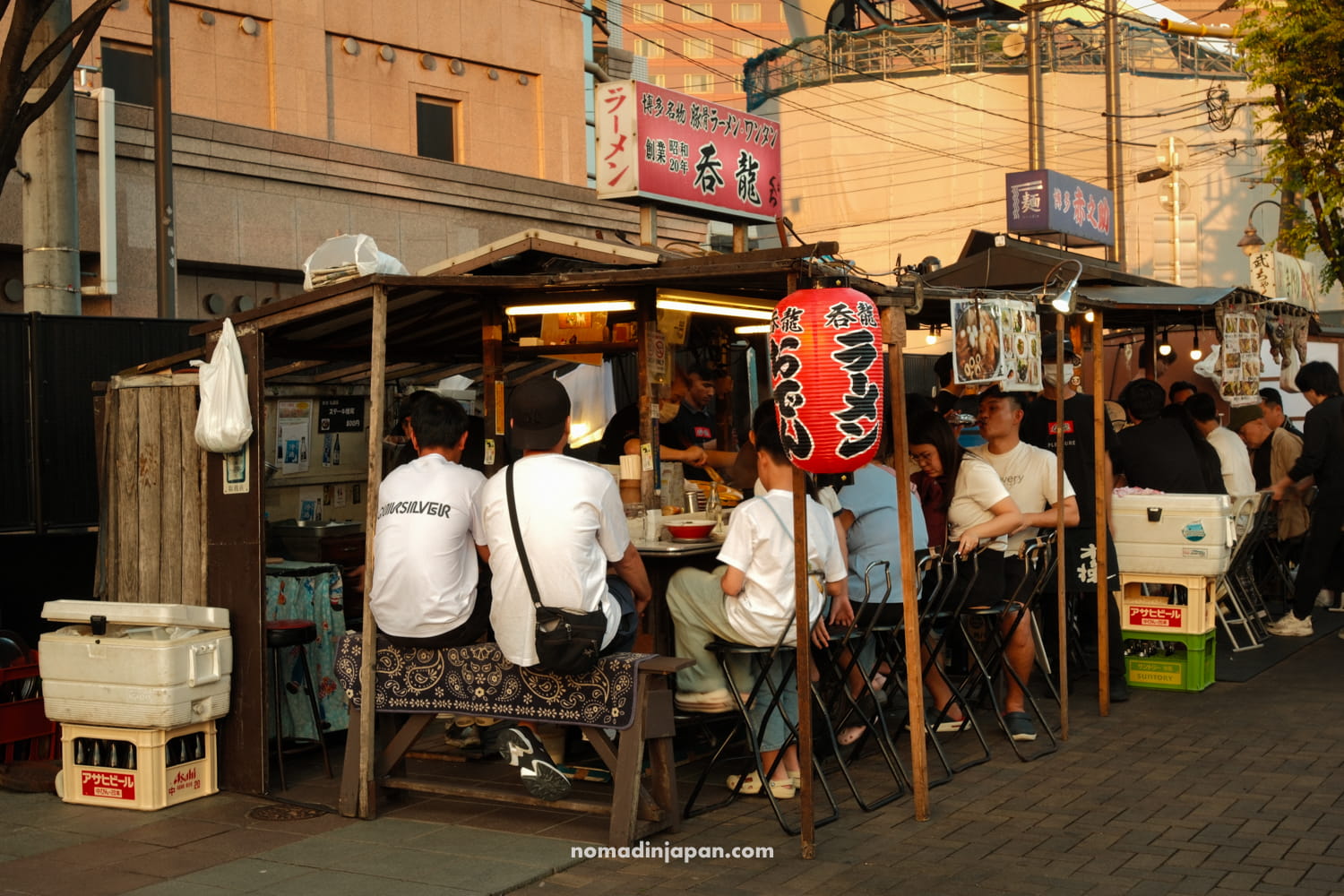
It’s so interesting to me that Fukuoka’s yatai—mobile, semi-permanent street food stalls—have become so popular. Unique to Fukuoka, they are embedded in the very energy of Fukuoka. 🏮
But if you’ve ever traveled throughout Southeast Asia or Latin America, street food carts are very quintessential, too. That said, yatai are unlike other variations of street food stalls. They’re not exactly food trucks, either (yatais even have their own business registration and sanitary rules).
So, why did Fukuoka rise up as the Japanese city that became street food central?
Part of the reason may be Fukuoka’s 2,000-year history as Japan’s gateway to Asia, where centuries of trade and cultural exchange helped shape the city’s unique food culture.
The atmosphere “inside” a yatai is very much like being inside a Japanese izakaya, or pub. Except, of course, that it’s outside, and you’re sitting on the tiniest of tiny bar stools.
The food at a yatai is also unique, typically featuring the famous Hakata-style ramen or Fukuoka’s signature spicy cod roe (mentaiko).
In this quick guide, I’m sharing how to experience Fukuoka’s yatai — skipping them because you’re intimidated would be a shame! Whether you’re solo traveling in Fukuoka or don’t speak Japanese, my guide will help you prepare for your first order. ☺️
What Are Yatai Food Stalls?
Again, people confuse yatai with other types of street food carts and food trucks. But they’re kind of in their own category. Yatais are mobile food stalls, and are set up and taken down every day.
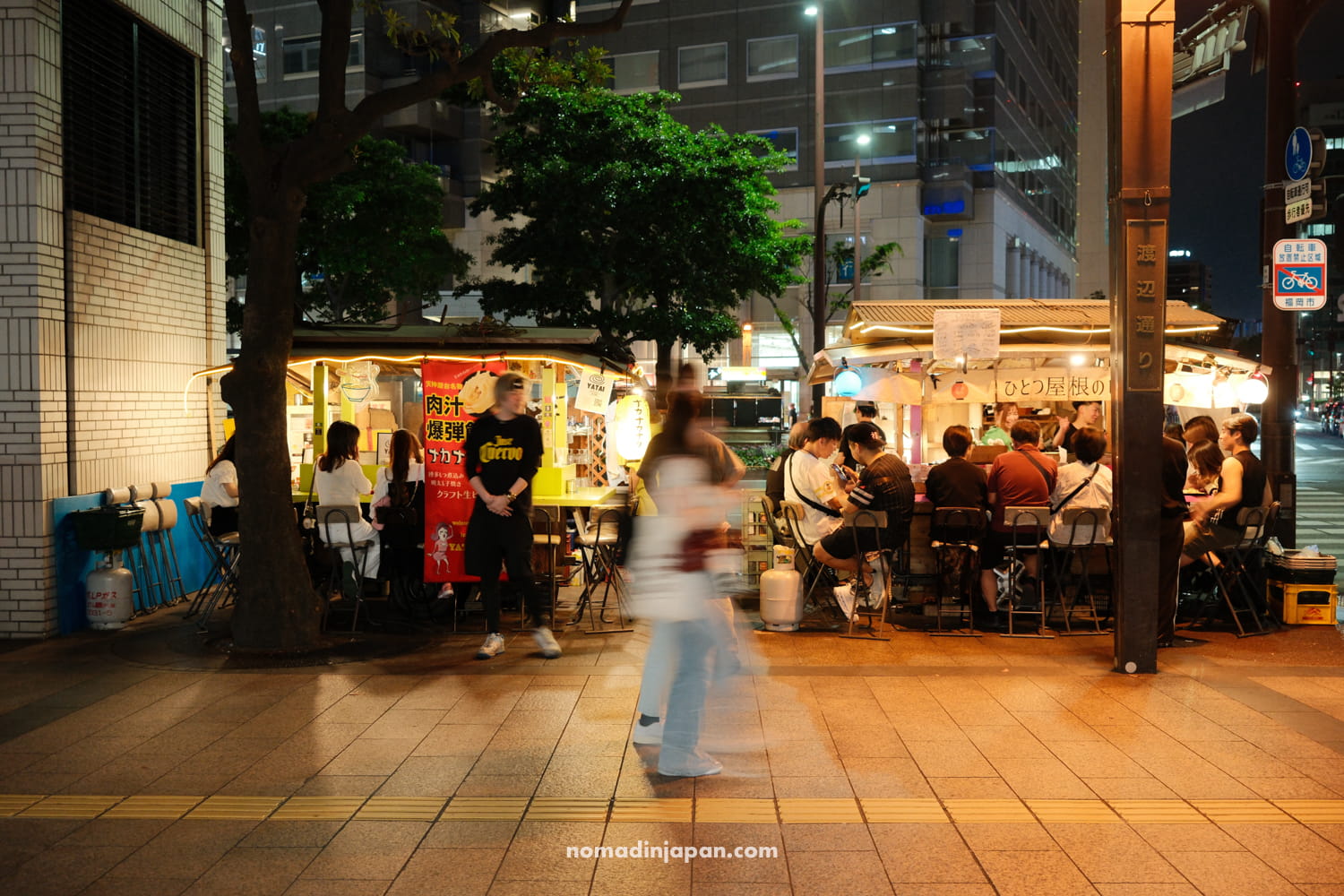
However, yatais are unique in that they’re also semi-permanent, with a legit business registration that allows owners to set up shop at the same location each night.
The yatai I visited had been running for the last seven years and had amassed a local clientele as well as tourists.
These “third spaces” in Fukuoka literally shape the city, changing its atmosphere from day to night—you won’t experience the same streets even if you passed by them earlier that morning.
While you can eat out in izakayas everywhere in Japan, it’s only in Fukuoka where you can experience this atmosphere of being out on a busy street, slurping down Hakata ramen or tucking into a spicy cod roe omelet.
That alone is what makes Fukuoka’s yatai so unique and the city’s energy so diverse and electric!
Are Fukuoka’s Yatai Worth Visiting?
I think, honestly, some popular yatais can be overhyped.
Japan’s queuing culture is no secret, but there are LOTS of yatai that deserve attention but simply don’t see as many tourists because they’re not rated “the best.”
Everyone—locals and tourists alike—is telling all their friends, “Go to a yatai, go to a yatai.” That creates a great sense of FOMO and also fosters competitiveness in finding the “best yatai” in Fukuoka. This results in 2–3 hour-long queues for some of the top-rated yatai.
Even if you feel shy, please try the lesser-known yatai stalls or go with a local guide who can help you ease into the scene.
Best Areas to Find Yatai in Fukuoka
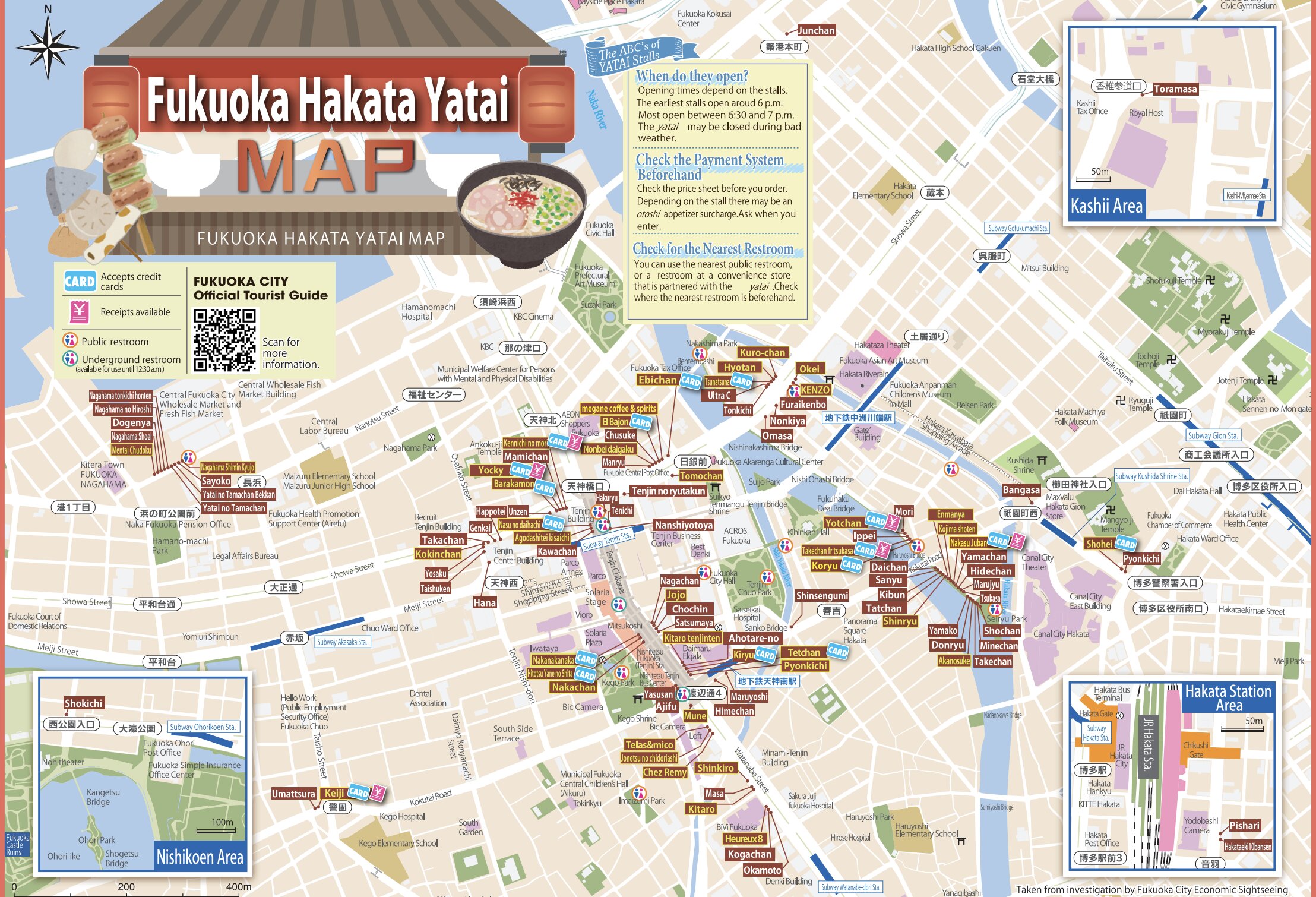
Nakasu
Typically, the busiest/most touristed yatai are found on Nakasu, followed by Tenjin (just around the station), and then Nagahama.
Nakasu is an island sandwiched between the Hakata and Naka Rivers. It’s here (on the Naka riverside promenade), where you’ll find a concentration of yatai stalls. About two dozen yatai stalls gather here.
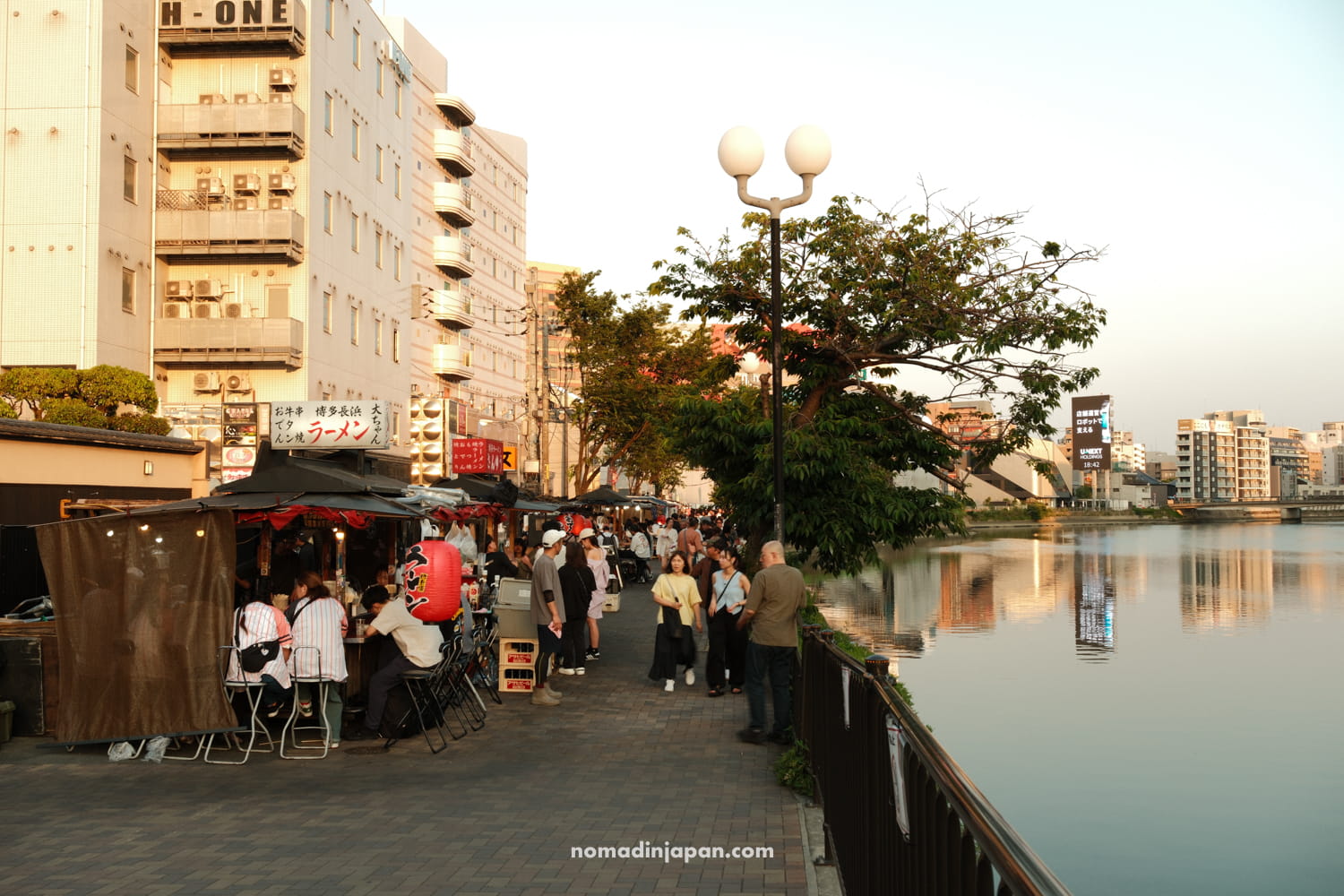
If you are staying in a hotel near Nakasu, you will have the chance to line up early for the evening yatai, which are nice with a sunset glow.
However, this area is by far the most touristed, but is also frequented by locals. You’ll have no trouble finding English menus, most of which have pictures. However, you’ll get upcharged here.
To find a more budget-friendly yatai, you may consider Tenjin or Nagahama.
Tenjin
Around Tenjin Station, you’ll find mini clusters of yatai stalls. These feel much more local in the sense that there aren’t hawkers trying to vie for your attention.
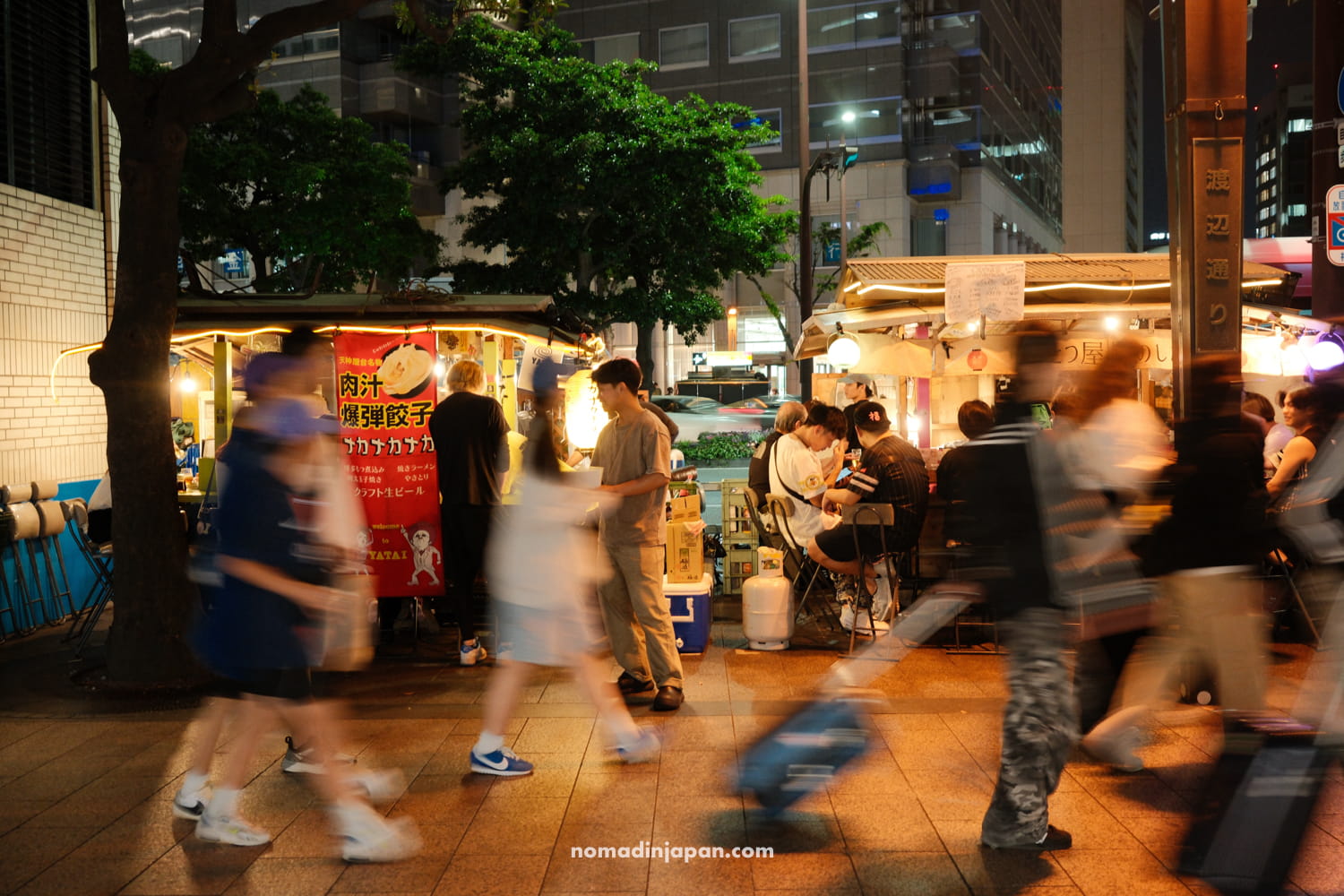
Shoppers, business folk, and tourists come and go, and the yatai are a backdrop amid the hubbub of activity. Because it is a major station, you’ll also find great accommodation options here that let you step outside and into the yatai atmosphere as soon as dusk falls.
This is where I dined at a yatai solo (at the Nakanakanaka stall), and I really enjoyed being somewhere not so front-facing for tourists, yet still tourist-friendly.
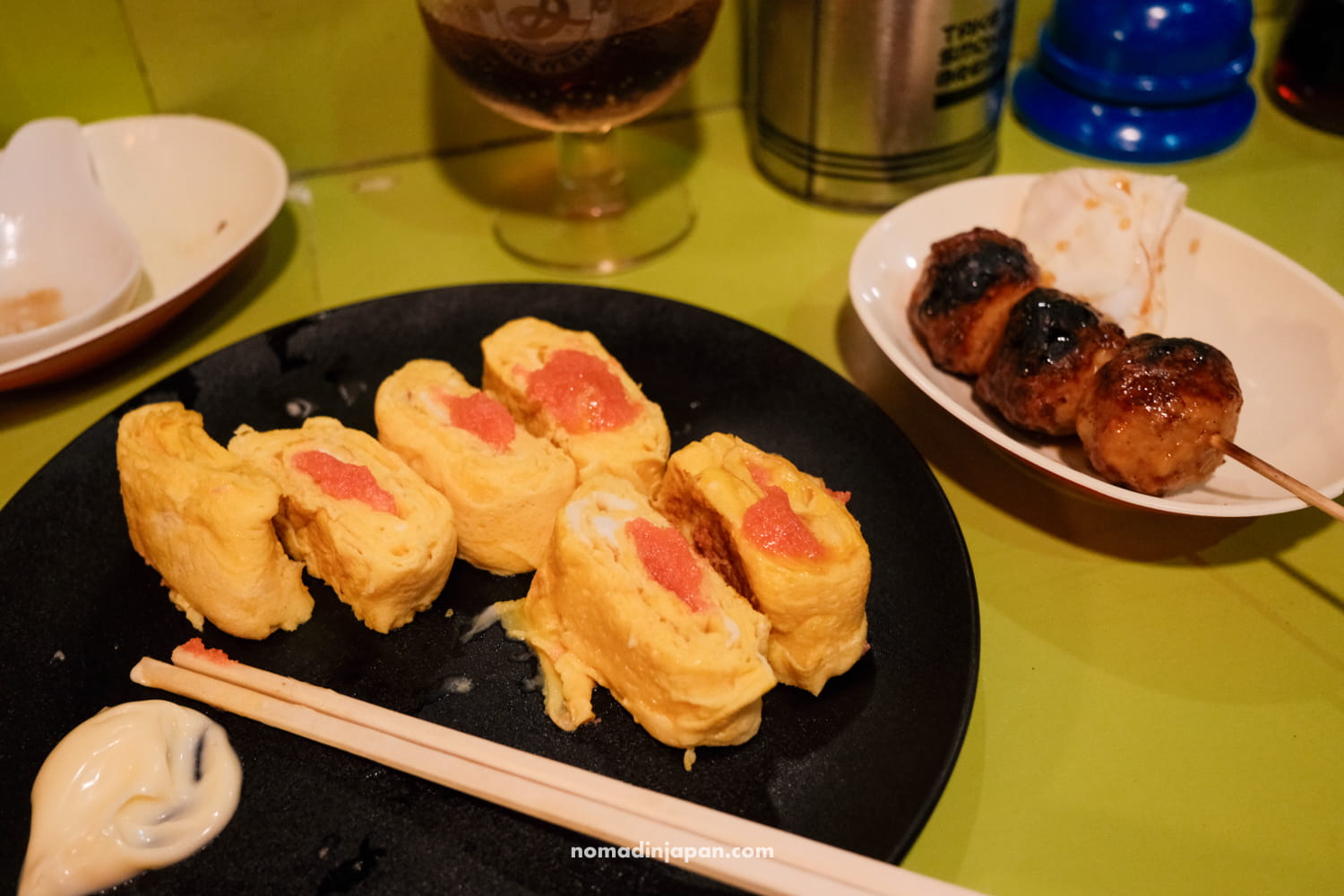
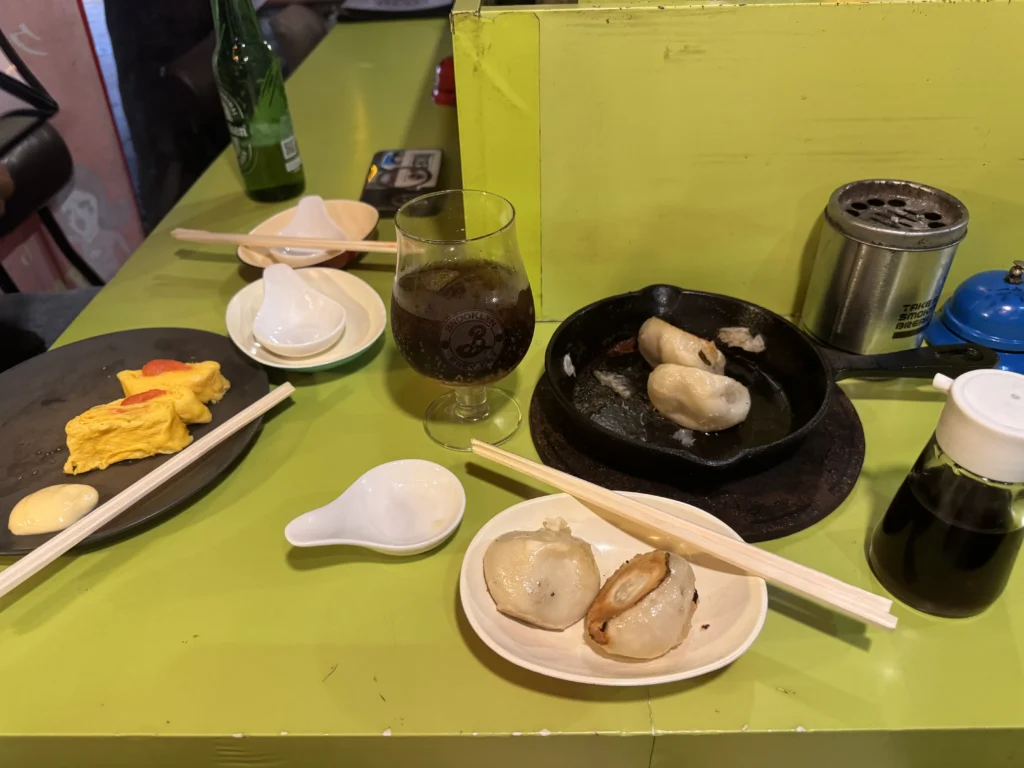
I ordered the mentaiko tamago, juicy “bomb” gyoza, and a tsukune yakitori! 🥟
Nagahama
I went to Nagahama to try one of the original Hakata ramen shops (Ganso Ramen Nagahamake). This area is far more local than Tenjin or Nakasu. I was the only “foreigner” around when I came.
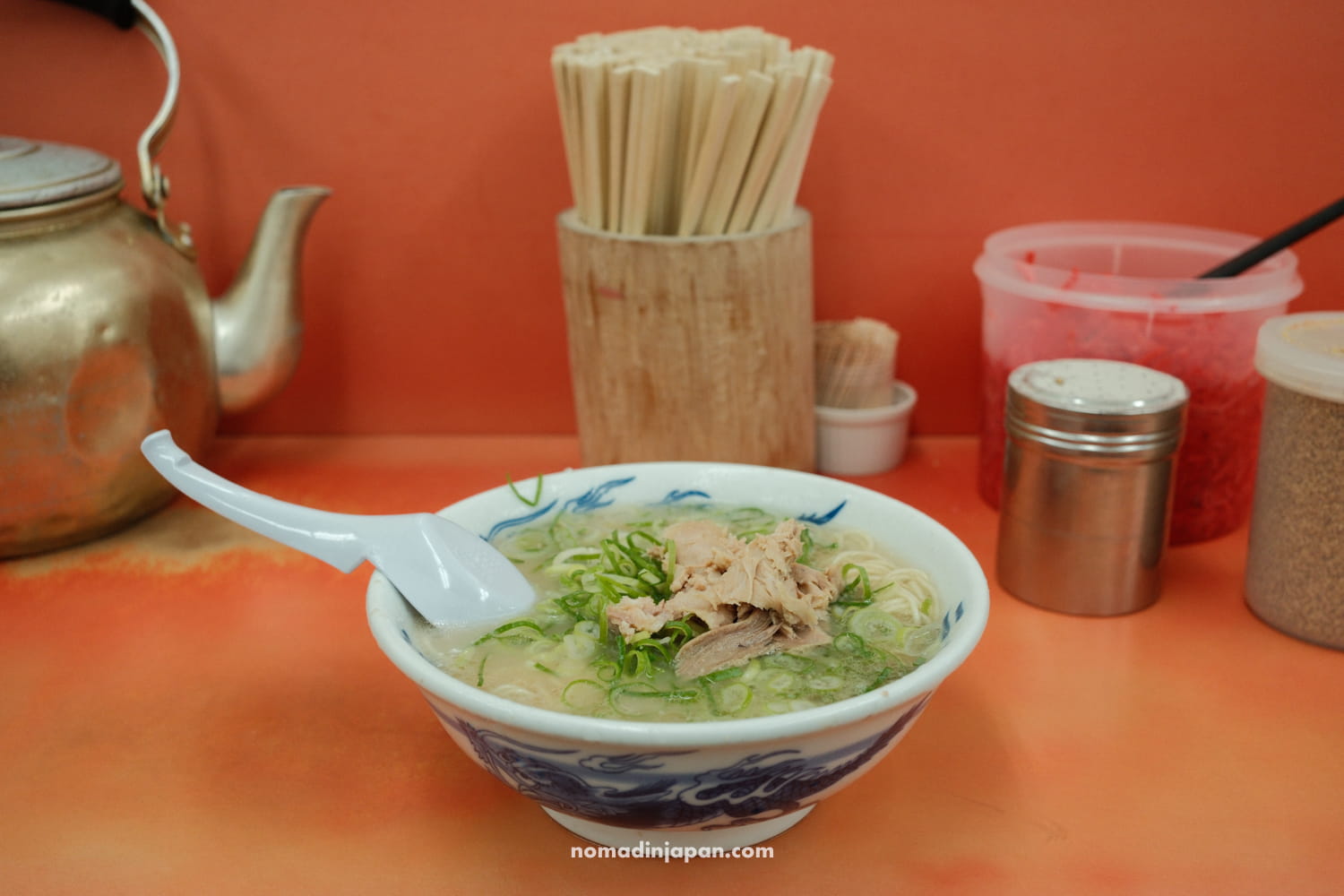
However, I didn’t try the yatai here, but from afar, they definitely looked more off-the-beaten-path choices for tourists, since they’re quite removed from the center. If you are staying around Ohori Park (as I was at the UNPLAN Hotel), however, Nagahama is just a 10-minute stroll away.
How Much Does It Cost to Eat Out? Yatai Food Prices
Most prices for food items at yatai are under 1,000 JPY, but plan to spend at least 2,000-3,000 JPY per person in cash for drinks and a full meal.
- Small dishes: ¥400–¥800
- Yakitori skewers: ¥150–¥350 each
- Oden: ¥150–¥300
- Gyoza: ¥500–¥800
- Hakata ramen: ¥700–¥1,200
- Draft beer: ¥600–¥900
- Highball/shochu: ¥500–¥800
From memory, I think my solo yatai meal cost ¥2,400 (I ordered a cola, tamago omelet, 1 skewer, and gyoza).
My First Yatai Experience in Fukuoka
Knowing Nakasu was the busiest/most popular for yatai, I avoided dining there but went for a stroll nonetheless just to get a sense of it.
And indeed, it was queues all the way. It’s nice to dine next to the river, but is the food that much better? I don’t think so.
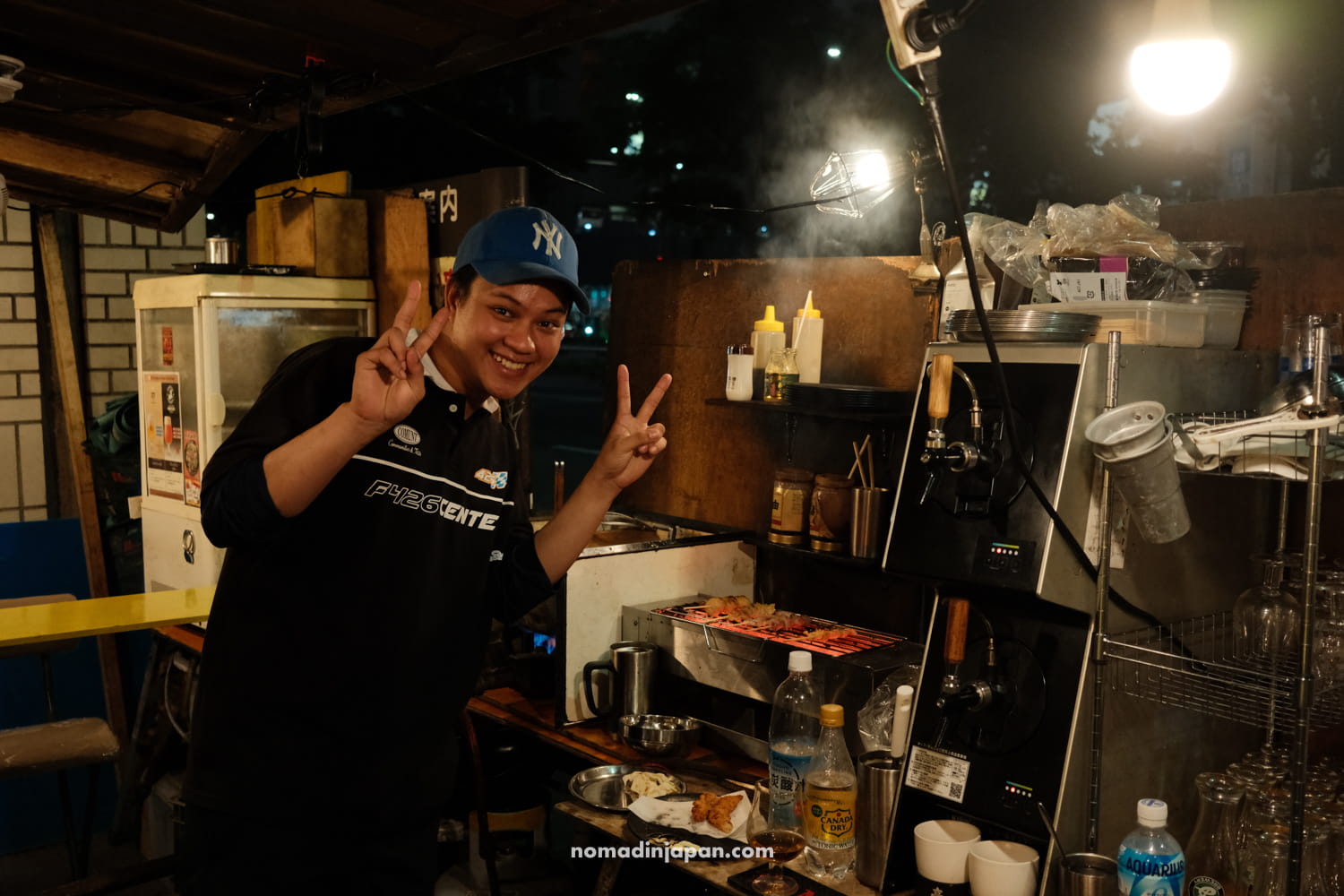
I saw other yatai stalls hawking to tourists down in Nakasu (and experienced it myself as I hurried past). It reminded me of my travels in Vietnam or Malaysia, where you’re called after and shown menus with pictures.
Instead, I walked around Tenjin Station around 6 PM to find a yatai that I could duck into. Traveling solo in Fukuoka means I could easily do that without disrupting others. Most places are used to tourists, even the lesser-visited ones, and will readily welcome you if a seat is available.
I was given a bar stool on the corner, tucked between two businesswomen whom I assumed were colleagues, and two younger guys out for a meal. I was glad I didn’t have a large bag or a group with me!
The atmosphere and conversation flowed, and it was really enjoyable to sit out in the evening air and enjoy delicious comfort food like yakitori, tamago, and gyoza. Since I was alone, I avoided ordering the larger dishes such as fried rice/noodles or ramen.
What It’s Actually Like Eating at a Yatai
The Seating
Expect tiny spaces (like, real tiny!) and shared counters.
Your plates and drinks will be very close to others, so be mindful of the space you take up, both on the counter and around you.
Place bags on your lap or tuck them on the corner of your chair, if you can!
The Atmosphere
Some yatai felt performative, while others didn’t. It’s just another pub, but uniquely set on the sidewalk. It’s lively with chatter and cooking and road traffic, so it can be somewhat noisy too.
Otherwise, it’s nice that there’s this sense of openness and friendliness. Locals and tourists together.
There’s also a fairly fast turnover, but you’re not expected to order all at once. You can order one dish and a drink, then assess before ordering more if needed!
You could also hop around multiple yatais, if you’re hungry! There are quite a few yatai hopping food tours in Fukuoka to try.
The Food
Don’t expect large portions at yatai. Most are snack-style small plates meant to be shared.
Yatais are also known for their drinking culture, so there’s not much on the menu other than beer and alcohol; a safe order for non-drinkers would be a Coca-Cola.
What to Order at a Fukuoka Yatai
When at a yatai, it’s good to try something local and regional, rather than go for the same Japanese classics you can get anywhere.
That’s how I ended up ordering mentaiko tamago (spicy cod roe omelet), even though I usually wouldn’t order it anywhere else.
Here’s a quick list of foods to try at Fukuoka’s yatai:
- Mentaiko tamago (spicy cod roe omelet)
- Hakata ramen (the classic ramen style from Fukuoka)
- Yaki-ramen (stir-fried noodles)
- Matsunabe (beef offal stew)
- Gyoza (thinner, bite-sized ones or juicy “bomb” gyoza)
- Yakitori (good to try if you haven’t had it in Japan before, but not a specialty here)
Yatai Tips for First-Time Visitors
1. Bring Cash
Cash is still king at Fukuoka’s yatai, although some are now accepting credit cards.
The online yatai map above shows you the yatai accepting cards; however, don’t rely on it 100%. The yatai I ate at (Nakanakanaka) was supposed to accept cards (according to this map), but he responded with “cash only.”
2. Don’t Be Afraid to Go Alone
Definitely don’t shy away from eating at a yatai just because you’re nervous to go alone. I know the feeling!
But, I promise, no one cares that you’re dining solo. In fact, yatai are perfect for eating alone because you’ll be able to get a seat rather quickly.
3. Expect Limited Seating
That said, seating availability is not guaranteed, especially on weekends and during peak dinner hours between 6 and 8 PM.
If you can, eat early, and go even earlier if you want to snag a seat at a Nakasu yatai.
4. Know a Few Japanese Phrases
If you are shy, hold up a finger to indicate how many people you are. If you’re just one, say “hitori desu, onegaishimasu.”
You can also point to the menu and say “Kore, onegaishimasu” to say “this one, please.” You can also say the other “please” (kudasai), but I always use onegaishimasu as it’s more polite!
Other helpful phrases:
- Osusume wa nan desu ka? (What do you recommend?)
- Gochisōsama deshita! (Thank you for the meal. Say this when leaving!)
- Oishii desu ne! (This is delicious!)
- Kādo tsukaemasu ka? (Do you take cards?) Or you can simply say “Kado de, onegaishimasu” (which means “with card please” — they’ll get you!).
Common Mistakes Tourists Make at Yatai
Understandably, tourists are afraid to make a “faux pas” in Japan.
A few common mistakes to avoid with yatai:
- Don’t queue only for “viral” stalls
- Not carrying cash
- Trying to visit with large groups
- Being afraid to sit next to strangers
- Being rambunctious and loud
Yatai food stalls are not a tourist attraction, so please be polite and mindful. They’re an establishment, so enjoy yourself, but respect others’ space and time as well!
My Honest Take on Fukuoka’s Yatai Culture
Fukuoka’s yatai food culture is becoming a “thing to do,” and I certainly can see why. And I do think it should be included in your Fukuoka itinerary. However, don’t feel like you have to eat out at a top-rated yatai or at a Nakasu yatai.
The experience is one thing, the food is another. Most of what you can eat at a yatai is available elsewhere. (Ramen, gyoza, tamago, etc!)
I think, most of all, it’s about understanding more about what makes Fukuoka, well, Fukuoka! This lively, outdoorsy energy is palpable and a testament to what makes the city feel so welcoming and social.
So, even if you’re nervous, solo, or don’t speak Japanese, I hope this little guide to Fukuoka’s yatais will encourage you to get out there and try new things and new foods!