
Kumano Kodo Itinerary: How Many Days You Need? 2–5 Day Options
How long do you actually need to walk the Kumano Kodo?
First, to answer that, consider that there are four core trekking routes of the Kumano Kodo, and the one you choose will greatly impact your pilgrimage:
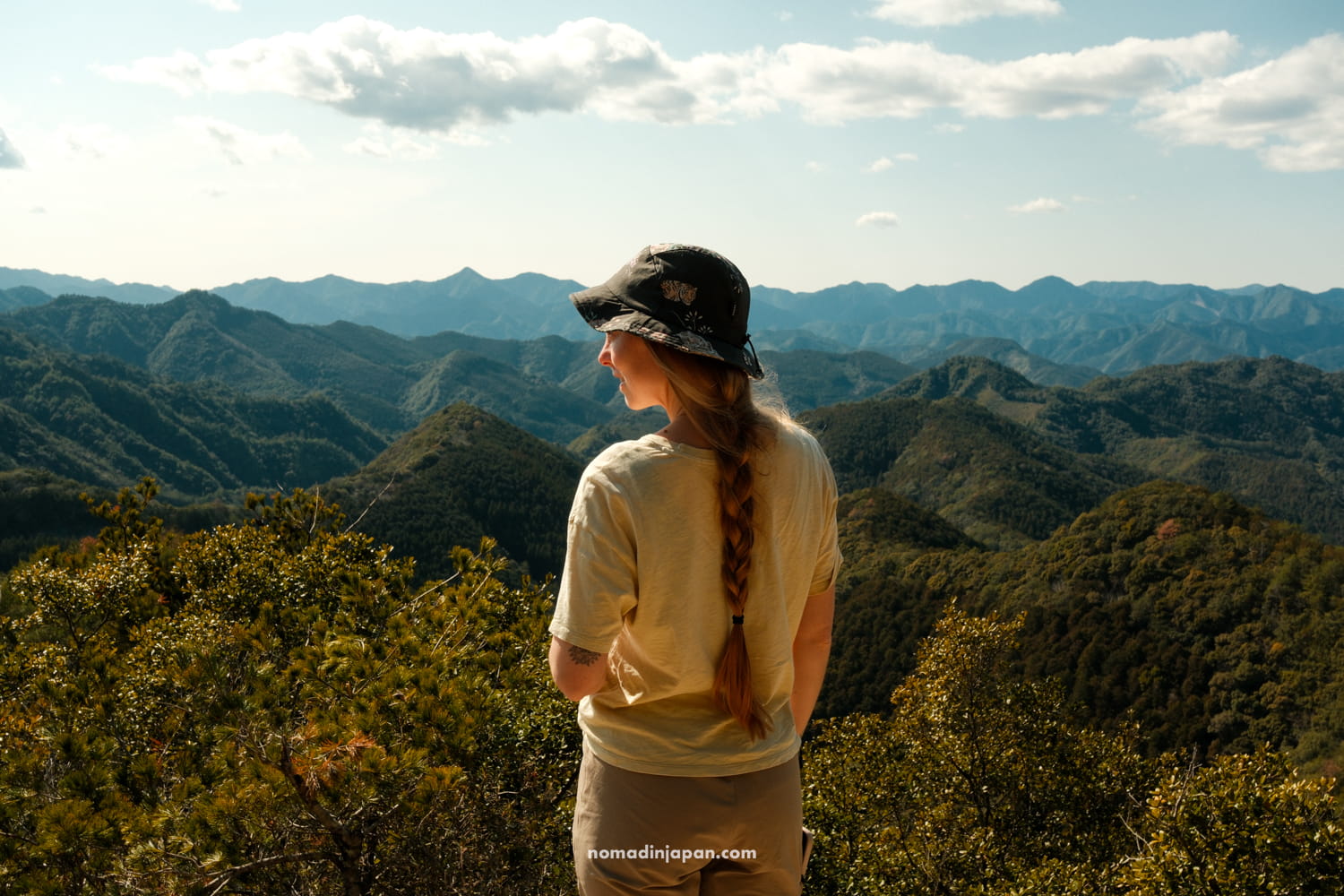
- Nakahechi Route – The most popular and well-connected route starts at the Takijiri-oji trailhead and goes through the mountains to Kumano Hongu Taisha; best for first-time pilgrims and multi-day itineraries! This is the one I recommend doing.
- Kohechi Route – A more challenging mountain route connecting Koyasan to Kumano Hongu Taisha, with steep climbs and remote sections; ideal for experienced hikers seeking a more rugged pilgrimage.
- Ohechi Route – A coastal route that follows the southern shoreline of the Kii Peninsula, offering ocean views and fewer crowds; historically used by pilgrims traveling by sea.
- Iseji Route – An eastern route connecting Ise Grand Shrine to the Kumano shrines, with stone-paved paths, bamboo forests, and a quieter, more off-the-beaten-path experience. I learned about this route from Craig Mod, a prolific author who has walked the Kumano via various routes and wrote a book set in the Kumano (Things Become Other Things).
We met so many fellow pilgrims on the Nakahechi who composed a different itinerary than we did.

So, in an effort to simplify and help reduce the overwhelm we felt planning our self-guided itinerary, this post is designed to help you choose a suitable itinerary based on your time, fitness, and budget.
Whether you have just two days to see the Kumano Kodo highlights or five full days to trek the Nakahechi in full, here’s what to know about routes, distances, buses, logistics, accommodations, and more!
How Many Days Do You Need for the Kumano Kodo?

If you plan to hike just the core section of the Nakahechi route (from Takijiri-oji trailhead to Kumano Hongu Taisha — the first of the three Grand Shrines), then plan for at least 2–3 full days.
You could technically do it in two days, hiking from Takijiri-oji to Chikatsuyu (~14 km) and then from there to Hongu with a bus shortcut (~18 km or ~7 km).
I spent many hours researching different possible routes and itineraries of the Kumano via Kumano Travel. But based on our experience, here’s how you can best split it up based on fitness, budget, and time constraints:
- 1–2 days: Kumano highlights / partial experience with the help of public transport/car
- 3 days: Most common, shortened Nakahechi (ending at Kumano Hongu Taisha)
- 4–5 days: Full Nakahechi experience (ending at Kumano Nachi Taisha and Nachi Falls)
- 6+ days: Slower, more restful pilgrimage with a chance to sightsee along the coast
🥾 We spent 5 days hiking the Nakahechi, about 70 kilometers (~43.5 miles) (6 days in total with an overnight in Nachi-Katsuura), and I feel this was the best balance for enjoying the Kumano pilgrimage, including its viewpoints, onsen villages, and culture, without rushing.

Customizing Your Own Self-Guided Kumano Kodo Itinerary
You don’t need a guide for the Kumano, unless you’d like additional context or easier planning. Below, I’ll suggest a few recommended self-guided itineraries based on what we heard from fellow pilgrims and on our own experience!
2-Day Kumano Kodo Itinerary (Short Pilgrimage Option)
- Best for: Limited time, new hikers
- Route: Takijiri-oji → Chikatsuyu/Nonaka → Hongu
- Total distance: 37.8 km / 23.5 mi

A 2-day hike means back-to-back long days: roughly 14.5 km from Takijiri-oji (Nakahechi trailhead) to the Chikatsuyu/Nonaka area, then ~18 km of hiking on day two to Hongu (intermediate itinerary).
If you’d like, you can also shorten the second day from ~18 km to ~7 km by taking the bus all the way to Hosshinmon-oji and walking the gentler descent down into the valley, where you’ll still arrive at Kumano Hongu Taisha and Japan’s tallest Shinto gate, O-torii (Oyunohara).
You could also skip the trailhead altogether and drive further and choose which section you’d like to hike (we met a few people who did that!).
🏡 Overnight in Chikatsuyu/Nonaka, then the Hongu area (recommended: Yunomine Onsen)
This 2-day/night option ends at Kumano Hongu Taisha.
Your third morning would then mean taking the bus onward (back to Osaka/Tanabe/etc) or visiting the other two Grand Shrines, Nachi (bus) and Hayatama (reachable by boat down the Kumano-gawa River).
3-Day Kumano Kodo Itinerary
- Best for: Slower pace
- Route: Takijiri-oji → Takahara → Chikatsuyu/Nonaka → Hongu
- Total distance: 37.8 km / 23.5 mi

If two full days of hiking seem like a lot, you can spread it out over three days/nights instead by first overnighting in Takahara (the “Village in the Mist”).
From the Takijiri-oji trailhead, this requires only a 2.5-hour hike to reach Takahara. This itinerary option is ideal for those traveling down from Osaka/Wakayama on the same first day (like we did), and who don’t want to push all the way to Chikatsuyu (6–7 hours) after an already long train ride.
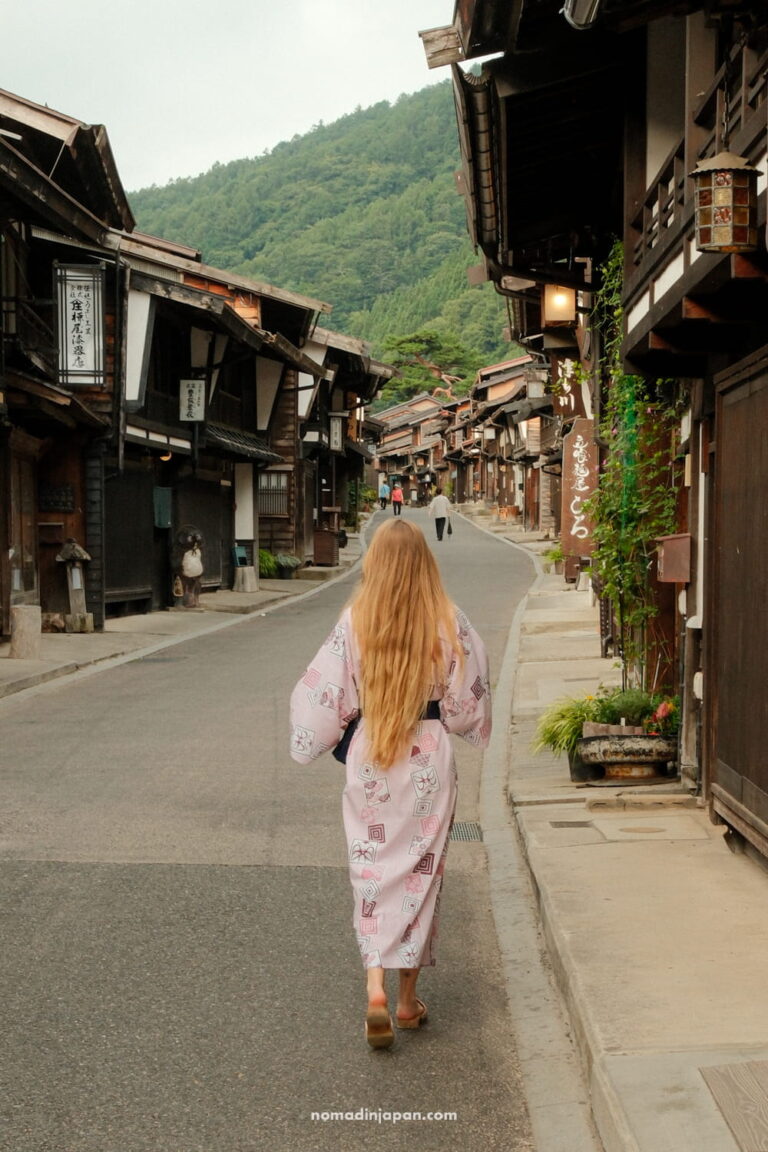
To follow this itinerary, plan to stay in Takahara for the first night. We stayed at the Kiri-no-Sato Lodge and loved starting our pilgrimage slowly with an onsen, a delicious kaiseki dinner, yukata robes, and sunrise over the mountains.
Your Nakahechi hike will still end in the Hongu area. On your fourth day, you would need bus/boat transport, or a rental car, to reach the other two shrines.
4 to 5-Day Kumano Kodo Itinerary (Full Nakahechi Experience)
- Best for: Experienced hikers wanting the full pilgrimage
- Route: Takijiri-oji → Takahara (optional) → Chikatsuyu/Nonaka → Hongu ⛩️ → Koguchi → Nachisan (⛩️) → Nachi-Katsuura (optional)
- Total distance: ~70 km / 43.5 mi
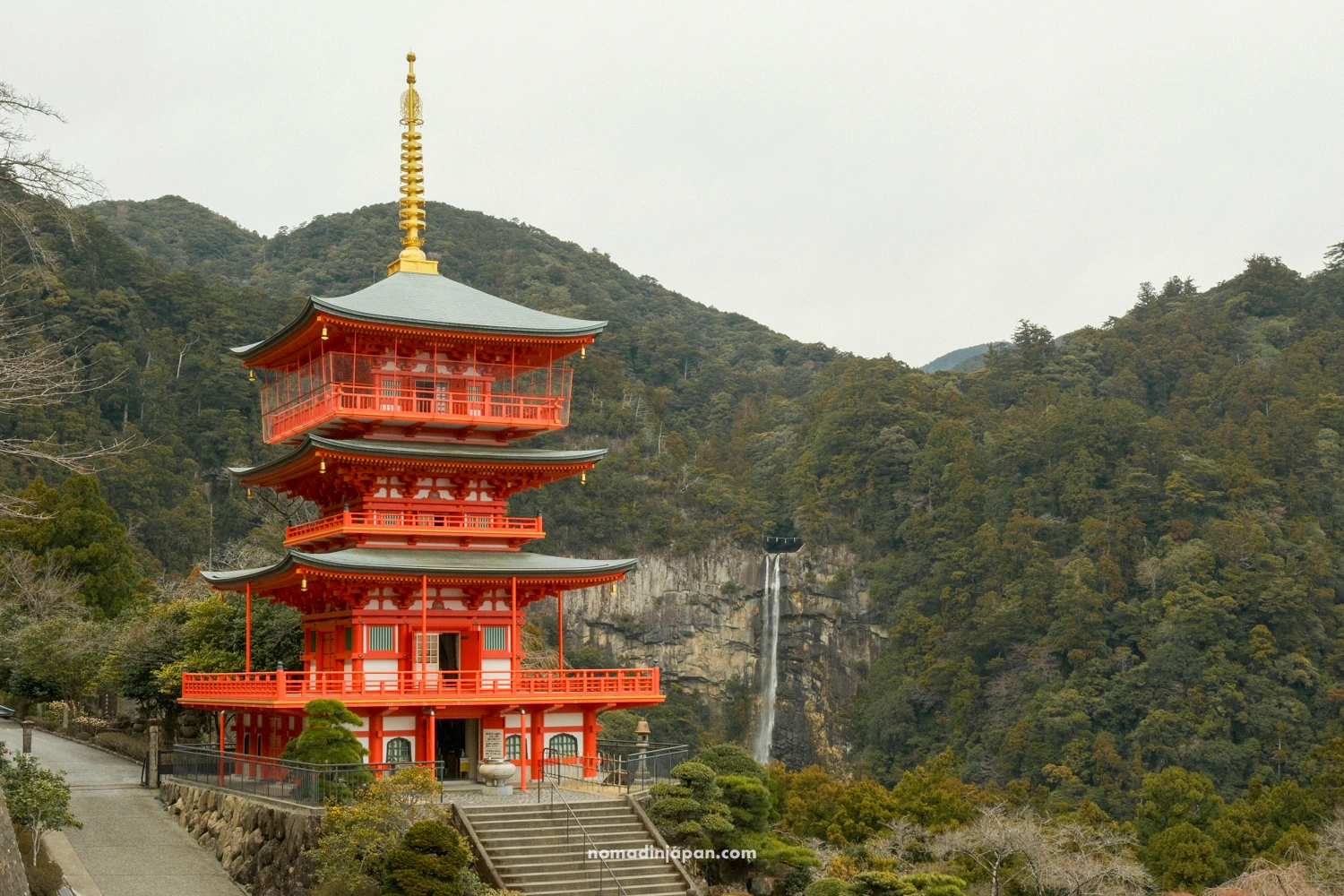
The next itinerary option is to extend your hiking days and hike between Hongu and Nachisan (Kumano Nachi Taisha Grand Shrine and Nachi Falls).
NOTE: It’s not possible to hike it all in one day; therefore, you must plan two extra hiking days (and they’re the hardest) with one overnight in Koguchi (the midway point).
🏡 Be sure to secure accommodation in advance for your overnight in Koguchi (midway from Hongu to Nachi), as availability is very limited! Sen. Haven Nakamura is the house we stayed in.
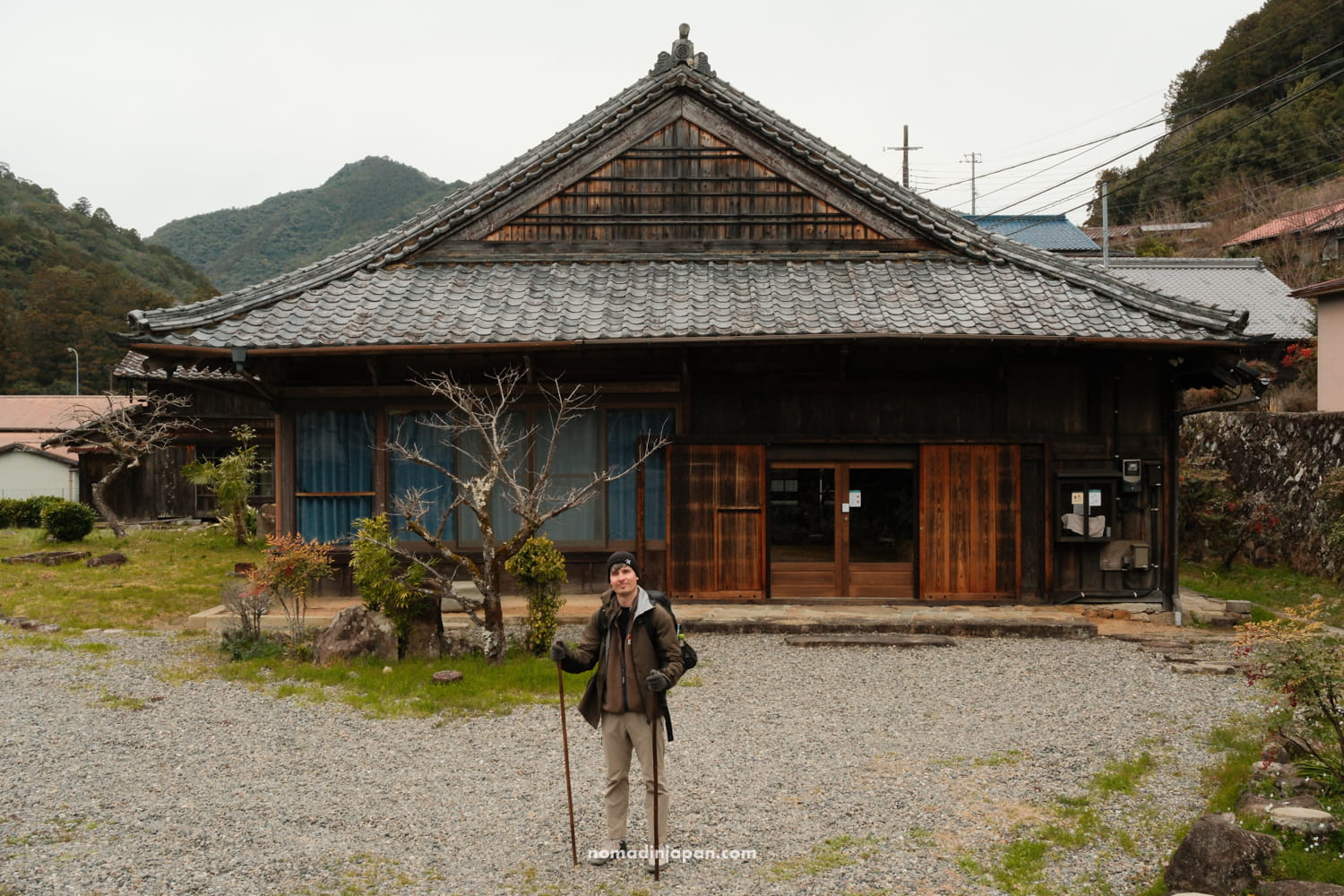
I say either four or five days above because you could complete the full Nakahechi in four days, or five with an added night in Takahara.
We personally did 5 hiking days, but 6 total travel days, as we overnighted in Nachi-Katsuura. In the morning, we took a bus to Shingu to collect our final Kumano stamp at the Kumano Hayatama Taisha Grand Shrine.
Alternatively, you could overnight at Nachi Falls to have more time there; however, there is only one accommodation available that books up early: Mitaki Sanso.
Recap of Our Experience + Itinerary

Below, I’ll share my experience so you can get a feel for how you could customize your own Kumano Kodo itinerary.
The Kumano can be “done” fast or slow, but having spent 5–6 days in the area, plus another week or so in Wakayama City, I highly recommend adding more days to your itinerary before and after your Kumano hike.
There’s so much to do and see in Wakayama Prefecture, and it would be a shame to blow in and blow out just as fast! This is why I highly suggest either overnight in Tanabe (if you plan to arrive in Chikatsuyu on night 1), or adding an extra rest day post-hike in Nachi-Katsuura or Shingu.
We opted for Nachi-Katsuura, and I don’t regret it! It’s a retro, old fishing village on the coast about 30 minutes from Nachi Falls.


It is known as Japan’s number 1 tuna landing port and has an awesome little fish market by the harbor, plus cute free footbaths with tiled mosaic, right beside the water.
Not to mention, Nachi-Katsuura has a couple of fun accommodation options, including the sprawling, Showa-era Hotel Urashima with cave onsens (where we stayed), or the backpacker-friendly Why Kumano with specialty coffee, tucked right by the Kii-Katsuura Station.

We didn’t stay overnight in Shingu, but we did visit on our 6th morning to officially collect all the stamps for the Kumano Sanzan. 🙌
The third and final shrine of the Kumano is located here, in Shingu, and is worth visiting!

From Shingu or Nachi-Katsuura, you can take the Limited Express Kuroshio train back around the peninsula up to Osaka. We spent one final night in Wakayama City (where we stored our luggage at Guesthouse Rico) before heading to KIX, Osaka’s airport, the next day.
Having this extra flexibility meant we could fully enjoy our Kumano itinerary without rushing to catch trains or flights after such a spiritual, experiential hike! ✨
Quick Checklist: Our 5-Day Kumano Kodo Itinerary Summarized
You can read more details about the Nakahechi route in my hiking post, including times, distance, and elevation gain/loss, but let me give you a brief, practical itinerary outline based on our own!

DAY 1:
- Travel to Kii-Tanabe Station via the Kuroshio train
- Pick up the Dual Pilgrim stamp booklet at the tourist center
- Catch the bus (~40 minutes, Kumano Hongu Line) to Takijiri-oji
- Visit the Kumano Kodo Kan Pilgrimage Center & Museum (~20 minutes)
- Collect your first stamp at Takijiri-oji!
- Start hiking to Takahara Village (~2.5 hours)
- Stay at Kiri-no-Sato Lodge
DAY 2:
- Start hiking by 9 am from Takahara to Chikatsuyu
- Lunch break (bento) at Michi-no-Eki rest area
- Night in Chikatsuyu or Nonaka area
- Rest/relax; onsen if available
DAY 3:
- Take the 07:23 am bus from Chikatsuyu to Doyukawa-bashi bus stop
- Start hiking (07:45)
- Lunch break at Hosshinmon-oji
- Arrive at Kumano Hongu Taisha Grand Shrine! ⛩️
- Collect your official Kumano pilgrimage stamp beside the reception office (stamp the last page of the booklet!)
- Walk to Japan’s tallest Shinto gate, O-torii, and collect your Oyunohara Sanctuary stamp
- Return to the Hongu bus stop on foot (10 minutes)
- Visit the Kumano Hongu Heritage Center (09:00–17:00)
- Catch the last bus to Yunomine Onsen (~16:30) or hike ~2 hours
- Stay the night in Yunomine Onsen (J-Hoppers)
- Eat dinner at You Got It Bar (craft beer, steamed veggies + delicious gyoza)
- Try to snag tickets to Tsuboyu (World Heritage onsen) that evening or wait until morning (we were first in line at 7 am). First-come, first-served.
DAY 4:
- Soak in Tsuboyu or the other public onsen baths
- Collect your Yunomine-oji stamp at the shrine up a small hill (follow Kumano Kodo signs)
- Loop back into town, buy onsen eggs + cook them in the village spring
- Catch the bus to Hongu late morning ~11 am (OPTIONAL: Leave earlier to Ukegawa trailhead)
- Get off and grab a quick coffee at Sei
- Cross the street and grab picnic sandwiches + patisserie from this local bakery
- Catch the bus at Hongu taisha-mae to Ukegawa trailhead (~11:35 – 11:50)
- Start hiking from Ukegawa to Koguchi
- Picnic lunch with a view of “3600 Peaks of Kumano”
- Stay in Koguchi
- Get an early night!
DAY 5:
- Start hiking no later than 8 am
- Arrive at Kumano Nachi Taisha around 3 pm
- Veer right, visit the Seiganto-ji Buddhist Temple (collect stamp)
- Continue into Kumano Nachi Taisha Grand Shrine ⛩️ (collect stamp)
- Walk down stairs facing the mountains, take a left
- Walk toward the Three-Storied Pagoda (visit optional)
- Photograph the classic view!
- Shortcut down stairs to Nachi Falls and Hiro Shrine (collect stamp)
- Catch the bus from Nachi taisha-mae to Kii-Katsuura Station (~25 minutes)
- Stay in Nachi-Katsuura or Shingu
- END HIKE
DAY 6:
- Morning exploring Nachi-Katsuura
- Take the bus to Shingu (~30 minutes)
- Walk 10 minutes to Kumano Hayatama Taisha Grand Shrine ⛩️
- Collect your final stamp!
- Visit, take boat tour, or head directly to Shingu Station
- JR Kuroshio train back to Tanabe / Wakayama / Osaka, etc
- Onward travel in Japan or flight out of KIX
Last Tips for Planning Your Kumano Itinerary

As you can see, the Kumano / Nakahechi route can be organized in myriad different ways depending on your time, accommodation availability, and budget.
I don’t regret spending extra time in the mountains, even though it costs more. For me, I valued slowing down, enjoying onsen, eating good food, reading, etc., as much as the walk itself! ✨
A few of my personal favorite moments from our itinerary are what actually made the experience: soaking in the Tsuboyu onsen in Yunomine, visiting O-torii (Oyunohara), arriving sore and accomplished at Nachi Falls, collecting all of the stamps for Dual Pilgrim registration, and ending the trip on the coast, eating fresh tuna, and soaking in more hot springs.
Reminders before you go:
- Book accommodation early! At least 3+ months out, if possible.
- Plan full hiking days during daylight hours.
- Don’t overestimate pace! Those mountain passes are no joke!
- Consider luggage forwarding (we hiked with our 40L backpacks).
Please let me know if you have any questions in the comments! You can find more details about the Kumano Kodo Pilgrimage or the Nakahechi route in my additional guides.



Wow love all the information you shared on the Kumano Kodo. I’m looking at doing it next year either during Cherry Festival or Fall. I’m going with a small group of ladies. We are very strong hikers. We are interested In a good challenging hike but scenery is important and I would like to stay at the nicest accommodations possible. I was going to reach out to Kumano Travel. I thought it would be interesting to have a guide to add life context to the history. Did you meet Anne along the way with a local guide? Appreciate your insight as I start my planning for 2027
Hi Sunnie! Sounds great! If you’re an advanced hiker, you may look into doing another one of the Kumano Kodo routes (i.e. Koseji, 70km, starts in Koyasan) instead of the Nakahechi. The Nakahechi is easy/moderate from Takijiri-oji to Hongu, but challenging on the last 2 days from Hongu > Koguchi > Nachi Taisha because of the Ogumotori-goe pass. We didn’t have a local guide, there’s lots of signage and Oji shrine explanations on the Nakahechi. But Kumano Travel can definitely help with that, whereas we did everything DIY. For accommodation, there are nice ryokan like Kirinosato Lodge (highly recommend!). Yunomine’s ryokan also are nice, but sell out quickly. I advise booking ahead! xx
Gurl!! I read all of it! I hope someday I can do this!!! Thanks for this! Hope you will achieve all your heart desire!!! Keep it up!!
Awww, thank you so much! 🥰
Hi! How much did the version of your itinerary cost roughly? Super informative and a great read, thank you!
Hi Aimee! Thanks for reading and commenting! I just wrote a new post detailing our Kumano costs. We spent about $1300+ total
Hello! Thank you so much for your post, it was very helpful and I could find information that I’ve been looking for a long time in other places. I was wondering how did you manage your luggage while you were doing the hiking? Did you leave it in a locker somewhere? I’m planning to do this hike next spring and would really appreciate any advice. Thanks!
Hi Patricia! Thanks for reading and reaching out! I mentioned luggage forwarding somewhere in this post, I believe. Both Paul and I carried our backpacks, and left our large suitcase with our hostel in Wakayama to pick up after, but you can absolutely arrange luggage forwarding between your accommodations along the Kumano. Here is the list of providers!
Hi! Love the extensive write up on your experience. I am planning to do the Kumano Kodo with family (including 3 kids) in April 2027. So far ive logged booking requests in the Kumano Travel website. Did you use it too? How long before they finalized your booking? It’s been almost a week for me and still no confirmation. So I’m wondering if this is normal?
Hi Isabel! Thanks so much for reading. Sounds exciting – April will be an ideal time to do the Kumano Kodo with family! Kumano Travel receives a ton of requests, so it does take them time to get back and confirm all bookings. I would however check back often, just in case! I booked all of my accommodation myself (here’s my Kumano Kodo Lodging Guide, but that website is a great resource and may have additional availability beyond Booking.com’s listings. Hope you secure some great options — and have a wonderful trip! x