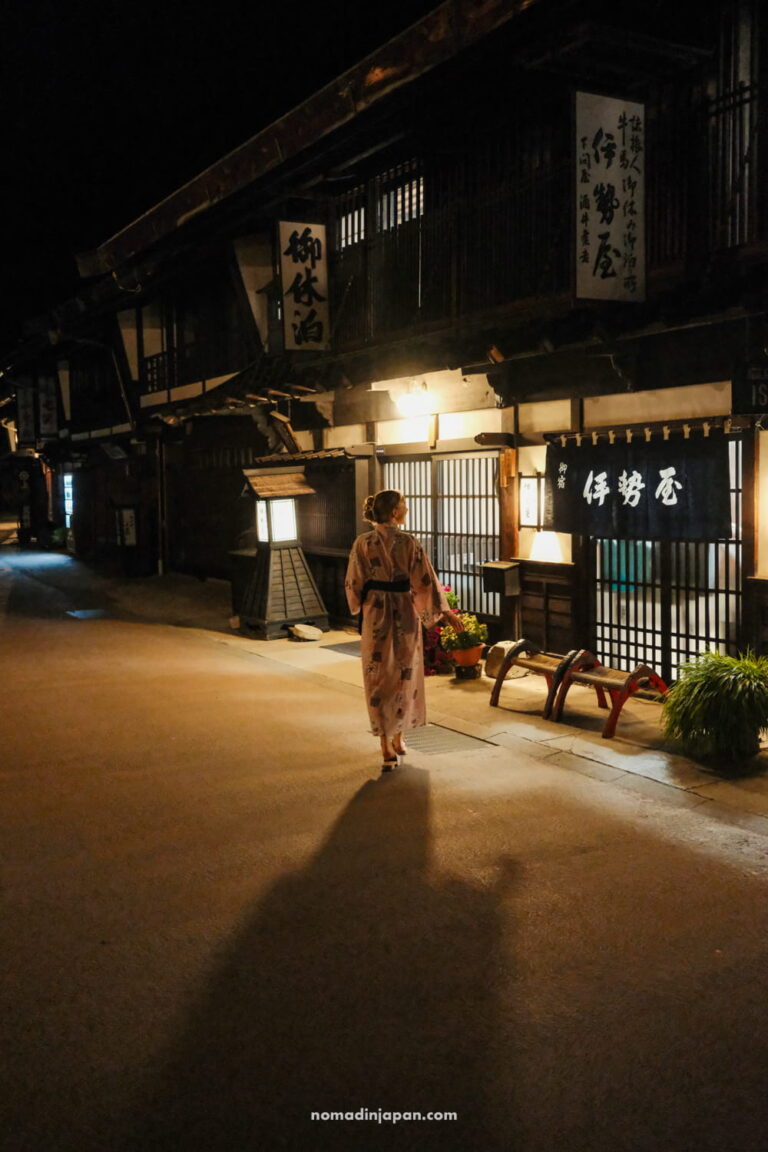
Where to Stay on the Kumano Kodo: Best Villages, Ryokan & Pilgrim Lodgings
Figuring out where to stay on the Kumano Kodo pilgrimage trail can be super confusing. Accommodation is spread out, books up early, and what you need to book depends on your larger Kumano itinerary — which villages you decide to rest in, how long you want to hike each day, availability… all that good stuff!
Luckily, I’ve done all the hard work for you! 😅

We spent 5 nights along the Kumano Kodo and will share my experience in this guide, including the which towns to stay in, how to choose based on your hiking itinerary, and what types of lodging to expect (we booked everything from a 3-bedroom Japanese house to a backpacker hostel!).
How Accommodation Works on the Kumano Kodo + How to Book
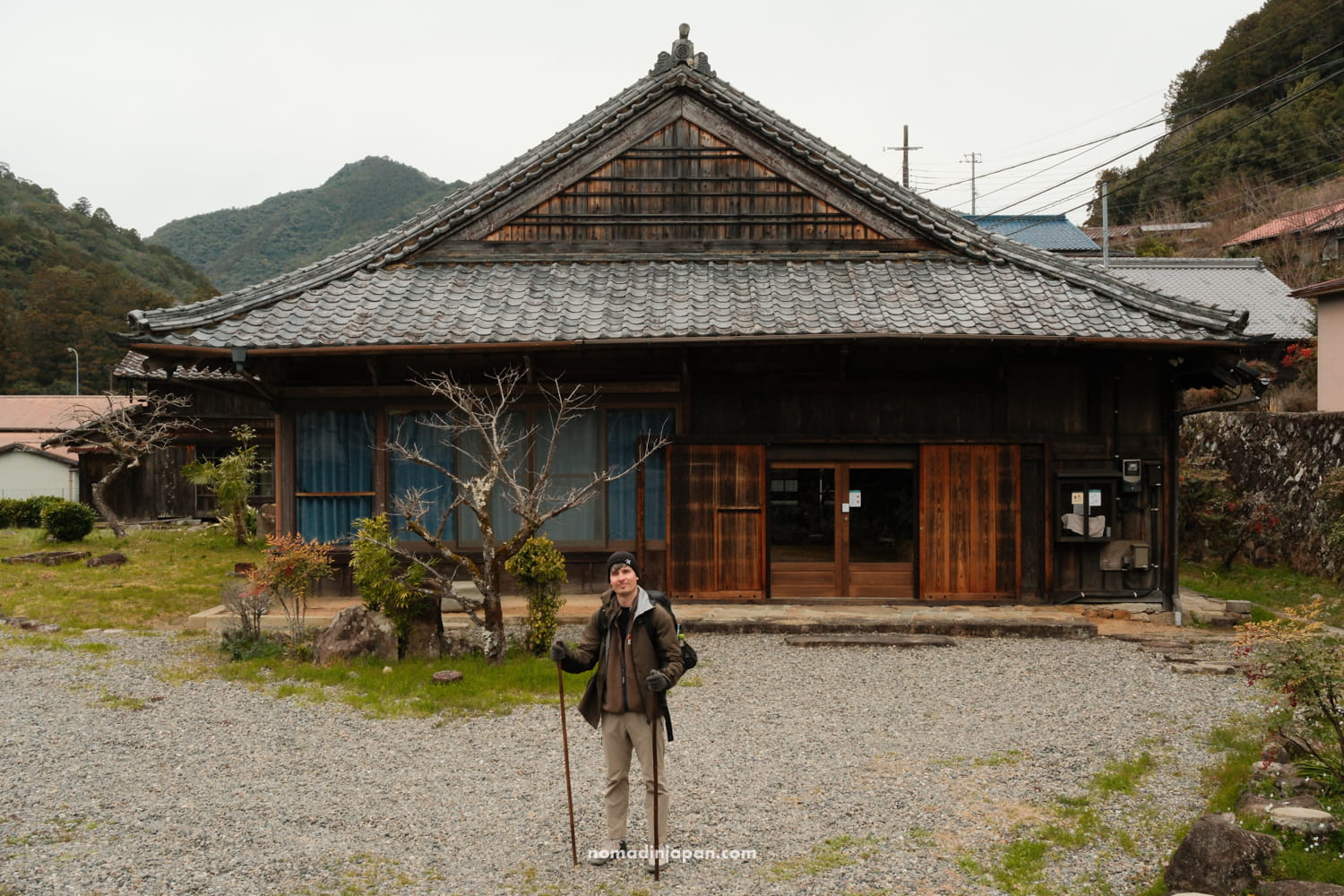
First, please note that your lodging options along the Kumano Kodo (Nakahechi trail) will be based on your hiking route. Meaning, there’s no “one size fits all” here — some pilgrims overnight in Takahara their first night, while others choose Chikatsuyu (= longer hike on the first day).
That said, if you follow our 4–5-day Nakahechi route from Takijiri-Oji to Hongu Taisha, then down to Nachi Taisha, you will be staying in small villages along the trail, and you’ll need at least 3–4 nights to complete it fully.
Here’s the shortened version of everywhere we stayed on the Kumano:
- Night 1: Kiri-no-Sato Lodge, Takahara
- Night 2: Kumanoyasai Base, Chikatsuyu
- Night 3: J-Hoppers Hostel, Yunomine Onsen
- Night 4: Sen. Haven Nakamura, Koguchi
- Night 5 (optional): Hotel Urashima with cave onsen, Nachi-Katsuura

While you’re at it, be sure to check your hotel/ryokan/guesthouse inclusions to see whether dinner + breakfast (and lunch bento) are included.
If not, I recommend reserving those in advance, as there are few food facilities on the way. Plan accordingly.
Keep in mind that Kumano Kodo accommodation is extremely limited, most especially in Koguchi — the midway hiking point between Hongu Taisha and Nachi Taisha (it’s a challenging 13–14 km trek each day between the two Grand Shrines). Booking in advance is essential!
The best time to book your stay on the Kumano Kodo is at least 3+ months out, honestly. Although, we did meet pilgrims who managed truly last-minute reservations (like same-week bookings), they mentioned it was difficult, and ultra-expensive.
Option 1 — Reserve Through Kumano Travel

The first option is to reserve all of your accommodations through the community-supported website Kumano Travel. While the website is helpful for learning more about the various routes and the history of the Kumano Kodo Pilgrimage, it is not very user-friendly.
The pro of using this community reservation system is that it aims to address all your needs: itinerary, luggage forwarding, info, etc.
However, to book anything, you must first “request” reservations. Unfortunately, bookings are only available between 7-9 AM and 7-10 PM, Japan Standard Time.

Whenever I tried to request reservations, the reservation portal was unavailable even though I was within the hours. Again, it’s reliable to use (if you can use it 😅) , and please try to book through it, but just be aware that it’s a bit lacking in user-friendliness and you may run into a wall as I did.
This frustration led me to Option 2: booking everything myself through Booking.com, after figuring out which villages to stay in (see below for my recommendations and where we stayed!).
Option 2 — Book Your Own Lodgings

The upside to doing everything yourself is that you can immediately book + secure accommodation for what is available.
With Booking.com, many places offer free cancellation, so it’s nice to use it for having extra flexibility. The downside of using Booking.com is that you may not have access to all available Kumano lodgings, or you may not receive more guidance or feedback on your itinerary.
However, if you are planning to do a self-guided hike anyway, you should have no problem booking your own accommodation. It’s actually pretty straightforward.
Once you know your hiking schedule/route, booking accommodation on your own becomes very simple.
Accommodation plan — if you END hike at Kumano Hongu Taisha (short Nakahechi):
Night 1/2: Book a place in Takahara or Chikatsuyu (depending on whether you want to hike ~2.5 hours vs. ~7 hours on your first day).
Night 2/3: Book around Hongu (aka Yunomine Onsen, Kawayu Onsen, or Hongu area).
➡️ Our accommodation plan — if you END hike at Kumano Nachi Taisha (full Nakahechi).
Same as above, but add in TWO extra hiking days, with one crucial overnight in Koguchi (the midway village between Hongu Taisha and Nachi Taisha). You cannot hike the whole thing in one day. Koguchi is a must-stopover.
🥾 Trailhead: Takijiri-oji
🪵 Night 1: Kiri-no-Sato Lodge, Takahara
💫 Night 2: Kumanoyasai Base, Chikatsuyu
♨️ Night 3: J-Hoppers Hostel, Yunomine Onsen
🌲 Night 4: Sen. Haven Nakamura, Koguchi
⛩️ End hike: Kumano Nachi Taisha
🌊 Night 5 (optional): Rest in Nachi-Katsuura or onward travel back to Osaka/etc
Types + Cost of Accommodation on the Kumano Kodo
If you book at the last minute, as we did (~one month in advance), you might have slim pickings for accommodation.
Our itinerary included a mountain ryokan, a 1-bedroom rental, bunk beds in a hostel, an old 3-bedroom Japanese house, and a sprawling, retro, 5-star coastal resort. The mix was… interesting 😅… but I would book it all again in a heartbeat, especially the mountain lodge in Takahara and the guesthouse in Yunomine (private onsen baths!).


Along the Kumano, it’s not unusual to have a mix of traditional ryokan inns, though you’ll find those more abundant around Hongu in onsen villages like Yunomine or Kawayu. Most other accommodations are house rentals and then minshuku, family-run guesthouses. There aren’t really large hotels here.
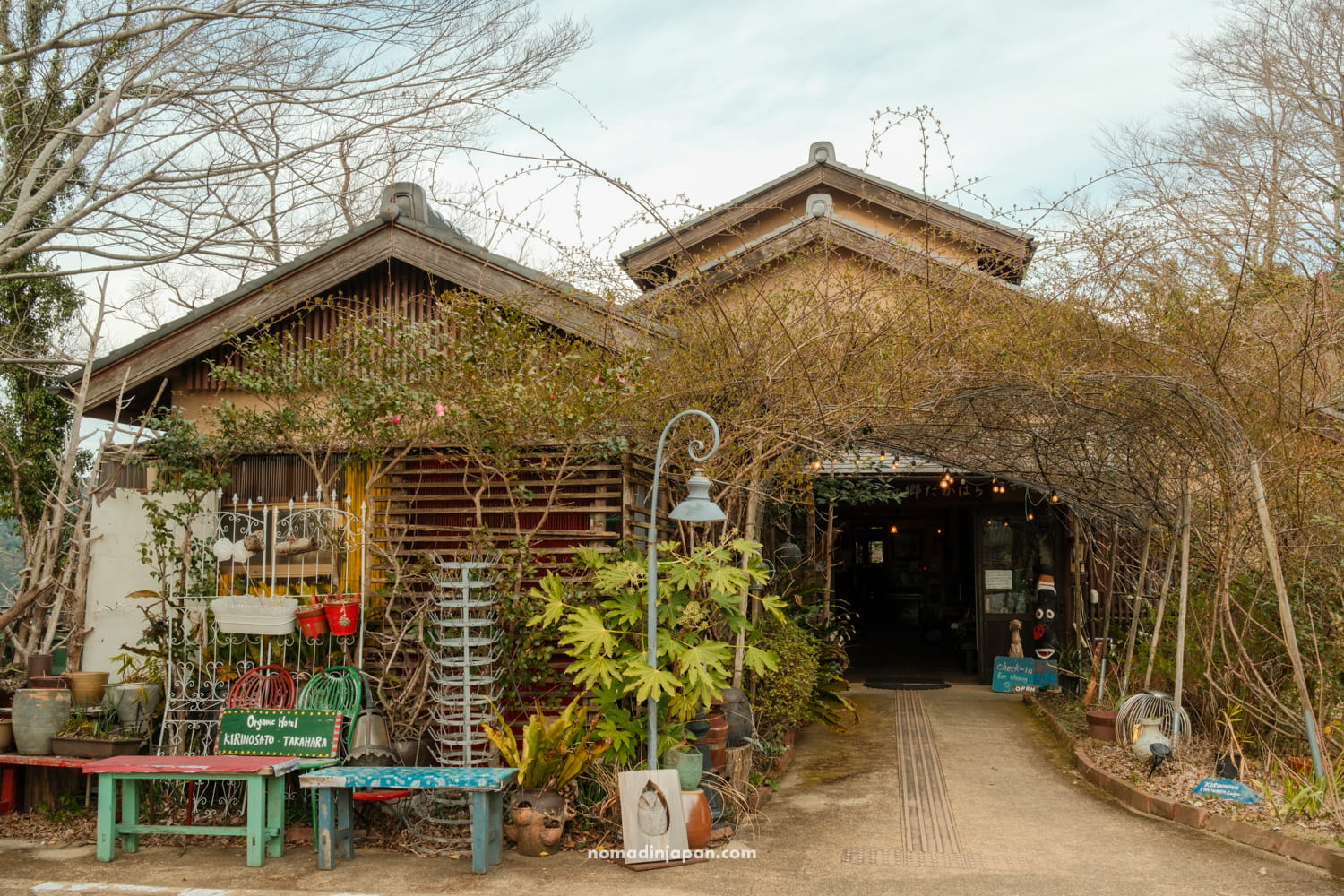
The highlight of our Kumano accommodation was probably our first night — at Kiri-no-Sato Lodge — and our third night at J-Hoppers in Yunomine Onsen (where you can soak in the world’s only World Heritage registered hot spring bath, Tsuboyu).
Cost-wise, lodging on the Kumano Kodo can get expensive because of the limited availability. The cheapest we found was our hostel, J-Hoppers, for $55/night (total for two bunkbeds; still had a private onsen!), and the highest was $275/night for our ryokan with onsen and dinner/breakfast.
💰 On average, we spent ~$190 per night for accommodation along the Kumano Kodo as a couple in a standard Japanese-style room or a house rental.
Best Places to Stay on the Kumano Kodo (Nakahechi Route)
1. Takahara (First Night Stop)


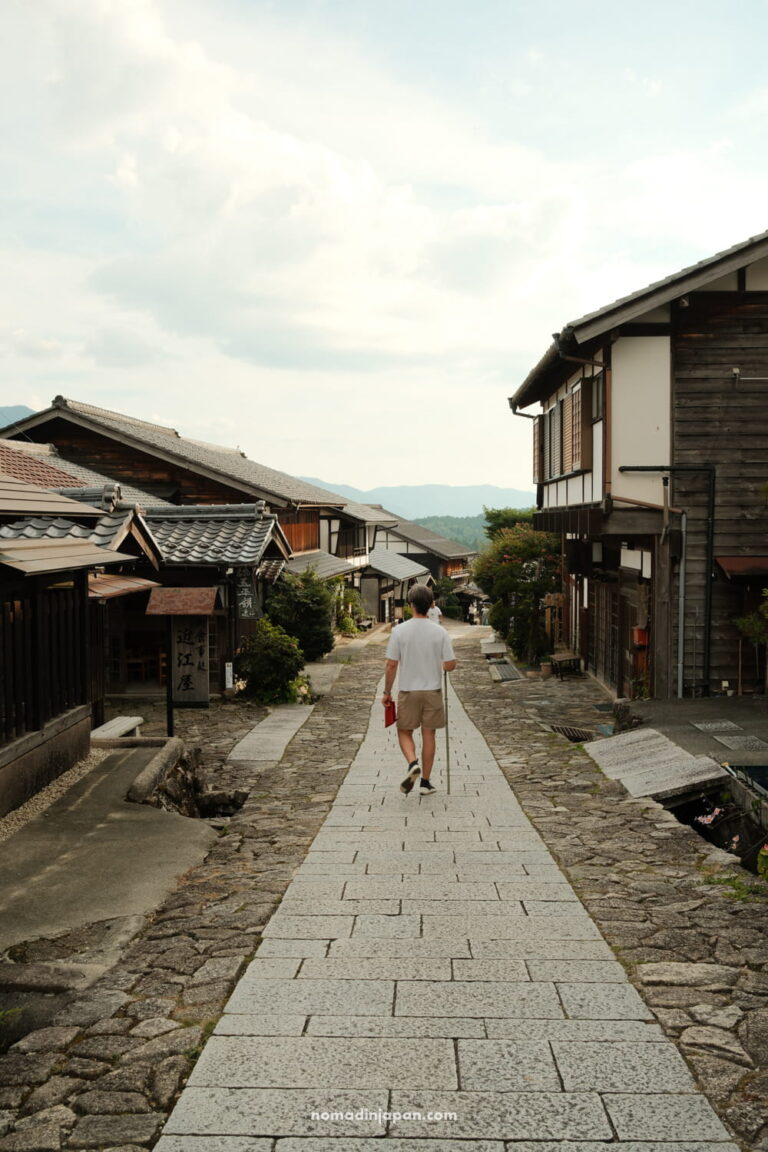
Our first night on the Nakahechi route, we stayed in Takahara, the “Village in the Mist.” I don’t regret staying here at all, even though it wasn’t very budget-friendly! In fact, this was the perfect slow start to our pilgrimage.
We booked a Japanese-style room at Kiri-no-Sato Lodge and would happily stay again.
It’s perched atop the village overlooking the Hatenashi mountain range, and has all the cozy parts of a Japanese lodge–ryokan you could expect: a fireplace in the high-ceiling dining room, a stone-lined onsen bath with views of the mountains, cozy yukata robes to wear to dinner and breakfast, friendly staff, and delicious regional cuisine!
Our dinner and breakfast were exquisite (and included) in our board.
This felt like the perfect way to start the trail — with a good soak, a good view, good people, and good food.
You can also reserve the next day’s bento lunch here for 1000 JPY/person (if you skip it, day 2 to Chikatsuyu has a rest area with soba/udon, snacks, and vending machine drinks).
2. Chikatsuyu / Nonaka

The next village area to stay in after Takahara will be Chikatsuyu or Nonaka. Choose Chikatsuyu if you want a shorter hike, and Nonaka if you want a slightly longer hike.
There was no accommodation availability in Nonaka when we searched, so we ended up in Chikatsuyu, renting a 1-bedroom house (Kumanoyasai Base). Although we were happy to secure a place in the village, the price/value wasn’t comparable to our previous lodge. The rental was a bit outdated, and unfortunately, the heating was not powerful enough to keep the cold of a mid-March night at bay. We woke up to 3°C inside! 😅
Aside from that, the rest was great: Shino, the owner, prepared/delivered us a bento dinner, and made a hot breakfast in her cute café for us before our bus departure from Chikatsuyu at 07:23 am (to Doyukawa-bashi, where the trailhead began for our hike to Hongu on day 3).
I’d possibly book here again if it were a little warmer later in the season. However, these others were my first choices, but they were sold out:
- Minshuku Chikatsuyu, a family-run guesthouse which is located right by the river and also the village onsen, Hisui-no-yu.
- Minshuku WAGO, another locally-run inn beside the Chikatsuyu-oji shrine (where you get your stamp!).
- Nonagase Guesthouse, a historic, renovated Japanese home with cedar tub.
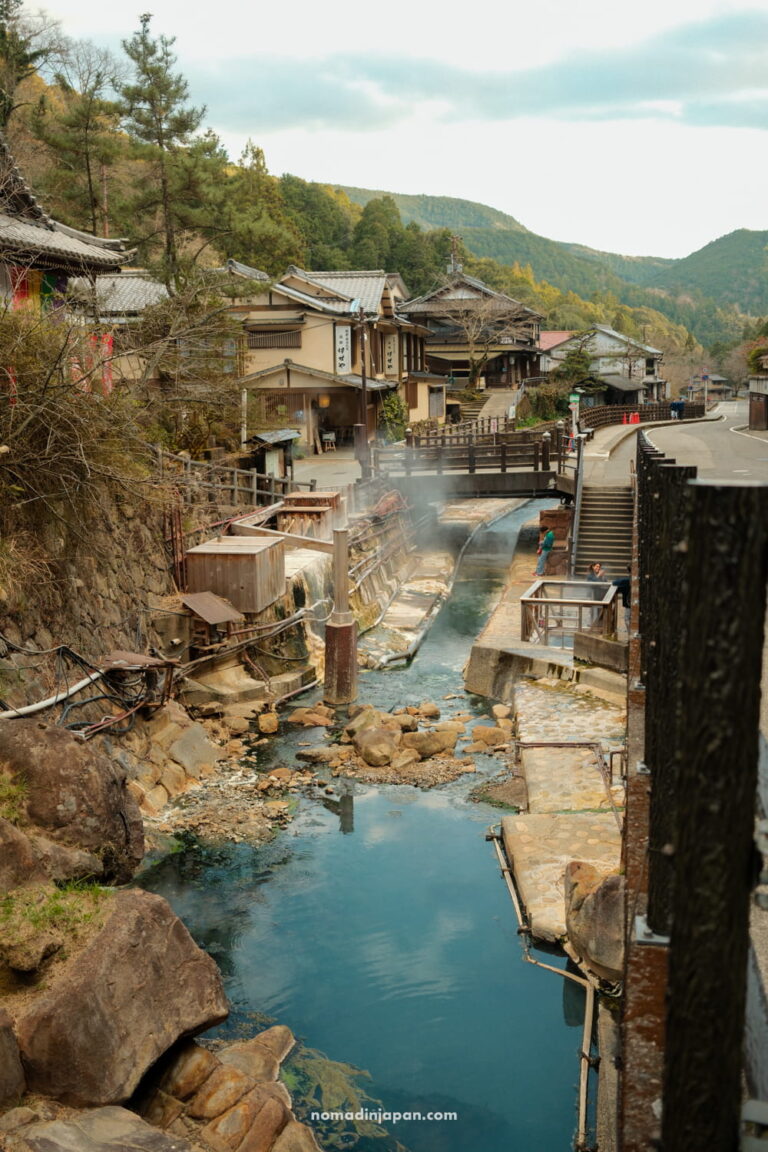
3. Yunomine Onsen Village (or Kawayu Onsen)
I’d say the highlight of the accommodation on the Kumano (for me) was staying overnight in Yunomine Onsen after finally arriving and visiting the Kumano Hongu Taisha Shrine on day three.
This historic hot spring village is where you can stay in a traditional ryokan on the Kumano. Otherwise, you can also opt to stay in Hongu for more convenient bus/transport access.
Still, the more unique option, in my opinion, is Yunomine Onsen — and it’s a quick bus ride away.
This historic hot spring village has over 1,800 years of history and is historically tied to the Kumano. Pilgrims would come to bathe in the ancient sulphuric springs of Yunomine as part of purification rituals! ♨️
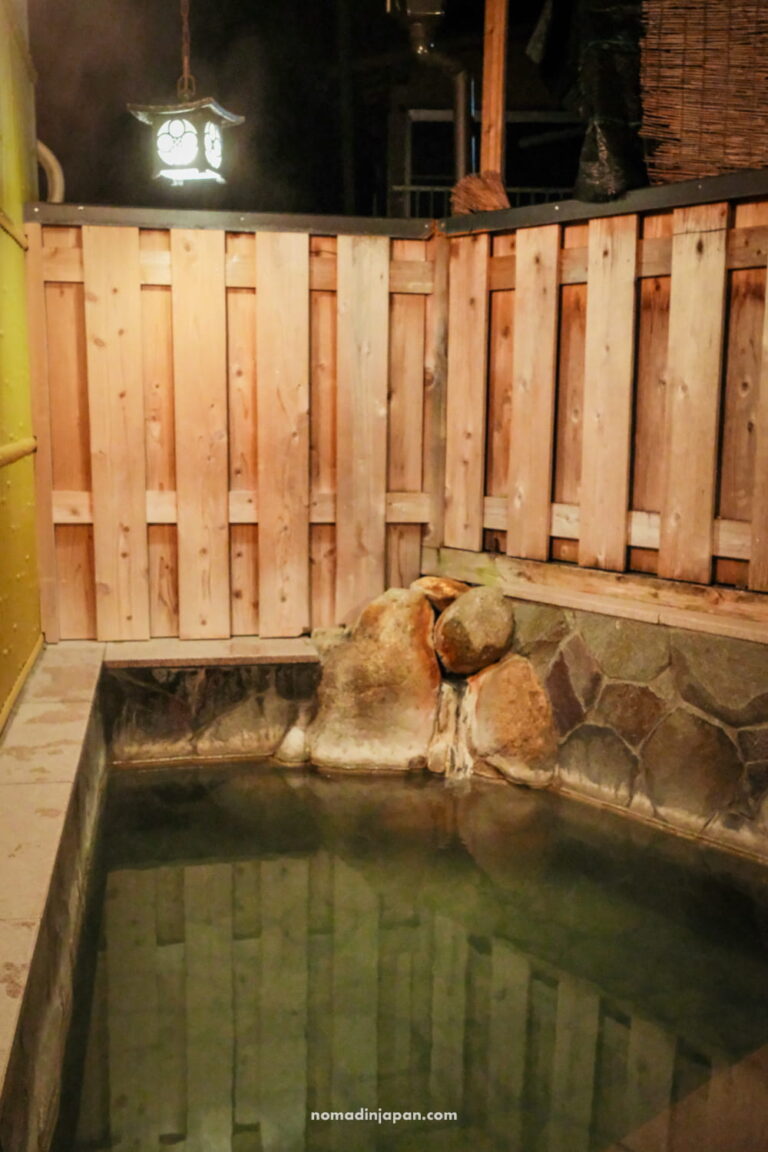
For accommodation, don’t overlook the J-Hoppers Hostel — probably one of the best hostel-type guesthouses we’ve stayed in Japan! It also has three private onsen baths you can use (one outdoor, two indoor), which is ideal for couples/groups who want to bathe together without gender-seperated baths. There’s also a cute footbath by the entrance.
As a hostel/guesthouse, J-Hoppers doesn’t offer any breakfast or dinner options; however, you can cook.
For dinner, I highly recommend eating at their sister restaurant, You Got It Bar, right in the heart of the village, featuring fresh onsen-steamed veggies and meat, plus snacks and delicious gyoza dumplings! (No reservations; first-come, first-served.)
In Yunomine, you can soak in the world’s only World Heritage-registered onsen bath at Tsuboyu. You can privately use the onsen for 30 minutes for 1-2 people (first-come, first-served). It’s located in a shed built directly over the hot spring creek, which makes it extra hot!
🏮 For a ryokan experience in Yunomine, look no further than Ryokan Adumaya. It’s one of the oldest, traditional inns in the heart of the village.
If ryokan in Yunomine is sold out, check next door in Kawayu Onsen, where you can dig out hot spring water directly in the river.
For me, this night was the perfect mix of Kumano pilgrimage, onsen, and culture.
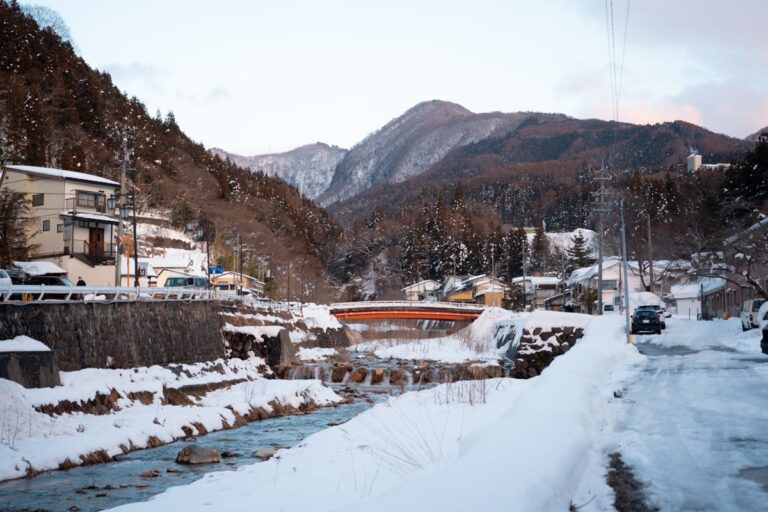
4. Koguchi (Midpoint Hongu–Nachi)

If you are hiking the full Nakahechi route (i.e., NOT ending your hike at Hongu), you will have two extra hiking days.
This means it’s a must-do to reserve accommodation in Koguchi (1 night) to break up the two mountain passes you have to cross to reach Kumano Nachi Taisha on foot.
In Koguchi, there are VERY limited options. This will be the first village to sell out. So, please check that you can secure something here first.
We lucked out and had one option available: Sen. Haven Nakamura (an old, but lovely, 3-bedroom Japanese house with a garden).
The house is right by the road, next to the town’s only small grocery store, and a short walk away from the Ogumotori-goe trailhead.
5. Nachisan (End of Full Nakahechi)
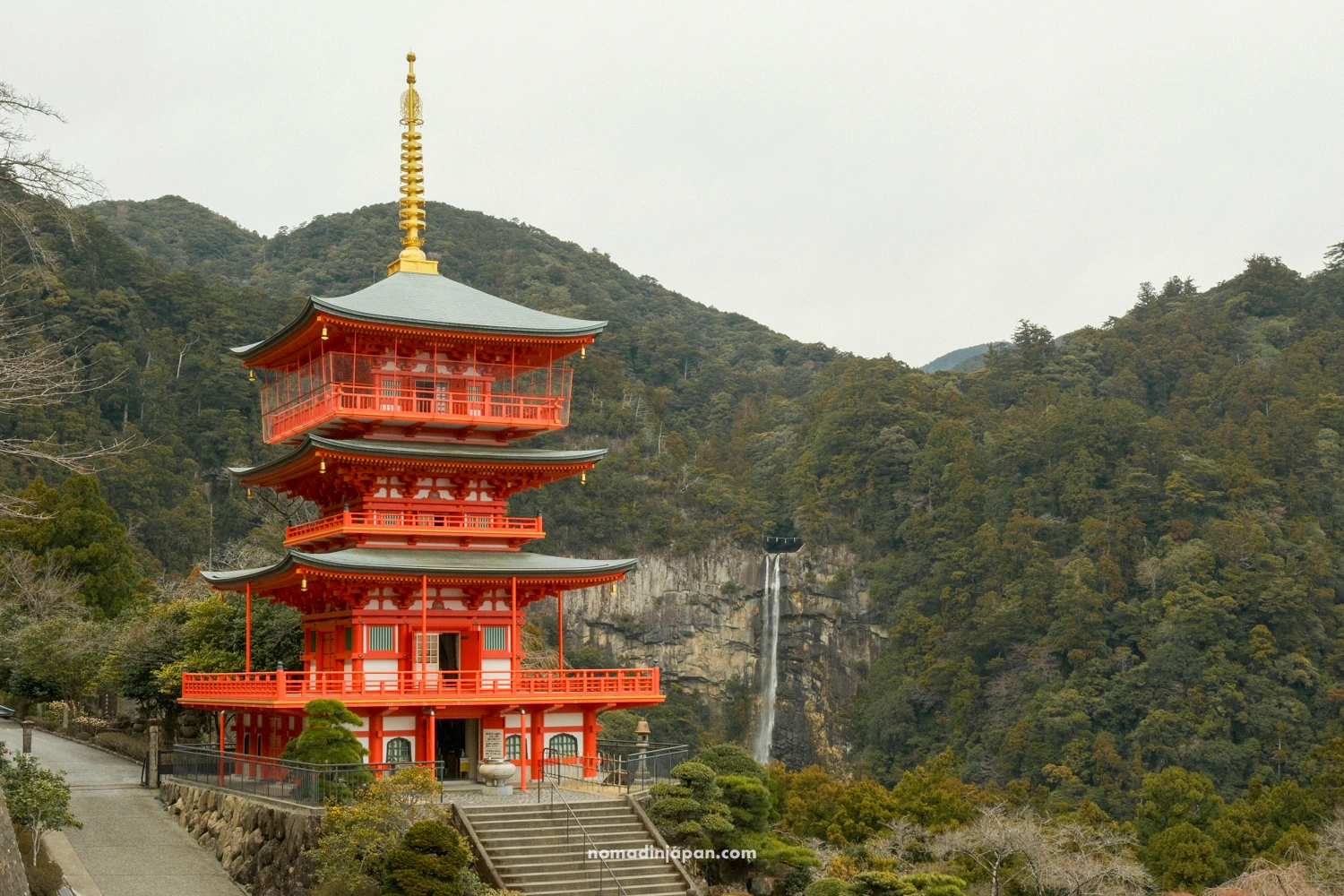
Finally, on your last day, you will hike down to Kumano Nachi Taisha and Nachi Falls. This is a full hiking day requiring ~7–9 hours.
Leaving at 8 am means an arrival time of around 3 pm+. There is only one lodging option here: Mitaki Sanso. Instead of staying here, though, we decided in advance to visit the shrine and falls, then take the last bus (~5 pm) to Nachi-Katsuura.
Places to stay on your last day of the Kumano:
- Nachi-Katsuura (fishing village; ~25 minutes by bus from Nachi Falls)
- Shingu (where the last shrine of the Kumano Sanzan is ⛩️; ~40 minutes by bus, with transfer)


We stayed overnight in Nachi-Katsuura, at the sprawling Hotel Urashima, which is famous for its cave onsens (not tattoo-friendly).
Others with rental cars or onward travel plans can head to Kii-Katsuura Station (Nachi-Katsuura) and take the JR Kuroshio train back to Tanabe, Wakayama City, Osaka, etc.
Practicing Mindful Tourism: What to Expect from a Kumano Kodo Stay

Please be mindful that many of the lodgings along the Kumano Kodo are not luxury resorts. They’re small, locally-run ryokan or guesthouses with loads of history and require great care.
You can expect:
- Early dinners or bento (~6:30 pm) and breakfasts (6–7 am)
- Early check-out times (8–9 am) to allow hikers an early start on the day
- Shared onsen baths (gender segregated or private rooms)
- Traditional tatami flooring with futon bedding (can be hard on the hips/shoulders!)
- Very few to no restaurants in villages (plan food with lodging in advance)
- Quiet, rural communities (no partying, no loud noises after 9 pm, no trash!)
Best practice is to be courteous to residents and other pilgrims.
The Kumano Kodo is not just a zip-through experience; it holds significant spiritual heritage and deep cultural importance. Please be mindful. 🙏
Finally… Slow Down & Enjoy!

I’d recommend budgeting in more time to slow down at your ryokan/lodge along the Kumano Kodo. It’s part of the pilgrimage to rest and reflect, and enjoy other facets of the hike other than the trails — onsen, regional food, community, quiet time… 🥰
Your choice of lodging on the Kumano will have a huge impact on your experience!!
With that in mind, planning in advance can greatly help secure your route + accommodation, with time to organize luggage forwarding (if needed), plus double-check your meal plans.
Finally, remember to:
- Carry cash (~20k–40k JPY, just in case) for paying for bento lunches, snacks, coffees, onsen tickets, and shrine souvenirs
- Respect onsen, ryokan, and shrine etiquette 🙏
- Practice mindfulness and responsible tourism
I hope my accommodation guide has helped you piece together your lodgings! This is the advice I wish I had. If you have any leftover questions, please drop them in the comments below.