Located just south of Osaka and Nara on the Kii Peninsula, Wakayama is best known as the gateway to the ancient Kumano Kodo pilgrimage, and to Mount Koya (Koyasan), the foundation of Japanese Shingon Buddhism by Kōbō Daishi. But beyond the shrines and temples, this rugged prefecture is home to juicy mikanmandarin oranges, historic hot springs, coastal towns and beaches (and some of the freshest tuna you’ll ever try), and near-forgotten rural mountain villages. Wakayama is often overlooked, mistakenly, but it’s one of the best places to discover Japan’s spiritual heritage.
How to plan the perfect Japan pilgrimage hike for first-timers.
Wakayama
Wakayama is probably best known for the Kumano Kodo Pilgrimage, a network of ancient routes that cross the mountains of the Kii Peninsula, and Koysan, where you can experience a temple stay with Buddhist monks. The region is also famous for its sacred shrines (like Kumano Hongu Taisha), traditional onsen towns such as Yunomine (1800-yrs-old history), and Japan’s more rural side.
Yes, 1000%!!! Wakayama definitely gets overlooked (I mean, it took me eight trips to Japan before coming here!!). I think it’s especially worthwhile if you’re looking to experience a quieter, more spiritual side of Japan. We saw few tourists compared to other places we’ve been. And it’s a shame, because Wakayama offers a mix of nature, culture, and history, making it ideal for a slower experience. You can hike the Kumano Kodo, soak in remote hot springs, and visit UNESCO-listed shrines, all without the crowds of major destinations like Kyoto.
We spent roughly two weeks in Wakayama, between hiking the Kumano (5-6 days) and Wakayama city (4+ days). I’d say you need at least 4-5 days to explore Wakayama, depending on your plans. If you’re hiking part of the Kumano Kodo, you’ll likely want 3–5 days carved out JUST for the trek, while a shorter visit, with a rental car, can focus on key sites like Kumano Hongu Taisha, Yunomine Onsen, and the surrounding coastal towns of Kii-Katsuura and Shingu. Read more info in my Kumano Kodo itinerary.
We visited during early March (March 1–15), but the best time overall would extend from March to May, or during the fall months in Oct-Nov. Basically, when the weather is mild and pleasant. Summer can be hot and humid (and RAINY), while winter is quieter but still suitable for hiking, though temperatures are much cooler in the mountains (it got down to 3°C when we did our trek!).
The easiest way to reach Wakayama Prefecture is by train, first to Wakayama City, but you can go direct to Kii-Tanabe, the main gateway to the Kumano Kodo. From Osaka, it takes around 2–2.5 hours via a limited express train (Kuroshio), while from Kyoto it takes about 3 hours. From Tanabe, buses connect to trailheads and key towns along the route. Overnight in Tanabe if you plan to hike a big day on your first day of the Nakahechi. Otherwise, you can stay in Wakayama City (which is what we did before/after our trek).
Ehhh, you don’t need a car to visit Wakayama, especially if you’re hiking the Kumano Kodo. The region is well-connected by buses and trains. However, renting a car in Tanabe can make it easier to explore more remote areas, coastal towns and beaches, and lesser-visited parts of the Kii Peninsula. We met A LOT of hikers who were driving part of the route and not doing the full 5-6-day itinerary.
Places to Visit in Wakayama
Wakayama Prefecture is spread across the mountainous Kii Peninsula just south of Osaka and Nara. While it’s easy to get to from the Kansai region, it feels more rural, spiritual, uncrowded, and connected to nature.
Honestly, a trip to Wakayama is less about visiting one central city or place and more about discovering the whole prefecture—whether that’s trekking a portion of the Kumano Kodo or staying in small onsen villages tucked into the mountains. Expect sacred shrines, hiking trails, coastal towns, and some of Japan’s most unique hot spring experiences (looking at you, Yunomine 👀).
There’s so much to discover in Wakayama, we can’t wait to go back!
Kumano Hongu Taisha – One of the three grand shrines of the Kumano Kodo pilgrimage, considered “the spiritual heart of the region.” And for good reason! Nearby is also Japan’s tallest Shinto torii gate — Otorii of Oyunohara Sanctuary (the former site of the Hongu Taisha Shrine).
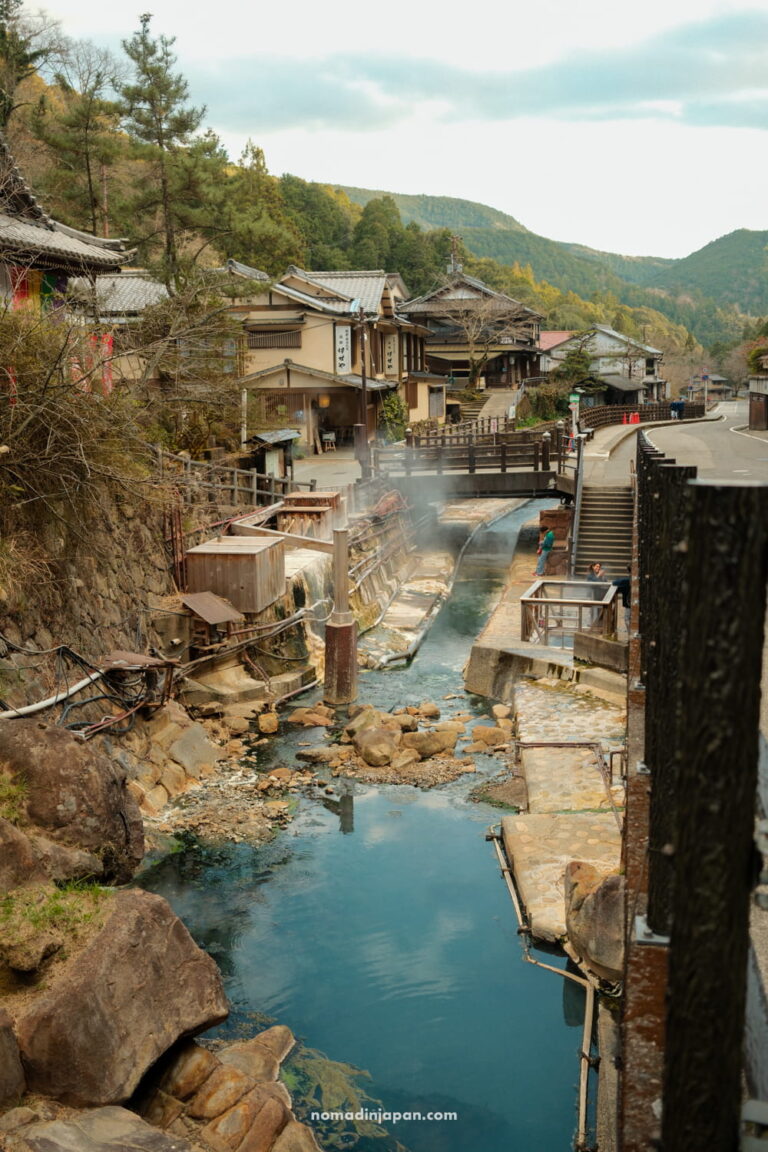
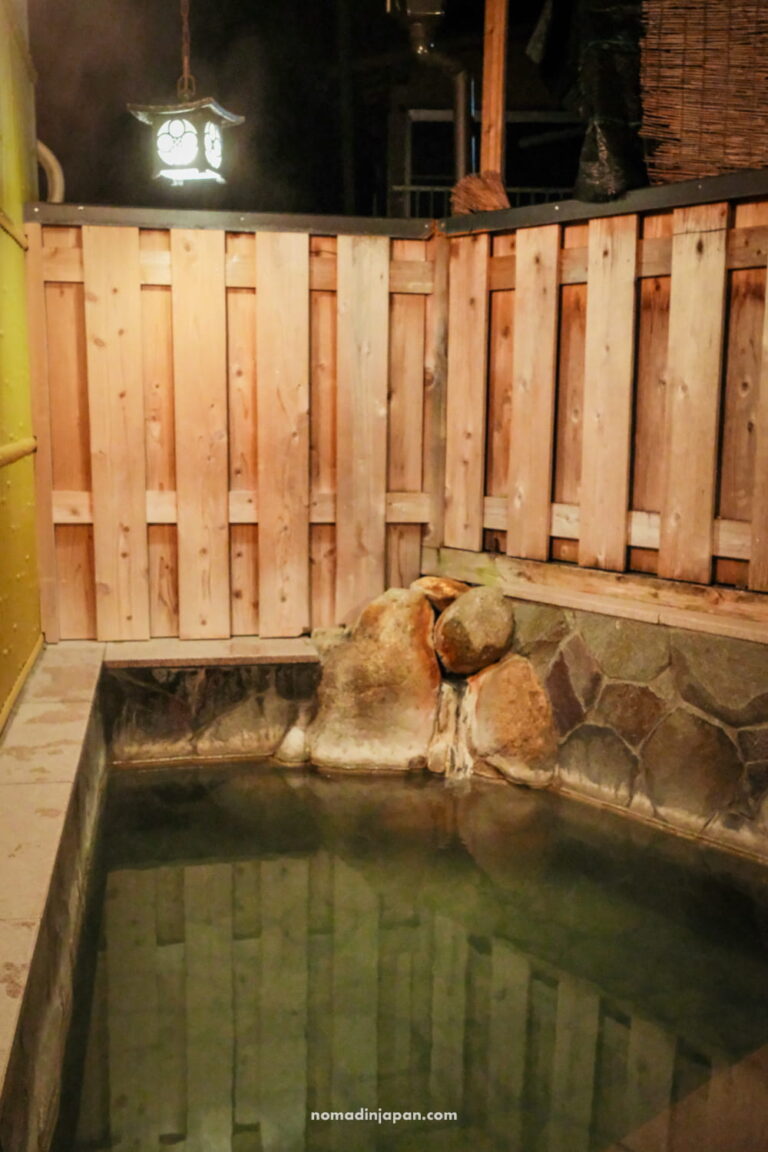
Yunomine Onsen – A historic hot spring village said to have over 1,800 years of history, known for its UNESCO-listed Tsuboyu onsen bath in a shed built over the hot spring creek, with history tied to the Kumano pilgrimage.
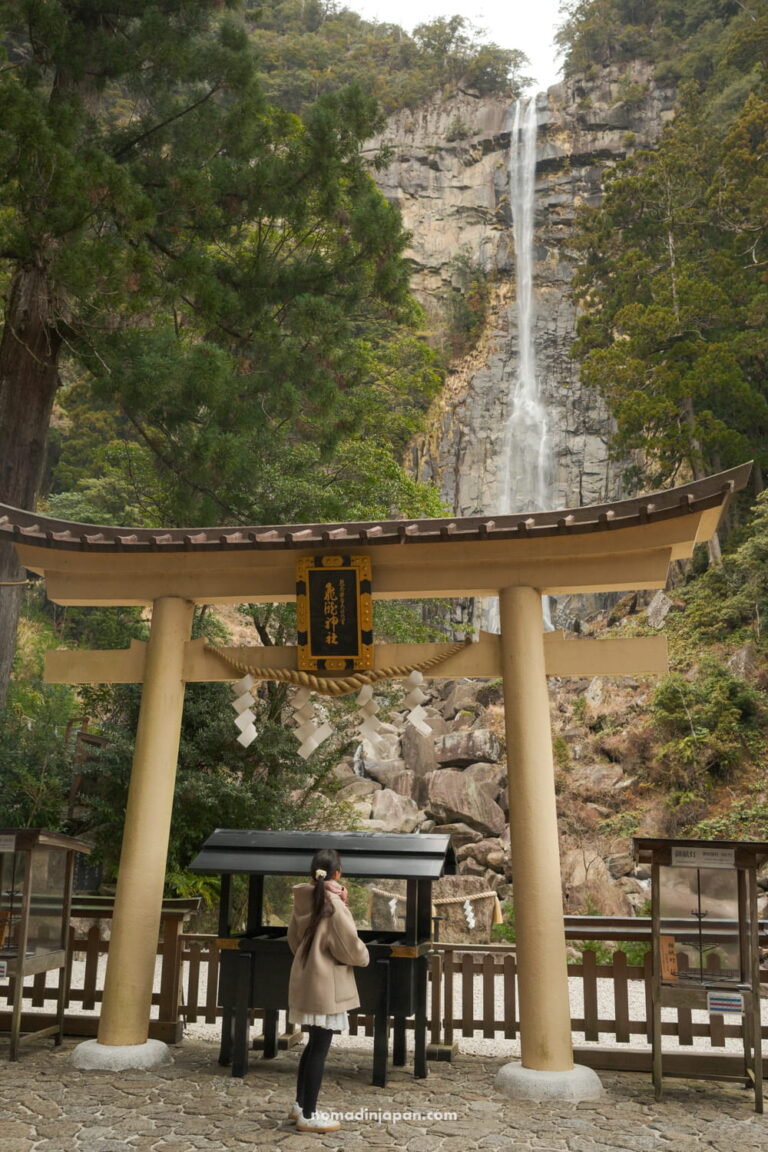
Kumano Nachi Taisha & Nachi Falls – You know that photo of a vermillion pagoda with a waterfall in the background? Yeah, that’s this place! This is one of the major grand shrines of the Kumano, and Japan’s tallest waterfall. Together, they make one of the most iconic sights and photos in Wakayama.
Kumano Hayatama Taisha (Shingu) – The third grand shrine we visited, and the final one to complete the Kumano Sanzan!
Kawayu Onsen – A unique riverside onsen town where you can dig out your own little hot spring bath along the riverbank. We passed here on the way from Hongu to Yunomine.
Hashigui-iwa Rock & Kushimoto – Fascinating natural rocks, sea caves, resorts and beaches, and Honshu island’s southernmost town.
Kumano Kodo Pilgrimage
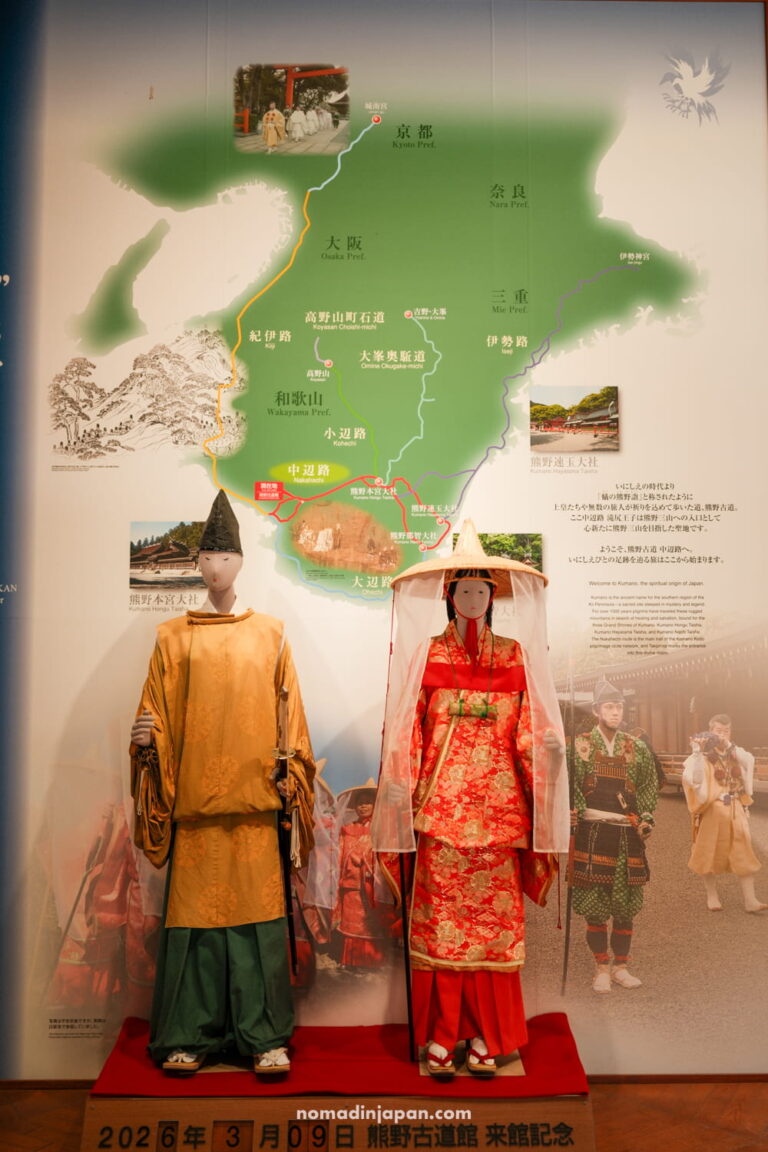
The Kumano Kodo is the heart of Wakayama and one of Japan’s most spiritual experiences. This ancient pilgrimage trail goes over forested mountains, connecting Kumano Hongu Taisha, Kumano Nachi Taisha, and Kumano Hayatama Taisha.
The Nakahechi Route (the “Imperial Route”) is the most popular and accessible, and is what most people think of when referring to the Kumano. It’s a multi-day trek through small villages, beyond scenic viewpoints, up centuries-old stone paths, and across challenging mountain passes once walked by emperors and pilgrims. (Yeah, it’s cool 😎.)
Kumano Hayatama Taisha – Located near the coast in Shingu!
Visiting these shrines is a core part of the Kumano Kodo experience, whether you hike between them or access them by bus/car! We trekked from Takiri-oji to Nachisan, spanning approximately 70 km over 5 days, though you can do it in less time or split it up into chunks by bus/car.
Onsen & Where to Stay
One of the highlights of visiting Wakayama—especially along the Kumano Kodo—is staying in mountain lodges and soaking in natural hot springs after a long day of trekking.
Many stays in Wakayama are in ryokan or small family-run guesthouses (minshuku), including yukata robes, home-cooked dinners, and access to onsen. However, there are also lots of large-scale, sprawling beach resorts and coastal hotels. One such famous hotel with a cave onsen is Hotel Urashima.
Rather than staying in one place, most travelers will move between towns as they explore the region.
Yunomine Onsen – One of the coolest onsen villages I’ve been to! We stayed here along the Kumano Kodo. It has traditional ryokans and Japan’s only UNESCO-listed hot spring tied to the pilgrimage.
Kawayu Onsen – Right beside Yunomine, Kawayu is another unique onsen town where you can soak in riverside hot springs, especially magical in winter when the river turns into a hot bath!
Kumano Hongu Area – A convenient base to stay right beside Kumano Hongu Taisha, with a mix of guesthouses, ryokan, and hotels.
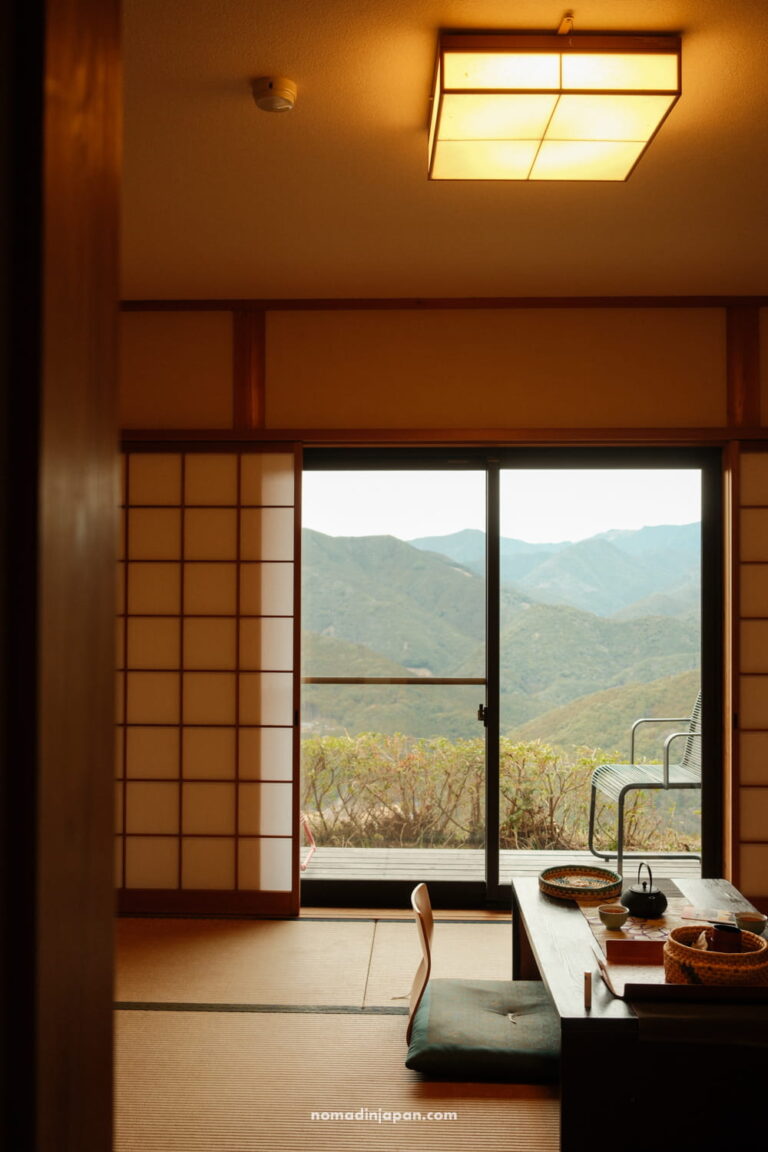
Takahara – The first place to potentially stay along the Kumano. It’s a scenic mountaintop village with beautiful views and a peaceful atmosphere. Wake up with sunrise on the mountains!
Kii-Tanabe – This is a practical place to stay before or after your hike, with more accommodation options and easy access to transport back to Wakayama or the Osaka airport. You can also collect your first Kumano stamp here!
Nachi-Katsuura – The charming, retro fishing village on the coast near Nachi Falls, where you can try Japan’s freshest tuna and soak in bubbling hot springs from within caves.
Shirahama – A coastal resort area with a wider range of hotels, beachfront stays, and luxury onsen with ocean views.
PS. Staying in a ryokan often includes multi-course kaiseki meals featuring local ingredients, as well as access to indoor or outdoor hot spring baths. It’s worth booking one if you’ll be visiting historic onsen towns like Yunomine Onsen.
Getting to & Around Wakayama
Getting around Wakayama can feel a bit more complex. The region is spread out across mountains and coastal towns, so most travel involves a mix of trains and local buses. If you’re hiking the Kumano Kodo, you’ll rely heavily on buses to reach the trailheads and move between towns on your own two feet. 😉 While limited, buses are reliable, and we had no problem finding them or understanding the posted schedules!
Rather than trying to base yourself in one place, it’s best to plan your route in advance and move through the region step by step. The Kuroshiro Limited Express train runs along the entire coast of the Kii Peninsula and is what we used to get to Wakayama from Osaka and back to Wakayama after Shingu City.
In between villages, we hiked around 10-15km+ per day and rode the bus (mainly between Hongu and Yunomine, then Yunomine to our next trailhead) and were able to tap in/out with our credit cards on our iPhones (very convenient!). Our ICOCA IC card wasn’t available on most inter-town buses.
You can easily search routes and buy advanced train tickets via Klook.
Screenshot
Cost of Traveling in Wakayama
I was actually surprised by the cost of accommodation in Wakayama (particularly along the Kumano Kodo).
Our biggest expenses were accommodation and then transport. That said, the experience—staying in traditional inns, eating really good meals, and soaking in onsen—was well worth the price. Accommodation options are extremely limited along the trail, so budget for $100-200+ per night for some ryokan and house rentals.
While you can save with a regional JR Pass, we slow-travel and therefore paid each train ticket separately. The cost from Shingu back to Wakayama was around 9,000 JPY.
I’m really quite happy with our food discovery in Wakayama! Wakayama is famous for a few delicious foods, like its own ramen and mandarin oranges.
Wakayama Ramen – This is Wakayama’s very own! It’s a rich, soy-based pork broth ramen. Try it in Wakayama City! We went to Ide Shoten, which actually won Japan’s “best ramen” award in 1998!
Kishu Ume (Pickled Plums) – These are a must-try if you enjoy salty, umami, savory-sweet flavors. Wakayama is Japan’s top producer of ume (pickled plums or sometimes referred to as Japanese apricots).
Mikan (Mandarins) – These are the sweetest, juiciest mandarin oranges I’ve ever had! They’re grown all throughout the region, and you’ll be sorry if you miss out.
Fresh Tuna – Thanks to its coastline, Wakayama offers everything from tuna and sashimi to grilled fish and local specialties in towns like Nachi-Katsuura and Shirahama. We got to try it FRESH. So good.