Nachi Falls, Wakayama: Visiting Japan’s Most Sacred Waterfall
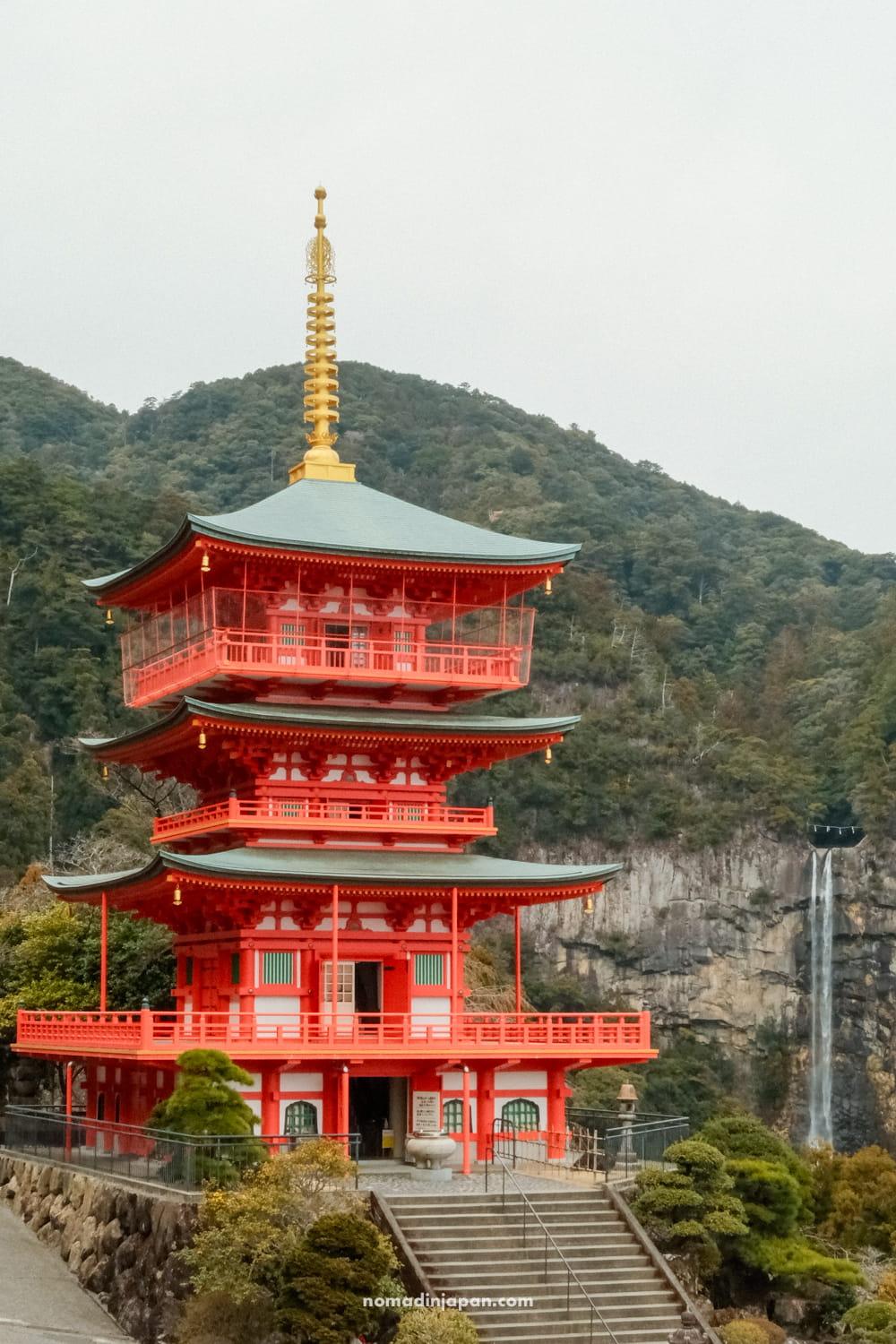
You know that iconic photo of a vermillion three-storied pagoda set in a misty, forested valley, backdropped only by a tall, sacred waterfall? Yep, that’s Nachi Falls, also known as Nachi-no-Taki (那智の瀧). 💦
This waterfall is not your ordinary waterfall, though. Zoom in on any photo, and you’ll see white lightning-bolt shapes strung between two trees above the falls. Those bolts indicate the presence of a kami (a Shinto deity).
Indeed, Nachi Falls is considered sacred, and being Japan’s tallest single-drop waterfall, that means it’s one powerful deity!
Nachi Falls is historically tied to the ancient Kumano Kodo Pilgrimage, and you can arrive here on foot from Hongu in two days via challenging mountain passes.
Or, you can take the bus or a rental car to visit Nachi Falls, too. 😂
Here’s everything you need to know about Nachi Falls in Wakayama, including how to visit, why it’s so special, and what to do beyond the falls. This guide is for pilgrims, slow travelers, and day-trippers to Nachi Falls!
What Makes Nachi Falls So Special?

Let’s recap quickly. Nachi Falls is so unique for a couple of reasons:
- It’s Japan’s tallest single-drop waterfall! (133m)
- Spiritually important in the Kumano faith (known as Shinbutsu-shugo)
- Worshipped as a deity (Shintoism, Japan’s indigenous belief, is all about respecting and worshipping the living being in all things, including nature – rocks, falls, trees, etc!
- Part of Kumano Sanzan + UNESCO World Heritage registration
That said, it’s important to note that Nachi Falls doesn’t exist in isolation.


Most people who visit also come to the area, historically known as Nachisan before the Meiji Restoration of 1868, because this is the home of both the:
- Tendai Buddhist Seiganto-ji Temple (the first in a 33-temple pilgrimage), to which the vermillion three-storied pagoda belongs;
- Kumano Nachi Taisha Shinto Shrine — one of the three Grand Shrines (collectively known as Kumano Sanzan), which is part of the Kumano Kodo pilgrimage.
Pilgrims of old would walk the various routes of the Kumano Kodo to worship and become “reborn” by visiting the Kumano Sanzan.
Modern-day pilgrims, hikers, and travelers can trace their footsteps by embarking on a multi-day hike along the Nakahechi Route, which crosses the Kii Peninsula from west to east, connecting the three shrines in Hongu, Nachi, and Hayatama (Shingu).
Where Is Nachi Falls?
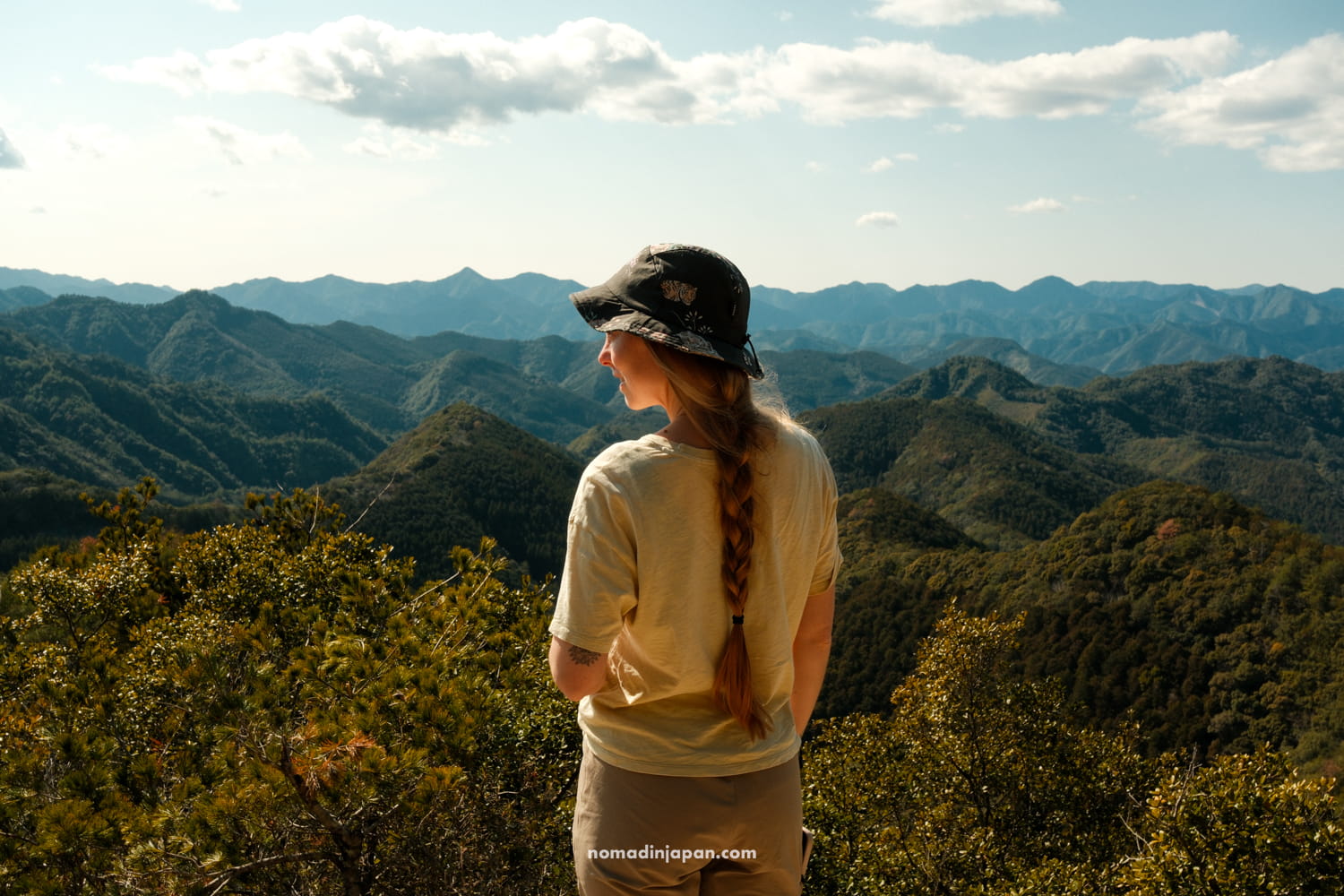
Nachi Falls is technically located within the greater Nachi-Katsuura town area in Wakayama Prefecture, which lies south of Osaka and Nara Prefectures on the mountainous and coastal Kii Peninsula.
From Kii-Katsuura Station, it takes just ~25 minutes by bus to reach Nachi Falls (take the yellow 31 Nachisan Line). There are frequent buses that run every day. There’s also a car parking lot for those with rental cars.
Most pilgrims, though, arrive on foot over the Ogumotori-goe mountain pass, which is a seriously steep and challenging hike starting in Koguchi (the midway point between Hongu and Nachi).
Things to Do at Nachi Falls
Visit the Kumano Nachi Taisha Shrine
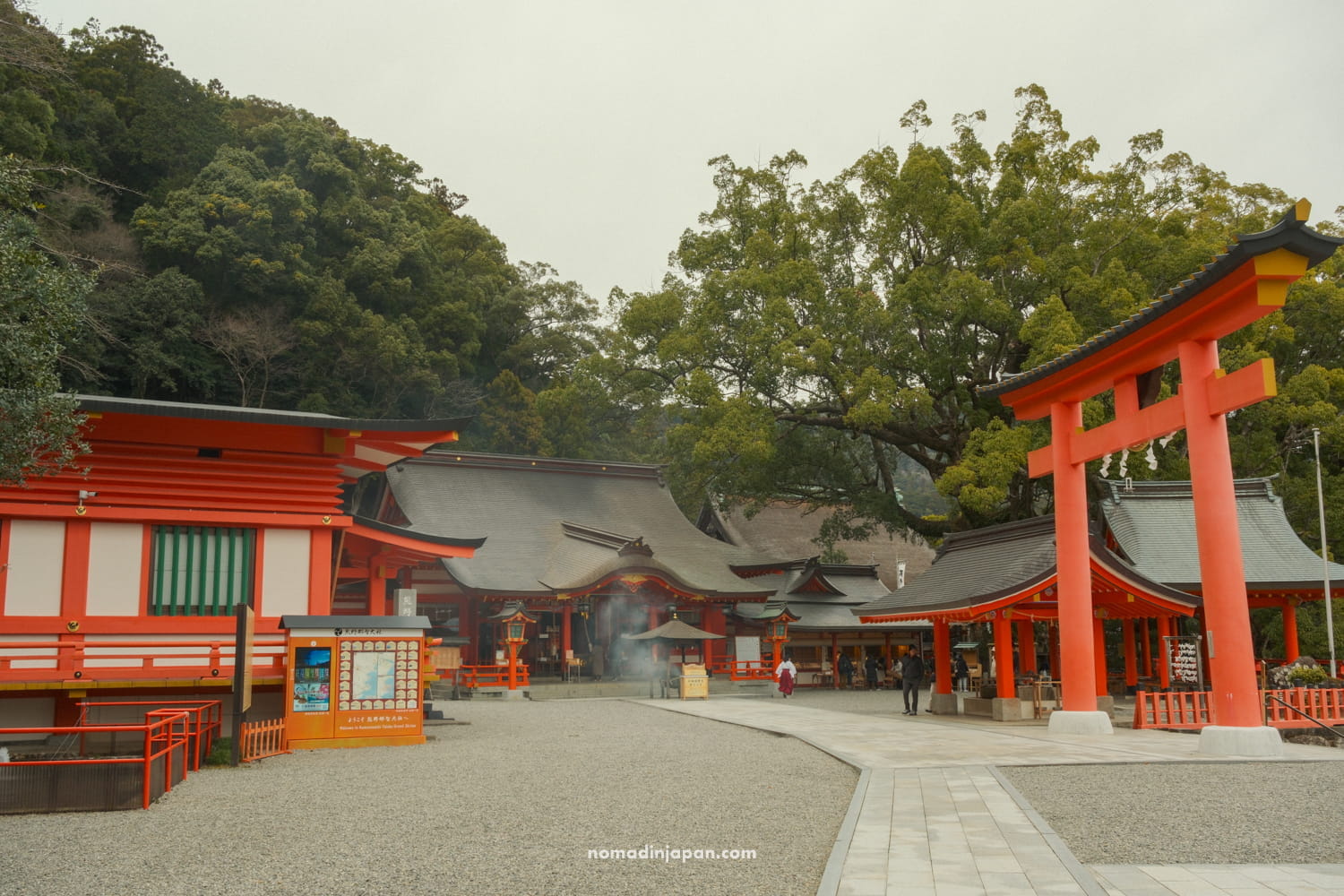
Personally, I found the Shinto shrine of the Kumano Nachi Taisha to be the most impressive and architecturally beautiful.
The stone-step entrance, marked by several large torii gates, is a worthwhile climb. If you’re arriving via the Kumano trail, though, you’ll first visit Seiganto-ji Temple.
At Nachi Taisha, you can buy omamori amulets and pay respects to a dedicated shrine to Yatagarasu — the sacred and mythical three-legged crow 🐦⬛ who is said to have guided Japan’s first emperor along the Kumano to the ancient capital city of Nara.


There’s also a beautiful, old camphor tree, also considered sacred, which you can actually walk inside the trunk of and pray. Buy an ema — a wooden wishing plaque — to hang out by the tree!
Explore Seiganto-ji Temple & Pagoda

Next, head inside the Seiganto-ji Temple.
The Seiganto-ji Buddhist Temple itself is free to visit and is more of what you’d expect from a Buddhist temple — it’s not as elaborate or as colorful as Shinto shrines are.
What’s unique about this one in particular, though, is that it’s the first temple marking the 33-temple Saigoku Kannon Pilgrimage.
The vermillion pagoda in front of Nachi Falls also belongs to the temple, and due to its uniqueness, is one of Japan’s most photographed landscapes. Visiting the pagoda separately costs 300 JPY.
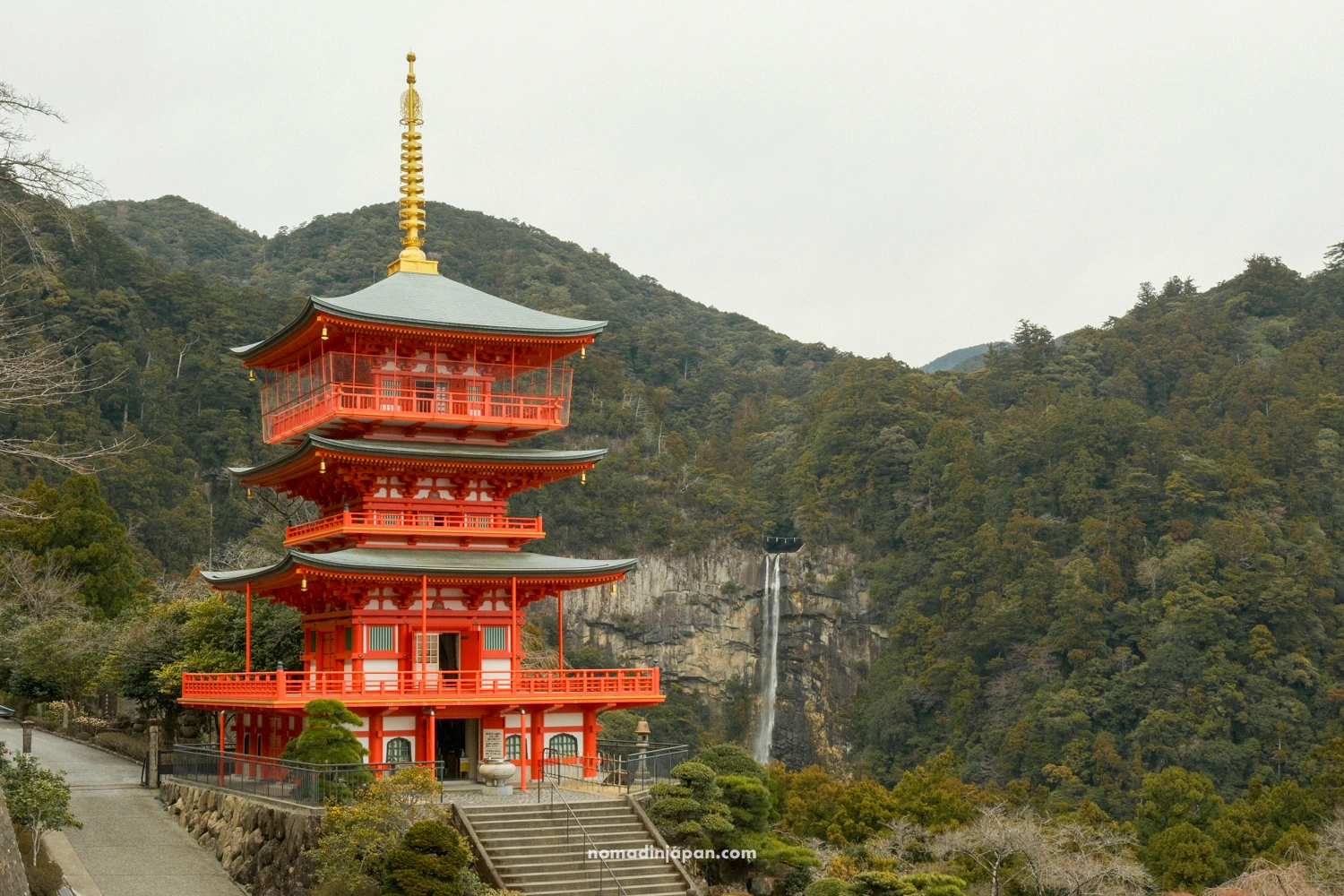
Together with Nachi Taisha and Nachi Falls, the Seiganto-ji Temple and Pagoda are emblematic of ancient Shinto-Buddhist syncretism.
Before the Meiji Restoration, they all acted and operated as one: Nachisan. However, today, while they support, complement, and still fuse together, they technically operate separately.
Walk to the Base of the Falls at Hiro Shrine

Once you’re finished roaming the hillside village, temple, and shrine, walk down the road a little way, toward Hiro Shrine. There’s a shortcut via some large stone steps — don’t rush!
Down here is where you can get the full bottom-top view of Nachi Waterfall, and also visit (and collect a stamp!) at Hiro Shrine.
There is a small observation deck (cost 300 JPY) up some stairs beyond the reception office that we didn’t have time to visit. Apparently, you can also drink a cup of the sacred water for a fee. 💴
Instead, we marveled at the sacred waterfall from below.
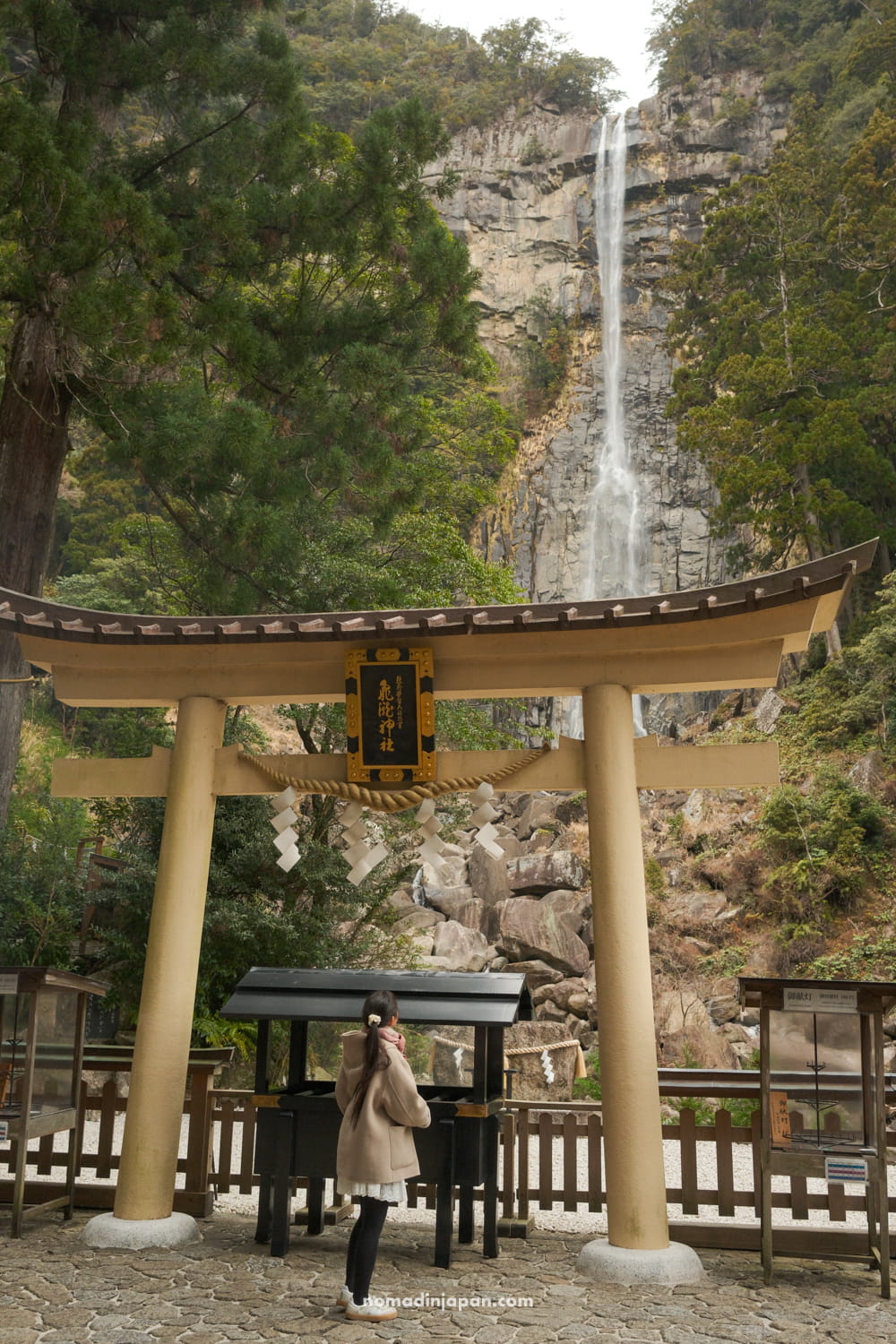

There’s a beige/yellow torii gate marking the entrance by the road, and another directly in front of the falls themselves, re-signifying its status as an important place of worship. Entrance to this area is free, but bring coins for amulets, souvenirs, and incense offerings.
Be sure to allow yourself enough time to get back up the stairs if catching the bus afterward. It’s steep!
Walk the Daimonzaka Pilgrimage Trail
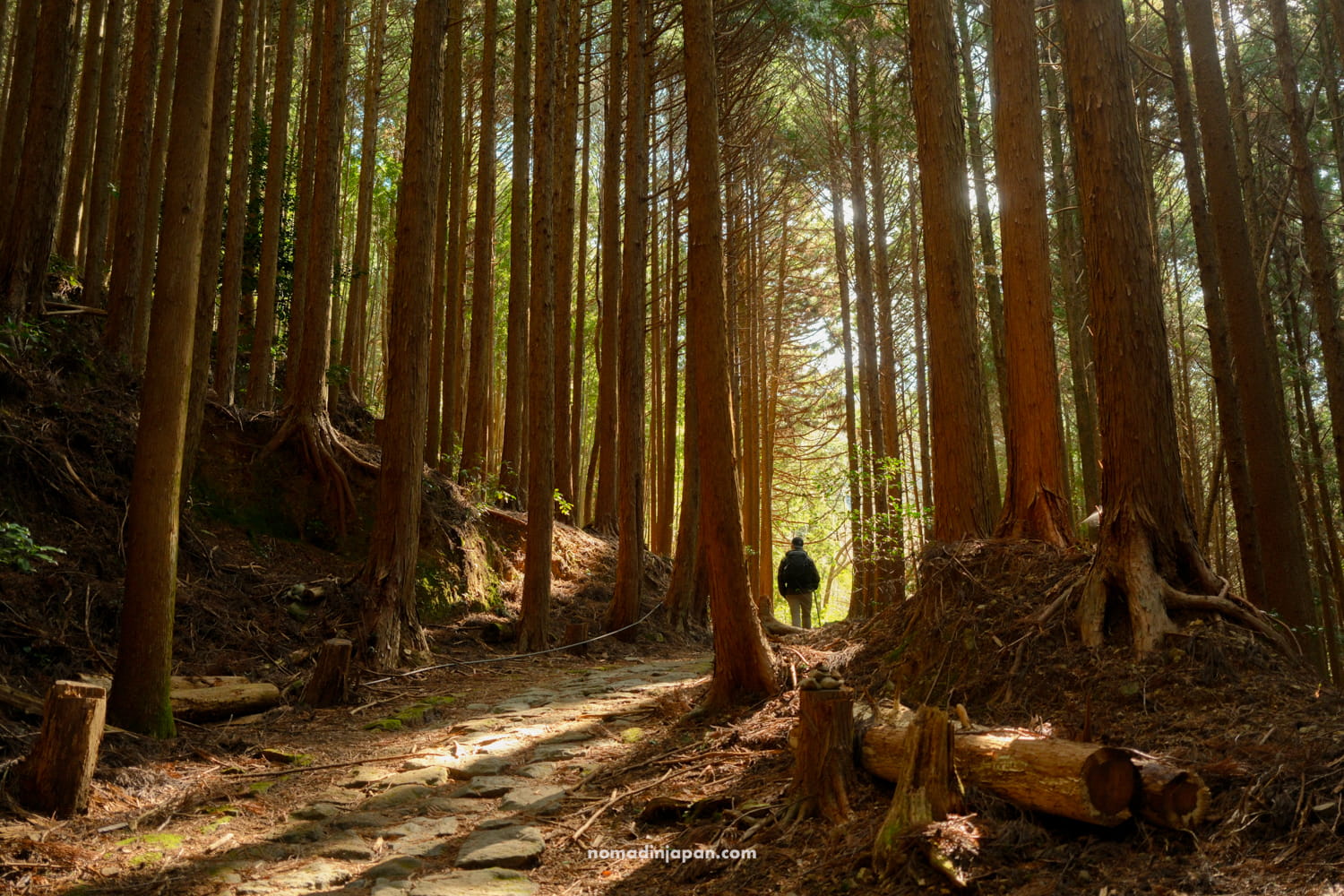
Just below Nachi’s Hiro Shrine is the Daimonzaka trail section of the Kumano Kodo that leads from the coastal route to Kumano Nachi Taisha.
Honestly, having already hiked 70 kilometers, we skipped this section and ran out of time anyway before the last bus left. BUT if you have time, the Daimonzaka is a very scenic, old trail that features a long stone staircase set amid dense forest. (Very similar to what we already hiked to get here from Koguchi.)
Wear proper shoes (especially if it’s been raining), and take your time here if you decide to go!
How to Get to Nachi Falls

I would not recommend taking a DIY day trip to Nachi Falls from Osaka or Kyoto — it’s too far (about 5 hours each way). You could do a 1-day tour visiting all 3 shrines in Kumano, but it’s really a full day (7 am to 8 pm).
Instead, if you’re already in Wakayama exploring, then Nachi Falls, of course, deserves a visit! 😍
From Tanabe, it takes around 3 to 3.5 hours to reach Nachi Falls. You’ll first take a train to Kii-Katsuura, followed by a short local bus ride up to the shrine and waterfall area.
Better yet, stay overnight in Nachi-Katsuura town or Shingu if you want to have enough time to visit the waterfall, plus the temples and Grand Shrines of Kumano.
Then, of course, if you’re hiking to Nachi Falls from Hongu, it’ll take two days, hiking ~14 km each day, with a crucial overnight in Koguchi. You can read more in my Kumano Kodo Itinerary.
Can You Stay Near Nachi Falls?

There’s only one hotel near Nachi Falls — and yes, it does have views of the waterfall! Check out Mitaki Sanso ryokan.
However, if it’s sold out, the next best place to stay is in neighboring Nachikatsuura.
We stayed at the sprawling Showa-era resort on the coast, Hotel Urashima, famous for its cave onsens (not tattoo-friendly).
The backpacker-friendly hotel, Why Kumano, is a good option for budget or solo travelers.
Final Tips for Visiting Nachi Waterfall

All in all, I HIGHLY recommend carving out time in your itinerary to visit Nachi Falls and the coastal towns, Grand Shrines, and onsen villages you’ll find spread out across Wakayama Prefecture.
Before you go, remember:
- Wear proper shoes (stairs + uneven paths to Hiro Shrine)
- Bring cash for entrance + souvenirs (buses accept credit card tap!)
- Combine sites in one visit (Nachi Taisha + Seiganto-ji + falls)
- Allow at least 2–3 hours to explore the area!
- Respect Nachi Falls and the greater Nachisan area as sacred sites (these places are more than just photo stops!)
If you have any questions about visiting Nachi Falls, drop your comment below!