
The Ultimate Guide to Skiing in Shiga Kogen, Nagano: Japan’s Largest Ski Area
As Japan’s largest interconnected ski area, you’d think that Shiga Kogen would be overrun and crowded with tourists. But it’s not.
I couldn’t believe how incredible the skiing in Shiga Kogen was, which will forever have a special place in my heart.

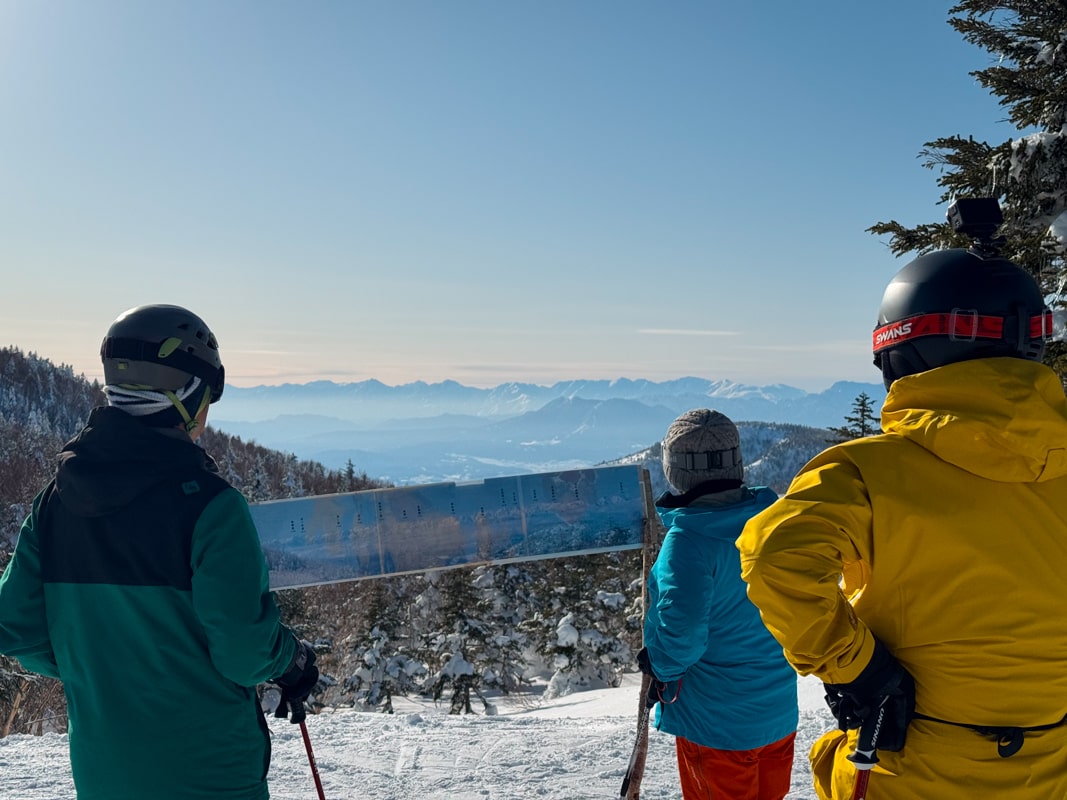
Not only because it was my first-ever ski resort experience in Japan, but because the snowfall was beyond JAPOW—it was legendary! ❄️ With record-breaking snowfall, we had some of the most gorgeous powdery snow you could ask for.
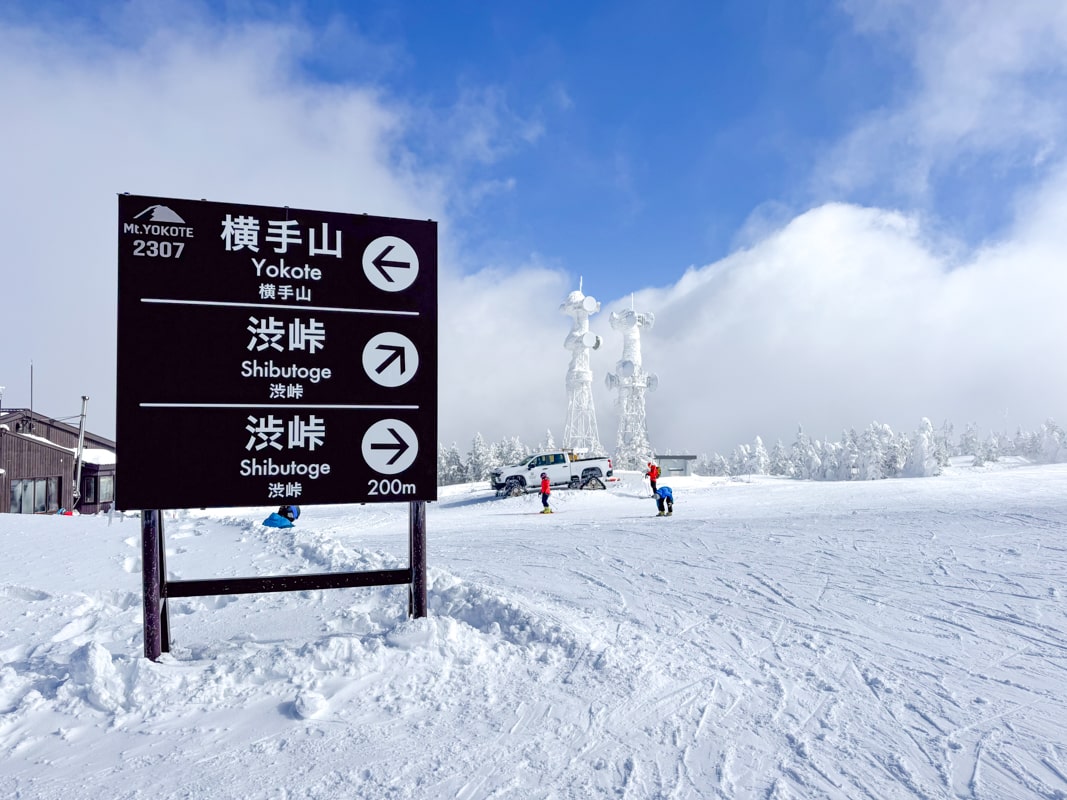
Here are the fast facts: Shiga Kogen has 18 interconnected ski resorts, over 80km of runs and forest trails, and the highest-elevation ski resort (and café) in Japan, located at Mt. Yokoteyama (2,307m). It was also host to the 1998 Olympics.
And on a clear day of skiing in Shiga Kogen, you can see a 360-degree panorama of the Northern Japanese Alps towering in the distance and the surrounding pristine Nagano highlands.

With so many runs available to all levels of skiers and snowboarders, powdery snow, Japanese crowds, one ski lift/pass to rule them all, and super fun slopes and forest trails, I have to say Shiga Kogen has got to be one of the best places to ski in Japan.
Read below to learn about Shiga Kogen’s slopes and resorts, shuttle buses, cost, accommodation, and more!
Skiing in Shiga Kogen: Everything You Need to Know

Shiga Kogen & Ski Resorts Explained
Shiga Kogen is a ski area located partially in one of Japan’s National Parks (—Joshinetsu Kogen) in northeastern Nagano Prefecture. The whole area is sometimes referred to as the Shiga Highland.
In winter, it becomes a ski paradise, and in summer, the snow melts, giving way to abundant hiking trails.
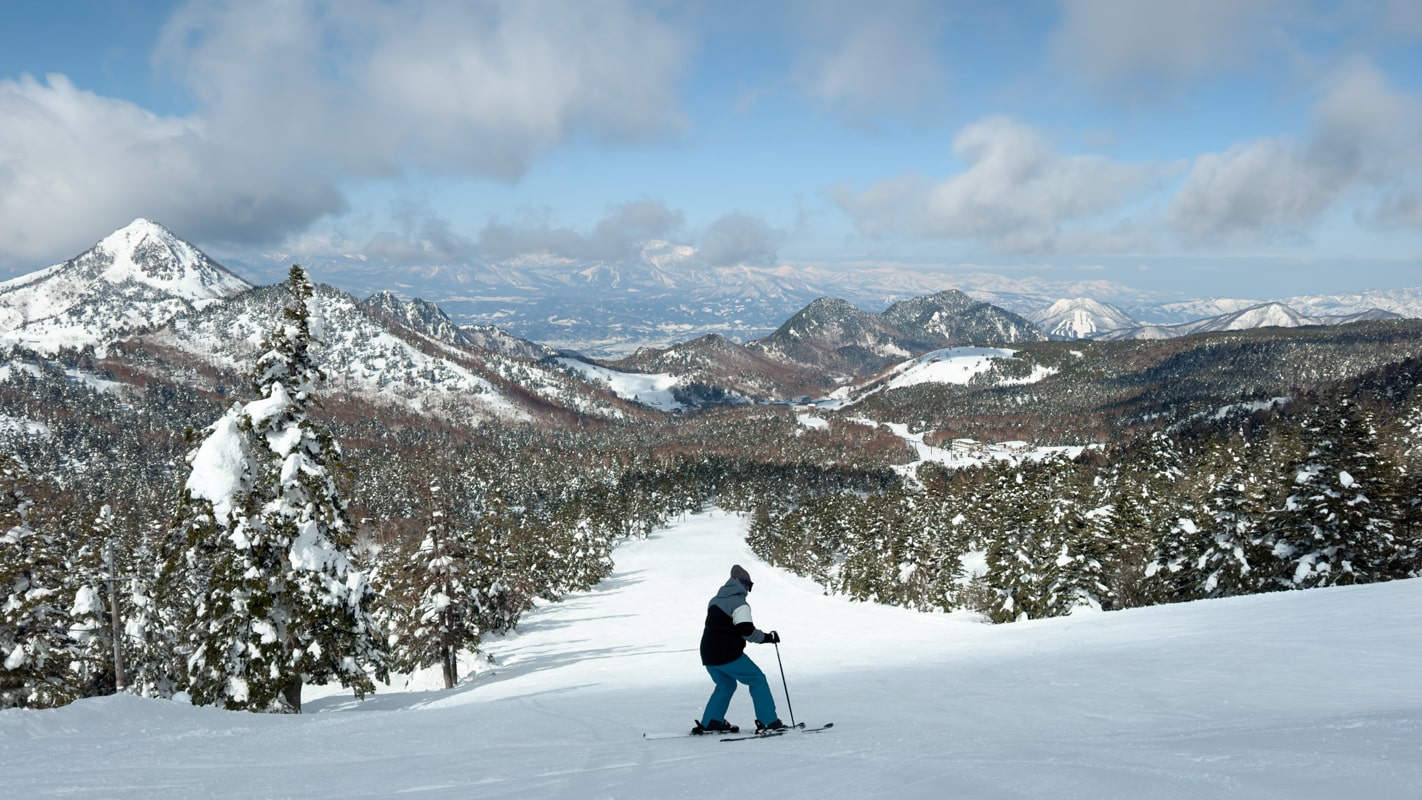
To understand Shiga Kogen, consider it not as just one ski resort, but 18 interconnected ones, of which the top areas for beginner-advanced skiing (in my experience) are:
- Yakebitaiyama (Olympic course with great wide slopes and views)
- Ichinose area (family-friendly and good for beginners)
- Okushiga Kogen (off-piste & quieter, super fun)
- Yokoteyama (highest elevation, 2307m, and it has the Crumpet Café)
Viewing a map makes this a lot easier to understand:
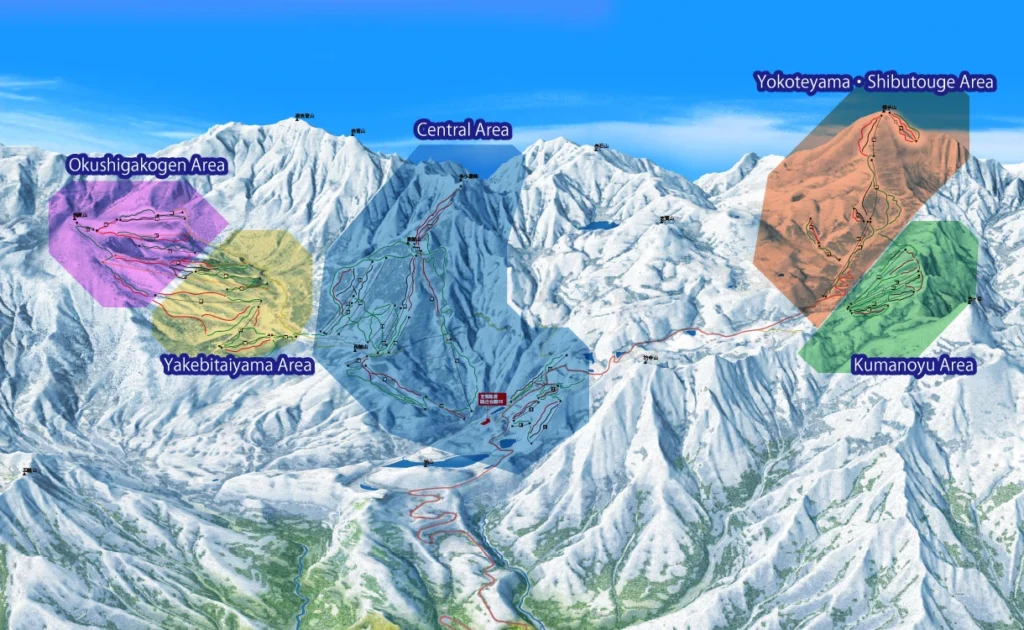

Again, think of an entire area with multiple resorts, slopes, and sections.
It takes 30-45 minutes to travel from one side of Shiga Kogen to the other using the shuttle buses—luckily, around 60 of the trails are interconnected, meaning you can ski from area to area without taking a bus. The only “extra” shuttle bus required is for reaching Yokoteyama, Shibutoge, and Kumanoyu areas.
While that’s significantly larger and more complex than other resorts, it’s also one of the reasons to choose Shiga Kogen over other ski resorts in Japan.
Its sheer size (over 600 hectares) with 80-100km of trails makes it diverse and ideal for a weekend-long ski trip! ⛷️
Why Choose Shiga Kogen?
Another reason to choose Shiga is its local atmosphere.
Despite its massive size, it retains an authentic charm that makes it a unique ski resort.
There are many amenities, hotels, and runs for all—there were times (even on the weekend) when Paul and I were alone on our slope for a good while.
Unlike Nozawa Onsen, where we skied after, there weren’t many international tourists like us at Shiga. Compared to Nozawa, Shiga also had way more fun forest runs and backcountry trails.
Also, if you want access to non-ski activities that are great for couples or families, Shiga lies just at the edge of cute onsen towns (e.g., Shibu Onsen) and the famous snow monkeys at Jigokudani Snow Monkey Park.
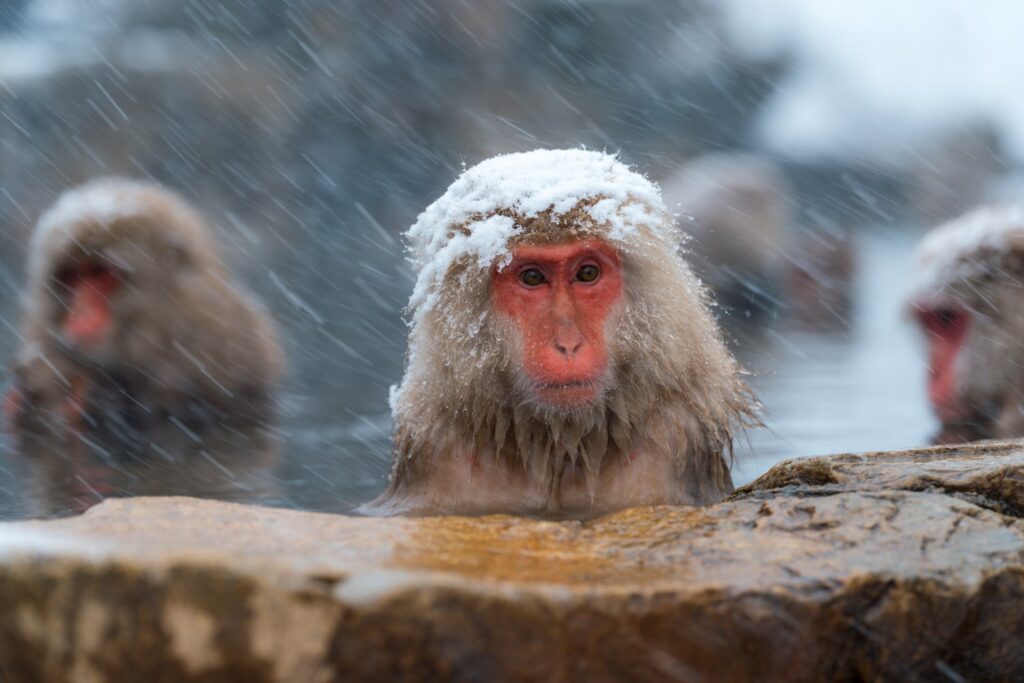
Considering price, crowds, and activities/convenience from Tokyo or Nagano, I’d definitely choose Shiga Kogen again for a future ski trip.
Snow Quality & JAPOW
Japan is famous for its powder-like snow (hence the name Japow), and Shiga Kogen’s location in northeastern Nagano makes it a prime receiver of delicious, fluffy snow.
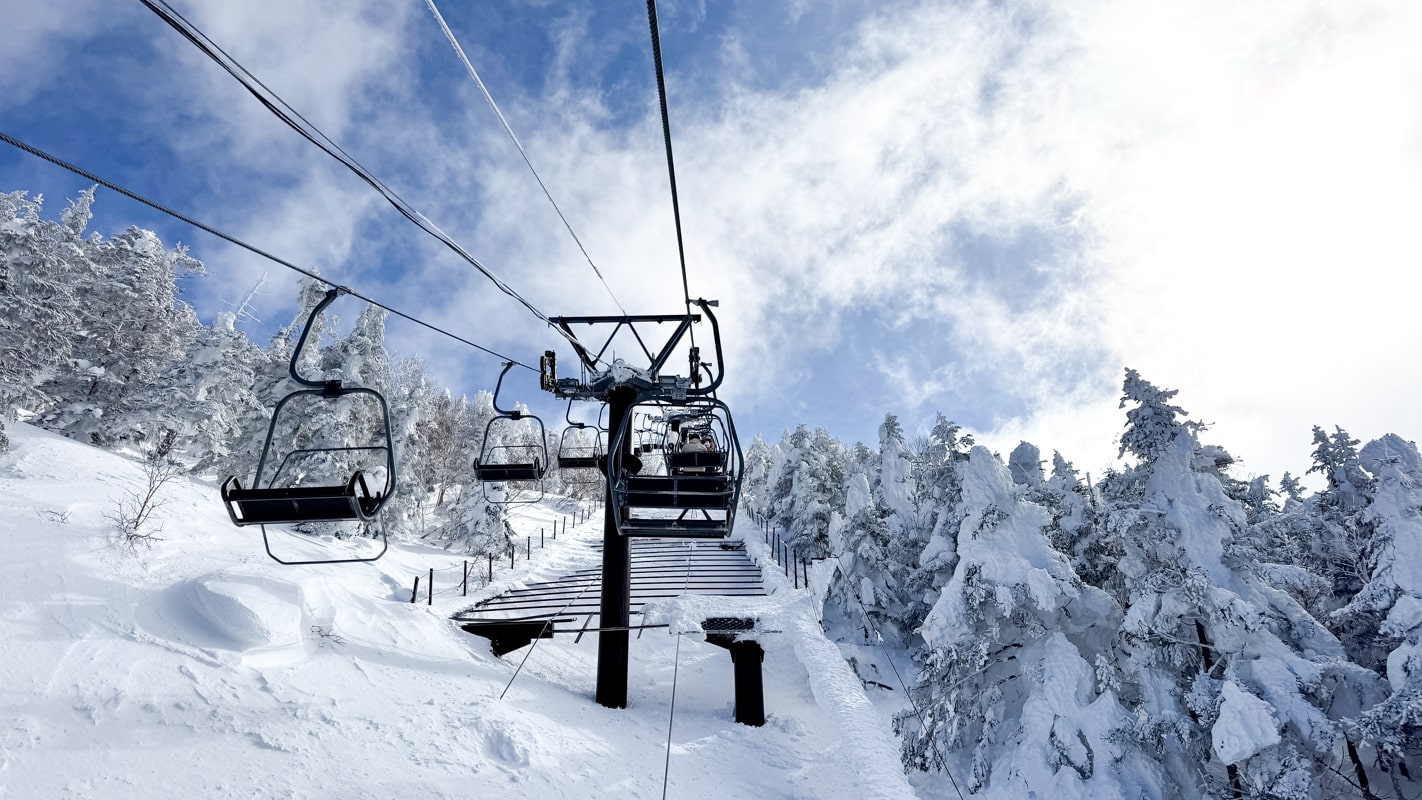
While Hokkaido and other regions in Japan are great for skiing, Nagano is known for having one of the longest ski seasons (from November to May), although that can vary year-to-year.
We were fortunate to experience record snowfall and prime powdery conditions at both Shiga Kogen and Nozawa Onsen.
That said, the best times to ski in Japan will vary based on where you go, but for Shiga Kogen, we found early-mid February to hit the sweet spot—long enough after the holiday crowds dissipate but early enough for mid-winter wonderland.
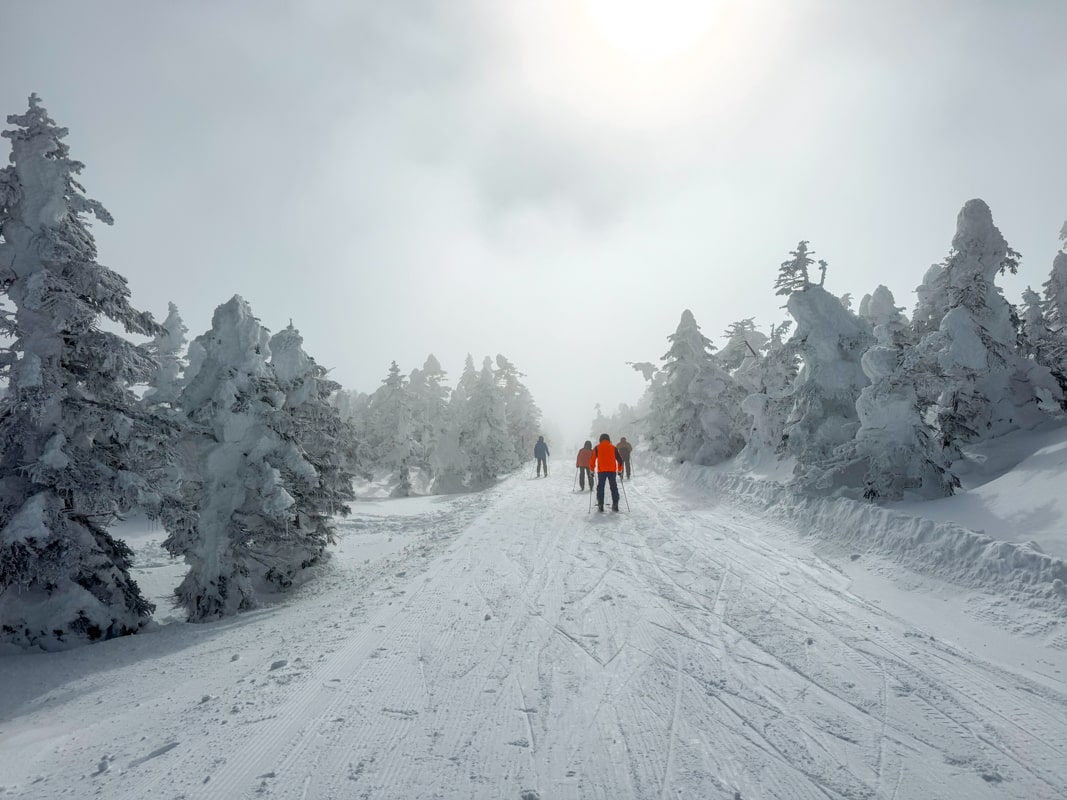
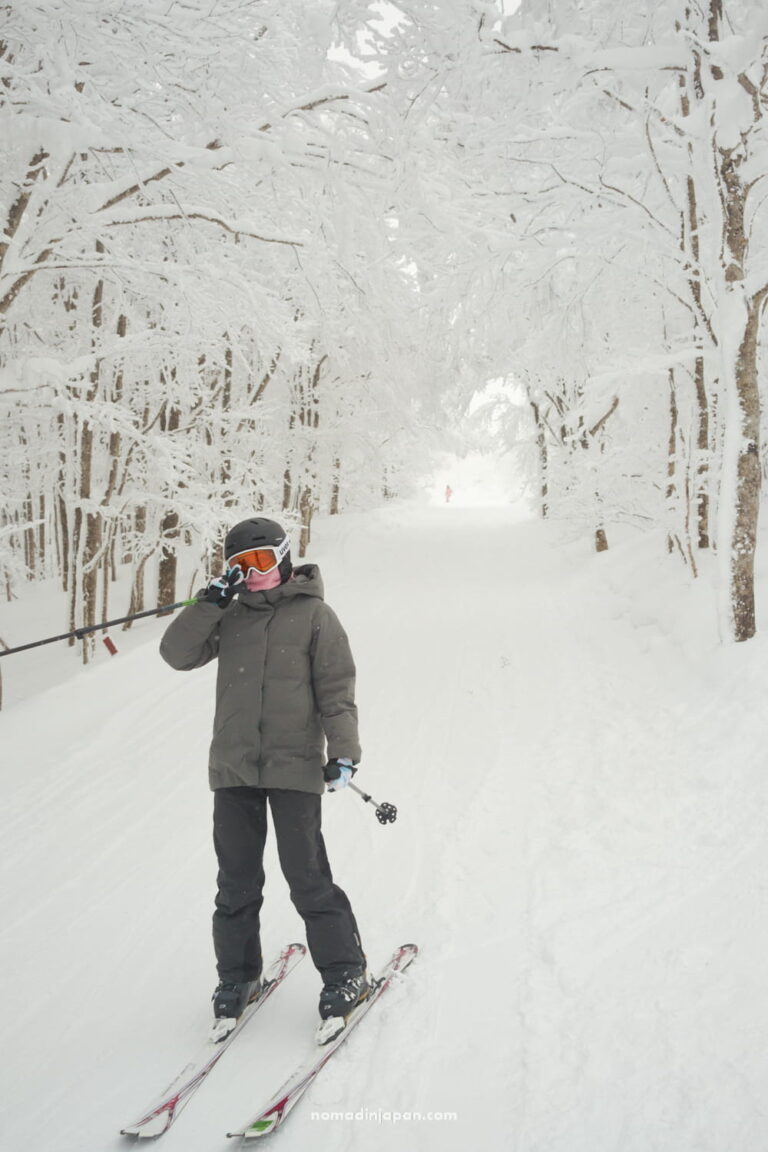
What I loved most about skiing in Shiga Kogen was the picturesque forest trails and the views of the Alps.
And it was all made even more unique thanks to Mt. Yokote’s high elevation, which creates “snow monster” trees, 樹氷 (juhyo), shaped by heavy snowfall, wind, and ice!
Shiga Kogen Lift Passes & Costs
Skiing in Shiga Kogen is easy with its All Mountain pass. You get access to all 47 lifts and 18 ski resorts with one key card.
While there are single-area passes, the price difference doesn’t make it worth it. Instead, go all-in on the all-mountain pass.
We opted for the 2-day pass, which has gone up to JPY 17,500 per adult for the 2025/2026 season.
- 1-Day (All-Mountain): JPY 9,000
- 2-Day: JPY 17,500
- 3-Day: JPY 26,000
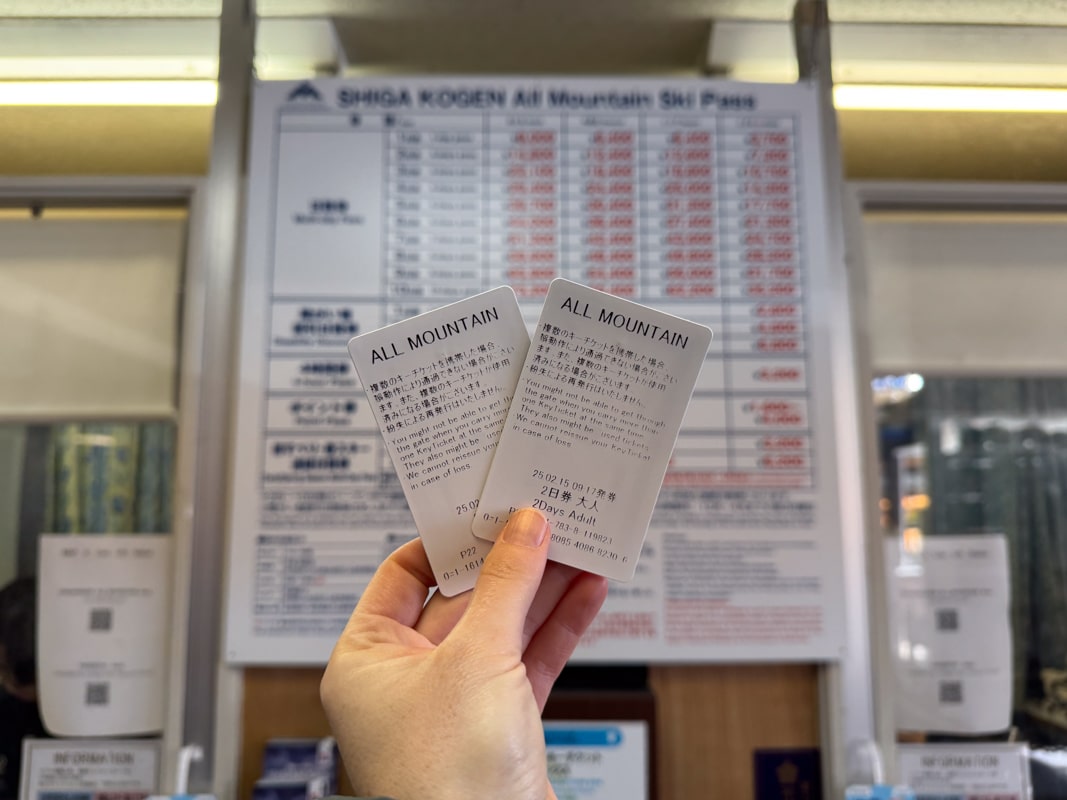
For discounts and pricing for disability, kids, or early season, read more here.
Of course, rental gear will be an extra cost, but we found it fairly affordable compared to European/North American prices.
I brought my own ski pants and jacket, but I needed everything else, which cost an extra JPY 26,400 ($173):
- Skiis and poles 🎿
- Helmet
- Gloves (purchased on-site)
- Ski boots
We got off the bus and rented ski gear directly from the Prince Hotel in the Yakebitaiyama ski area, where you can also take the gondola all the way to the top of the mountain.

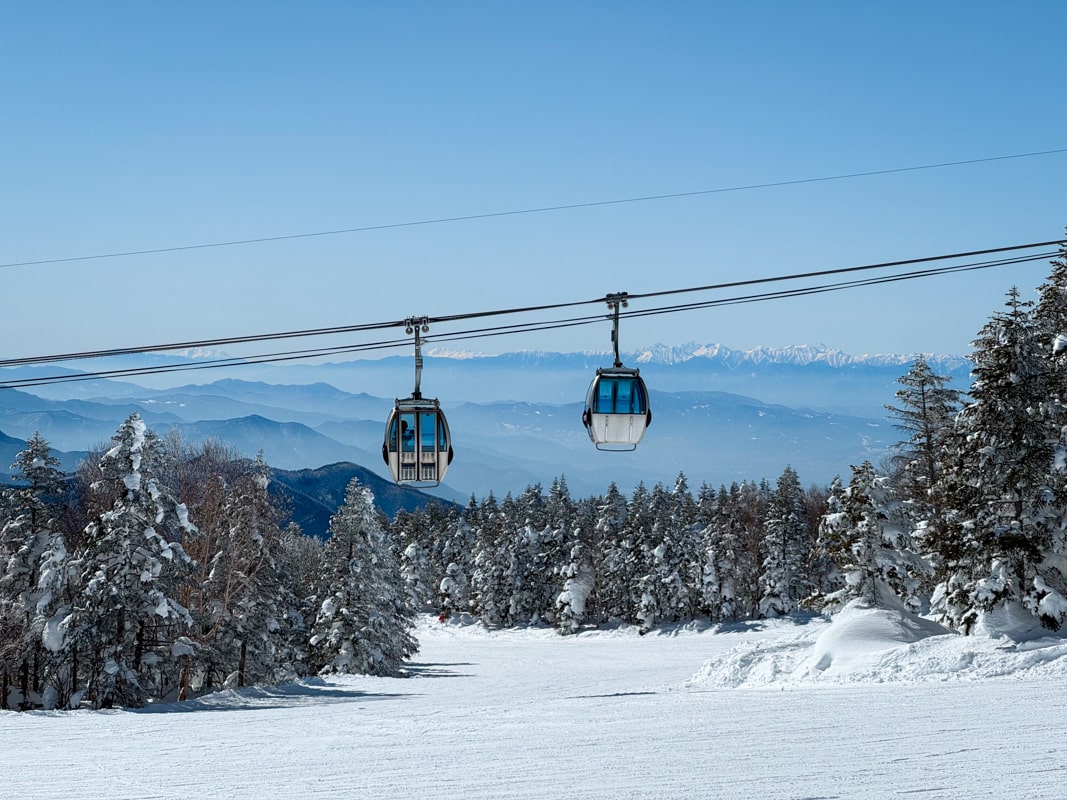
Shiga Kogen has other rental gear options in these areas:
| Ski Area | Rental Shops |
|---|---|
| Hasuike / Giant Ski Area | Alpina Sports |
| Takamagahara Ski Area | Snow Can Takamagahara |
| Ichinose Diamond Ski Area | – Snow Can Ichinose Diamond – Sports Station Chalet Shiga |
| Yakebitaiyama Ski Area | – Shiga Kogen Prince Hotel West / East – YAKEBI Ski Center (Gondola No.2) |
| Okushiga Ski Area | – Okushiga Center House Rental – Tact Ski Lab |
| Kumanoyu & Yokoteyama Ski Areas | Snow Can Kumanoyu or Yokoteyama |
Since rental shops open around 8:00 a.m. and close around 4:30-5:00 p.m., it’s best to take advantage of your two full days and arrive early!
Where to Stay in Shiga Kogen for Skiing
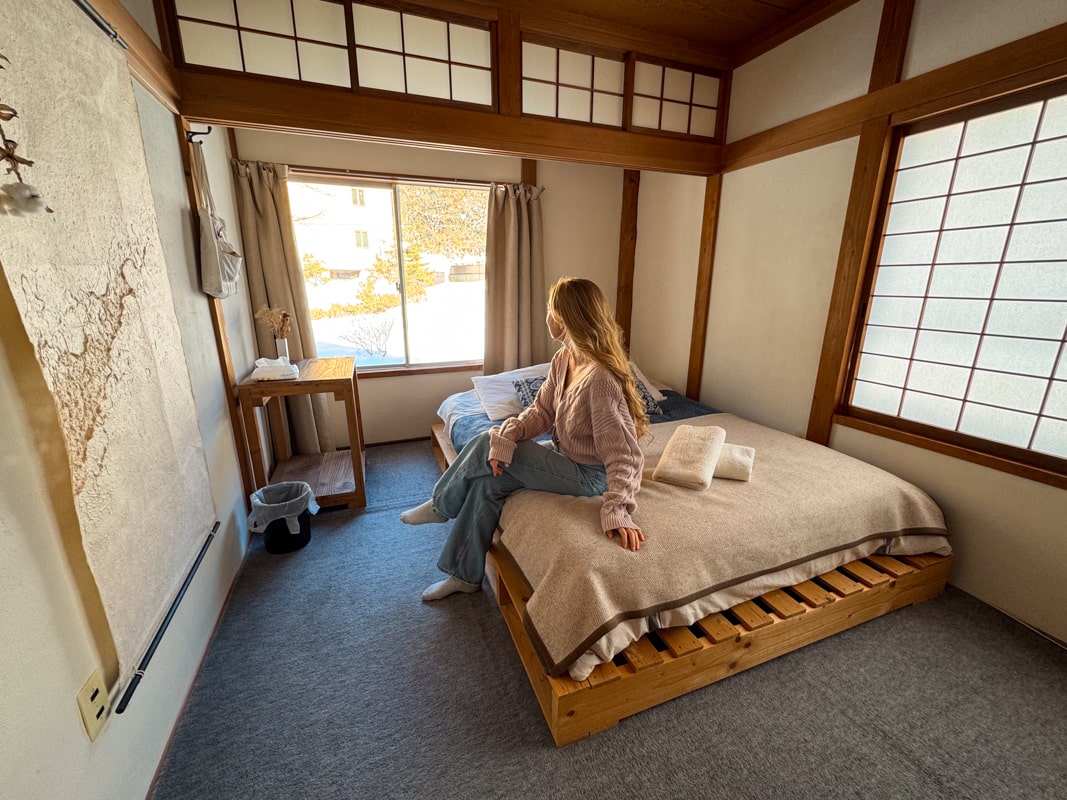
Shiga Kogen Hotels
Shiga Kogen has ski-in ski-out hotels like the Prince Hotel, but there are also nearby accommodation options if you want to be based in a town or just outside of the ski area.
The perk of staying inside the ski area, of course, is proximity to the slopes. You could be the first on the gondolas in the morning, and last to shred the well-worn slopes at the end of the day.
The money you spend on staying within the ski resort area might be worth it for the convenience and having an all-in-one, integrated experience, with many hotels providing breakfast and dinner, as well as private onsens (hot springs).
Aside from the Prince Hotel, I think the two other best hotels for comfort and ski-in ski-out in Shiga Kogen are:

Hotel Grand Phenix in the Okushiga area offers ski-in/ski-out convenience with comfy rooms and sweeping mountain views. Includes dining, an indoor pool, sauna, private hot springs, and a cozy fireplace lounge after a day on the slopes!
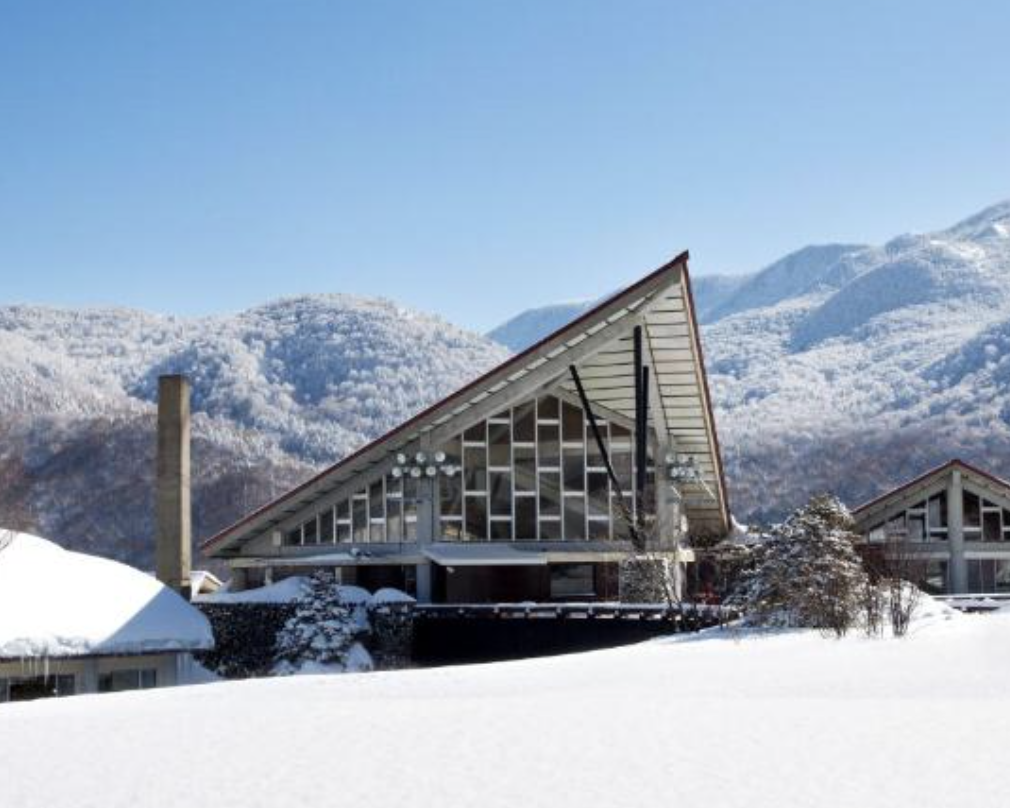
Okushiga Kogen Hotel is a ski-in/ski-out property at the far end of Shiga Kogen, known for its quiet slopes and relaxed atmosphere. With comfortable rooms, French-inspired dining, and direct lift access, it’s a great choice for those seeking a peaceful mountain stay.
We chose to stay outside the ski area, right near the Jigokudani Snow Monkey Park in Kanbayashi (in between Shibu Onsen town and Shiga Kogen).
The Senjukaku Hotel here is top-rated and worth checking out if you want to be in between.
Shibu Onsen Village & Après Ski
For the best après-ski atmosphere, food, and onsen culture, I highly recommend staying in one of the ryokans in Shibu Onsen.
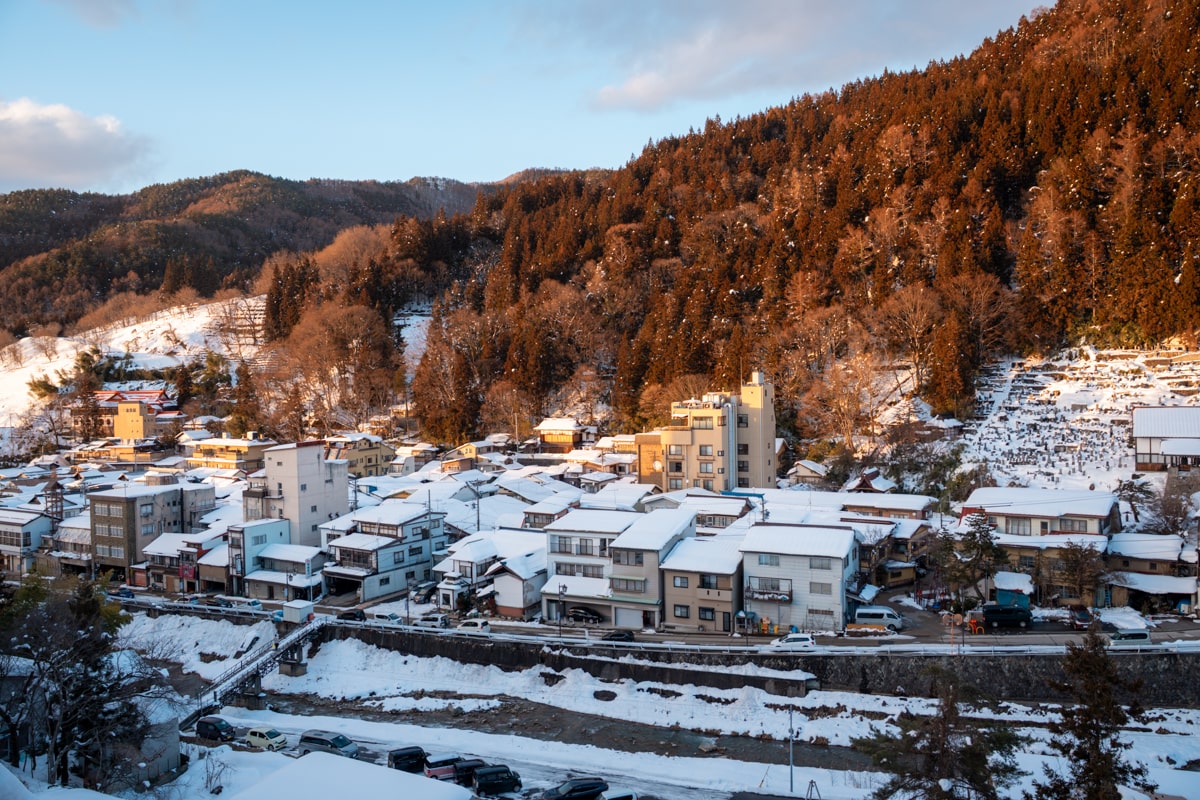

However, unless you have your own rental car, you will need to coordinate your return time with the shuttle buses and a 30-minute or longer return trip (which can feel long after a full day of skiing).
Nevertheless, Shibu Onsen is a charming, traditional Japanese town with historic buildings, onsens, and a retro vibe.
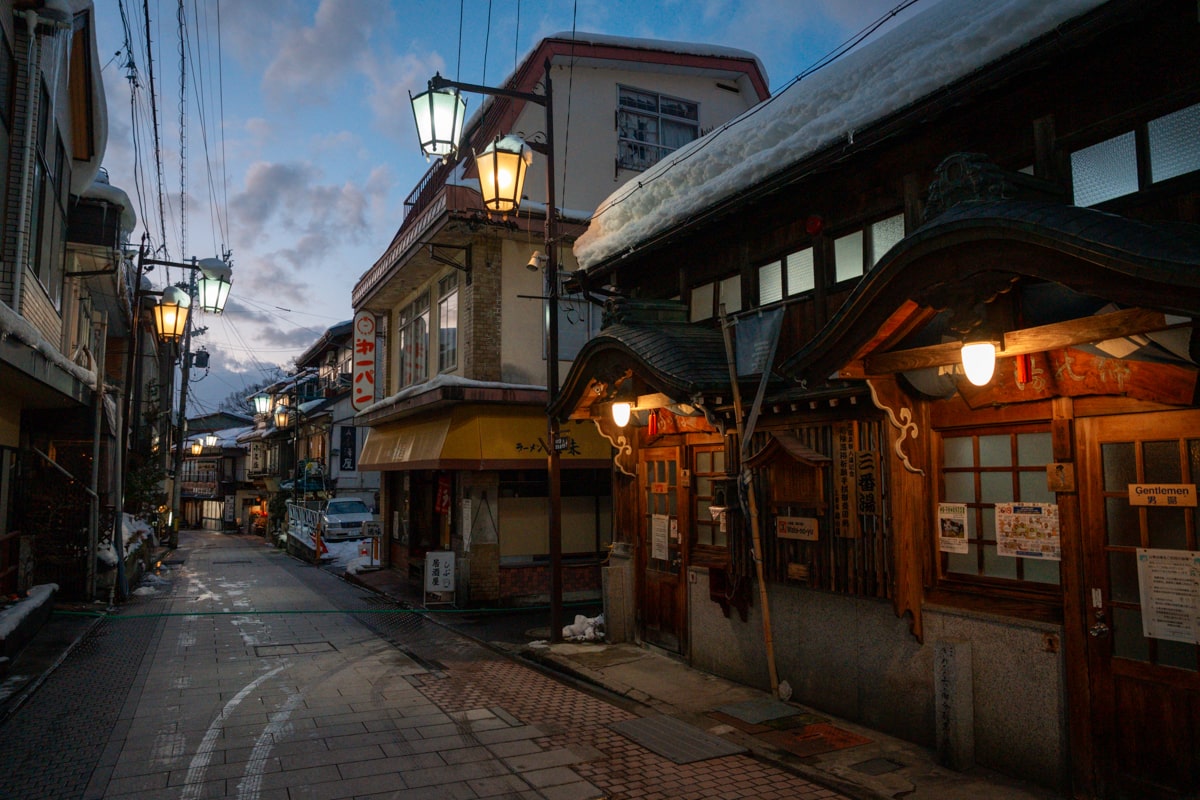
KOKUYA Ryokan would be my number one choice for staying in Shibu Onsen, which is 30 minutes from Shiga Kogen. I was envious of everyone walking the streets in their yukatas, hopping from each of the village’s nine public baths (known as sotoyu).
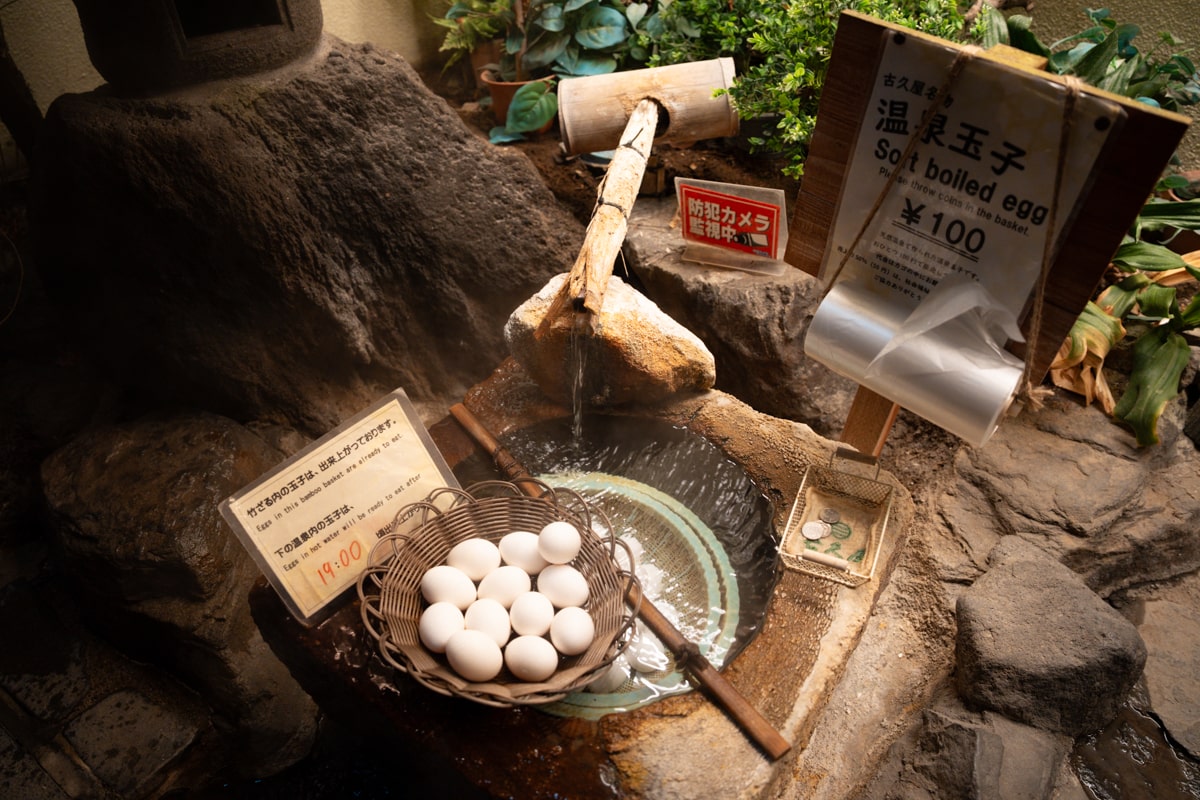
As a guest at one of Shibu Onsen’s inns, you also receive an onsen ticket, which is only available to guests. Outside, they have a little “onsen egg bath” where you can buy onsen eggs for JPY 100 each—so cute!
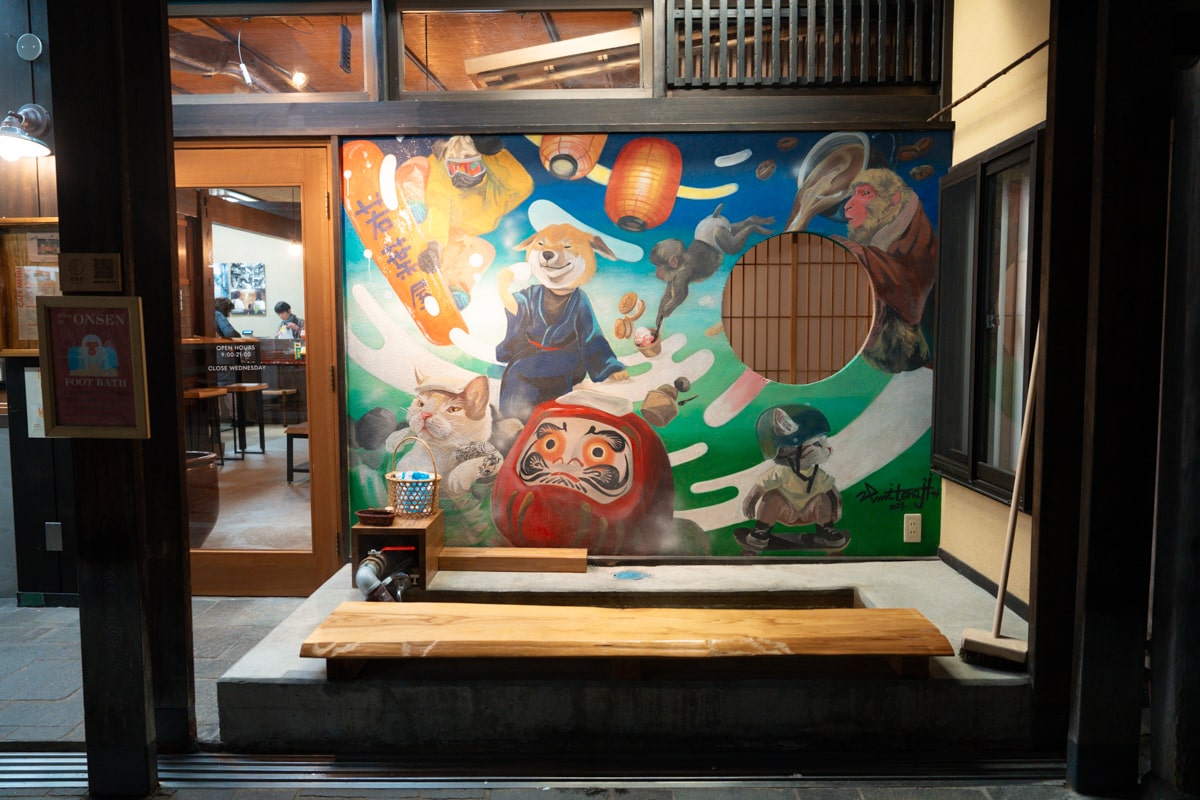
If you’re not a guest at one of the ryokans, there are a couple of free public footbaths in the towns for a nice soak, or you can access (for a small fee) just one of the nine public baths typically reserved for guests.
The neighboring traditional onsen town of Yudanaka Onsen is also a popular choice for more amenities, food, and bus access.
How to Get to Shiga Kogen
From Tokyo
If you’re heading directly from Tokyo, you’ll need to add one extra step: take the Hokuriku Shinkansen (approximately 90 minutes) to Nagano Station. Book your Shinkansen tickets online for a seamless experience!
From Nagano City
We took the bus from Nagano City directly to Snow Monkey Park (where our accommodation was), outside of Shiga Kogen.
You can take the Nagano-Dentetsu Line/Limited Express to Yudanaka Station, and from there, get a bus transfer to Snow Monkey Park (bus stop) or a ski resort (such as the Prince Hotel).
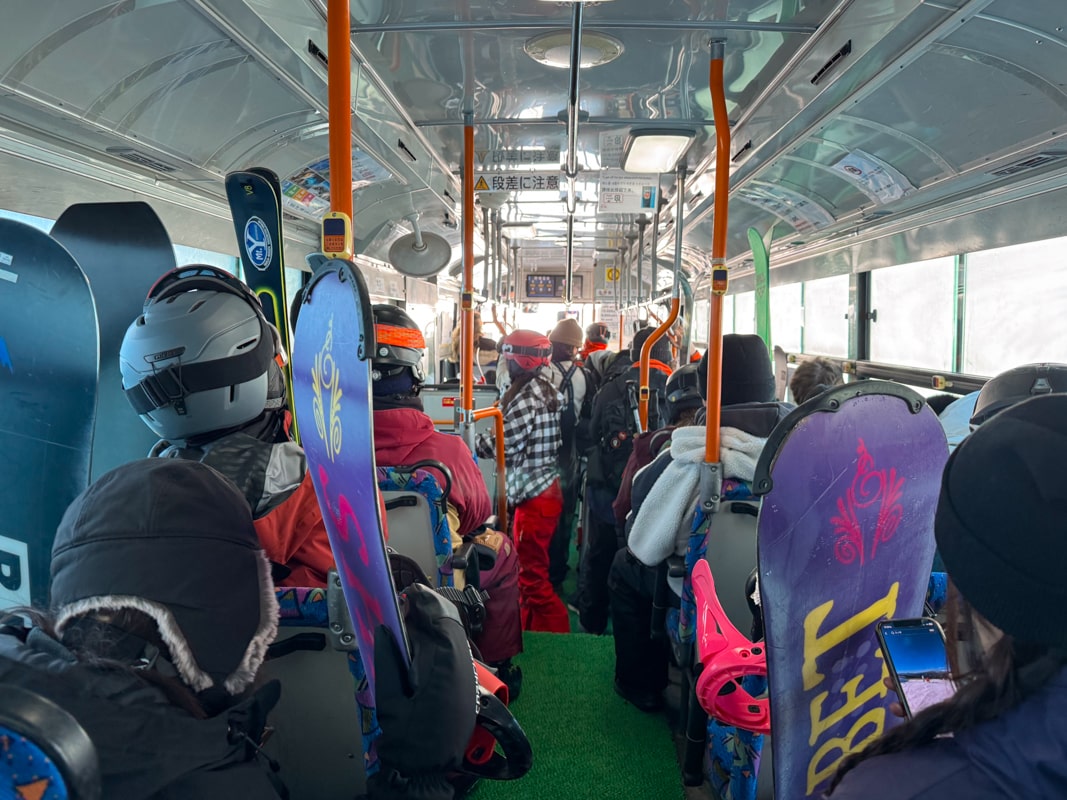
Shuttles in Shiga Kogen
Once in Shiga Kogen, you can use the network of free or low-cost resort shuttle buses that run between the different ski areas, hotels, and lift stations.
Since we were staying right by Snow Monkey Park bus stop, we’d head to the bus stop on foot from our accommodation and then hop off at one of the Shiga Kogen ski resorts for ski time. It cost us approximately JPY 600 per person until we arrived at Shiga Kogen, after which the shuttle became free.
Since Shiga Kogen is interconnected, you can ski from area to area—except for the Yokote/Kumanoyu areas, which require an additional shuttle bus!
How to Make the Most of Skiing in Shiga Kogen
We bought a 2-day All Mountain Pass for Shiga Kogen, and it was, simply put, awesome.
I’d recommend at least two full days of ski time here, as there are numerous trails and resorts to explore (not to mention reruns!).
That means planning a minimum of 3-4 full days around Shiga Kogen to enjoy all other activities, such as Shibu Onsen town and Snow Monkey Park.

❄️ Don’t mistake skipping the Yokoteyama and Kumanoyu ski areas; these are arguably the most beautiful and least crowded of all Shiga Kogen’s slopes!
At Mt. Yokote (2,307m), you can have a scrumptious brunch/lunch at the Crumpet Café, which sits on top of the gondola.
The interior resembles a cozy Swiss chalet-style lodge with exquisite mountain views, and the food is delicious, making it worth the trip all the way up the mountain.
From here, you can head down the Shibutouge Area or go all the way down to Kumanoyu. The top-to-bottom ride is so gorgeous; I kept saying “Oh my god” the whole way!
The best way to make the most of your time is to divide Shiga Kogen into days 1 and 2.
Weekend Itinerary for Skiing in Shiga Kogen
From left to right, start your morning all the way at the edge of Shiga at the Okushiga area. From here, you can make your way across to the Yakebitaiyama area, before skiing into the Central Area (Ichinose, etc).

On day two, you can take the earliest morning shuttle bus to Yokote and Kumanoyu ski areas.
Follow in our footsteps (or ski marks!) to spend half 1/2 day over at Yokote, then take the shuttle back over to the area from which you rented your gear (in our case, Prince Hotel); have a few final runs, then hand over the rental gear before taking one of the later shuttles out of the park.
On your “off” ski days (or break days), I recommend exploring the towns of Yudanaka and Shibu Onsen and visiting the snow monkeys.
Having a few extra “cushion” days for your ski trip allows for flexibility, too, in case of bad weather or delays.
If I could, I’d hit replay on my Shiga Kogen ski vacation because it was truly unbeatable, especially with that Japan-famous powder! ❄️
I hope this Shiga Kogen ski guide has helped plan your dream trip! If you have any questions, drop them in the comments below and I’ll get back to you.




Wow thanks for all the great tips! We are heading to Shiga Kogen for our first family ski trip to Japan. We adults have been skiiing in Japan about 5 times, but not for the last 10 years. This will be our first trip to Shiga Kogen. Can you add any insights about the quality of the skis for rent? We are staying at Prince West. Do we need to go into the town to get better quality performance skis? Us adults have our own boots but the kids will need to rent boots as well as skiis for adults and kids.
Wow, so nice!! The ski rental varied from budget to premium! You’ll have no trouble finding high-end skis there at Prince or the other shops. They cater to all budgets.