Kumano Kodo Grand Shrines and Sacred Sites: Hongu Taisha, Nachi Falls, & Oji
Long before the Kumano Kodo became a bucket list trek, this ancient network of pilgrimage routes led emperors, monks, and everyday pilgrims deep into the mountains of the Kii Peninsula, all moving toward the same sacred destination: the Kumano Sanzan.
The Kumano Sanzan marks the three Grand Shrines of the Kumano Kodo:
- ⛩️ Kumano Hongu Taisha
- ⛩️ Kumano Nachi Taisha
- ⛩️ Kumano Hayatama Taisha

Together, they are the spiritual heart of the pilgrimage and the birthplace of Japan’s spiritual heritage, where Buddhist rituals and Shintoism blend and meld.
But what surprised me most wasn’t just the focus on the Kumano shrines themselves!
It was everything sacred and small in between, and along the way. For example, a big part of the Kumano is the “secondary” Oji shrines tucked into the forest, meant for pilgrims’ prayer and guidance.
Then there’s the actual ritual of walking (more so hiking), the intention behind it. And the memorials for all those who lost their lives centuries ago, when making the arduous journey.

So, whether you’re hiking just a section of the trail, the full Nakahechi route, or simply visiting a few of the Kumano’s most iconic sites by bus or car—like Nachi Falls—this part of Japan feels really different, and I hope you can visit mindfully.
Here’s what you can expect to see on the Kumano Kodo so you can experience them with a bit more intention and context!
Guide to the Kumano Sanzan Shrines & the Kumano Faith
This Shinto-Buddhist syncretism, which establishes the Kumano Kodo (known as Shinbutsu-shugo), is what distinguishes the Kumano and, along with the scenic natural beauty of the Kii Peninsula, is why it became one of only two UNESCO World Heritage-listed pilgrimages in the world (along with the Way of St. James in Spain, known as the Camino de Santiago).

Kumano Sanzan combined the Shinto and Buddhist faiths into one, known as Shinbutsu-shugo (literally the convergence of Buddhism and Shinto). The notion that deities (kami) are present in all things on Earth is deeply embedded into Japanese culture from ancient times. White paper folded into the shape of lightning and hung at shrines delineate areas where kami are believed to preside. After Buddhism arrived in Japan in the 6th century, Shinto deities were identified with the different forms of the Buddha, to create Shinbutsu-shugo.
– Visit Wakayama
Essentially, nature worship is inseparable from the Kumano journey. And the very act of the pilgrimage is to purify oneself before arriving at the Kumano Sanzan.

The Three Grand Shrines of the Kumano Kodo
1. Kumano Hongu Taisha (Spiritual “Center” of the Pilgrimage)

It’s long been believed that, among the three Grand Shrines of Kumano, the Kumano Hongu Taisha acts as the spiritual heart of the network.
All routes of the Kumano Kodo Pilgrimage lead here, to Hongu.
Oyunohara Sanctuary—the original location of Hongu Shrine before it was relocated due to flooding—is just a 5-minute walk away and is marked by Japan’s tallest torii gate, O-torii. It’s worth visiting both while you’re there!

From Koyasan (the birthplace of Shingon Buddhism), you can reach Hongu by crossing a challenging mountain route known as the Kohechi Route. From the coastal Iseji route, you can travel up the river from Shingu by boat.
The Nakahechi Route, the one most tourists choose (and what we did), is the “Imperial Route,” as it was once frequented by emperors and Japan’s imperial family, who made the pilgrimage on foot from the ancient capitals of Nara and Kyoto. Today, this route crosses the Kii Peninsula from west to east, starting in Takijiri-oji and ending at Nachi Taisha.
The Kumano Hongu Taisha is essentially considered the main shrine of the Kumano faith, and everyone is welcome.
This shrine, with its beautiful sweeping cypress bark roofs, is one of the three main shrines of the Kumano faith, of which there are more than 3,000 shrines. Originally located at Oyunohara, a sandbank at the confluence of Kumano-gawa and Otonashi-gawa Rivers, the shrine was moved to its current location following the great floods of 1889. The Oyunohara torii shrine gate marks the original location.
Because of this, reaching the Kumano Hongu Taisha is considered “completing” the Kumano pilgrimage.

It’s here where you can collect your official Kumano completion stamp for your Dual Pilgrim booklet (required for dual pilgrimage certification in partnership with the Way of St. James in Spain).
🥾 From the Nakahechi trailhead, you can reach Hongu in just 2–3 days on foot, stopping over at Takahara, Chikatsuyu/Nonaka, and finally, Hongu. Read more in my Where to Stay on the Kumano Kodo or my Kumano Itinerary for more advice.
2. Kumano Nachi Taisha & Nachi Falls
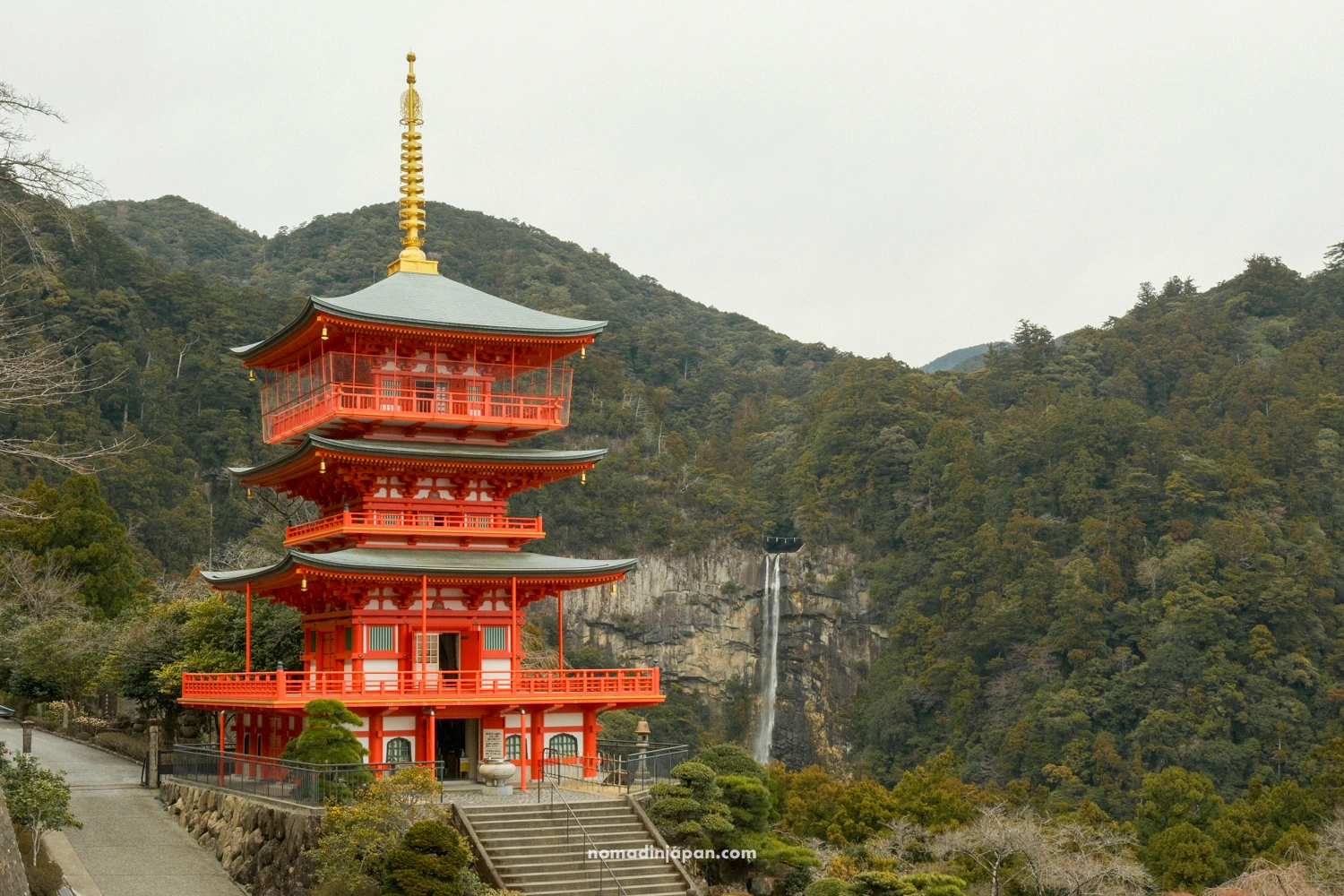
If you’ve seen photos online of the Kumano Kodo, it’s most likely been that of the Kumano Seiganto-ji Temple Pagoda with a backdrop of Nachi Falls—Japan’s tallest single-drop waterfall.
This iconic view has become somewhat synonymous with the Kumano Kodo Pilgrimage. And for good reason!
As someone who hiked the full Nakahechi, arriving here from Hongu meant two additional days of trekking over steep mountain passes. The arrival was SWEET! This view made it worth it — and the reward felt much more, well, rewarding! than if we were to simply drive or take the bus here.
Before Japan separated Buddhist and Shinto sites during the Meiji Restoration (post 1868), the sacred sites operated in unison under the Kumano faith (Shinbutsu-shugo) and were once known as Nachisan.
And in line with Shinto beliefs, Nachi Falls is believed to be the home of a powerful kami (deity). This is why the photo of the three-storied Buddhist pagoda and the Shinto waterfall is so unique: it literally represents the Kumano in one image.
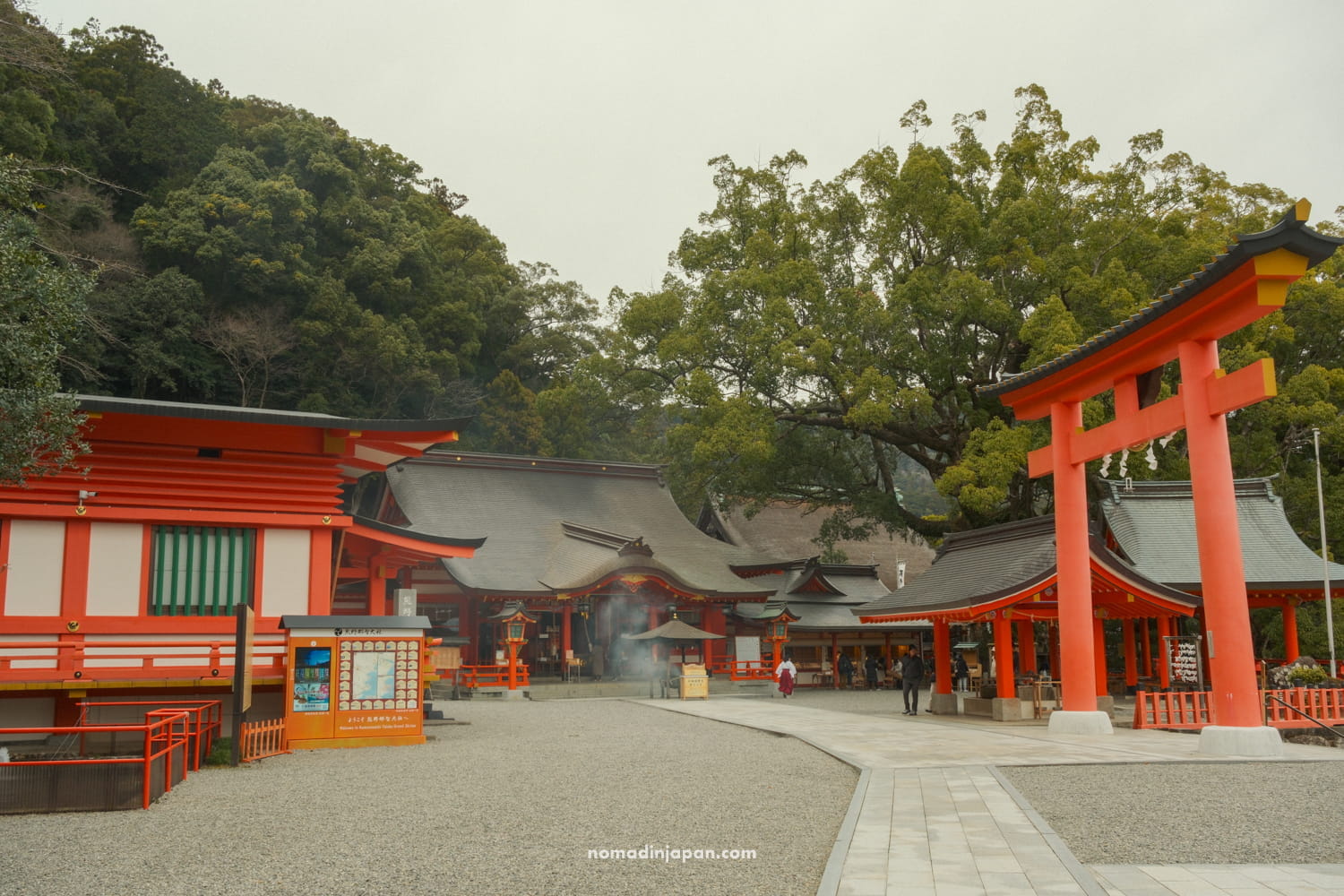

Today, the sacred sites operate separately yet side by side.
You will find Seiganto-ji Temple, a Tendai Buddhist temple believed to enshrine Nyoirin Kannon (the Bodhisattva of Compassion). It is also the first temple on the Saigoku Kannon Pilgrimage, a 33-temple circuit that the faithful complete. (You can also stamp your booklet here!)
Then, of course, there is the Kumano Nachi Taisha Shrine. On site is also a nearly 1000-year-old camphor tree, which you can climb inside. There’s also a smaller shrine dedicated to Yatagarasu, the sacred three-legged crow of the Kumano Kodo. 🐦⬛
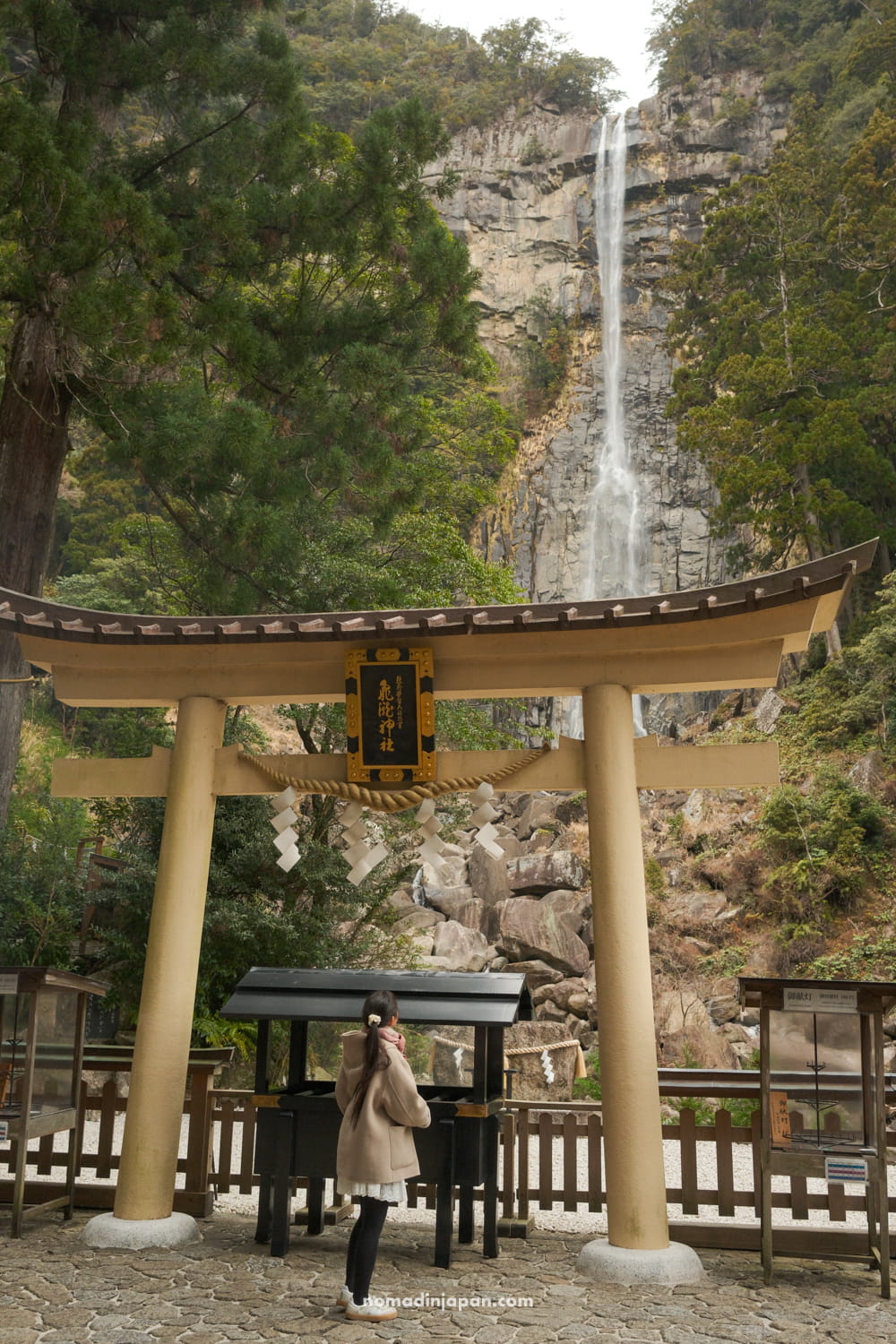
Nachi Falls, together with the Buddhist shrine and the Kumano Nachi Taisha Grand Shrine, make this a powerhouse place. Unsurprisingly, this shrine was my favorite, even just comparing it aesthetically, between Hongu Taisha and Hayatama Taisha (in Shingu).
3. Kumano Hayatama Taisha (By the Coast)
The last shrine (although there’s no real order, technically) is the Kumano Hayatama Taisha.

This shrine is located in Shingu town, on the eastern coast of the peninsula, just north of Nachi-Katsuura village. From Nachi Falls, Shingu is about a 1-hour bus ride away (with a transfer).
Hayatama Shrine is arguably the most accessible of the Kumano Sanzan.
It’s located right at the back of town, near the river. We came here by bus on our last morning from Kii-Katsuura Station to collect our final Kumano stamp.
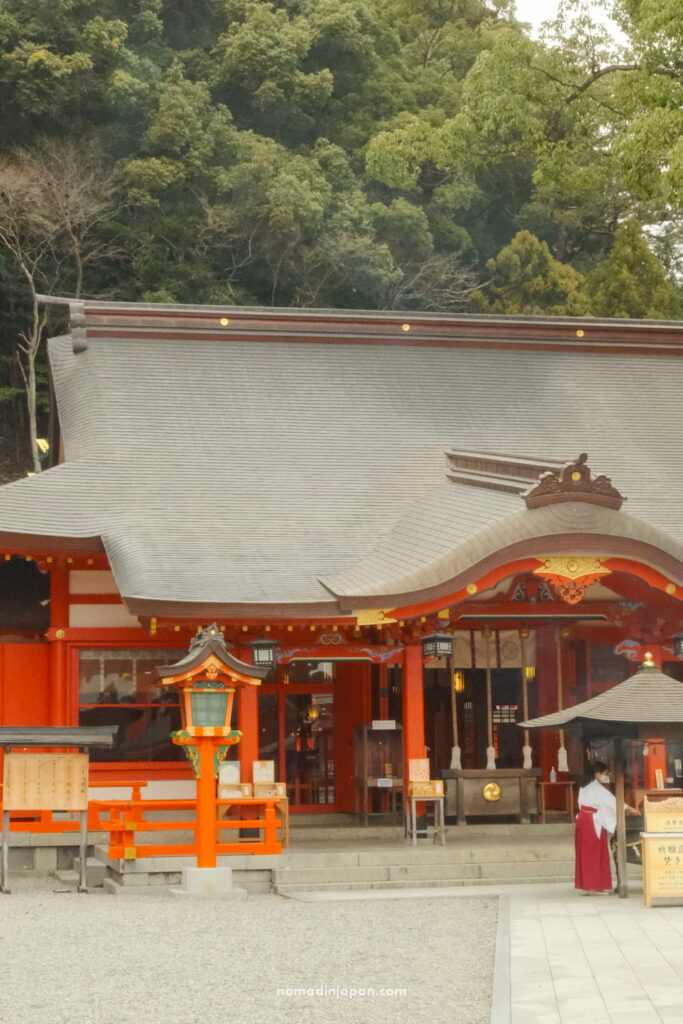
I think, among the three, Hayatama has less of a “wow” factor. However, it’s no less meaningful or beautiful, with its bright vermillion architecture (similar to Nachi Taisha); it just feels different to arrive at by bus than by foot, which is how we reached the other two grand shrines.
There’s also a sacred tree (Nagi no Ki) on the grounds. Hayatama also has a really beautiful purple omamori amulet with Yatagarasu on it, which, of course, I got!
What Are Oji Shrines? (Hidden Sacred Stops Along the Trail)

There is another type of shrine on the Kumano Kodo that is arguably as important as the Kumano Sanzan. They’re called Oji Shrines and are considered secondary or subsidiary shrines.
These were mini places of worship and guidance along the pilgrimage routes, meant for rest, prayer, and purification.
Some are very tiny, crumbling stone shrines. Usually, with a pile of coins in front from passing pilgrims. Some are easy to miss, but if you have a Kumano Kodo map and a stamp booklet, you will easily find them.
Most, in fact, are indicated, and have a “stamp house” where you can collect a red stamp, which, honestly, feels like an iconic “modern-day” way to worship the Oji. Some have their own torii gates and are considered more powerful or important than others.
Having the Oji shrine stopping points along the Nakahechi felt like a mini reward to keep going! 💪
Do You Need to Hike to Visit the Kumano Shrines?
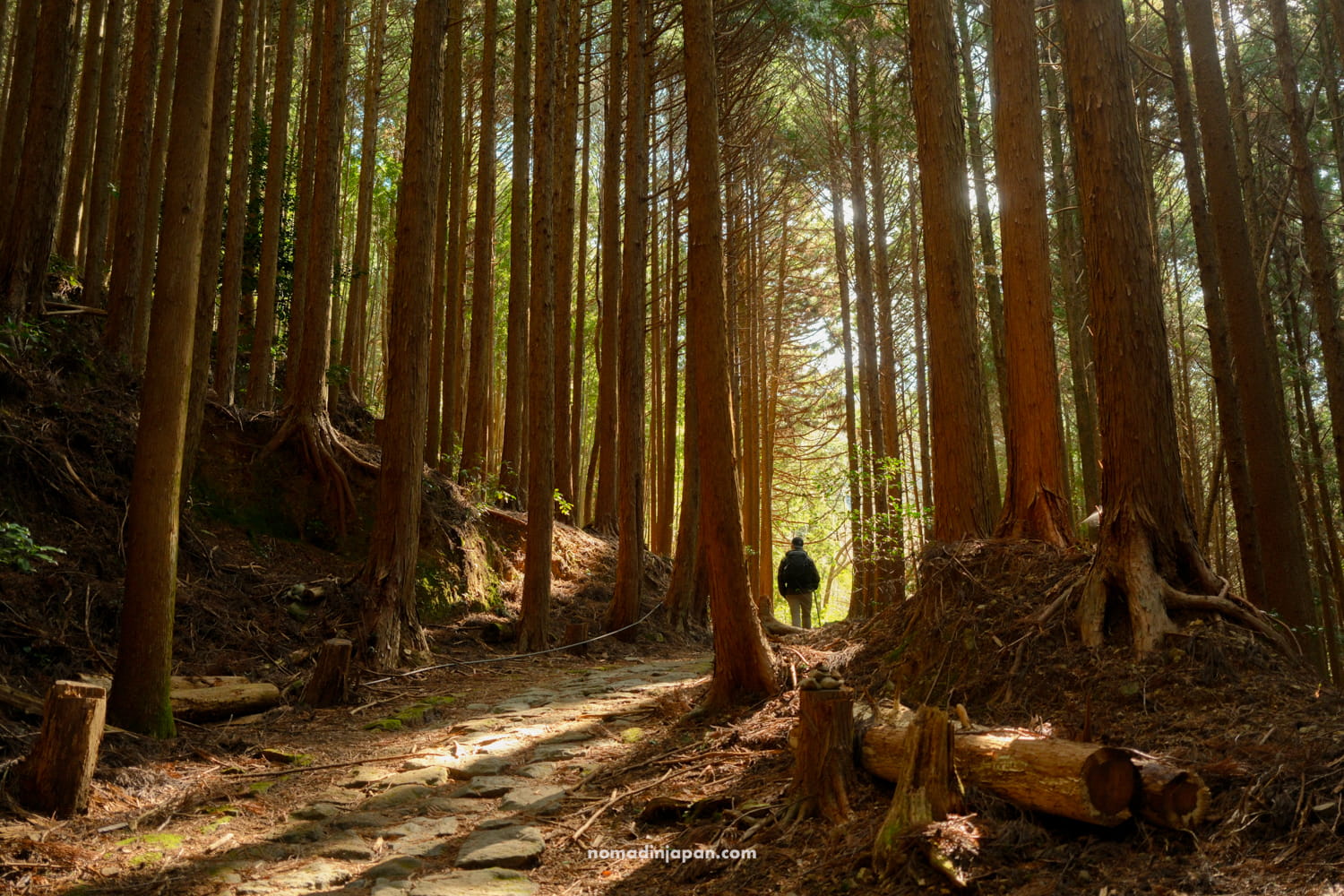
One thing that makes the Kumano Sanzan so accessible is that you can technically visit all three Grand Shrines by public transport or car.
However, to become a certified Dual Pilgrim, you need to hike at least a section between Takijiri-oji and Kumano Hongu Taisha.
So, in short, no, you don’t need to hike the full Nakahechi route (or any other of the Kumano routes) to visit the three grand shrines. However, if you want to collect stamps and visit the Oji shrines along the way, then yes — hiking, at least one section, will give you a sample of what the Kumano Kodo is like! 🥾
You can also combine bus + short walks or partial hikes.
We met many fellow pilgrims who drove (aka skipped on foot) the first sections and then decided to do a day walk from Hosshimon-oji to Hongu Taisha (about 7.5 km, gradual, scenic).
If you are more of an active, adventurous traveler, though, I can HIGHLY recommend hiking the Nakahechi all the way from the Takijir-oji trailhead to Kumano Nachi Taisha.
Final Tips for Visiting the Kumano Sanzan

The Kumano Shrines are ancient, sacred places of worship and ritual. Please be mindful when visiting! 🙏
Also, if you have extra flexibility, I highly recommend visiting the onsen villages, particularly around Hongu, such as Yunomine Onsen, which is historically tied to the Kumano. Here, you can also soak in Japan’s only World Heritage-listed hot spring, known as Tsuboyu Onsen.
I also suggest visiting Nachi-Katsuura, a charming fishing village, between your visits to Nachi and Hayatama shrines. We stayed overnight here at the Hotel Urashima (a bizarre, Showa-era resort built on the coast) to scope out their famous cave onsen baths.
There’s much to see and do in Wakayama Prefecture beyond the Kumano shrines, but they are definitely the heart of this rugged, mountainous peninsula! ⛩️