JR Pass Guide for Beginners: Your Guide to Train Travel in Japan
You’ve probably heard about Japan’s Rail Pass as the go-to pass for train travel across Japan.
While, yes, the JR Pass offers a convenient (almost) all-in-one pass to explore the country, oftentimes, it isn’t very cost-effective.
For example, I’ve traveled in Japan multiple times (on my fourth trip!) and have never needed a JR Pass.
So, do you?
Is the JR Pass worth it? And do you need it if this is your first time in Japan?
Whether visiting for the first time or wanting to maximize your time and budget, this overview guide breaks down everything you need to know about the JR Pass.

A Beginner’s Guide to the Japan Rail Pass (JR Pass)
The JR Pass Briefly Explained
The Japan Rail (JR) Pass allows pass holders unlimited travel on select trains and transport (extending to some bus and ferry routes) operated by the private Japan Railways Group.
It is exclusively designed for tourists or non-Japanese passport holders who wish to travel long distances in Japan or visit multiple cities, regions, or destinations within a specific timeframe (e.g., 7, 14, and 21 days are the most popular options for the standard JR Pass).
Typically, this pass is supposed to make navigating Japan easier for tourists who don’t want to worry about purchasing single journeys.

If used correctly/heavily, the JR Pass can save you heaps of money as train travel (especially bullet trains) is expensive in Japan.
However, tourists often purchase a JR Pass without researching if they will actually need it or save money.
Sometimes, you’ll waste money if you only use it once or twice (for example, for a roundtrip from Tokyo to Osaka/Kyoto).
Key Features of an Unlimited JR Pass:
- Unlimited rides on JR trains, including Shinkansen (bullet trains) and local JR lines.
- Coverage includes some buses and ferries, such as the Miyajima Ferry in Hiroshima.
- It is available for 7, 14, or 21 consecutive days (standard pass; check availability if choosing regional passes).
- Check the pass price and details here
Is the Japan Rail Pass Worth It?
I’ve never needed the JR Pass on my four previous trips to Japan.
However, this was because I was traveling slowly in Japan, and the JR Pass is designed for faster travel between destinations (for example, a 7-day or 2-week Japan itinerary).
Whether or not the JR Pass is worth the money depends on how you plan to travel in Japan.
If you’re staying in one region or city, the JR Pass probably won’t save you money, and regional passes could be a better option.
💡 If you’re visiting multiple cities quickly (changing every 1-3 days) and want to cover long distances, the JR Pass is likely worth the investment!
However, for most travelers, the JR Pass wouldn’t be worth it (again, depending on your travel plans).
The updated cost of the JR Pass:
| Type | Green (First-Class) Pass | Standard Pass | ||
|---|---|---|---|---|
| Duration | Adult | Child | Adult | Child |
| 7-day | 70,000 YEN | 35,000 YEN | 50,000 YEN | 25,000 YEN |
| 14-day | 110,000 YEN | 55,000 YEN | 80,000 YEN | 40,000 YEN |
| 21-day | 140,000 YEN | 70,000 YEN | 100,000 YEN | 50,000 YEN |
When the JR Pass could be worth it:
- You’re traveling between major cities like Tokyo, Kyoto, and Osaka within a specific time frame (i.e., 7 days).
- You’re planning day trips to nearby destinations (e.g., from Tokyo to Hakone or from Kyoto to Nara).
- You’re taking the Shinkansen bullet train, which can be expensive one-way (~$95).
- You want the flexibility of hopping on and off JR trains without buying individual tickets.
- Buy the JR Pass on Klook
Example Cost of the Standard JR Pass: Tokyo to Kyoto (Round Trip)
- A one-way ticket on a bullet train: Approx. ¥13,320 (~$90 USD)
- Standard JR Pass for 7 days (for one adult): ¥50,000 (~$320 USD)
Savings: You wouldn’t be saving on a roundtrip fare; however, if you take multiple additional trips (e.g., Kyoto to Osaka, Osaka to Nara) and add on long-distance journeys (Osaka to Hiroshima), the pass could break even.
However, if you have travel plans exceeding the JR Pass allotted time frame, such as spending ten days in Tokyo, five days in Kyoto, and then three days in Hiroshima, you would be better off buying single one-way journeys and paying for tickets as you go (or opting for bus routes or flying).
💡 JR Pass (Example) Calculation: Let’s say you’re visiting Japan for the first time and are visiting Tokyo, Kyoto, and Osaka (roundtrip from Tokyo) for roughly ten days. You likely would not save money buying the JR Pass.
Types of JR Passes
It’s important to note that even though everyone refers to the “JR Pass” as one single entity, there are actually several types of passes to choose from:
“Standard” JR Pass: The standard pass provides unlimited access to JR trains across Japan from Hokkaido in the north down to Kyushu in the south.
“Green” JR Pass: Offers the same benefits as the standard pass but with access to first-class seating (Green Cars).
“Regional” JR Passes: These are designed for travel within specific regions of Japan. Examples include the JR East Pass or the JR West Pass, which are more affordable than the regular JR Pass (since you’re only visiting a particular area).
🎫 select your Japan Rail Pass here 🎫
Regional Passes
An extra note on Regional JR Passes.
Regional Passes are more budget-conscious and designed for unlimited travel within a specific region or prefecture of Japan.
Even with regional passes, there are several types:
- Prefecture or region-wide (e.g., JR Hokkaido Pass, JR Kyushu Pass, etc.).
- Area-wide within a region (e.g., JR Kansai Wide Pass, one large area comprising Osaka, Kyoto, Nara, Himeji, etc., within greater Honshu).
- Linked areas (e.g., Osaka-Tokyo Hokuriku Arch Pass, which includes stops at Nagano and Kanazawa).
Which Transport Can You Use the JR Pass For?
Which trains you can use your JR Pass for will depend on which pass you get, but, typically, your JR Pass is eligible for use on:
- 🚅 Shinkansen (Bullet Trains): Almost all Shinkansen lines are covered, including the popular Tōkaidō, Sanyō, and Kyushu Shinkansen.
- Not able to use on the Nozomi or Mizuho trains.
- 🚆 Local and Rapid JR Trains: The pass includes unlimited travel on JR local and express trains within major cities.
- 🚌 Buses and Ferries: Some JR buses and ferries, such as the JR West Miyajima ferry.
Benefits/Pros of the Pass
Obviously, the biggest benefit of buying a JR Pass is saving money (paradoxical, right?).
If you travel long distances (say, from Tokyo to Hiroshima), the JR Pass can save you money compared to buying individual tickets.
For example, a round trip between Tokyo and Kyoto on the Shinkansen costs around ¥25,000 ($190), but a 7-day JR Pass costs around ¥50,000 ($320).
It does include other transport such as the JR Yamanote line in Tokyo, but will you really be using up $130 worth of travel on local trains and subways? Probably not.
Aside from potential savings, another benefit of the pass is that you get access to the Shinkansen bullet trains (however, see below; the fastest bullet train line, the Nozomi and Mizuho bullet train, aren’t included).
Perhaps the best feature of the JR Pass is free seat reservations.
While you don’t have to reserve a seat on bullet trains, it’s wise to do so during peak travel seasons. Otherwise, you and your travel partner/company could need to split up as seats together may not be available when you board.
Since I often travel solo in Japan, I typically don’t need to reserve seats on the bullet trains.
Cons/Limitations of the Pass
Even though the JR Pass is meant to simplify transport and train travel in Japan, it does have a couple of drawbacks.
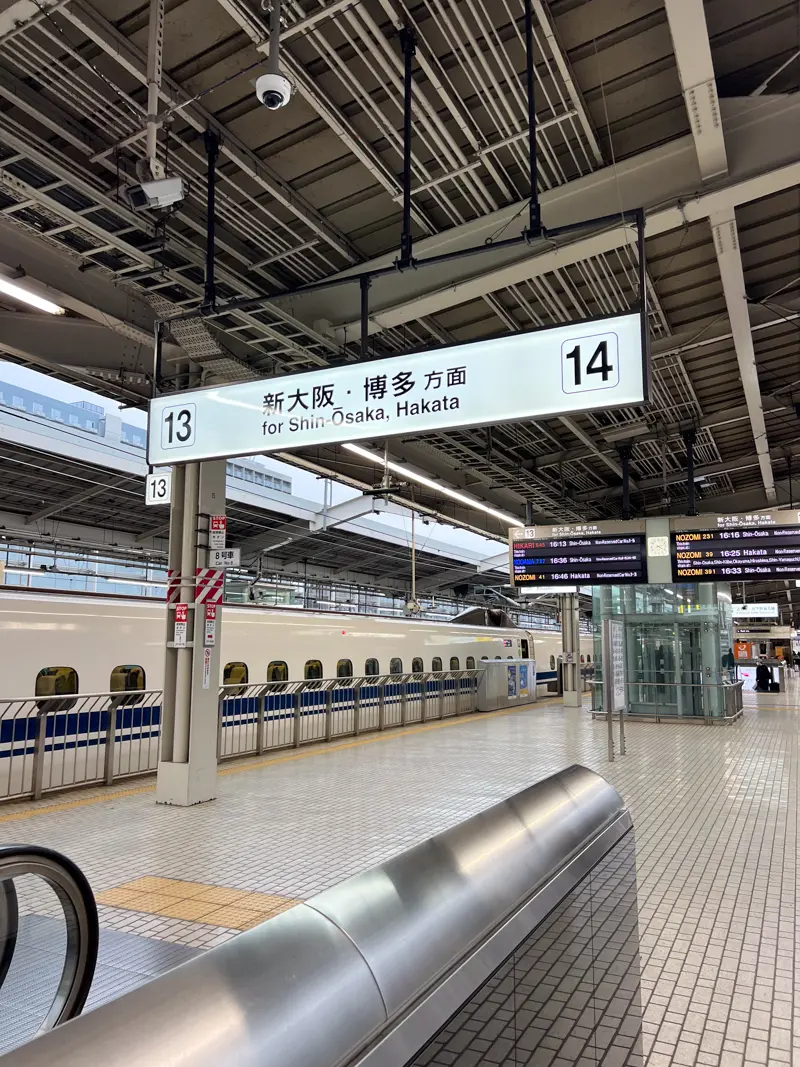
A big one is that the JR Pass is not valid on the Nozomi or Mizuho Shinkansen bullet train, which are the fastest bullet trains.
However, you can use the JR Pass for the Hikari or Kodama bullet trains, which are only slightly slower; make sure to check which bullet train you are boarding!
Likewise, the JR Pass cannot be used on non-JR-operated railways or subway lines, such as the Tokyo Metro or private rail networks; Japan has so many private rail/transport networks, which makes it confusing!
How to Buy the Japan Rail Pass
Unfortunately, you can’t use a digital-only version of the JR Pass; you must purchase it online and then exchange it for a physical pass upon landing in Japan.
If you order through the JR website, plan to purchase it at least two weeks in advance before you fly to Japan to receive your physical copy.
However, to make things easier, you can easily purchase your JR Pass online on the website or from Klook and receive a digital paper version, which you can later exchange for a physical pass.
Either way, to avoid interruption, buy the pass in advance.
Then, once in Japan (preferably at the airport), take your JR Pass and “activate” it at a designated office.
How to Use the JR Pass
- Purchase a pass online
- Purchase your chosen JR Pass online (easiest) or the JR website
- Take note of the activation date
- Upon arrival in Japan, exchange the digital version for a physical pass.
- Reserve seats on bullet trains (optional):
- Use the pass to book reserved seats for Shinkansen and limited express trains at ticket counters or machines
- For non-reserved seats, simply board the train
- Show your pass:
- Show the pass to a station attendant at the ticket gates instead of inserting it into the machine
How to Decide if the JR Pass Is Right for You
Still not sure if you need the JR Pass or not? It helps to have your Japan trip planned out a bit more closely.
For example, count exactly how many long-distance train journeys you plan to take and the potential routes for each day trip—and the would-be cost of each journey:
- Tokyo -> Fuji -> Tokyo
- Tokyo -> Osaka
- Osaka -> Nara
- Nara -> Kyoto
- Kyoto -> Tokyo
- etc
Secondly, consider opting out of the JR Whole Japan Pass (the most expensive and most flexible) if you’re staying in one region or visiting only a few cities.
Regional passes can cost half or a fraction of the standard JR Pass.
Finally, consider whether or not you’ll be traveling frequently by Shinkansen or on long-distance trips.
If so, then the JR Pass could be great to save money.

JR Pass Alternatives
Instead of the standard Whole Japan JR Pass, you could save money by focalizing your travels by region.
Again, Regional Passes are a good compromise between getting the JR benefits and not paying full price for coverage across Japan.
💡 Otherwise, the only true alternative to using the JR Pass is to purchase transport tickets as you go.
You can pay for transport in Japan using your IC card (Suica, Pasamo) and recharge funds online via your Apple Wallet or by inserting yen into the ticket machines with your IC card.
You can also purchase train tickets at the station offices’ welcome counters with a bank card or cash (they often offer service in several languages).
In my opinion, while Japan’s transportation network is streamlined and trains are hardly ever delayed (if so, by milliseconds), the “value passes” for transport or activities are often overly complicated. 🥴
I hope this beginner’s guide helps debunk some misunderstandings about the JR Pass’s cost-effectiveness and usefulness!
If you have any questions about the JR Pass and whether it’s right for your itinerary, feel free to let me know in the comments below.