
My Perfectly Slow 3-Day Fukuoka Itinerary (Kyushu)
For most tourists, a Kyushu trip starts off in Fukuoka, the capital city of Fukuoka Prefecture. Not surprisingly, either, considering it was once the historic gateway to Asia!
I’ve been romping around Japan for over a year, but it’s my first time in Kyushu, and therefore, my first time in Fukuoka, too. After spending four nights here, I am already certain I’ll be back. And next time, for much longer! (Ya know, to eat more ramen.) 😉
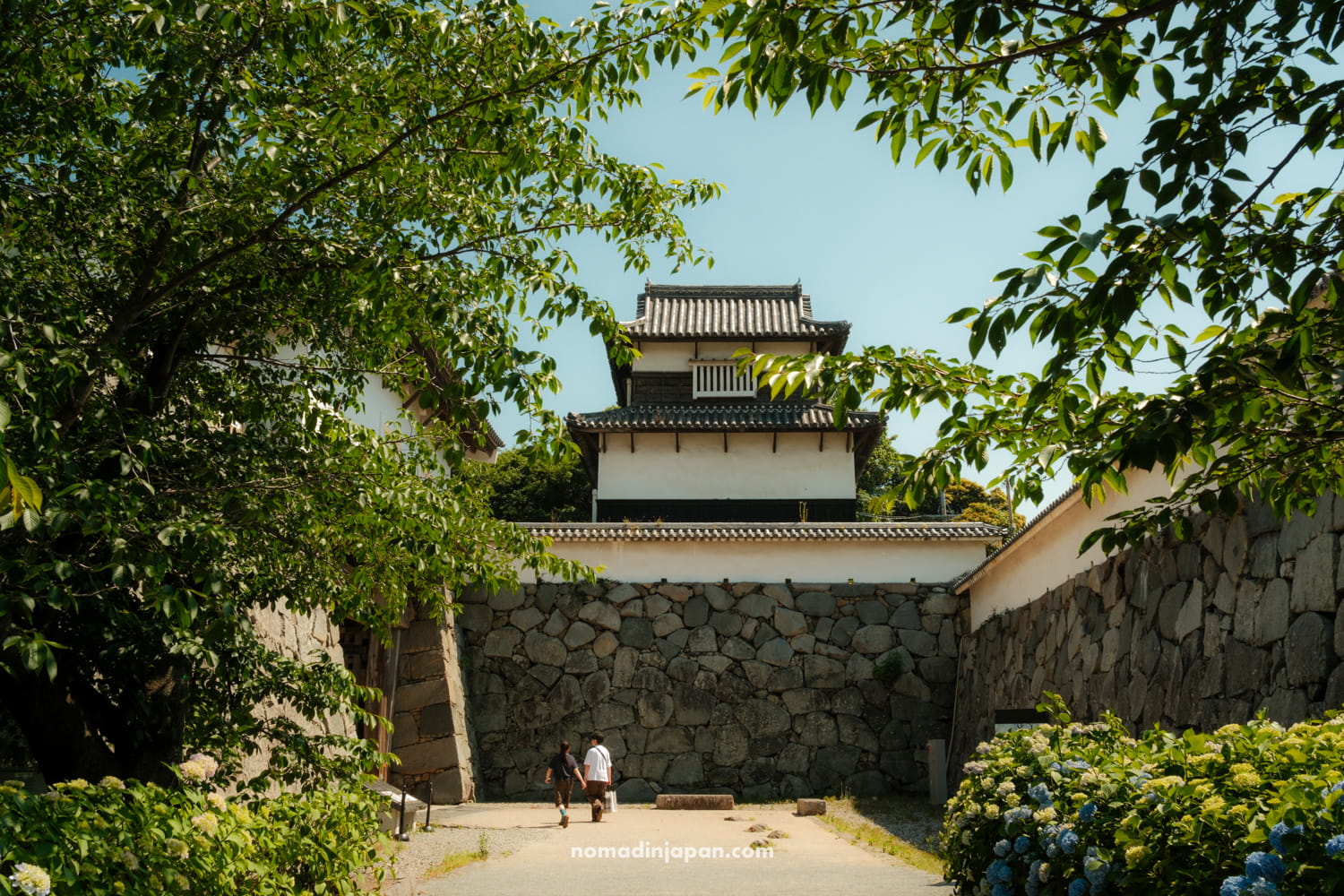
But within a day of exploring Fukuoka’s underrated neighborhoods and getting a sense of its atmosphere, I quickly associated it with a smaller, seaside version of Osaka.
Except here, you have far fewer crowds strolling down Naka and Hakata’s riverside promenades than you do in Dotonbori. Some corners and shrines, even the popular ones, edge on empty. To compare, I feel like Osaka is fast and quick, electric and lightning. But after spending a few days in Fukuoka and taking a mini day trip, it’s clear that Fukuoka is the city for slow travelers who enjoy an easygoing pace.
Fukuoka feels ideal for a longer, slower trip. I’d give it no less than three days.
For me, as a nomad, it was perfectly low-pressure. I could hang back in my hostel’s lounge and café, reading or journaling, or hop on the subway for a short ride into the heart of the city.
In Fukuoka, you can easily slip into open-air yatai stalls among locals without it feeling performative, or take a walk through a park and witness daily life. You can also hop on a train and reach other cities, the seaside, or the mountains and grasslands ever so efficiently.
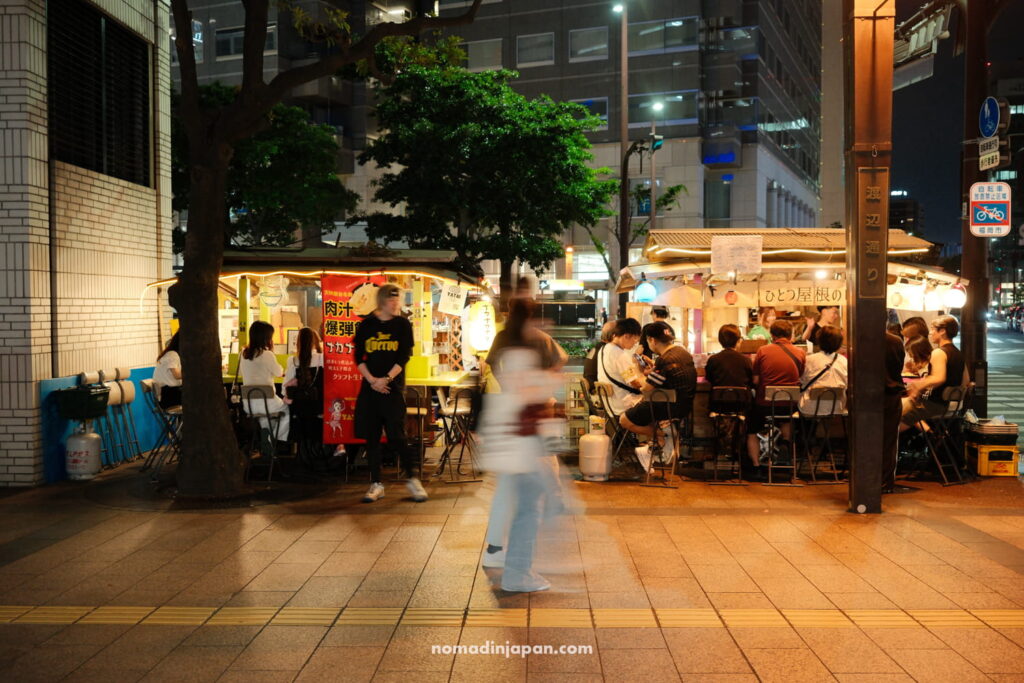
But Fukuoka itself has so much to offer that I found it hard to peel myself away for far-off day trips. It’s got multiple underrated hip neighborhoods, independent shops, galleries, parks, and museums begging to be put on the map.
All that said, here’s my 3-day Fukuoka itinerary, put together based on my experiences after 3D/4N at the end/start of May/June!
Feel free to pick apart and replace any activity with something else you find interesting! You can’t really go wrong here.
How to Spend 3 Days in Fukuoka (for First-Timers)
Day 1: Wandering Fukuoka’s Parks, Art, & Ramen
I love quietly immersing myself in a new city, hopefully through the more “local” scene — skipping and saving the more popular or guidebook attractions for a later day. So, that’s exactly what I did for my first day in Fukuoka, and what I recommend you do too!
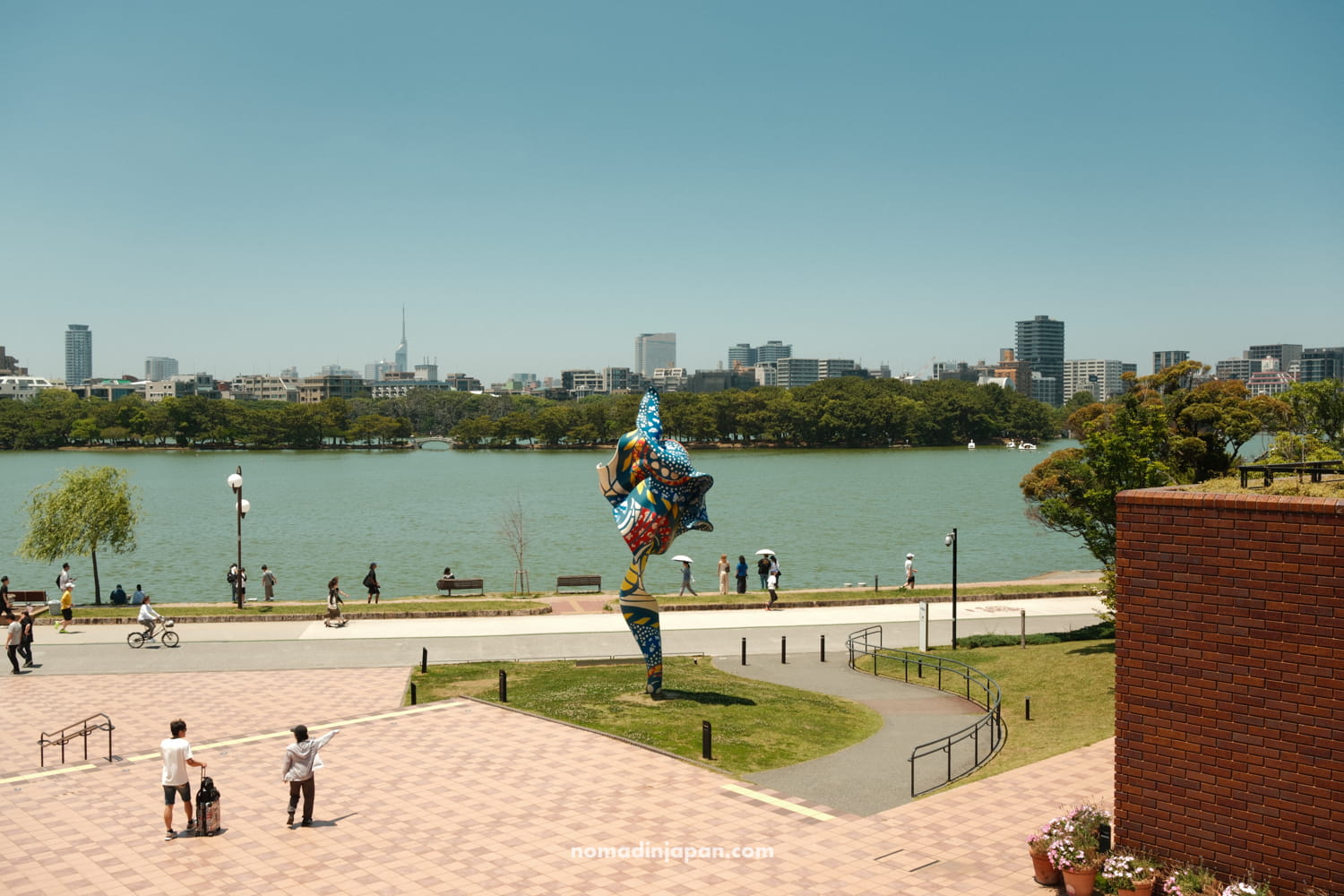
On day one, start your morning with a walk through one of Fukuoka’s most inspiring, spacious parks: Ohori-koen.
Set around a peaceful lake formed by Fukuoka Castle’s historic moat, this is the ideal starting point for a gorgeous day ahead (plus, it’s perfectly located beside where I stayed at Unplan, which is also just out front of Ohori Park metro stop).
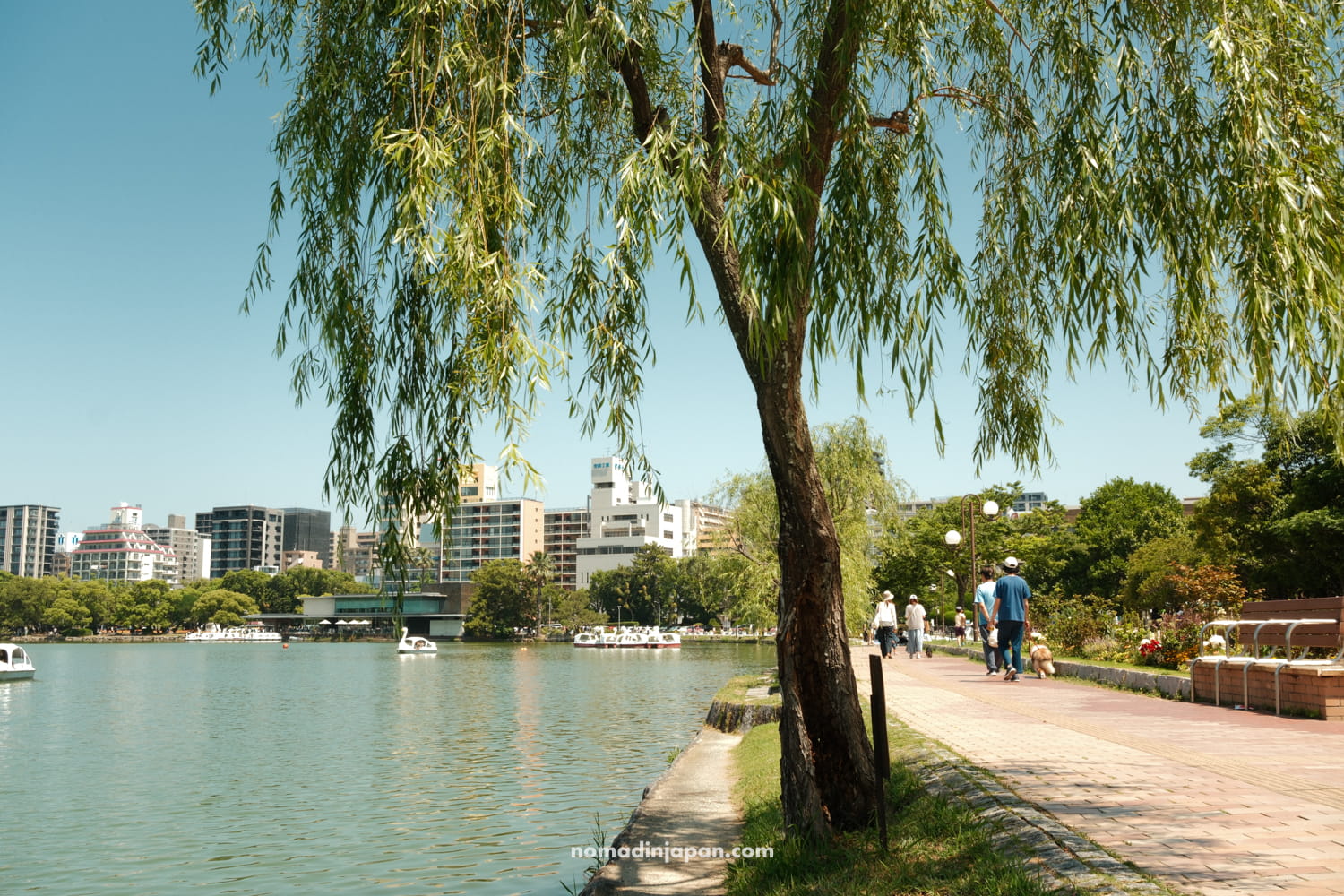
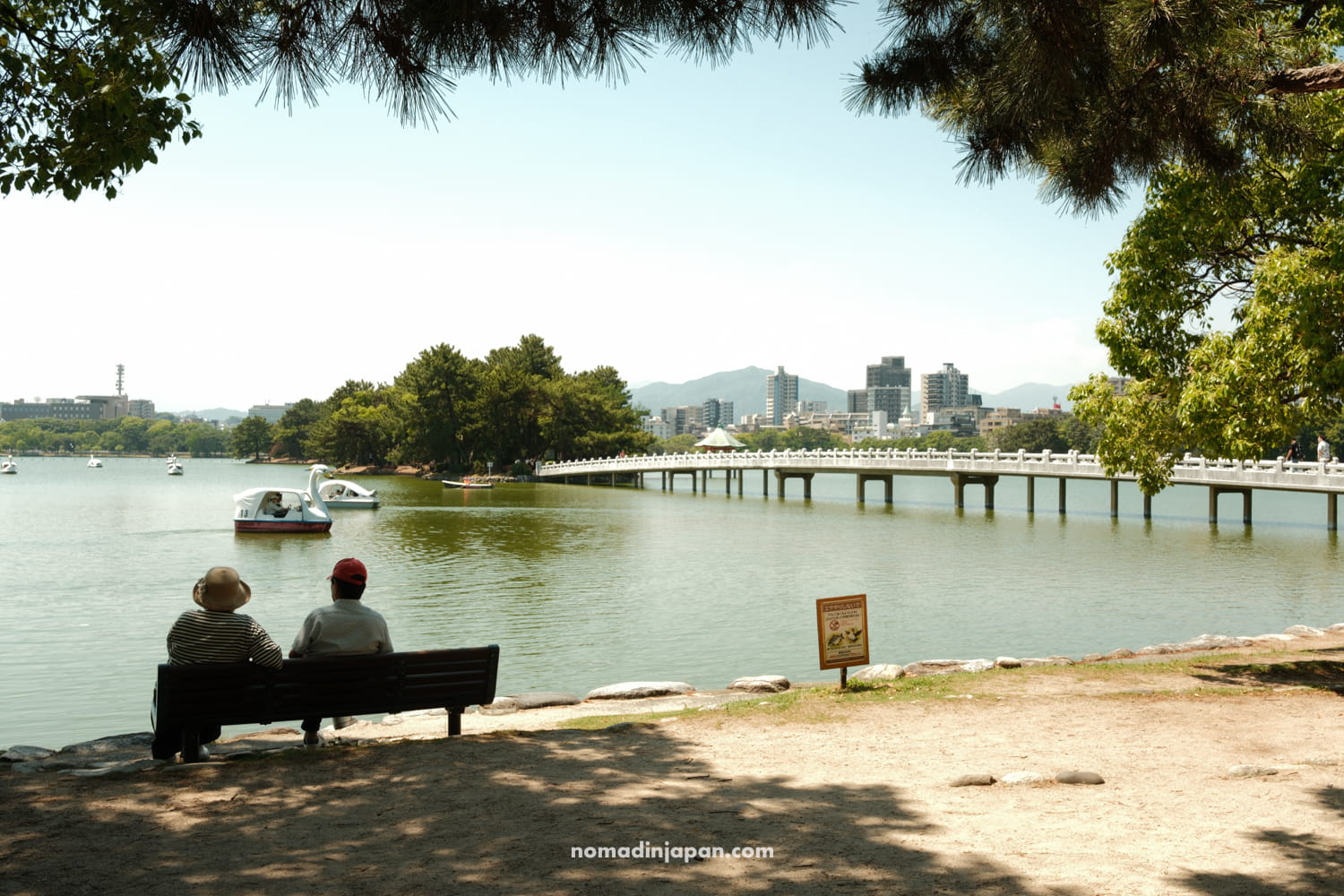
You’ll see far fewer tourists in Ohorikoen than at Hakata’s Canal City, and it’s far more relaxing and worthwhile than the large department stores.
Your first day in Fukuoka at a glance:
- 🥐 Start with coffee and pastries
- 🍵 Explore Ohori Park and the Japanese Garden
- 🖼️ Visit the Fukuoka Art Museum
- 🌸 Walk through Maizuru Park and Fukuoka Castle Ruins
- 👖 Browse vintage + thrift shops in Daimyo
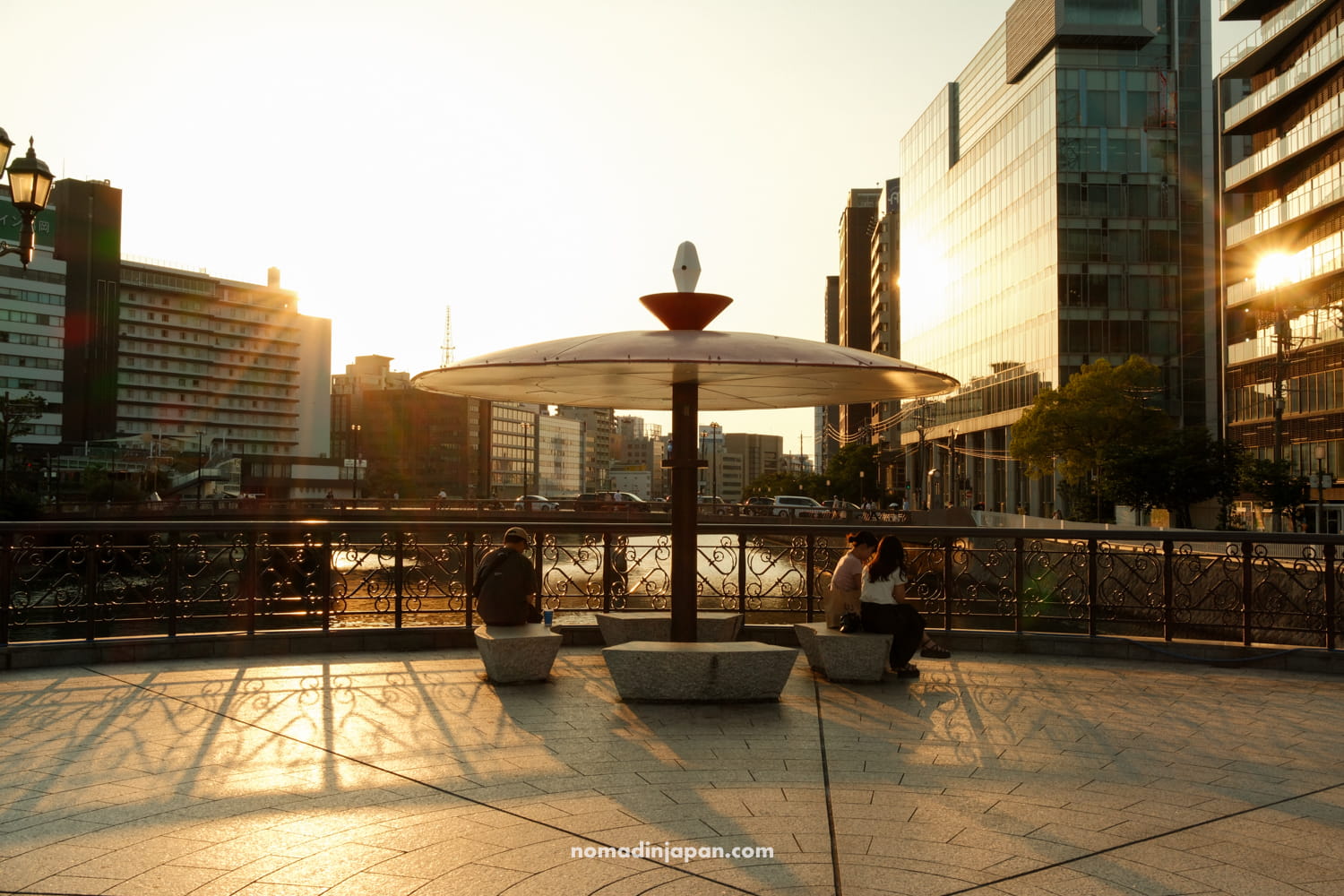
- 🌞 Atago Shrine or sunset stroll along the Naka River
- 🍜 Finish with a bowl of Hakata ramen and yatai hopping around Tenjin or Nakasu Island
You can rent a swan-shaped boat to peddle out on the expansive lake, or walk across its bridge and the islet that divides the lake in two.
Once on the other side, step into Fukuoka’s beautiful Japanese Garden. If you’ve never been to one before, this one is worth the stop (entry: 250 JPY) for experiencing a traditional Japanese landscaped garden and tea house with tiered waterfalls and iconic bridges.
I personally opted to visit the Fukuoka Art Museum (entry: 200 JPY), which houses two Contemporary Art Galleries on the 1st and 2nd floors.
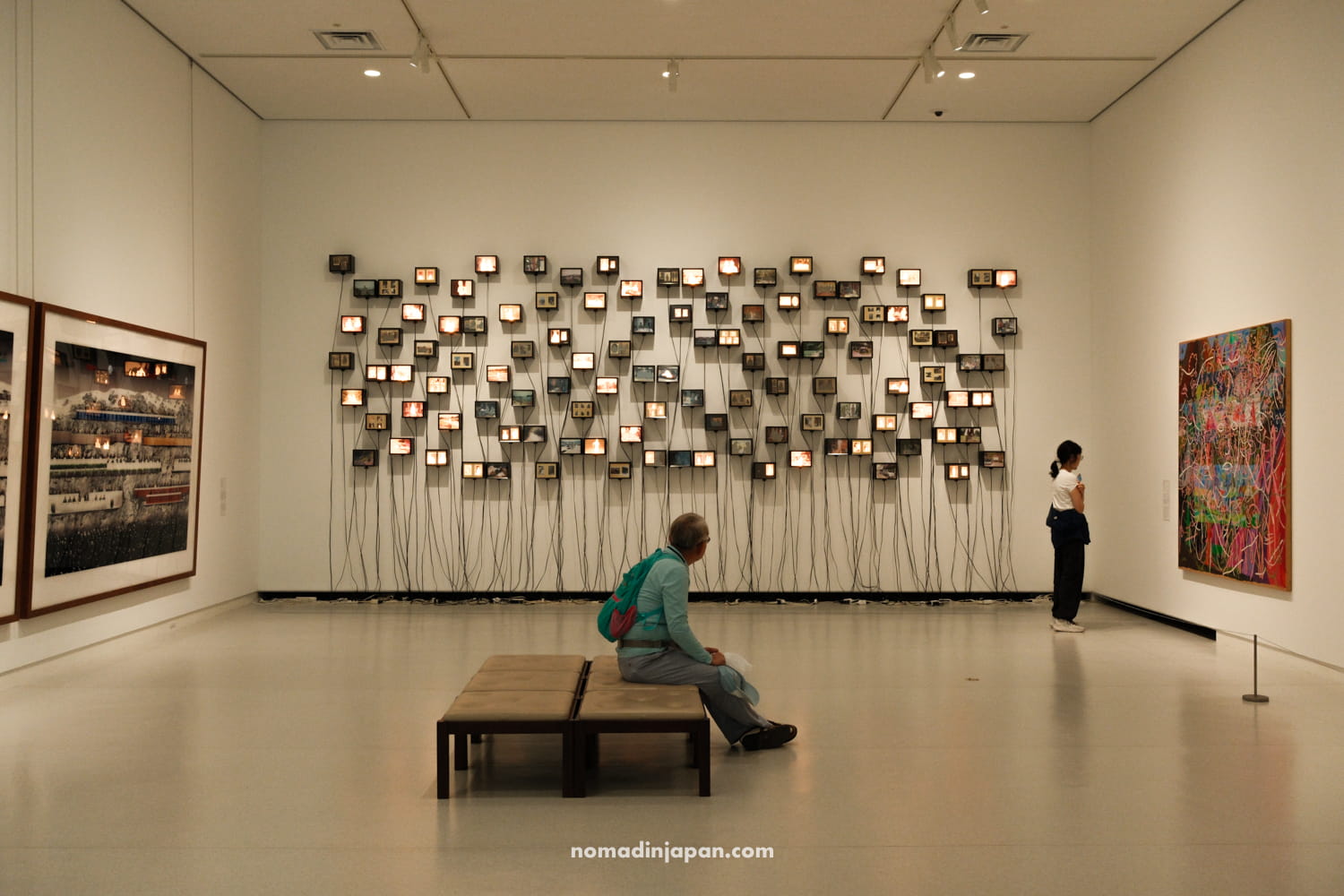
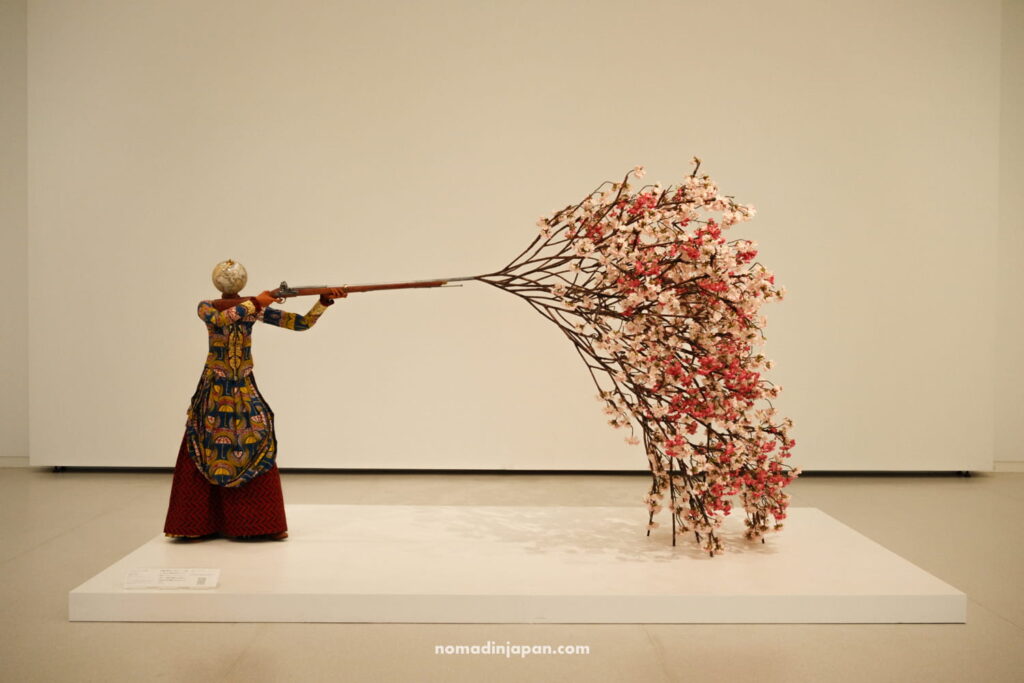
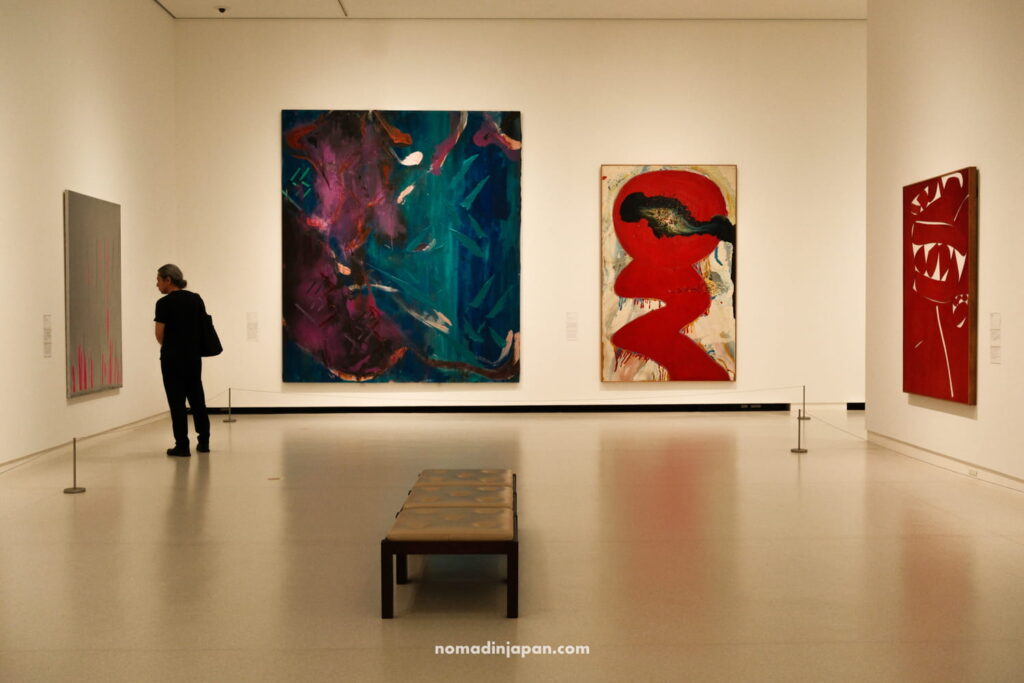
Inside is a range of abstract, impressionist, and designer art, including ancient pottery and ceramics, as well as original Buddhist statues from Fukuoka’s Tochin Temple!
There aren’t many food options inside the park, so I walked through the plum and cherry blossom-packed Maizuru Park 🌸 and the historic Fukuoka Castle Ruins to the Press Kitchen sandwich shop, located just at its edge.
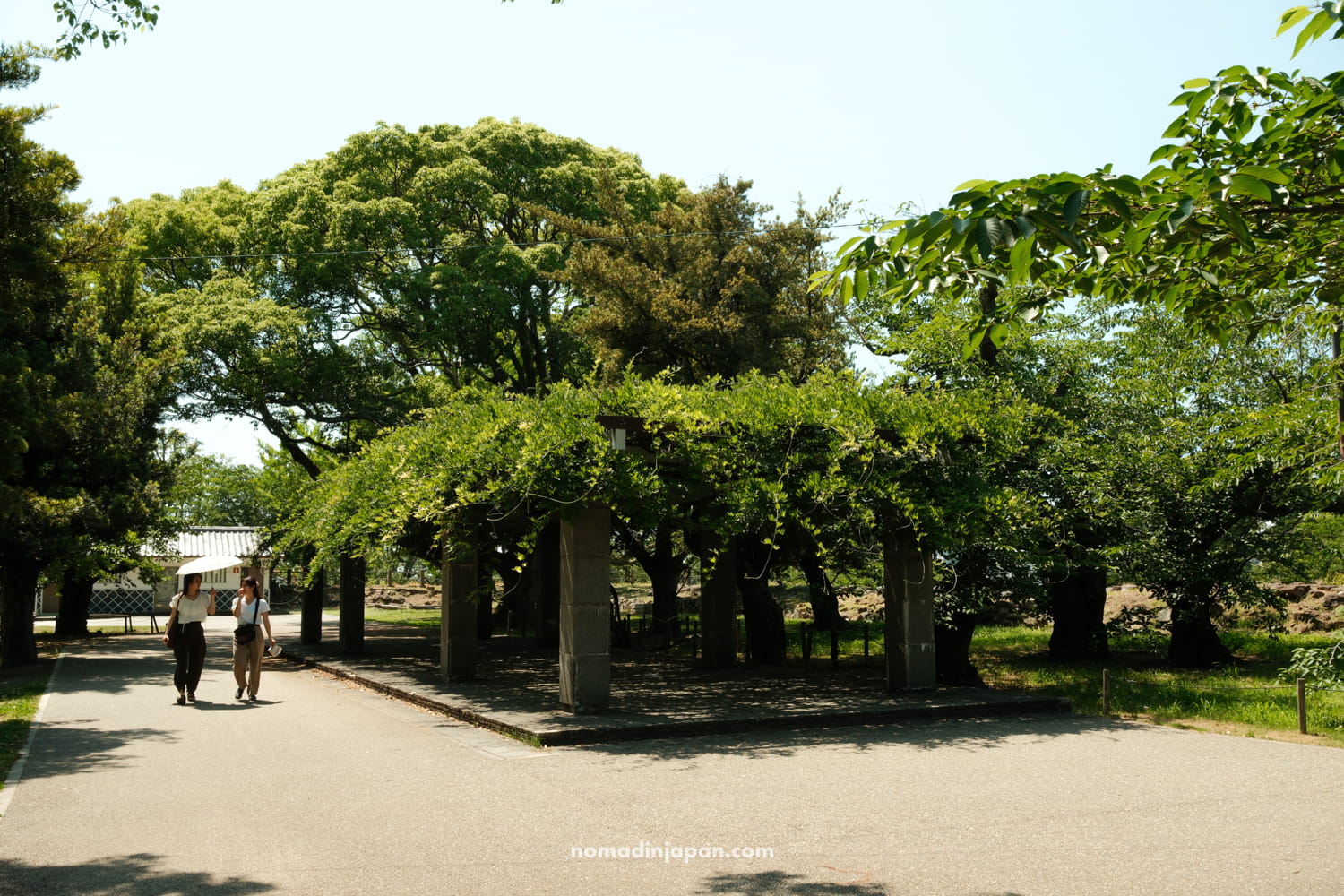
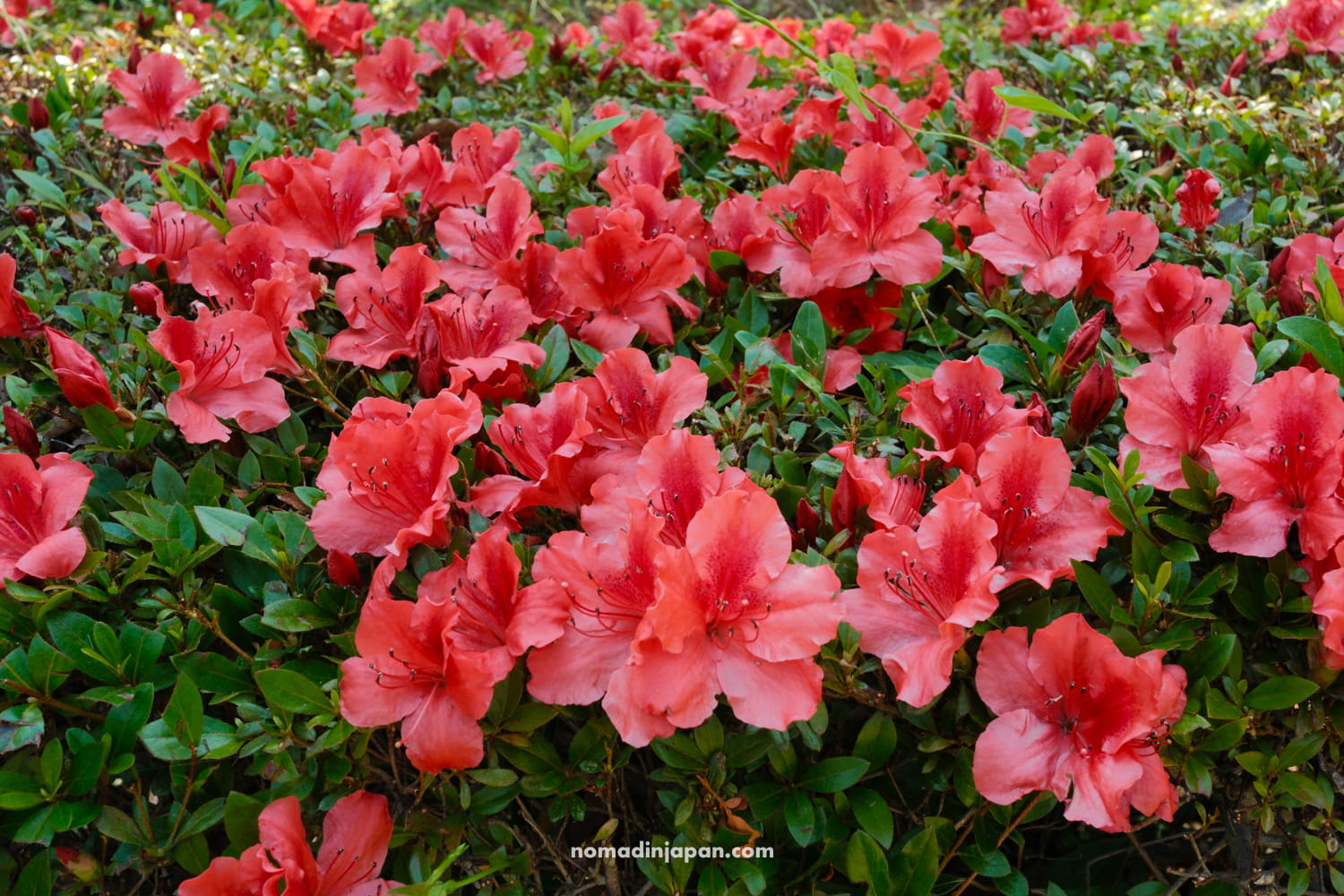
Next, take a rest at your hotel before making your way to Daimyo—Fukuoka’s “coolest neighborhood” sandwiched between Akasaka and Tenjin.
Daimyo has vintage thrift stores, record label shops, craft beer, specialty coffee, and popular soft serve.
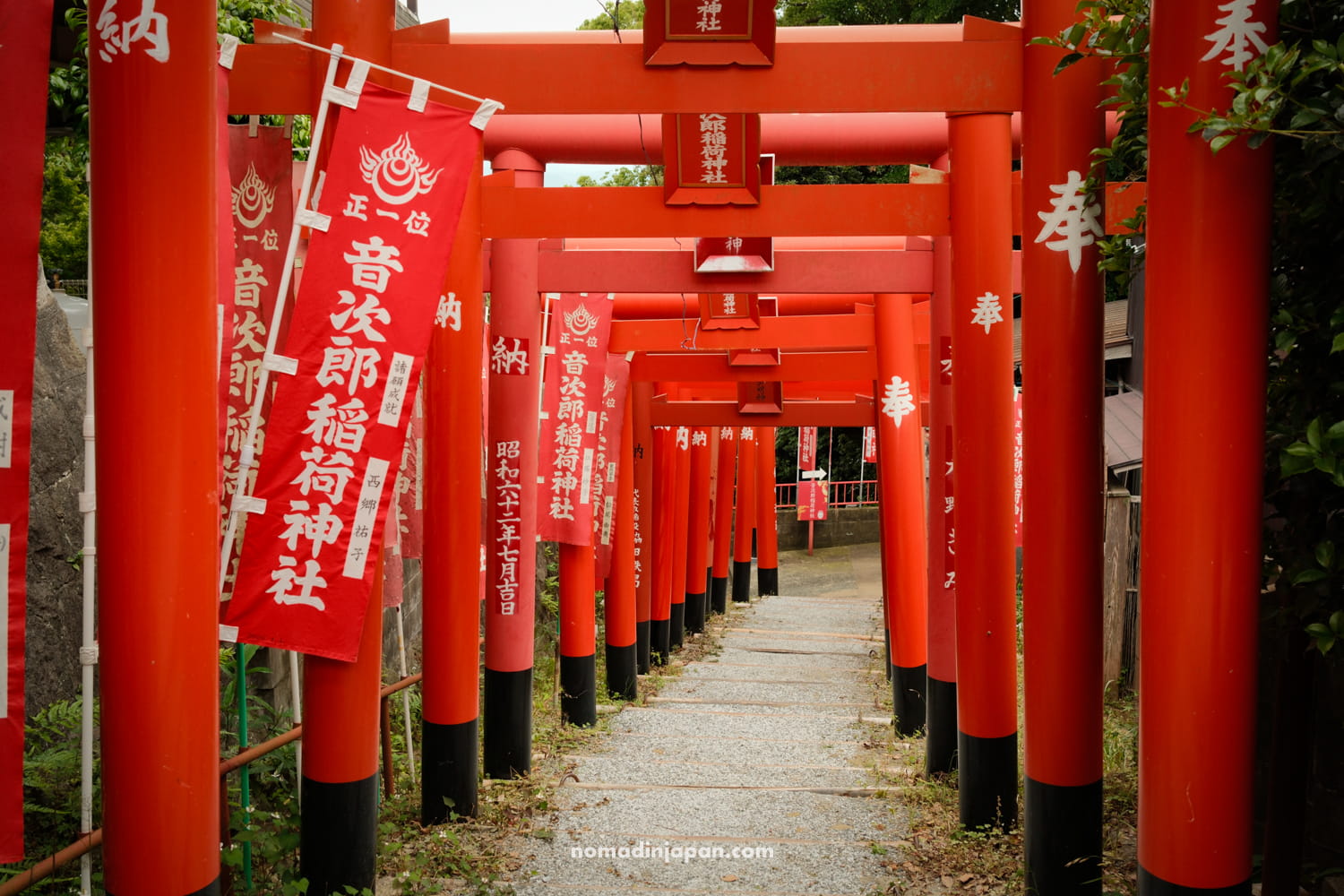
Or, hop in the metro and walk 15 minutes up the hilly staircase to Atago Shrine (the “fire protection” shrine) for a panoramic view over Fukuoka City (on your way, stop at Atago Otojiro Inari Shrine for a lovely encounter with Akira-san!).

Finally, head out for dinner with a classic Fukuoka yatai-hopping tour led by a local guide (or pick 1–2 and go yourself)!
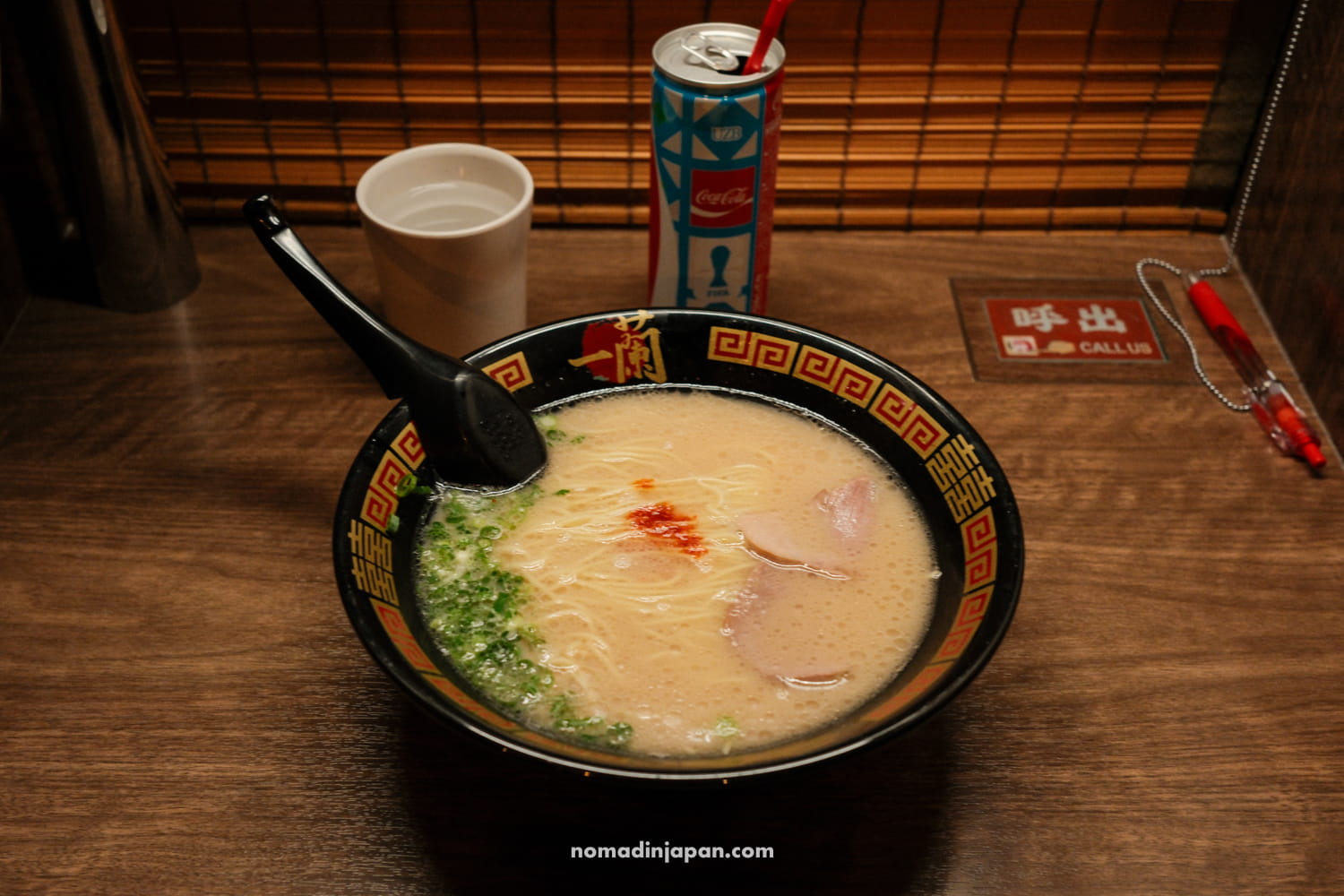
Fukuoka’s yatai stalls are street food carts, where you can sit shoulder-to-shoulder with locals trying Fukuoka’s specialty foods like mentaiko tamago (spicy cod roe omelet), Hakata ramen 🍜 (Fukuoka is the birthplace of tonkatsu ramen, after all!), and motsunabe (beef offal stew).
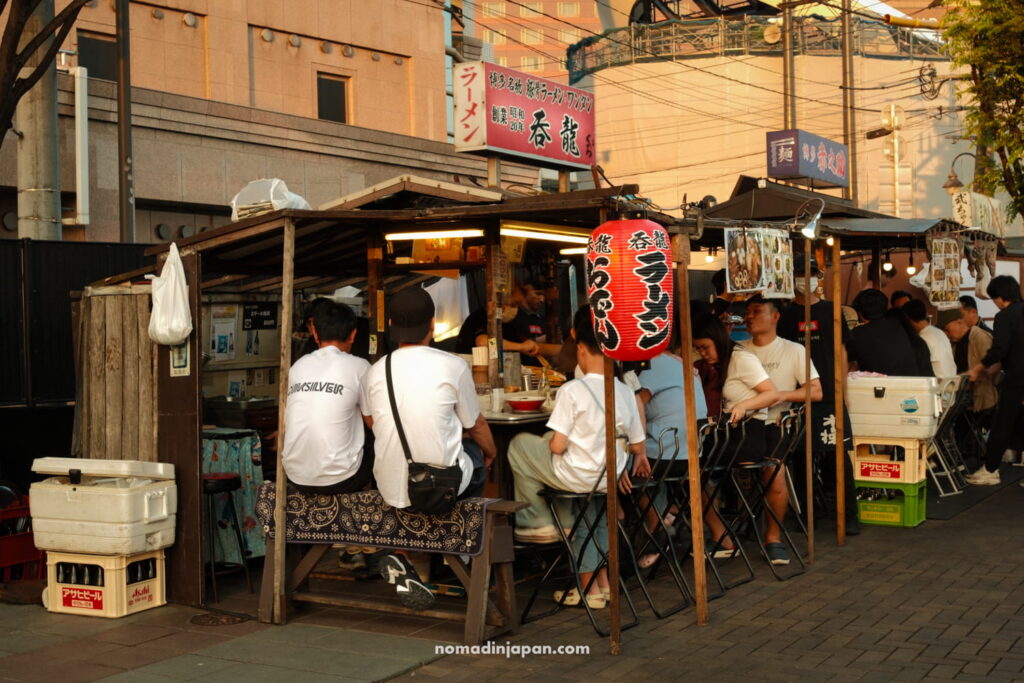
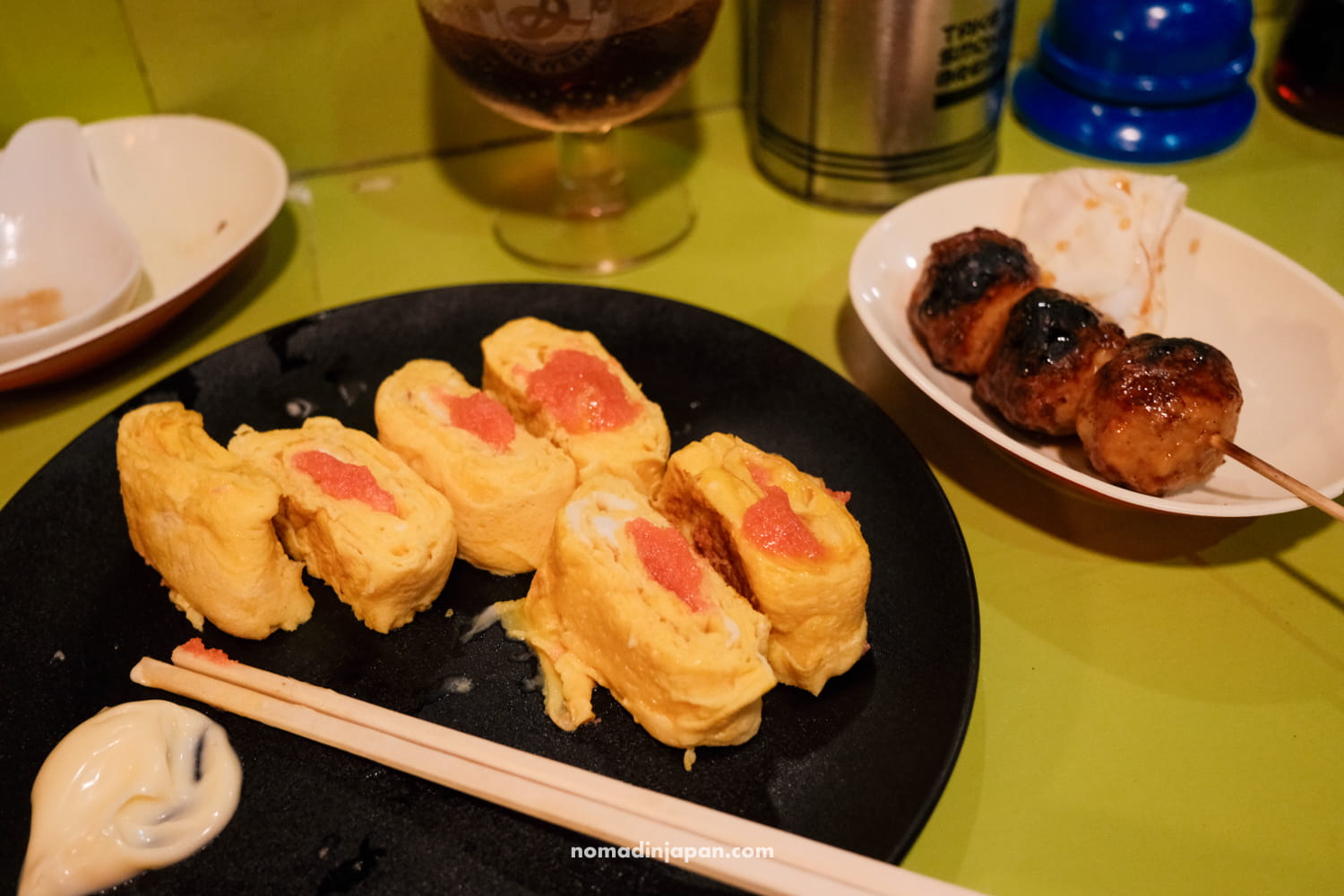
You can read more in my Fukuoka food guide, or head directly to Nakanakanaka (cash only), where I ate, near Tenjin Station.
Day 2: Day Trip to Yanagawa, the “Venice of Kyushu”
Fukuoka City has plenty to fill a 3-day itinerary on its own, but there are so many awesome day trips to do (too many, actually!). Pick one for this 3-day itinerary, or two if you have extra time and something is really on your list of must-sees.
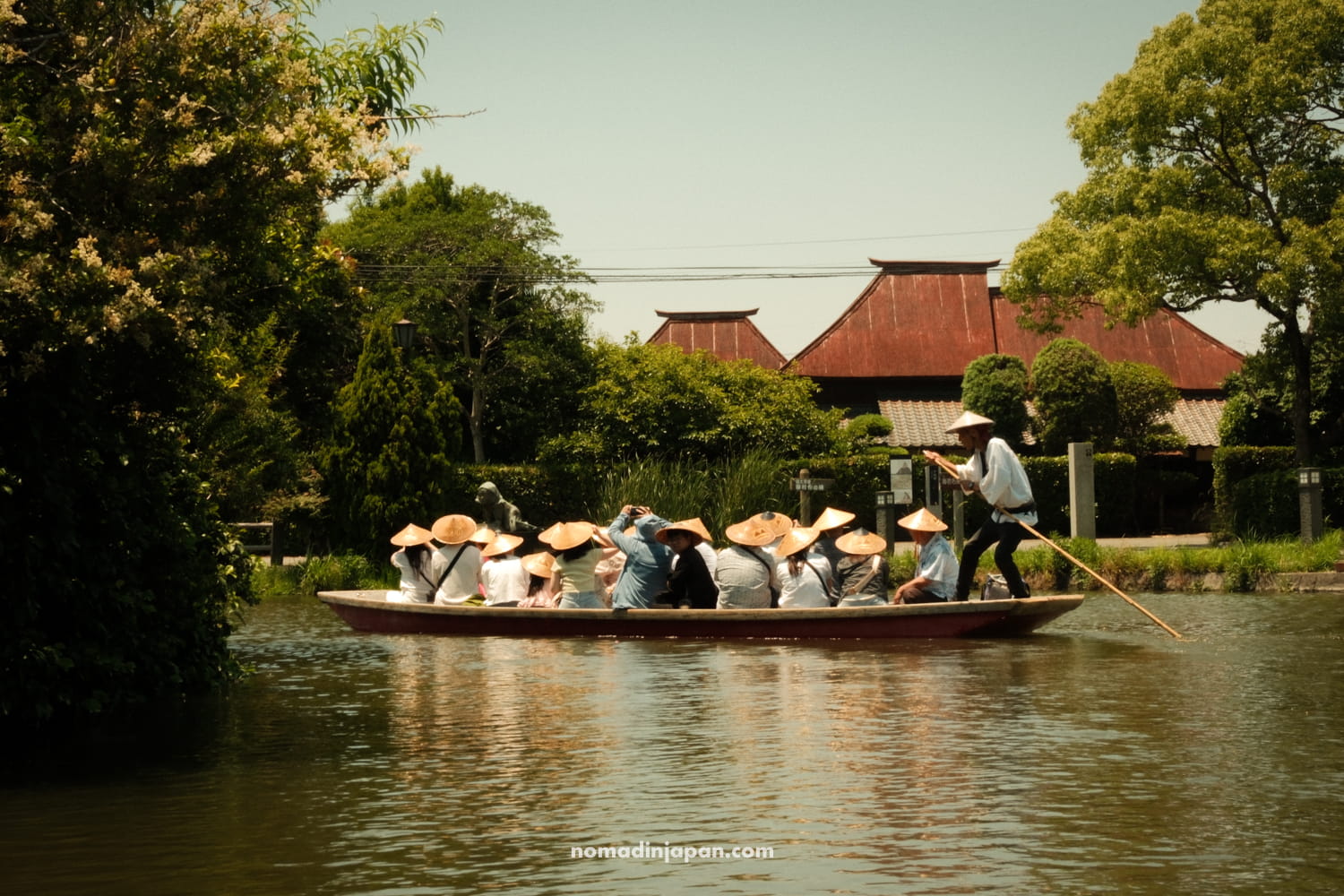
For a 1/2 day adventure (closer to Fukuoka; 1 hour away by train), check out:
- Yanagawa 🛶 for canal boat tours (sometimes combined with Daizafu)
- Nanzoin Temple 📿 with the Reclining Buddha
If you want a fuller day trip (guided 8-10 hour tours), Fukuoka is perfectly situated with lots of guided tours combining:
I decided to stay closer to Fukuoka, and opted for a day trip to Yanagawa, dubbed the “Canal City” and the “Venice of Kyushu.”
Here, you can take a leisurely 1-hour canal tour on a traditional donko boat through the weeping willow-lined waterways of historic Yanagawa, once a feudal samurai town and birthplace of the famous Japanese poet, Hakushu Kitahara.
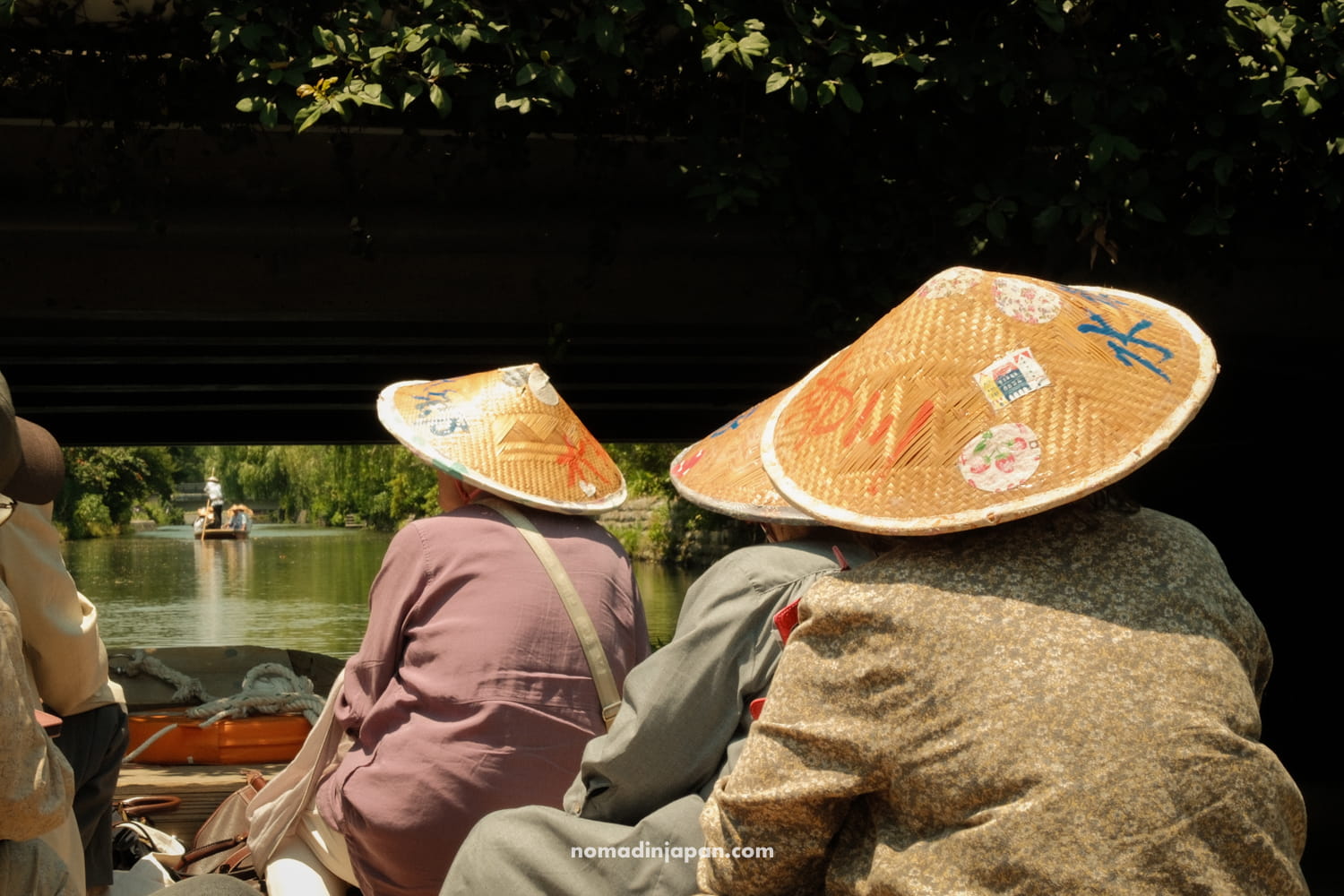
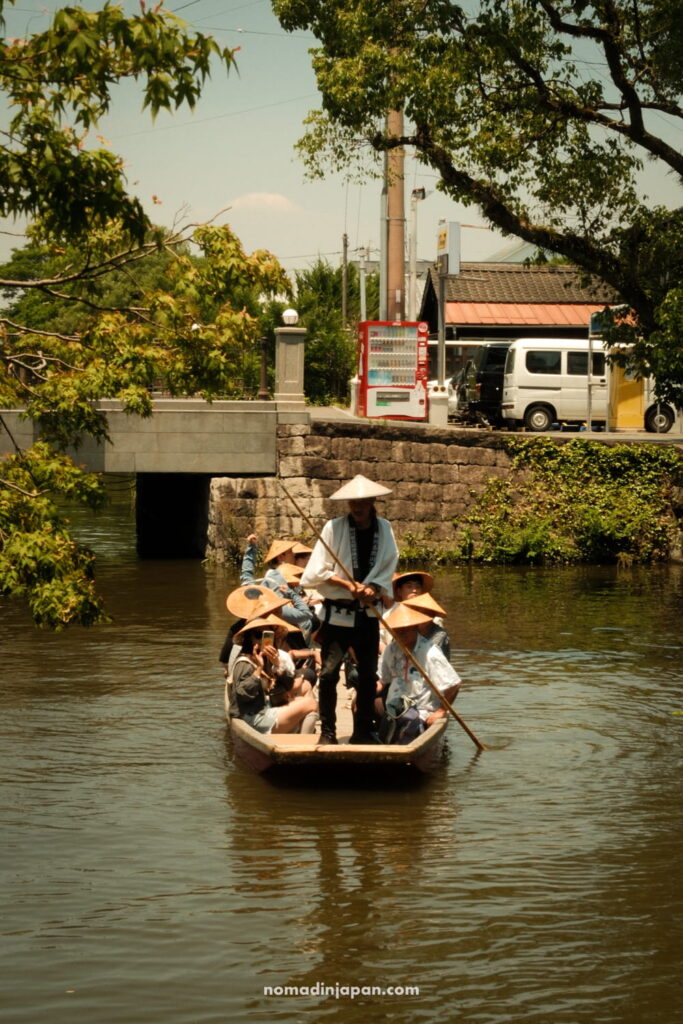
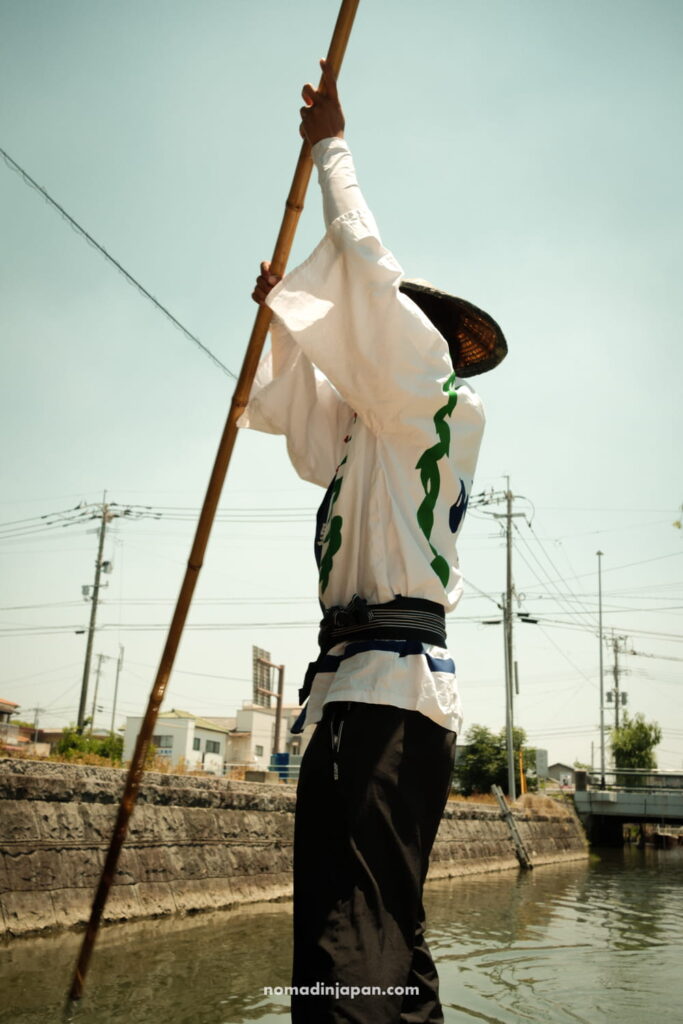
During the tour, your boat navigator will sing Kitahara’s famous poems (my tour with Suigo Kanko was in Japanese, which I didn’t mind!).
After your tour, hop off and stroll along the canal to grab lunch. Try the local specialty: fluffy unagi (steamed freshwater eel; I can recommend trying it at Mingei!), before touring Kitara’s family home or the Tachibana Museum.
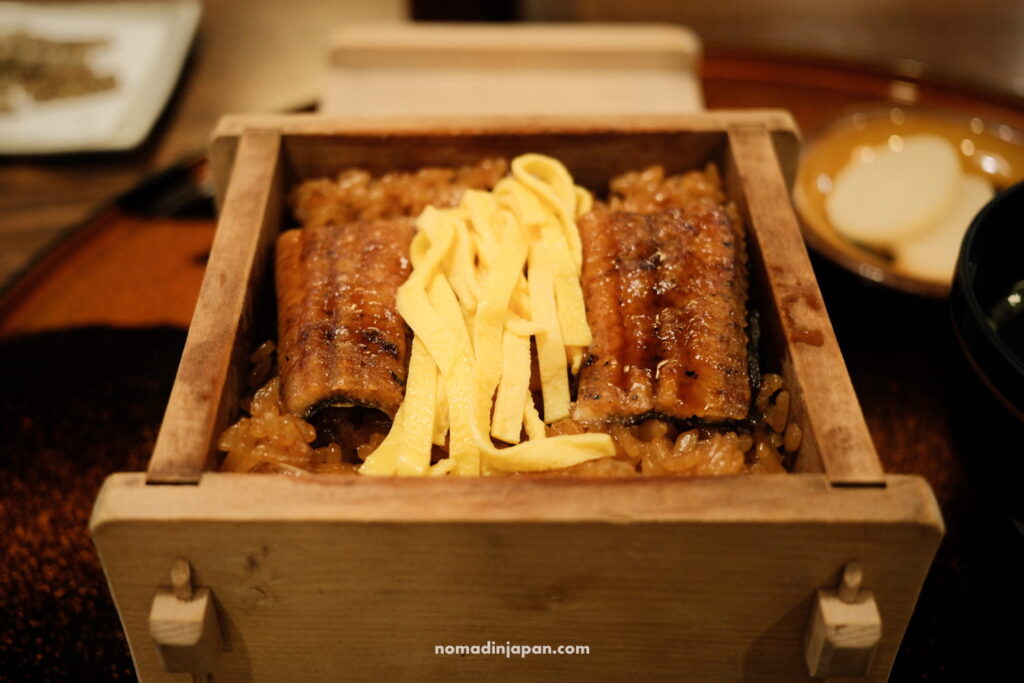
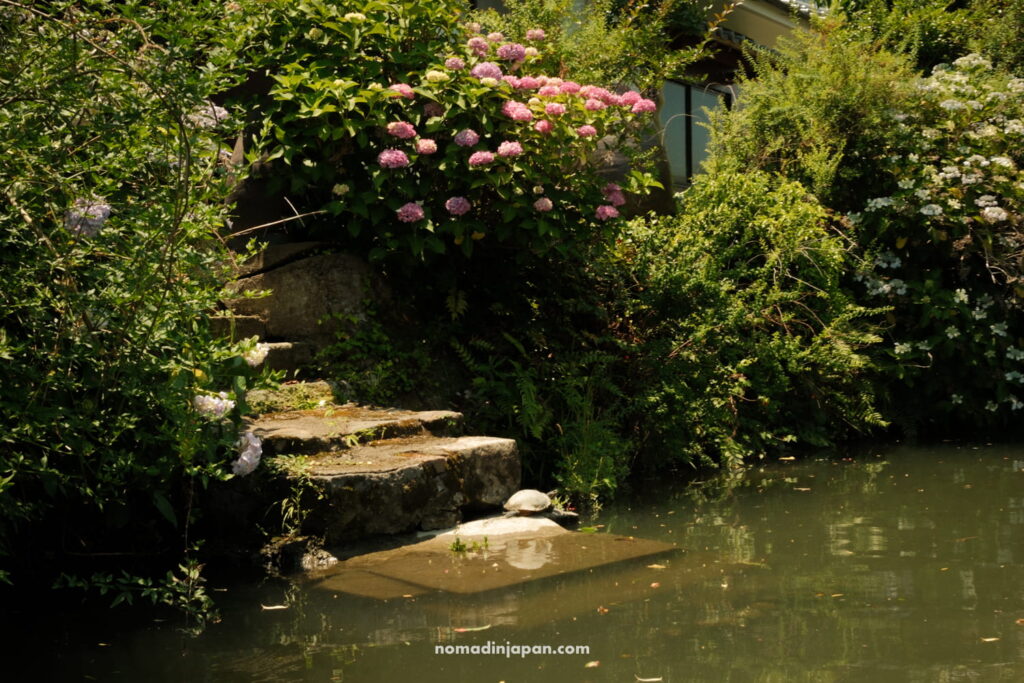
My visit to Yanagawa fell at the end of May, and it was very hot—take a hat for the boat tour (or rent a conical one for 100 JPY) and enjoy some post-unagi ice cream.
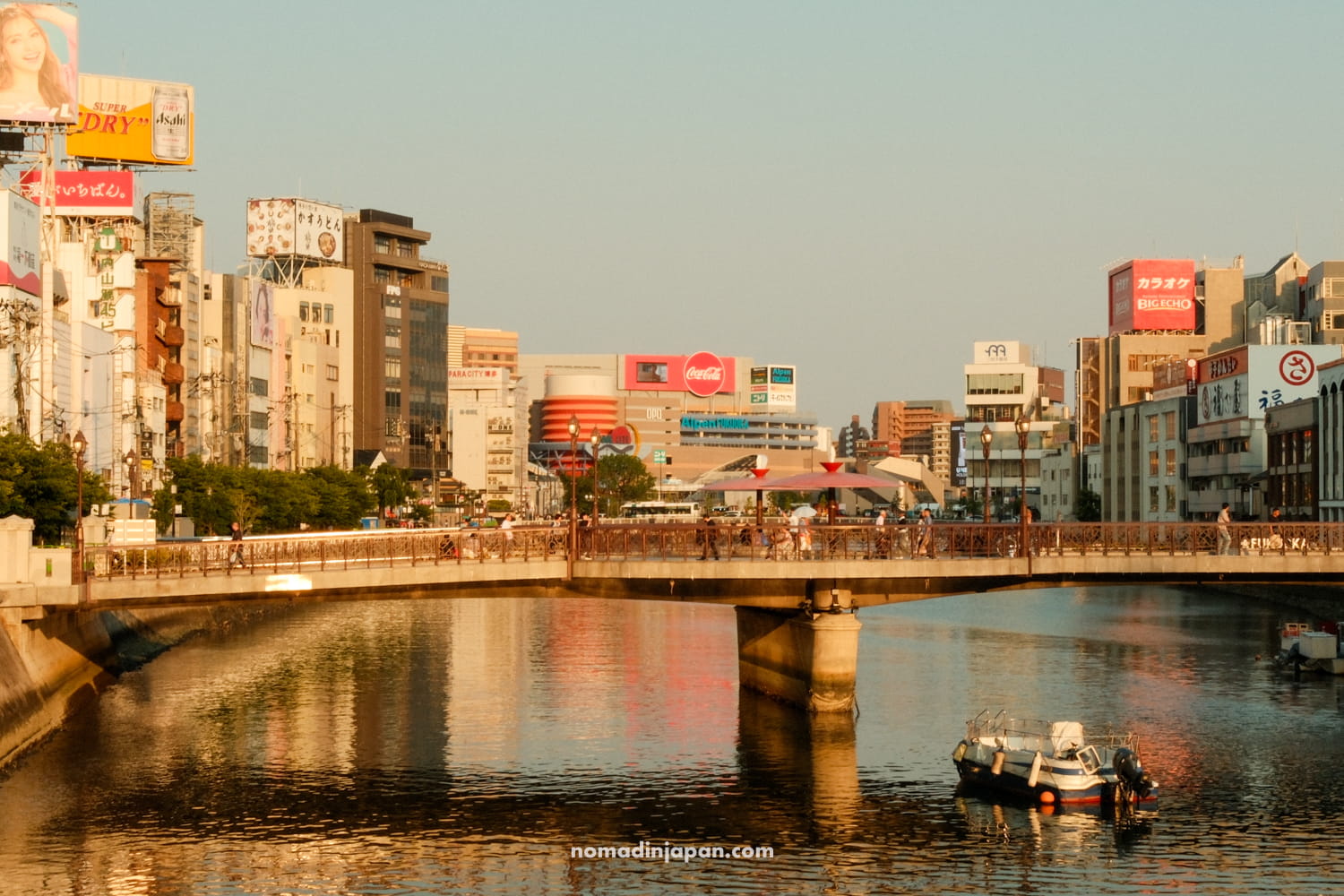
You could stretch out your time in Yanagawa by visiting the town’s Tachibana Museum, followed by dinner. I returned to Fukuoka in the early evening and ate at the original Ichiran (yes, the first; founded right here in Fukuoka in 1960), before strolling on Nakasu Island for sunset.
Day 3: Shrines, Seaside Views & Hakata Culture
Save your last full day to explore more neighborhoods in Fukuoka proper and any last-minute shopping. Fukuoka has an “Old Town,” aka Gion, just like Kyoto. However, with far fewer crowds.
Start your morning by dipping into the Kushida Shrine, Fukuoka’s oldest Shinto shrine (757 CE), beloved by locals as the guardian shrine of Hakata.
You’ll be extra lucky if you’re visiting Fukuoka in July, as this is when the famous Hakata Gion Yamakasa is held. Pick up an omamori before wandering through more old streets and temples!
To finish up your last day in Fukuoka:
- ⛩️ Morning at Kushida Shrine (or Nanzo-in as an alternative)
- 🚶♀️ Wander through Fukuoka’s Gion — Hakata’s old streets and temples
- 🛍️ Explore Canal City Hakata
- ☕️ Coffee break in the Momochi area or Nishijin Shopping Street
- 🌊 Stroll the Momochi Seaside Promenade
- ☀️ Final sunset overlooking the city from Fukuoka Tower
- 🦕 (Optional add-on: teamLab Forest)
- 🦐 Seafood dinner and drinks!
An alternative morning is to get an early start at Nanzo-in Temple (a 1-hour train journey) to see the colossal Reclining Buddha (said to be the largest of its kind in the world) if you want a more “bucket list”-worthy temple visit!
Nearby Gion, you have the chance to stroll around the popular malls at Canal City. If you’ve already been this way, skip it and head directly to the Momochihama area of Fukuoka, near the Fukuoka Tower and seaside promenade.
If you are looking for a good lunch spot, both Nishijin and Ropponmatsu are two more underrated areas of Fukuoka to explore.
For sunset, get tickets for Fukuoka Tower (1,000 JPY) and a final dinner by the seaside.
To sign off the night, you have all the distractions of a cosmopolitan Japanese city: arcades, karaoke rooms, Taito claw-machine stations, and underground malls. Pick your poison! I got EXTRA lucky and won a whale-sakura mofusand plushy at Taito. 😻
If you get the chance to linger longer in Fukuoka, you won’t regret it.
Fukuoka’s got the added perk of both the coastline and the interior mountains for even more side quests and nature escapes, which is why you should plan for no less than three full days here!

Got any questions about my time in Fukuoka? Let me know in the comments below!


Beautiful shots, thank you for sharing !!! This bowl of Ramen looks fantastically delicious
Thank youuuu! ☺️