Gliding Along Willow-Lined Canals: A Day Trip to Yanagawa From Fukuoka
Recently, I went on a solo day trip from Fukuoka city to Yanagawa. If you’ve never heard of this town, you wouldn’t be the first!
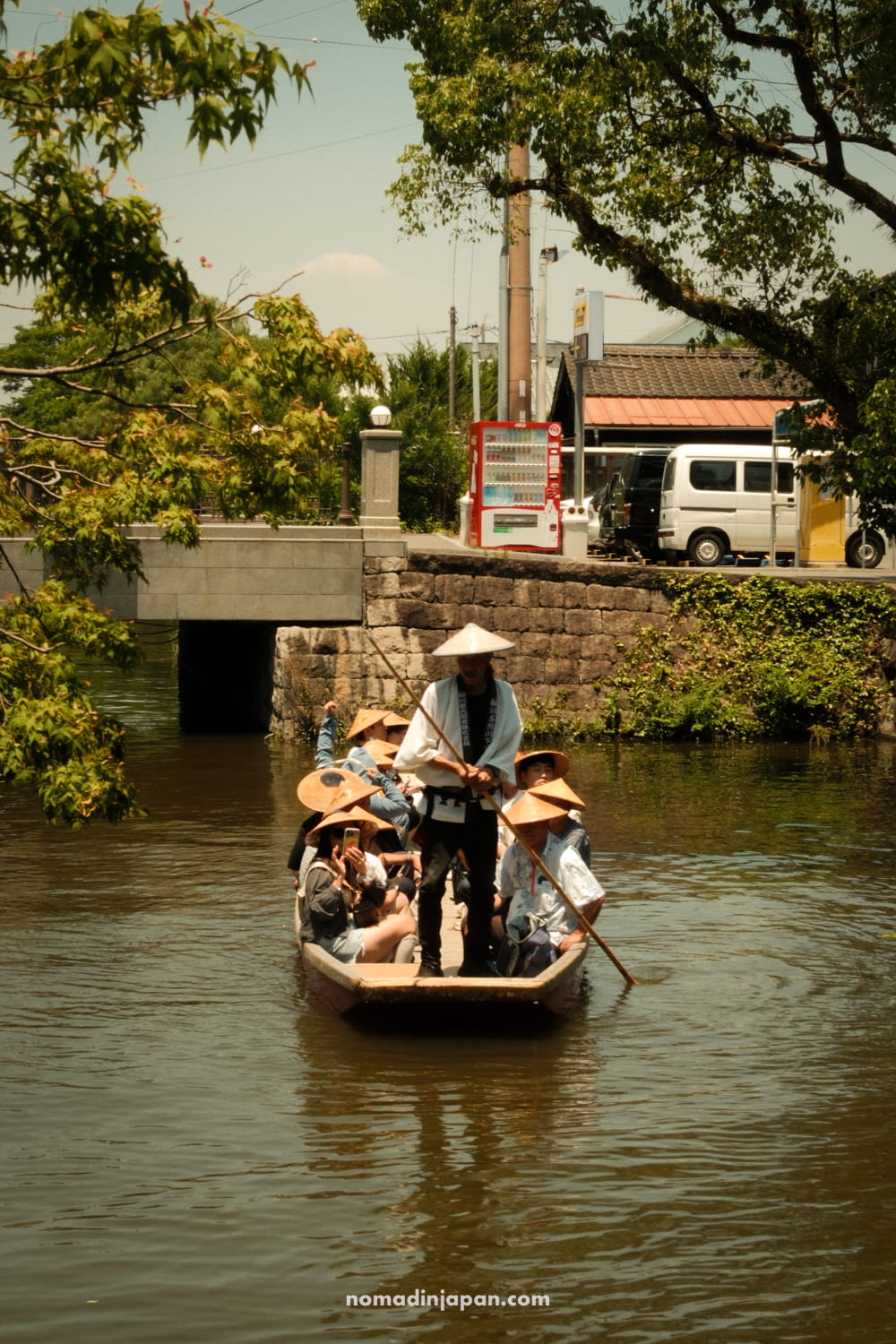
Yanagawa is an otherwise hidden mid-size town in Northern Kyushu, about an hour from Fukuoka proper by train. However, it’s gaining more and more traction (especially on social media) as a tourist destination for its historic canals, which you can tour by traditional donko boat.
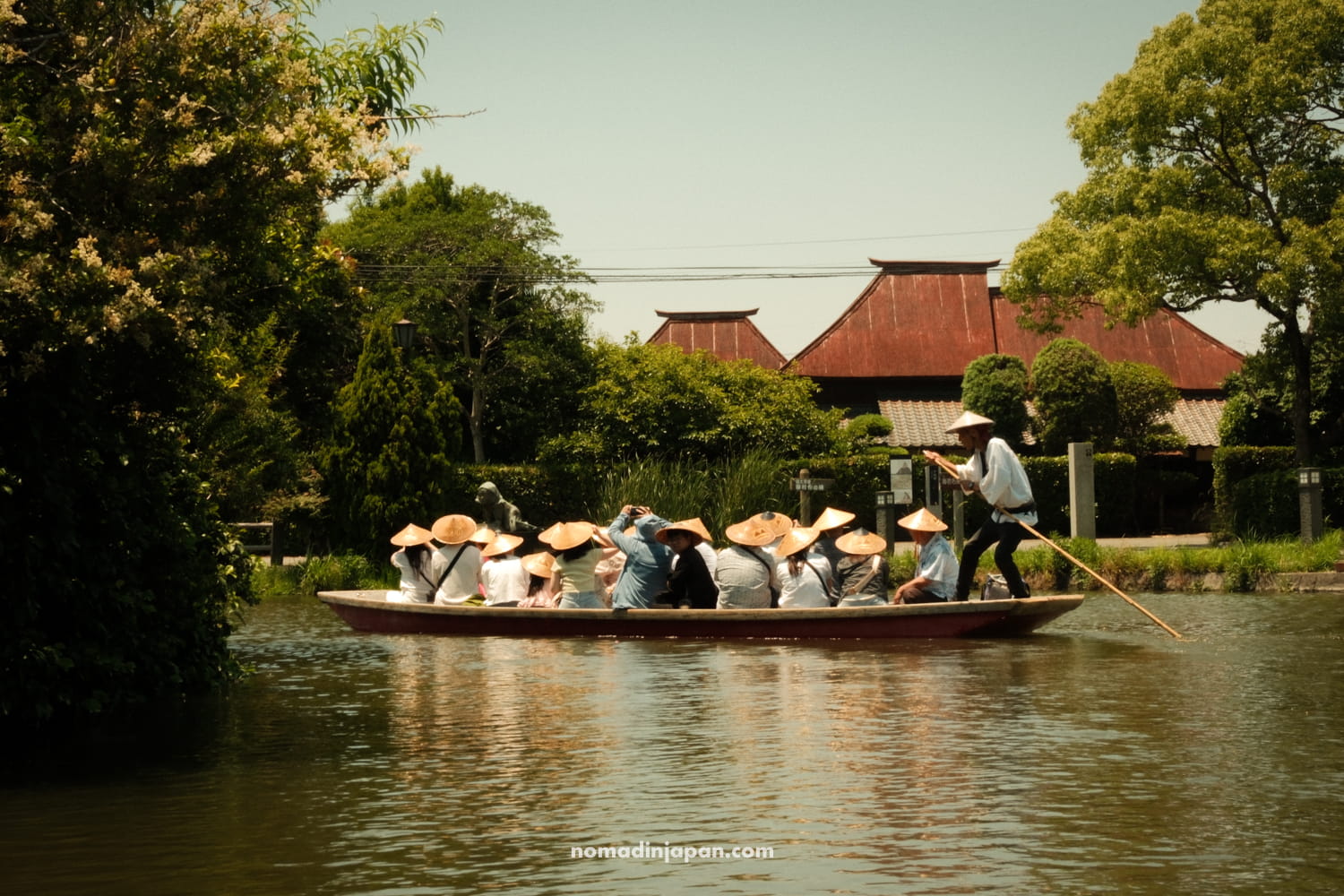
To test the waters (literally), I decided to venture south for the day to glide along the willow-lined waterways that wind through the town’s historic heart.
Will it be crowded? Too overhyped? Performative? I wanted to know whether a day trip to Yanagawa was worth it.
In answer, Yanagawa met—and surprised me—in ways I didn’t expect. Here’s my quick guide detailing my experience exploring Yanagawa on a day trip from Fukuoka.
Is Yanagawa Worth the Trip From Fukuoka?
Having spent pretty much an entire day exploring Yanagawa solo, I left wondering: How could this town foster more mindful, integrated tourism here?
Yanagawa, once a thriving castle town with 930km of waterways, has a rich history spanning centuries.
The canals were once an essential part of daily life in Yanagawa for transportation, irrigation, and farming, and remain deeply woven with the town’s identity today.
As such, most tourists hop on buses that shuttle them directly to the river cruises and then immediately back to the station.
Yanagawa’s most noteworthy “attraction,” therefore, centers heavily on the canal boat tours. However, I find it a shame that most people take the 1-hour cruise and then leave.
As I wandered the streets, everything felt bizarrely… empty. There was a haze in the air, a solitude I haven’t felt before traveling in a so-called popular day trip destination. Even Yanagawa’s best-known historic sites, such as the Japanese poet’s family home, the Kitara Hakushu Birthplace & Memorial Museum, remained eerily empty. I was actually the only visitor, and I went on the weekend.
If this had been anywhere near Kyoto, I couldn’t imagine to think how packed these streets would be. So, I wandered on, in search of something I couldn’t quite name.
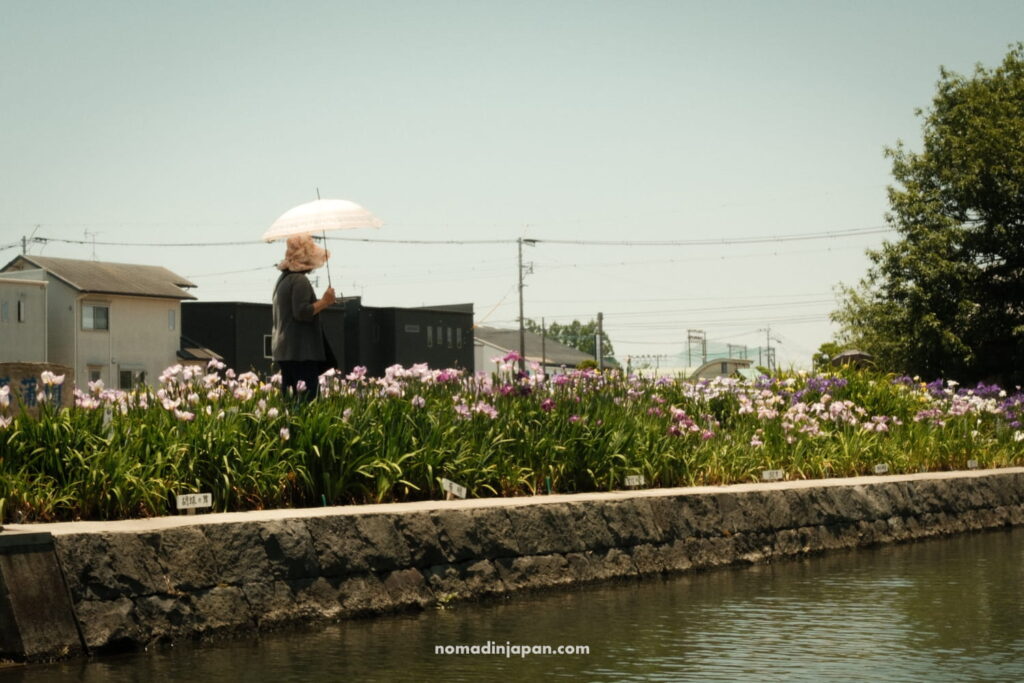
There’s no problem, per se, but I think this context is necessary for me to answer the question honestly: Is Yanagawa worth visiting on a day trip just for the river cruise?
I think Yanagawa, like many places in Japan, is worthwhile even without the “having checked off the main thing to do” mentality.
That said, you will enjoy Yanagawa with a more relaxed, open, and ultimately slower pace—allowing the day to unfold as you follow your curiosity, walking the riverside trails, popping into independent shops, and dining on the local specialty of fresh eel, rather than shuttling in and out after you snap a few videos on your 1-hour glide through the canals.
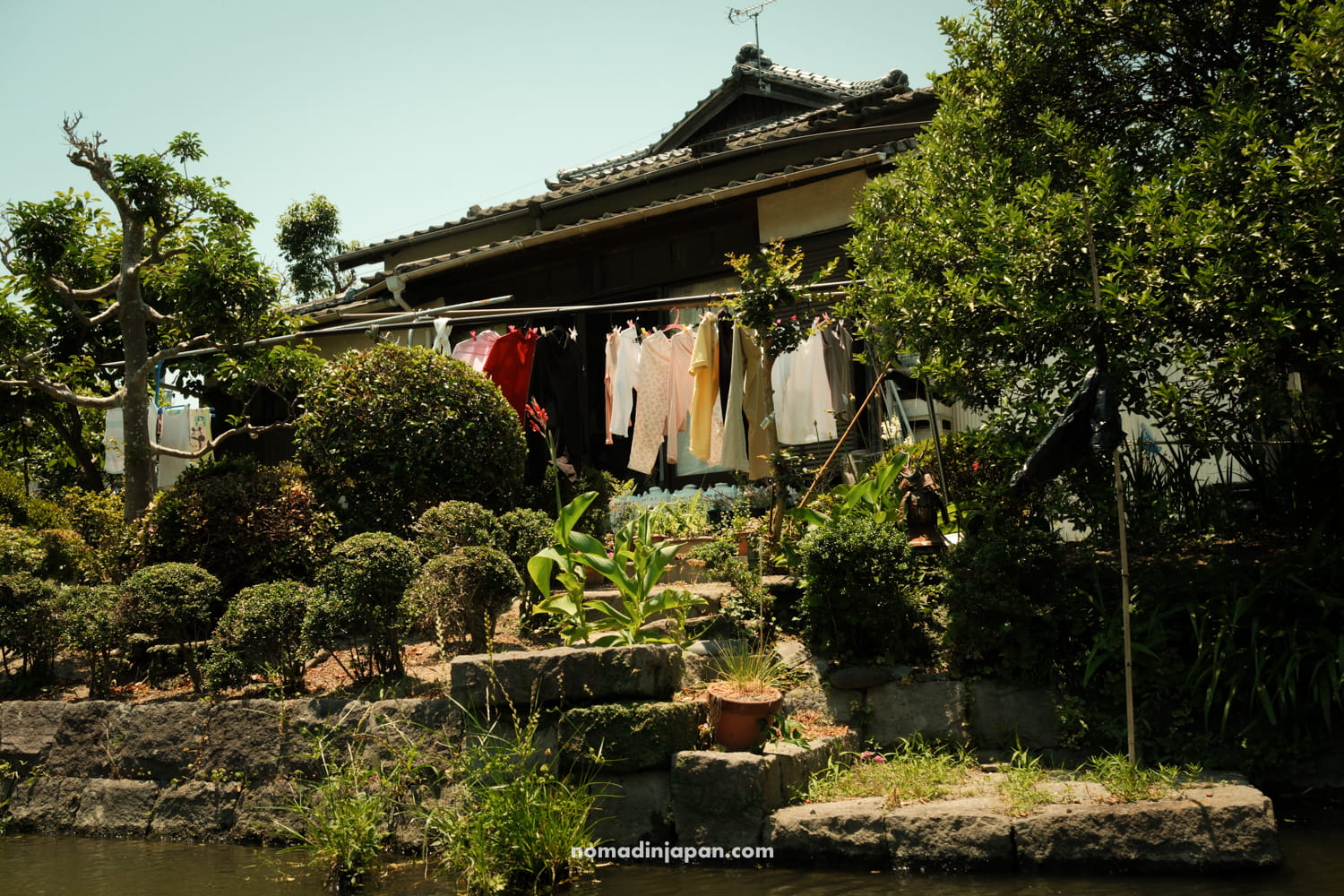
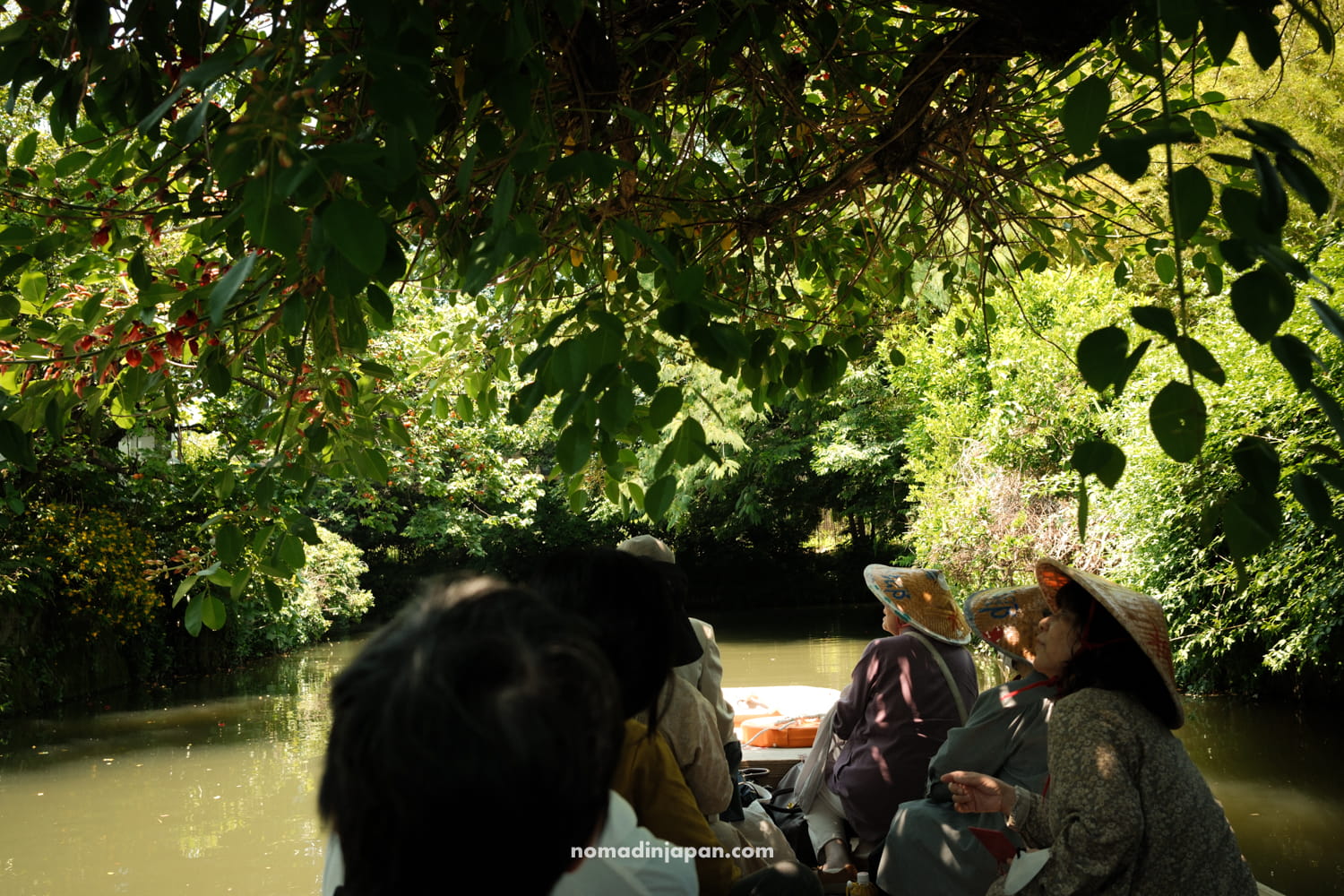
So, yes, it is worth it, but I’d say it’s especially worth it if you enjoy learning more deeply about the local history and culture that shaped Yanagawa as a “water town.”
Getting to Yanagawa From Fukuoka
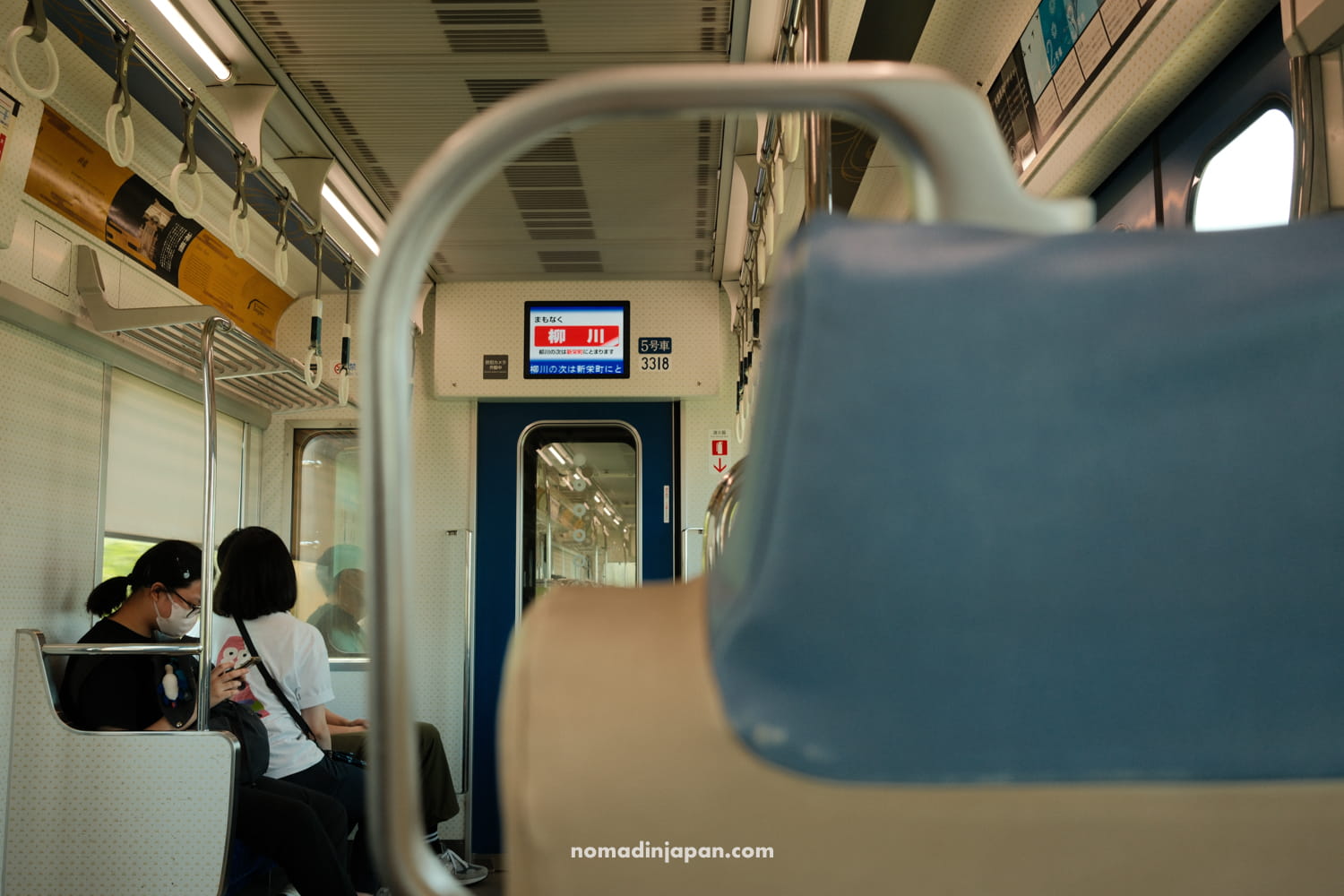
There are two ways you can organize your day. There’s a possibility of combining it with Daizufu if you really want to see both. In that case, you can either use a combo train ticket or take a guided tour.
Otherwise, if your sole focus is leisurely exploring Yanagawa, I’d recommend taking the Nishitetsu train from Tenjin Station, as I did.
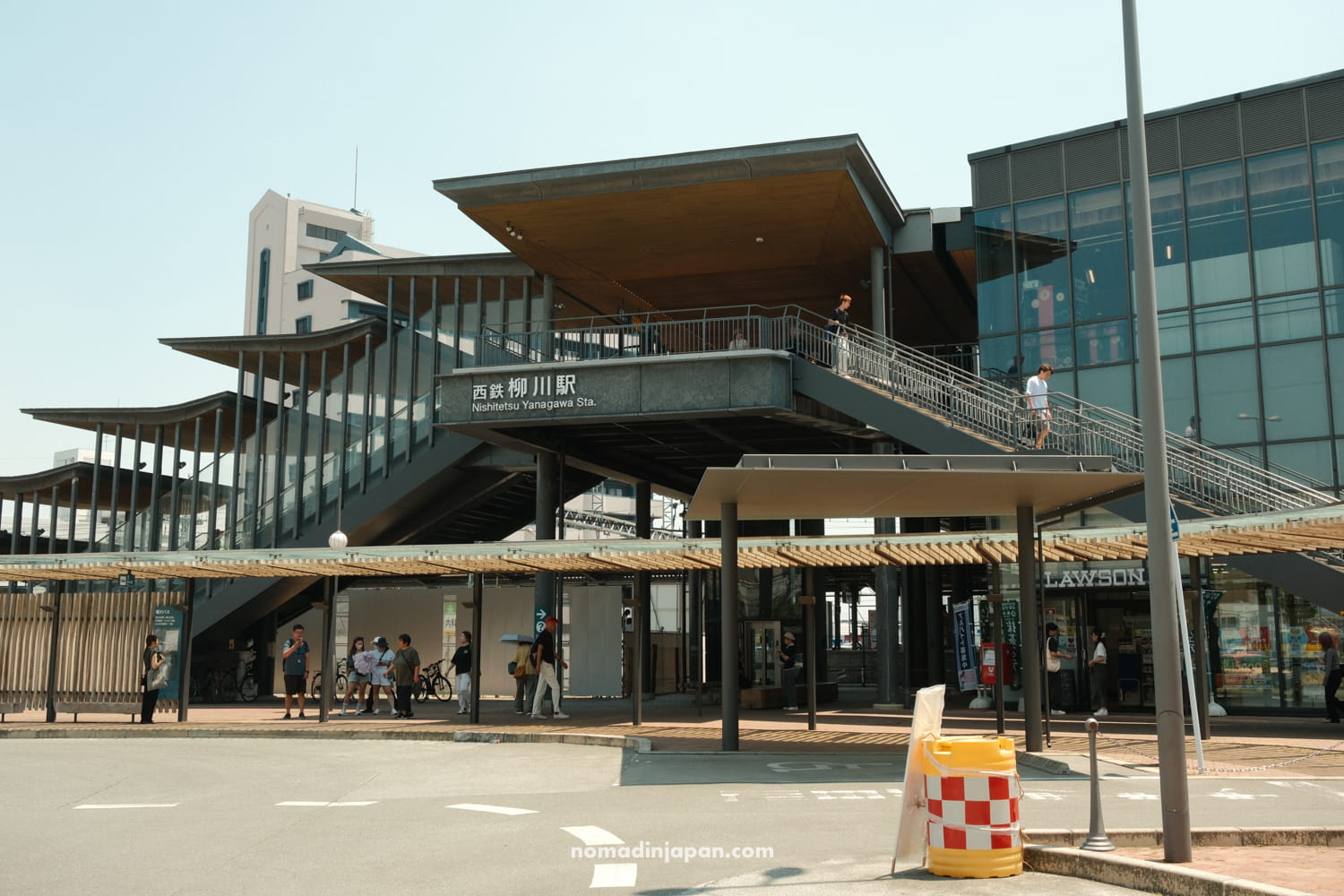
It costs about ¥960 one-way and takes right around 50 minutes. You can add funds to your IC card in your Wallet and just tap in and out at Fukuoka metro stations!
Cruising Yanagawa’s Historic Canals
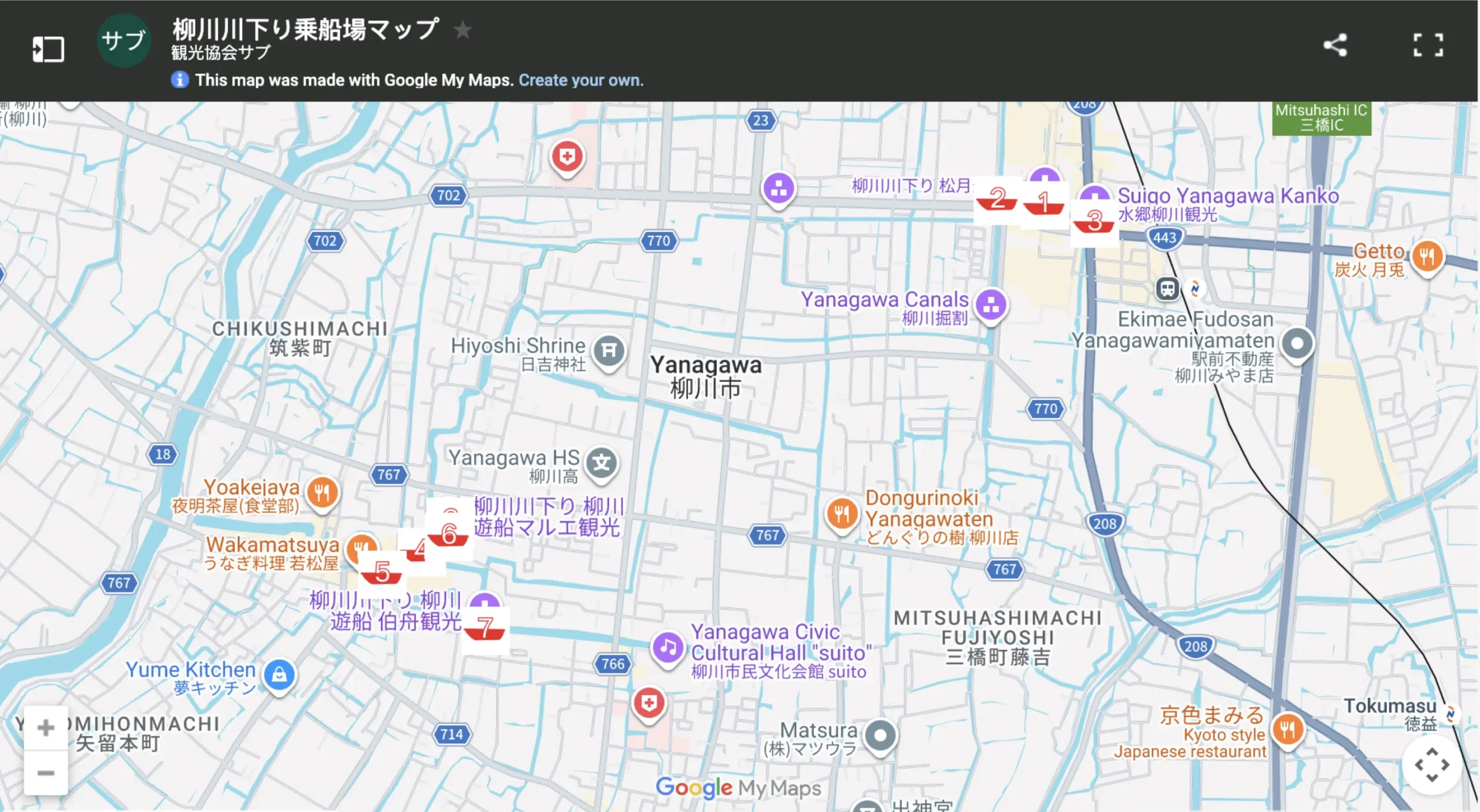
There are seven officially registered companies authorized to offer river punting tours through Yanagawa’s historic waterways.
There are 7 official and registered boat companies operating tours, each with slightly different boarding points and routes—plus a “Regular Course” lasting 1 hour and a “Short Course.”
- Regular Course: 60 minutes
- Short Course: 30–40 minutes
One of the regular routes starts near Yanagawa Station and travels through the canals toward the historic Okinohata/Ohana district, while the short route stays around the main sightseeing area.
While free shuttles to the departure points are available at the train station, I walked about 7–10 minutes down the road and purchased my ticket for the Suigo Kanko company at their reception office.
You can also book your tour online via Klook or GetYourGuide.
If you book in person, prices are roughly the same across companies and for both short and long circuits (¥1,800–¥2,000 for adults).
My boatman detailed everything in Japanese, and I was the only foreigner on the boat. But I didn’t mind at all! This felt even more authentic for me. Instead, I recorded part of the conversation and later translated it to get more storytelling context.
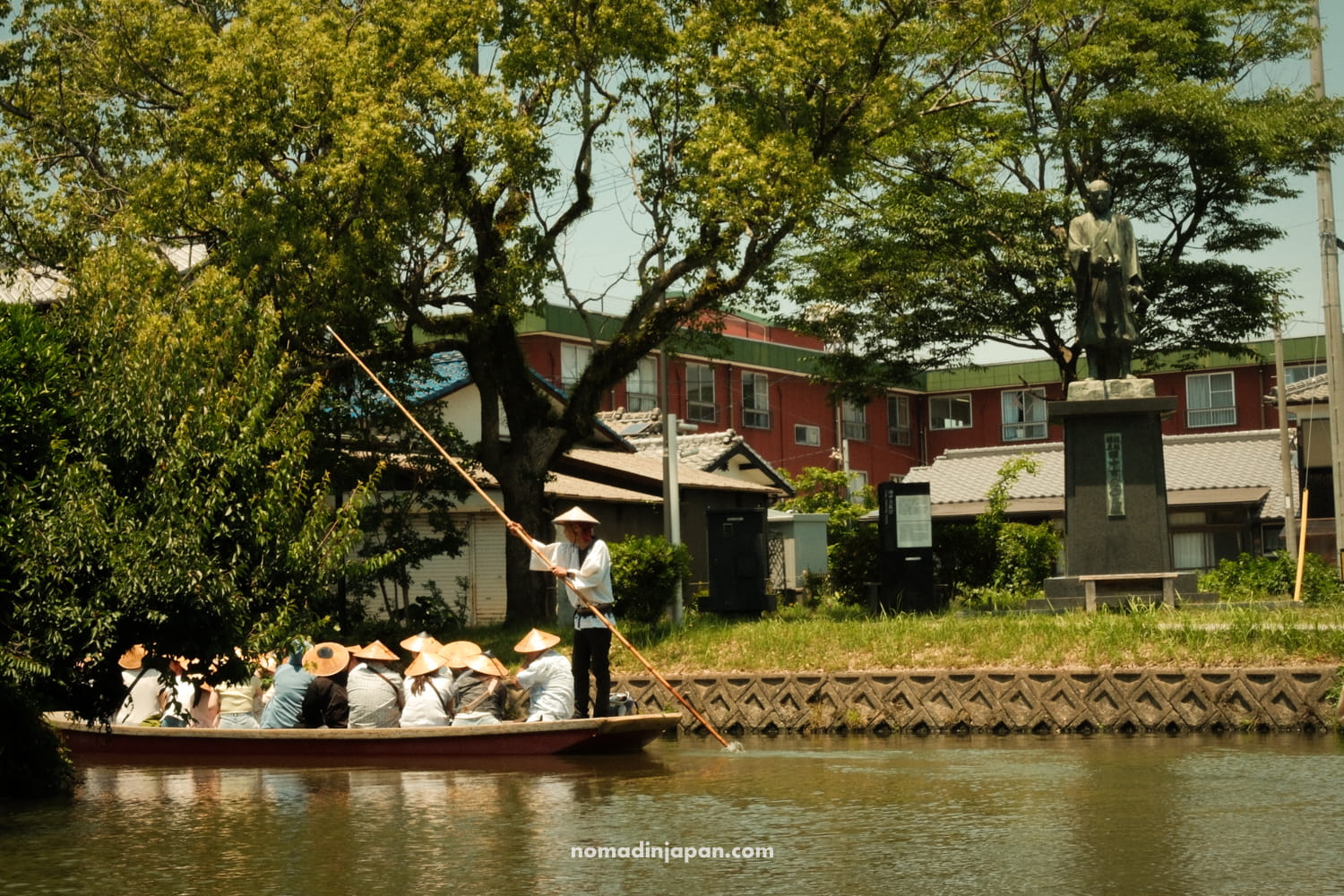
As expected, my boatmen began singing Kitahara’s poems in Japanese as he punted us through the canals.
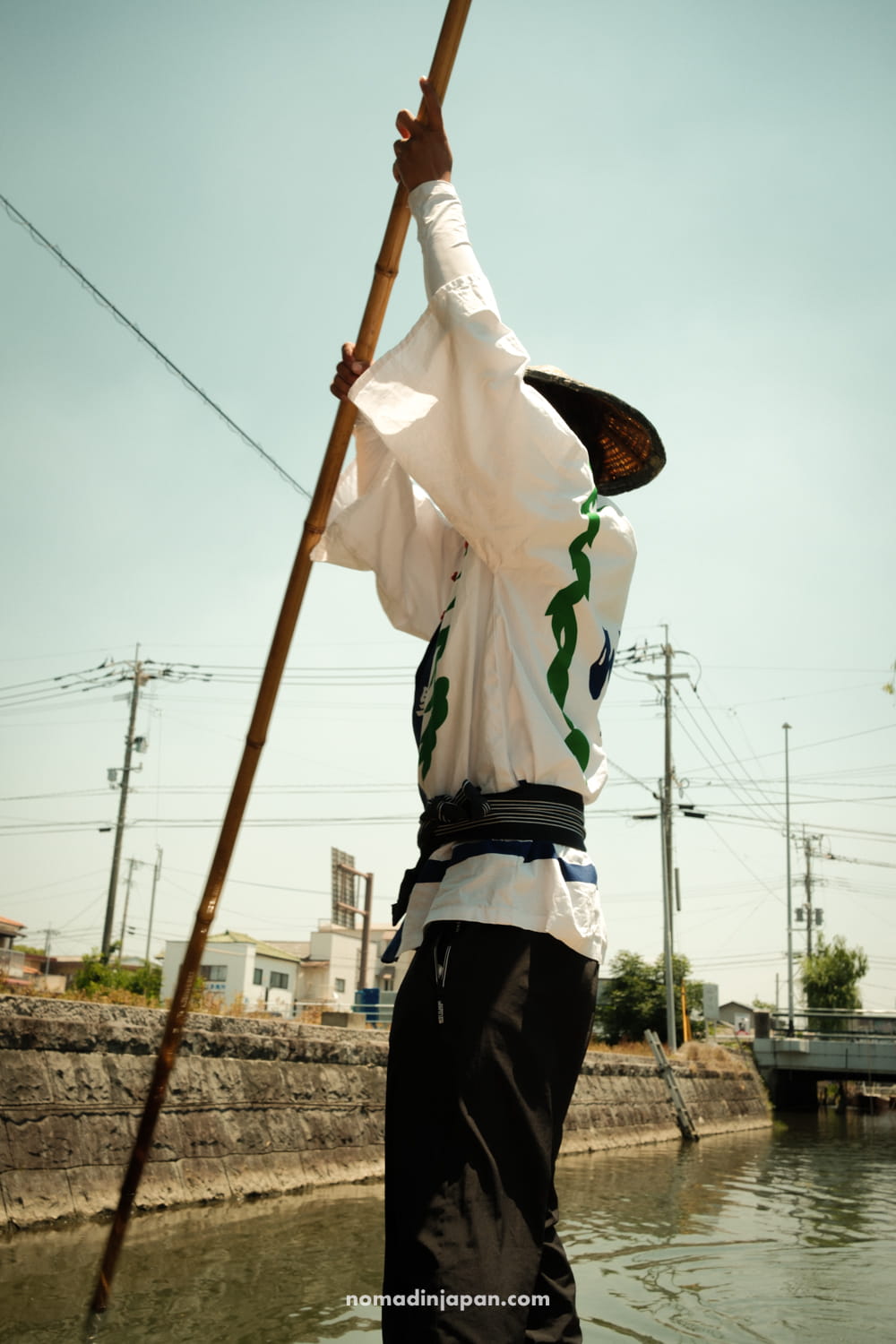
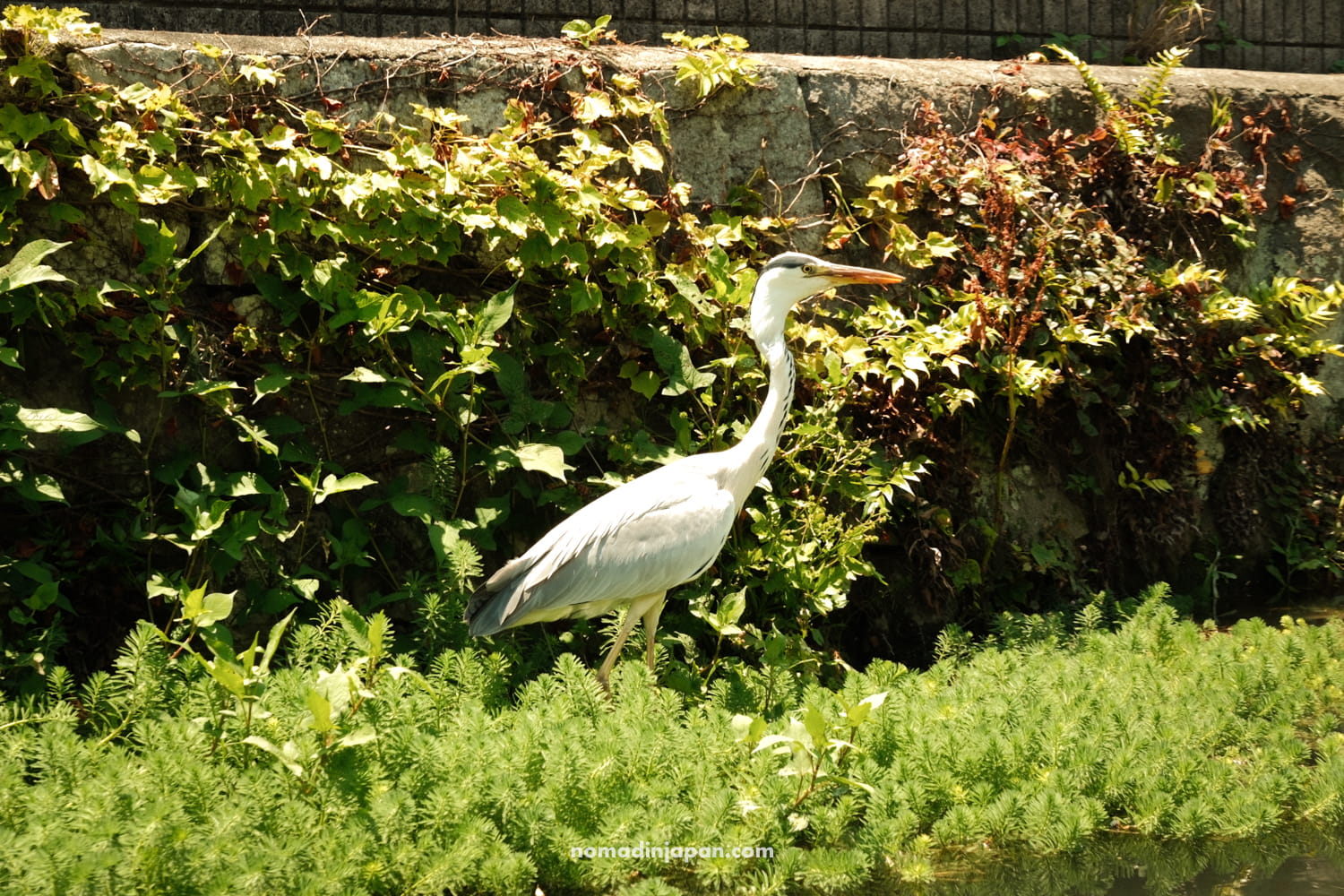
We saw sun-bathing turtles, backyard gardens, and flower trees in full bloom, and a couple of curious herons.
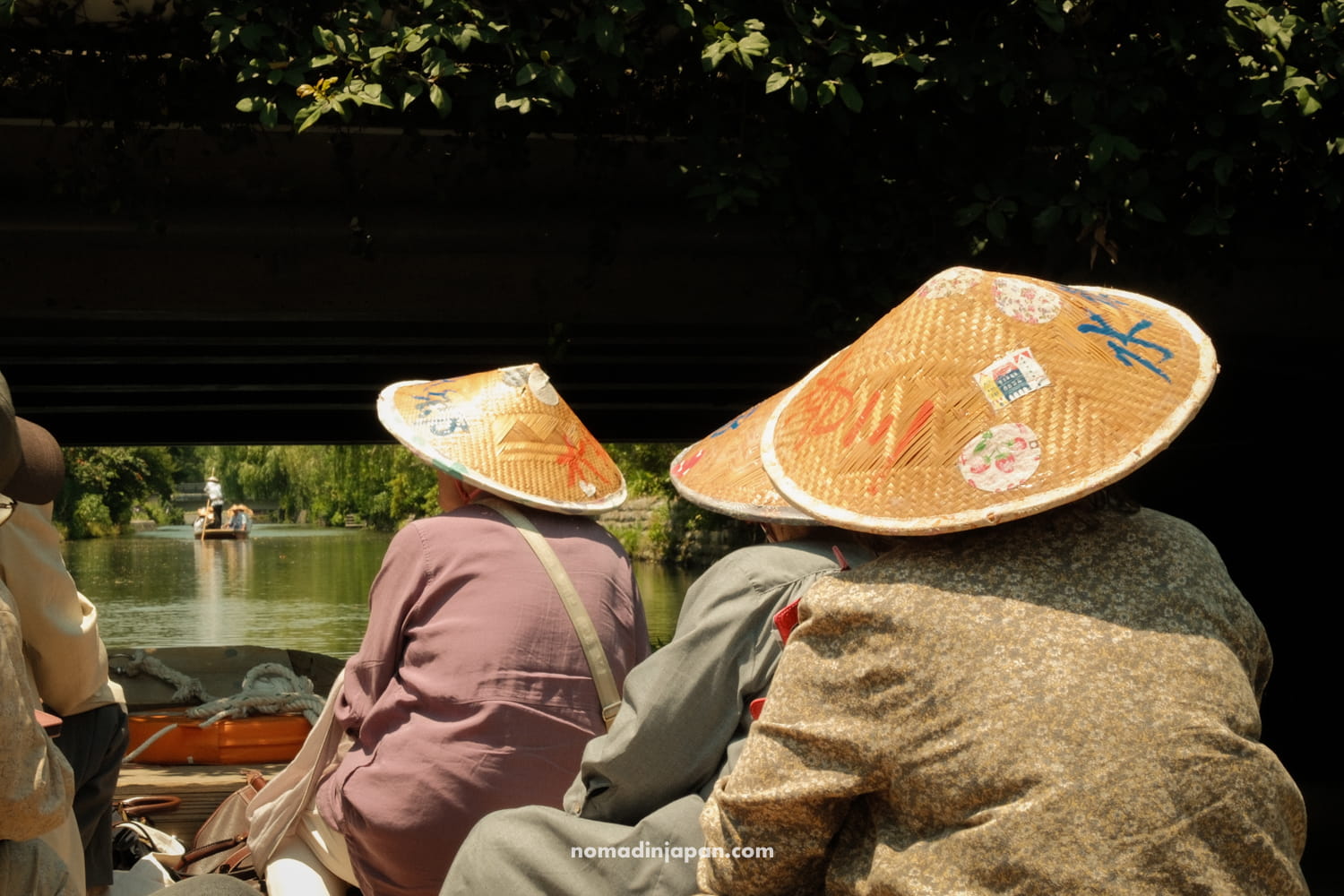
Watch your head as you duck beneath the low stone bridges!!
- ☀️ Bring a sun hat (there’s absolutely no shade or permitted use of sun umbrellas)
- 💴 Take cash
- 🧴 Wear sunscreen
- 📷 Ask permission before filming and photographing your boatmen!
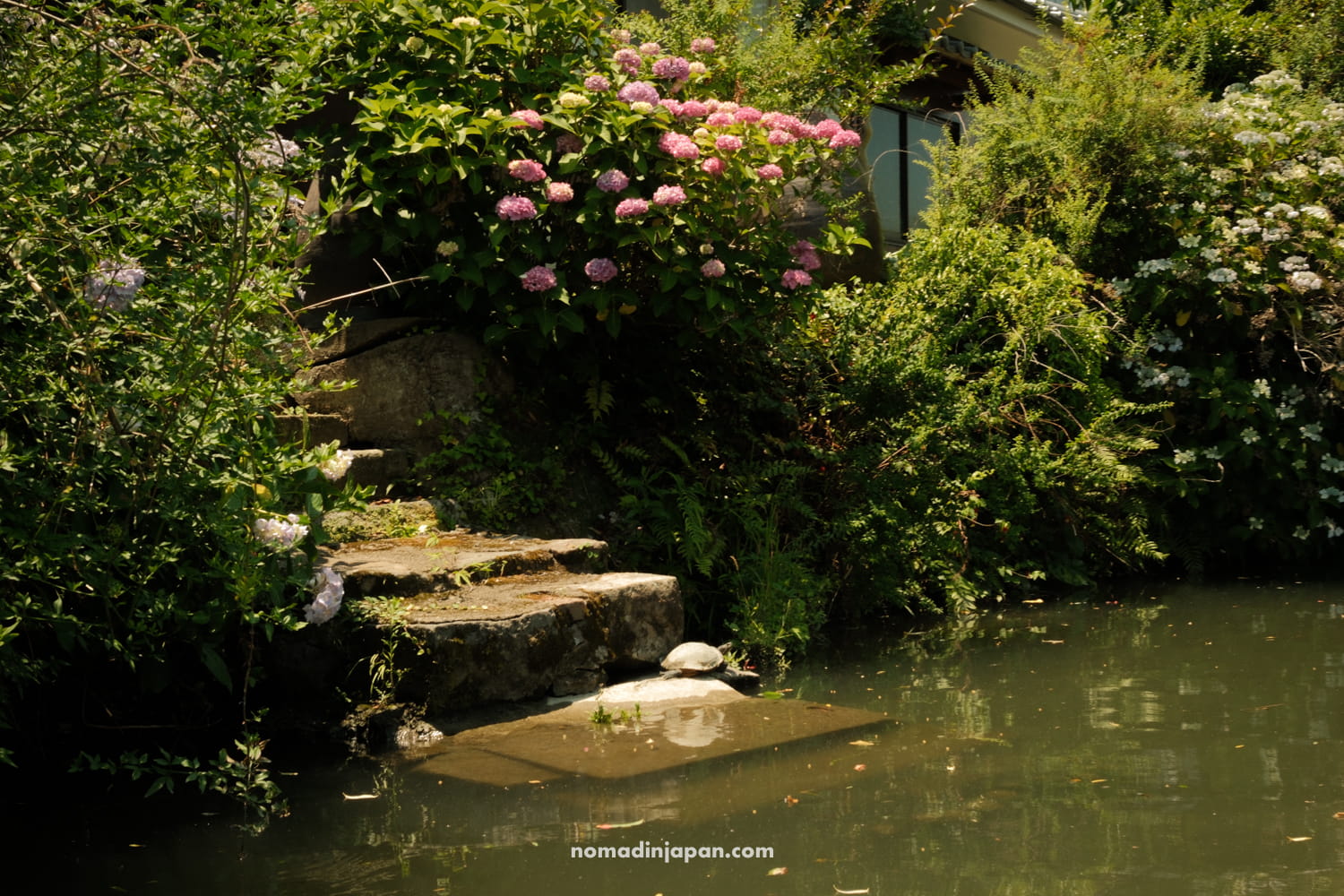
Wandering Yanagawa Beyond the Canals
After you disembark from the canal boat tour, you’ll be in the old Ohana area. This area is worth strolling.
Follow the canal a few minutes to the shop-lined canal, where you can dip inside a traditional-style restaurant to feast on eel for a mid-day lunch break, or grab an afternoon soft serve for take-away!
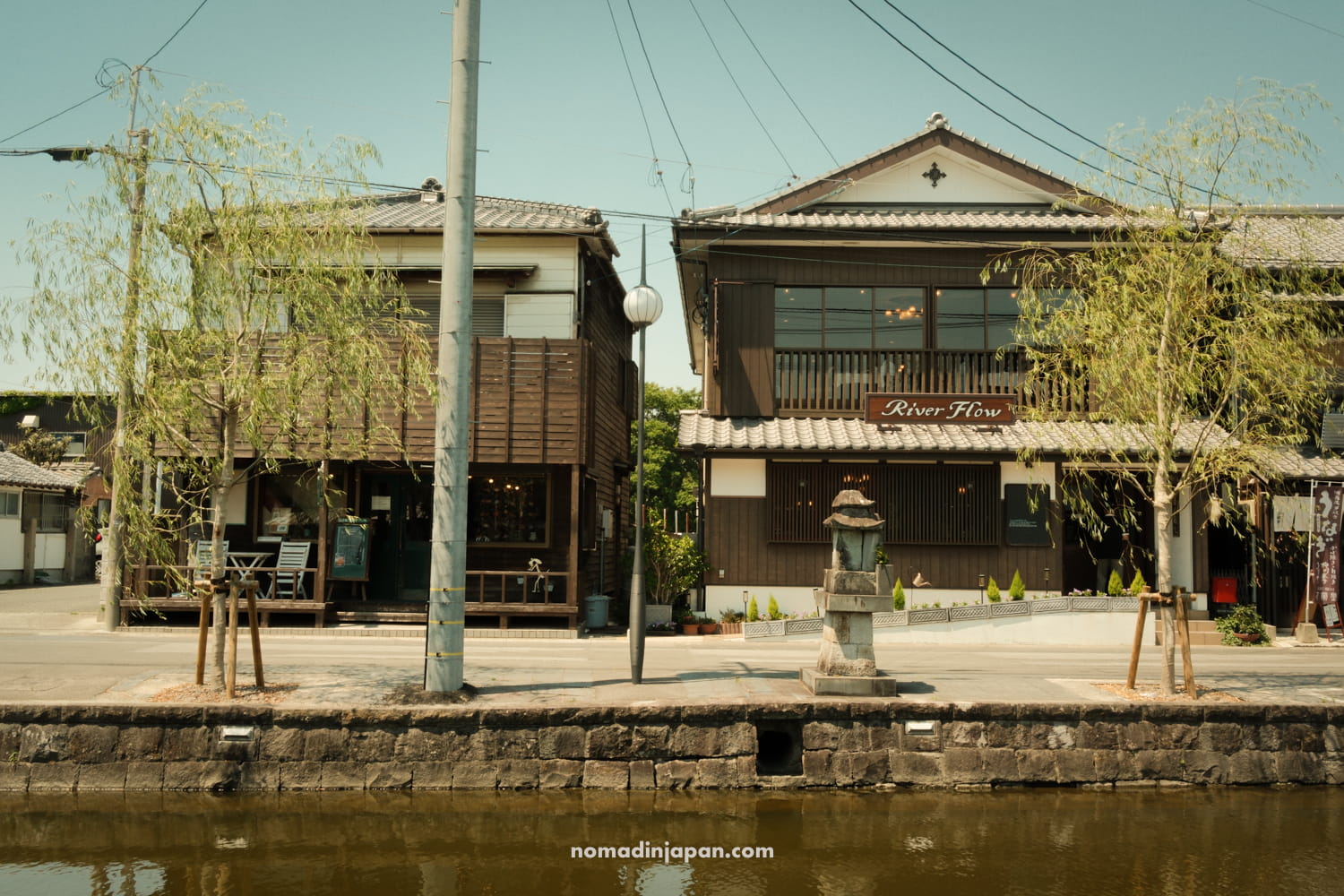
There are lots of quiet, empty backstreets that run parallel and around the block from this main hub in town. I followed the canal as much as possible, until it disappeared, and I stood at the intersection of a traffic light. Much of this area remains preserved from centuries of merchant houses. There’s a sense of slowness not often found in most touristed cities in Japan.
To get a better itinerary mapped for you, head to one of the two Tourist Offices.
Take a peek into Kitahara’s home (note: most displayed items and scrolls are all in Japanese), or head to the Tachiban Museum, the former estate of the Tachiban family — the feudal lords who oversaw Yanagawa’s domain during the 16th–19th centuries.
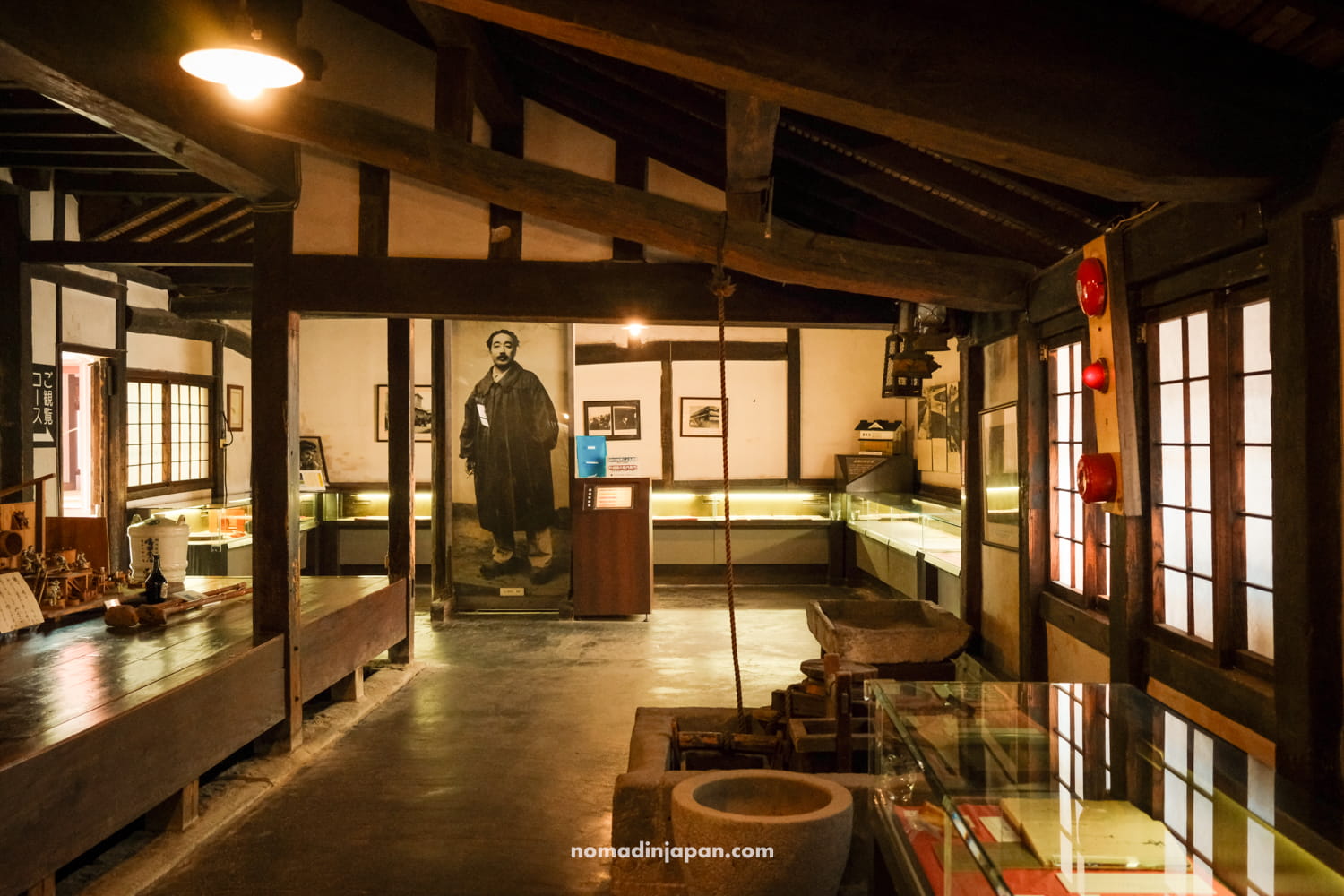
If you’re just visiting for a day, then you won’t get much further than the canal tour, eel lunch, and a museum or two.
But with public transport or a rental car, you could spend the late afternoon wandering along the coastline to see the Ariake Sea tidelands, or go farther around the city proper (not just the cultural heart).
Eating Steamed Unagi in Yanagawa
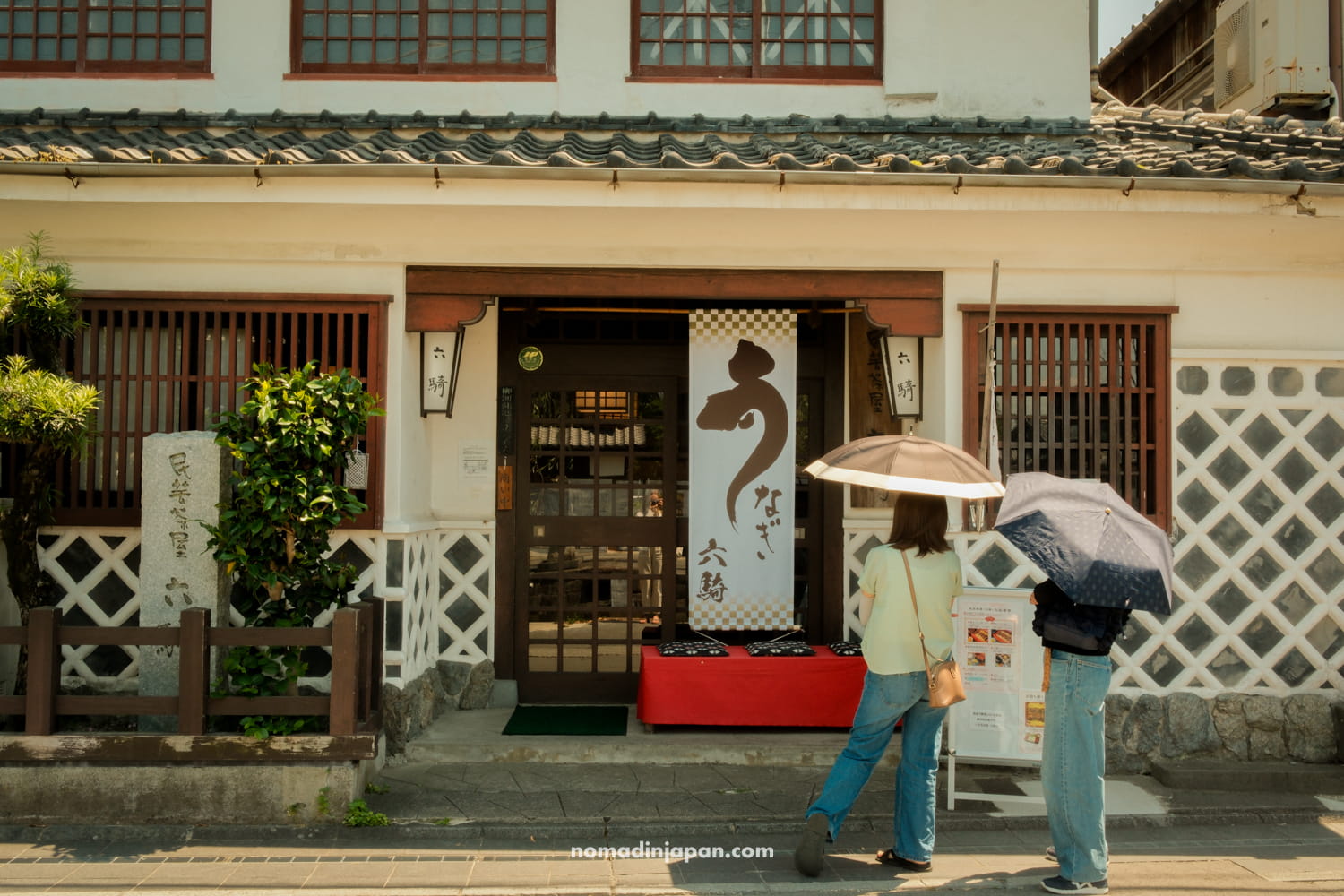
One of the highlights of a day trip to Yanagawa is the chance to try decadent freshwater eel, also known in Japan as unagi. Specifically, Yanagawa is known for its steamed eel, or seiro-mushi.
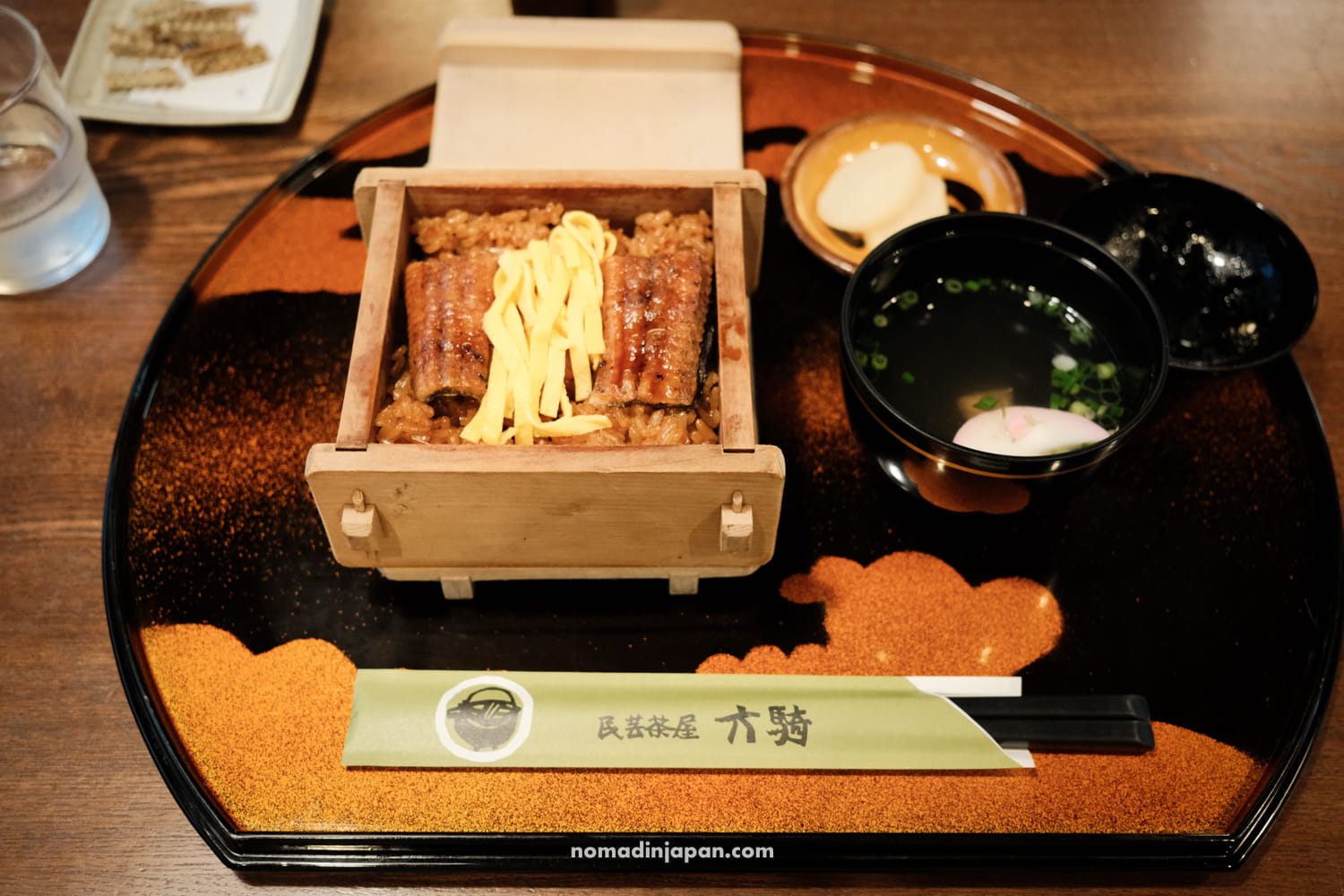
Unagi is a delicacy in many parts of Japan’s main islands, but it’s Yanagawa’s specialty: grilled eel, double-steamed in a bamboo basket, paired with shredded egg and a “secret recipe sauce” passed down through the generations.
Indeed, I stepped into Mingei Chaya Rokkyu, just beyond Wakamatsuya, the leading unagi restaurant with a 1-hour line out the door, and dined on true-to-pamphlet, fluffy eel and flavorful rice. The waitress brought out crunchy, seasoned eel bones to nibble on while I waited.
I ordered the mini size because I’m not a big eater, but I definitely should have gotten a small (S) with three pieces instead of two. It was delicious! You have to try it while you’re in Yanagawa.
Bri’s Final Takeaway: Yanagawa, Yay or Nay?
It’s true, it’s not often you get to experience a historic samurai castle town via its waterways. Most often, you tour a castle, now a museum (unless it’s one of the 12 still-preserved Castles of Japan).
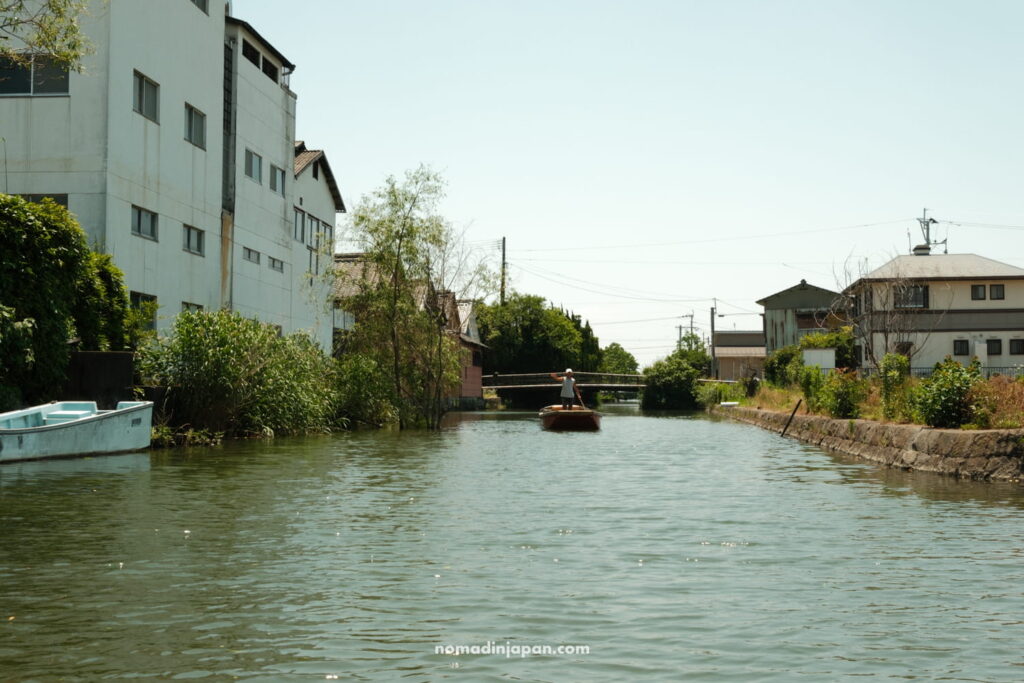
Yanagawa definitely feels unique. It’s got more than meets the eye, actually! While I’m happy social media is bringing in a flux of tourism to learn more about Yanagawa, I think there’s a lot left on the table.
If you are willing to sacrifice a day out of your Fukuoka itinerary and spend a full day in Yanagawa slowly, enjoying the sight of herons and willows, I think you won’t regret taking the day trip. Plus, it’s an easy 50-minute ride from Fukuoka without any major transfers. That’s just like crossing Tokyo by metro, so in that sense… a definite go!
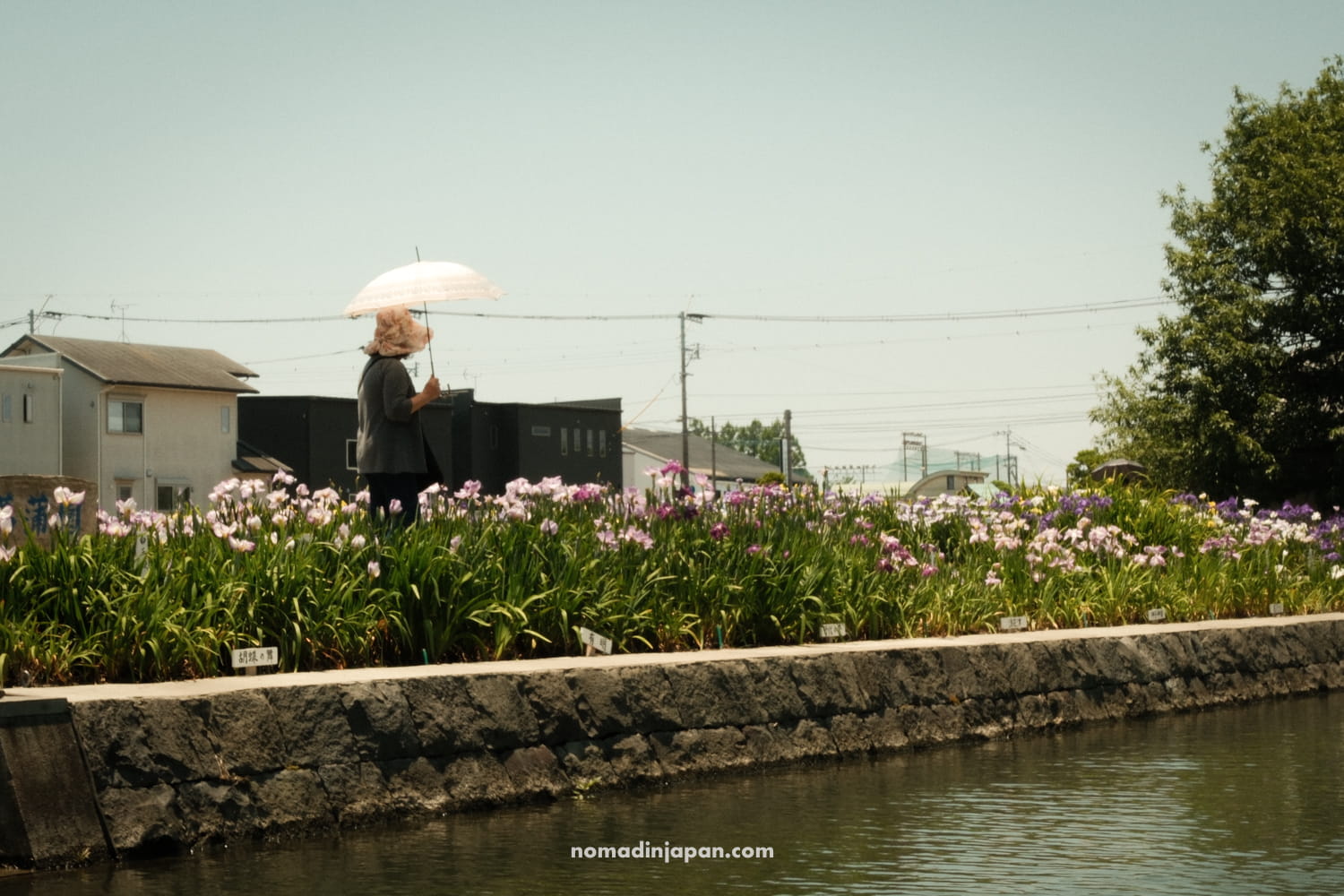
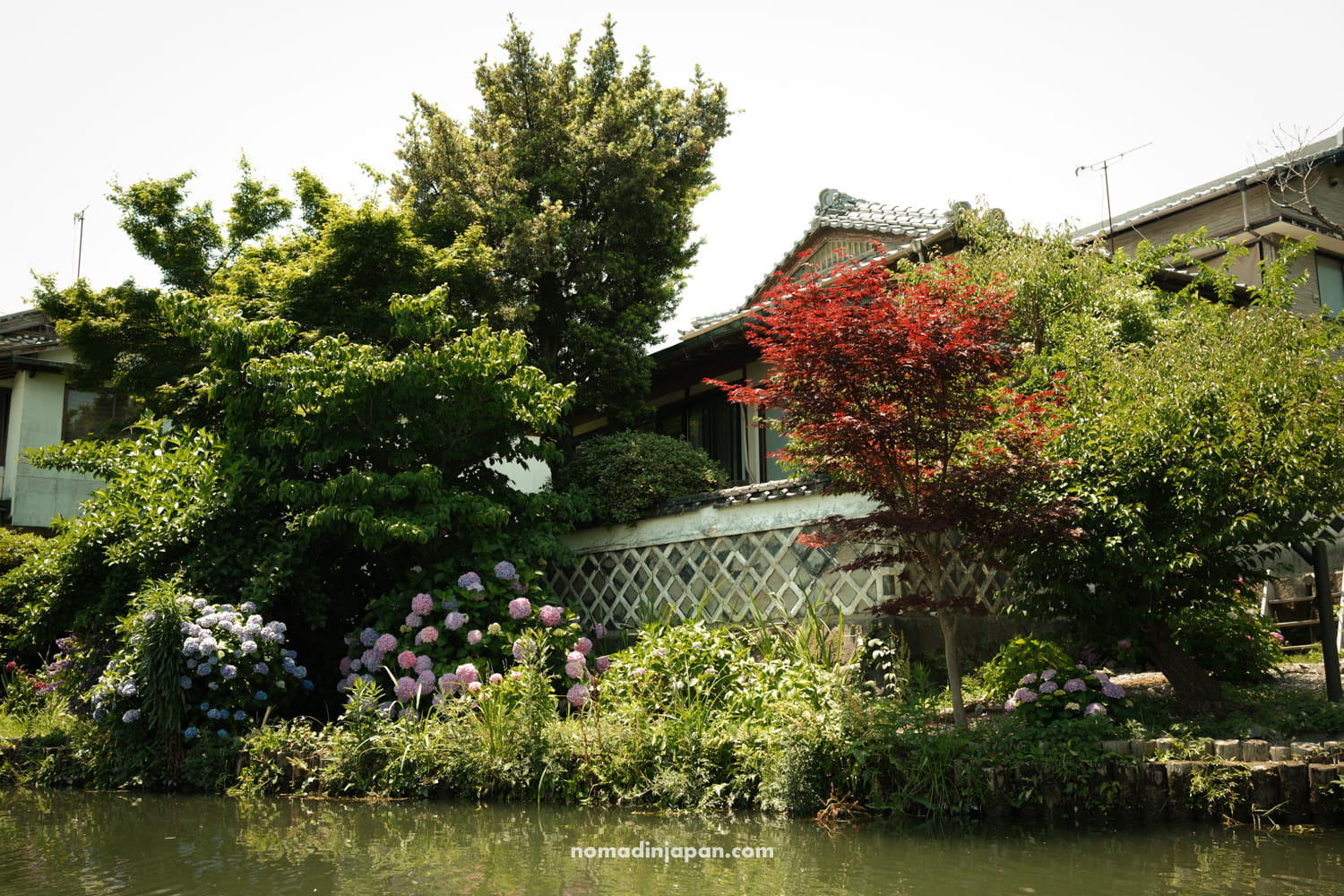
As a solo female traveler interested in Japanese art, history, and literature (and slow travel, food, and nature… lol), I definitely found Yanagawa worth it. 🌸 🐝 (I did walk heaps, and was fully worn out by the time I got back to the city, so that is something to keep in mind.)
But if you’re more into larger-scale experiences and guided trips, you may want to consider a full-day trip to Takachiho Gorge or Mount Aso instead.