Hiking the Historic 8km Trail Between Tsumago-juku & Magome-juku (Nakasendo Way)
The Nakasendo is a 534-kilometer historic highway traversing the Kiso Valley in central Japan. It once served as the footpath for everyday travelers, merchants, artists, and samurai making the journey on foot from Kyoto to Edo (Tokyo) during the Edo period (1603–1867).
The Nakasendo, literally meaning “Central Mountain Road,” once thrived with 69 post towns, or juku, but only about a dozen remain well preserved today, as if frozen in time.
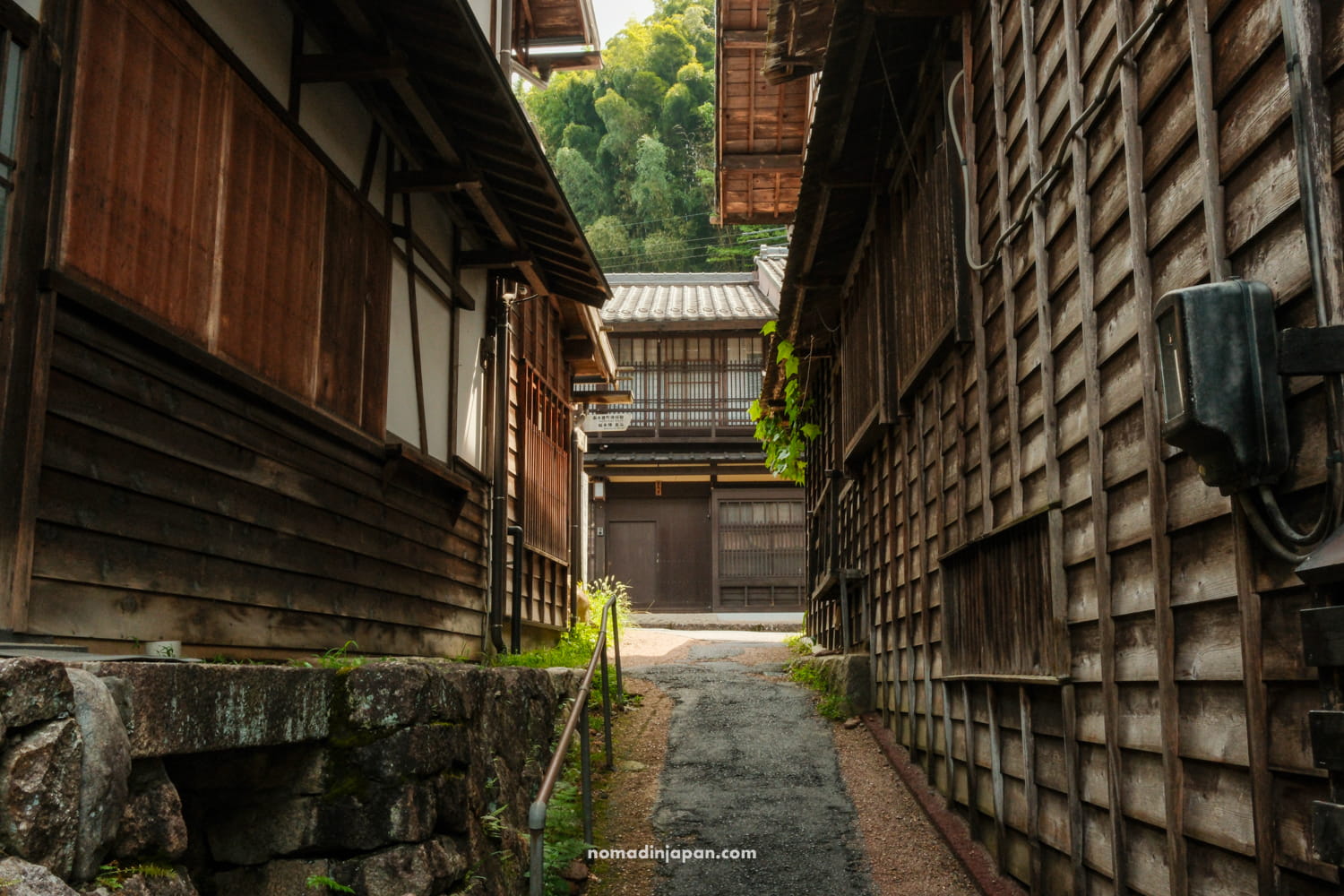
Two of those post towns are Magome-juku and Tsumago-juku. And today, you can walk the popular 8 km (5 miles) long old Nakasendo trail between the two.
In this guide, I’ll share my experience hiking the Nakasendo in reverse—starting in Narai-juku and ending in Magome-juku—and why it was the best possible choice for our Nakasendo itinerary.
Magome to Tsumago vs. Tsumago to Magome: Which direction is better?
When I first began planning our Nakasendo walk, it seemed that everyone was scrambling to start in Magome rather than anywhere else.
But, dear reader, I hope this helps free you to make your own plans: You DON’T need to begin the walk in Magome-juku for it to count as “walking the Nakasendo.”
Considering that there are plenty more towns along the Nakasendo, and that it is 330+ miles long, the 5-mile stretch between Magome and Tsumago is really just a blip.
It’s the most popular because it’s a relatively short (2-3 hours), easy, and scenic walk connecting two of the best-preserved towns along the Nakasendo. Hence, they get a lot of the attention.
Now that I have completed the Tsumago to Magome route myself, I can wholeheartedly say there is not a “better” way to do it. Doing it this way in “reverse” goes against the mainstream, so you actually do have fewer crowds.
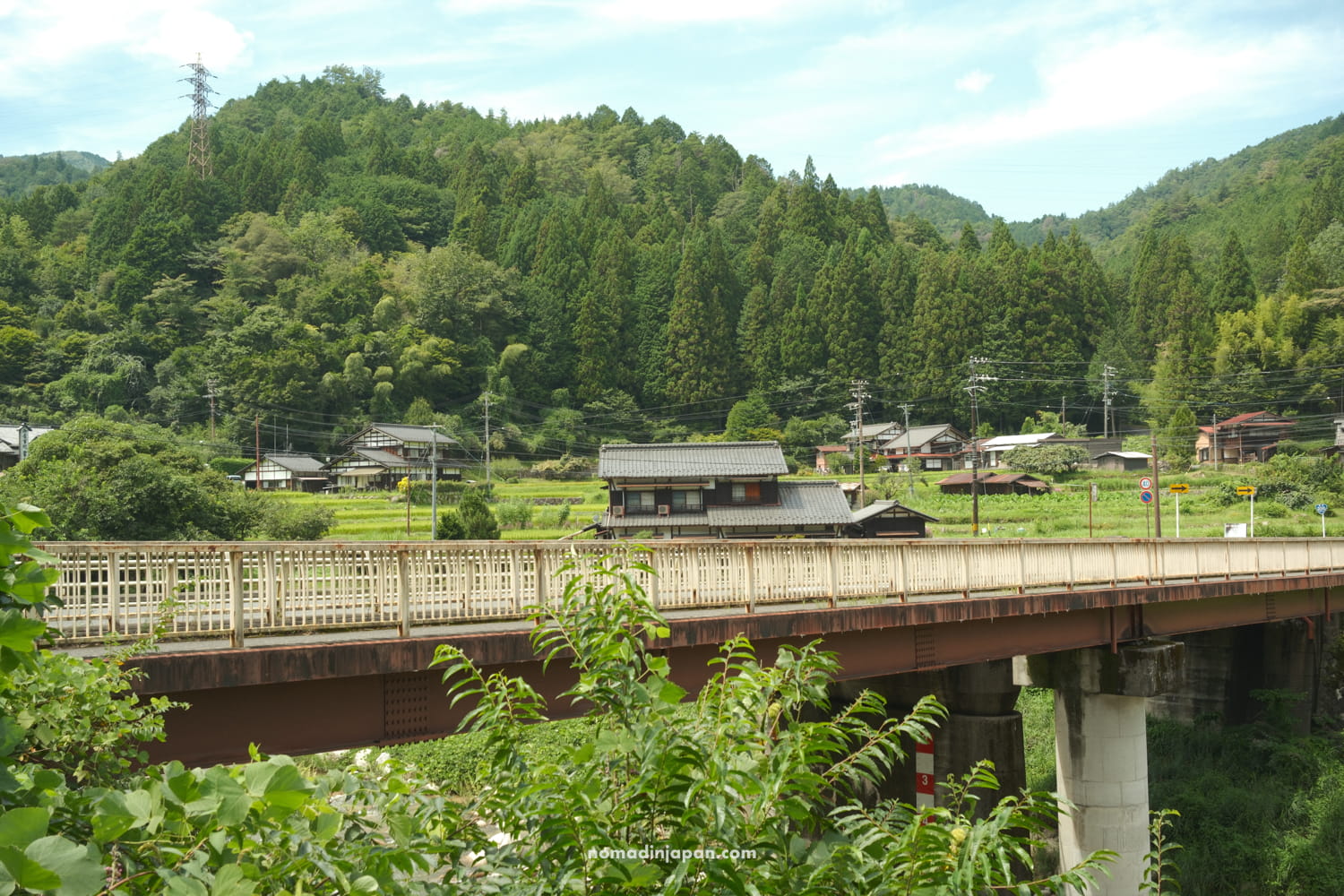
Another big reason I was happy to walk the Tsumago-to-Magome direction was that there was more uphill, which was much easier on my poor old knees (compared to the Magome-to-Tsumago route, which has more downhill). There’s about 400 m elevation gain.
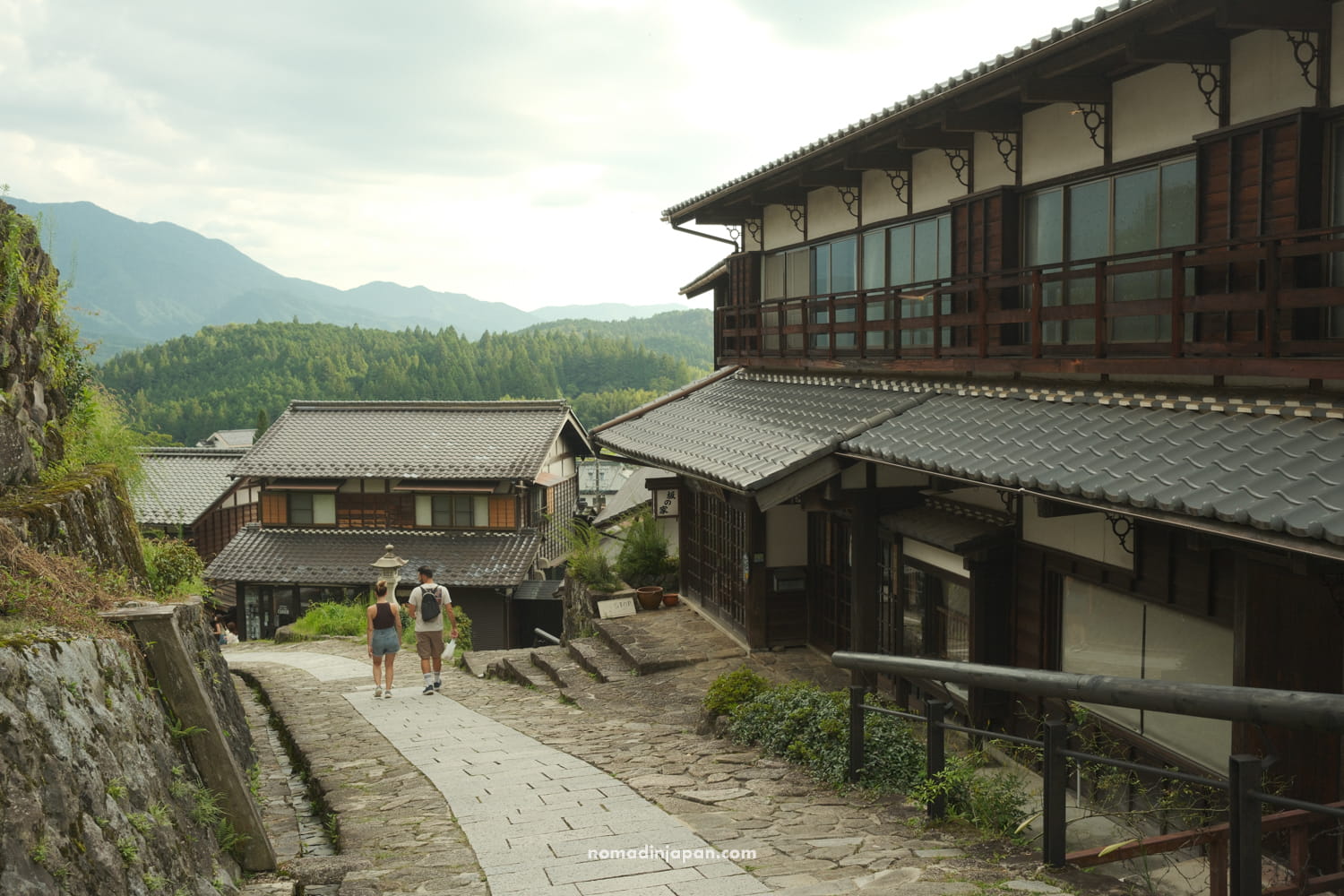
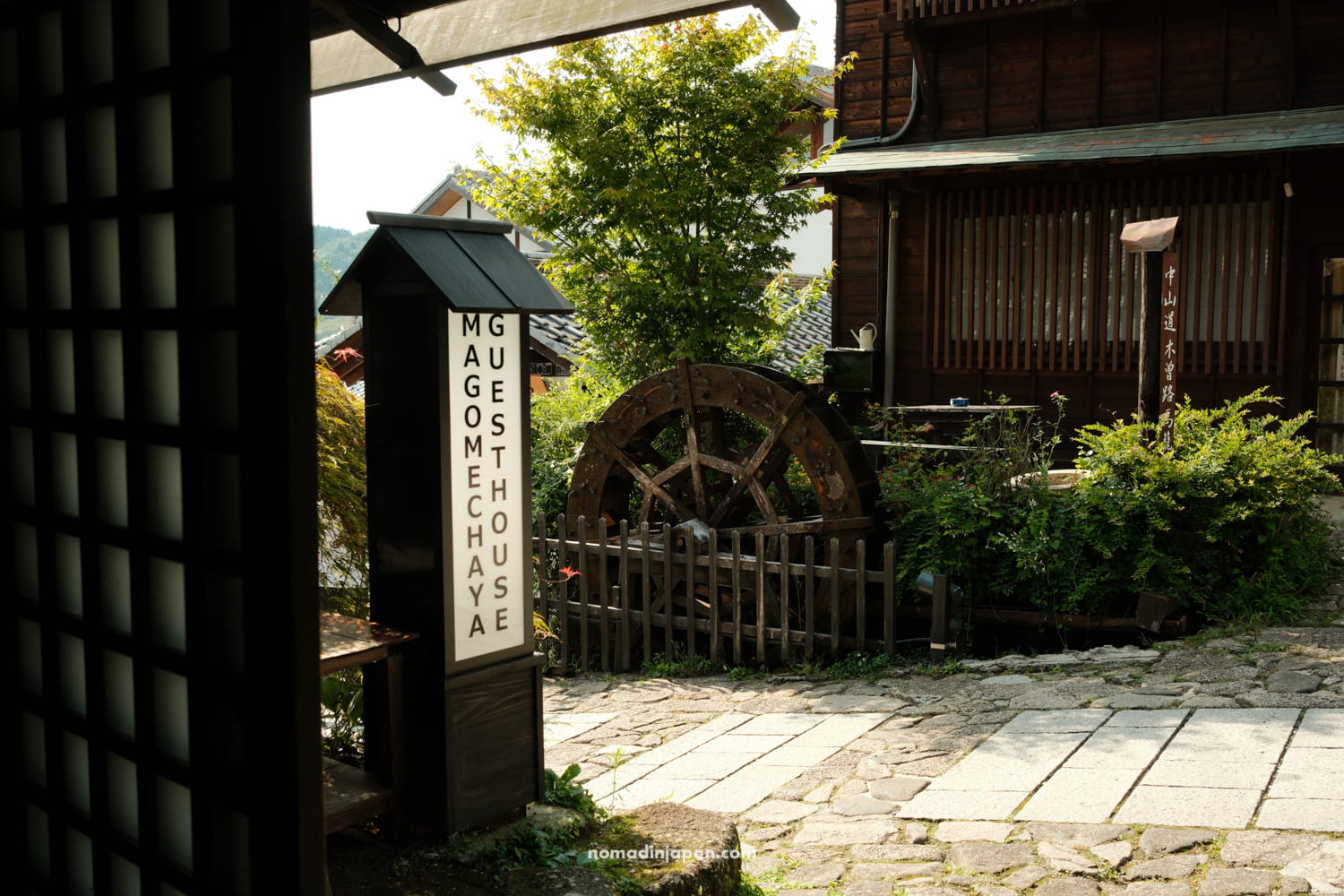
I also felt that the “finish” in Magome was much more of a reward. We arrived in time to browse the cute shops on its historic, steep slope and to experience a beautiful sunset over the mountains, with no tourists in the town, because we stayed overnight in the heart of the village (at the Magome Chaya Guesthouse).
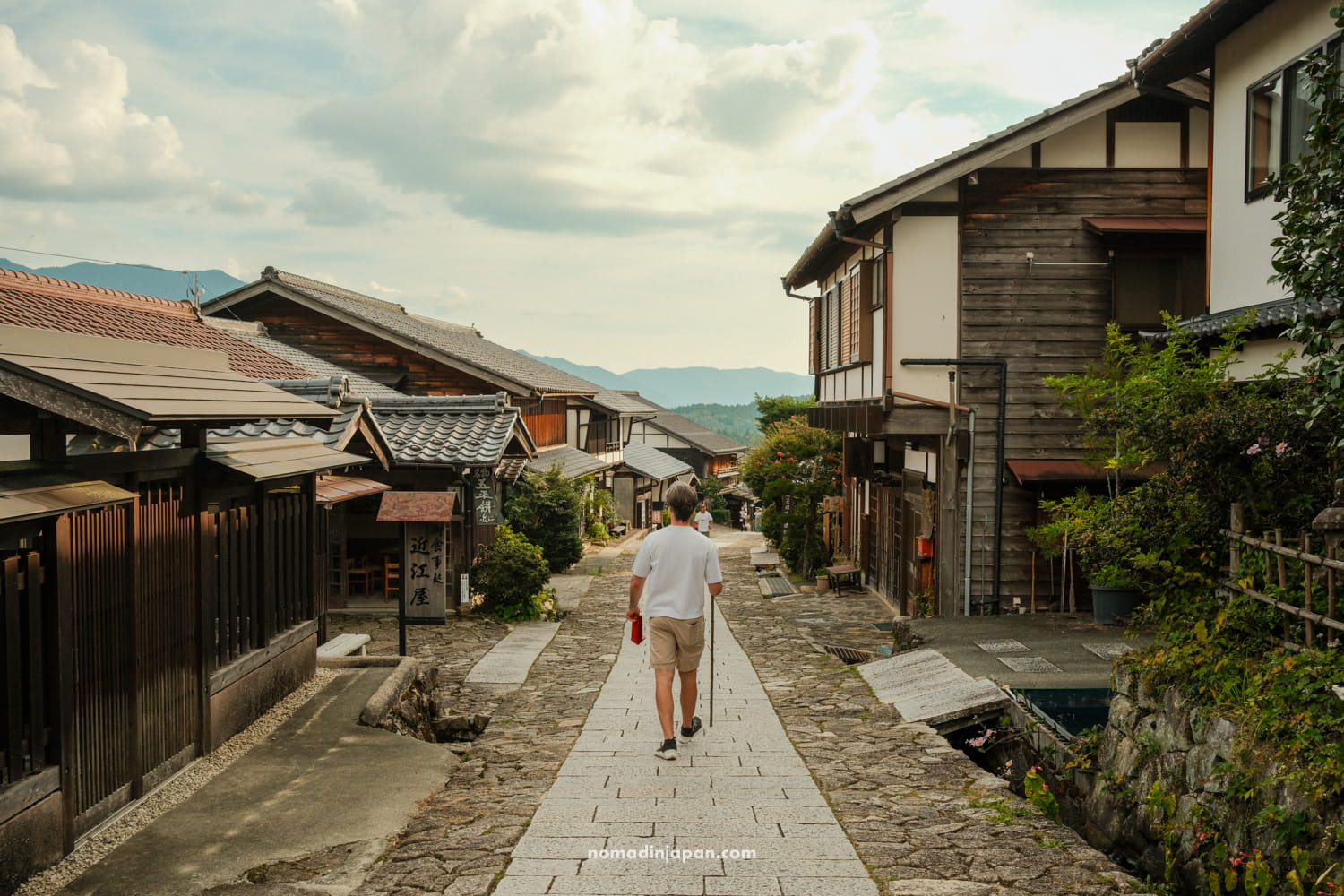
More of this reasoning below!
5 Reasons to Hike from Tsumago to Magome Instead
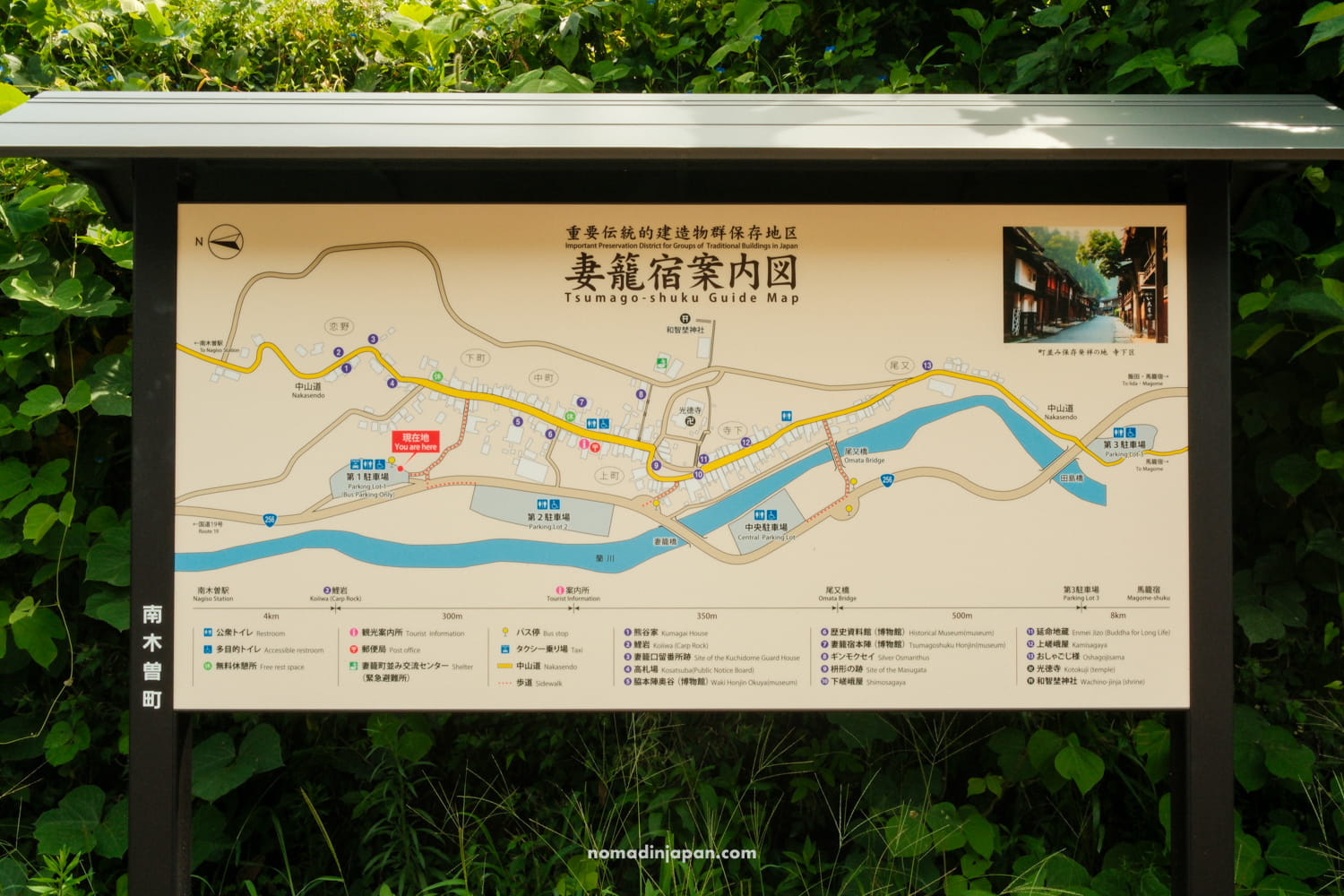
1. Save the beautiful hillside town of Magome for last
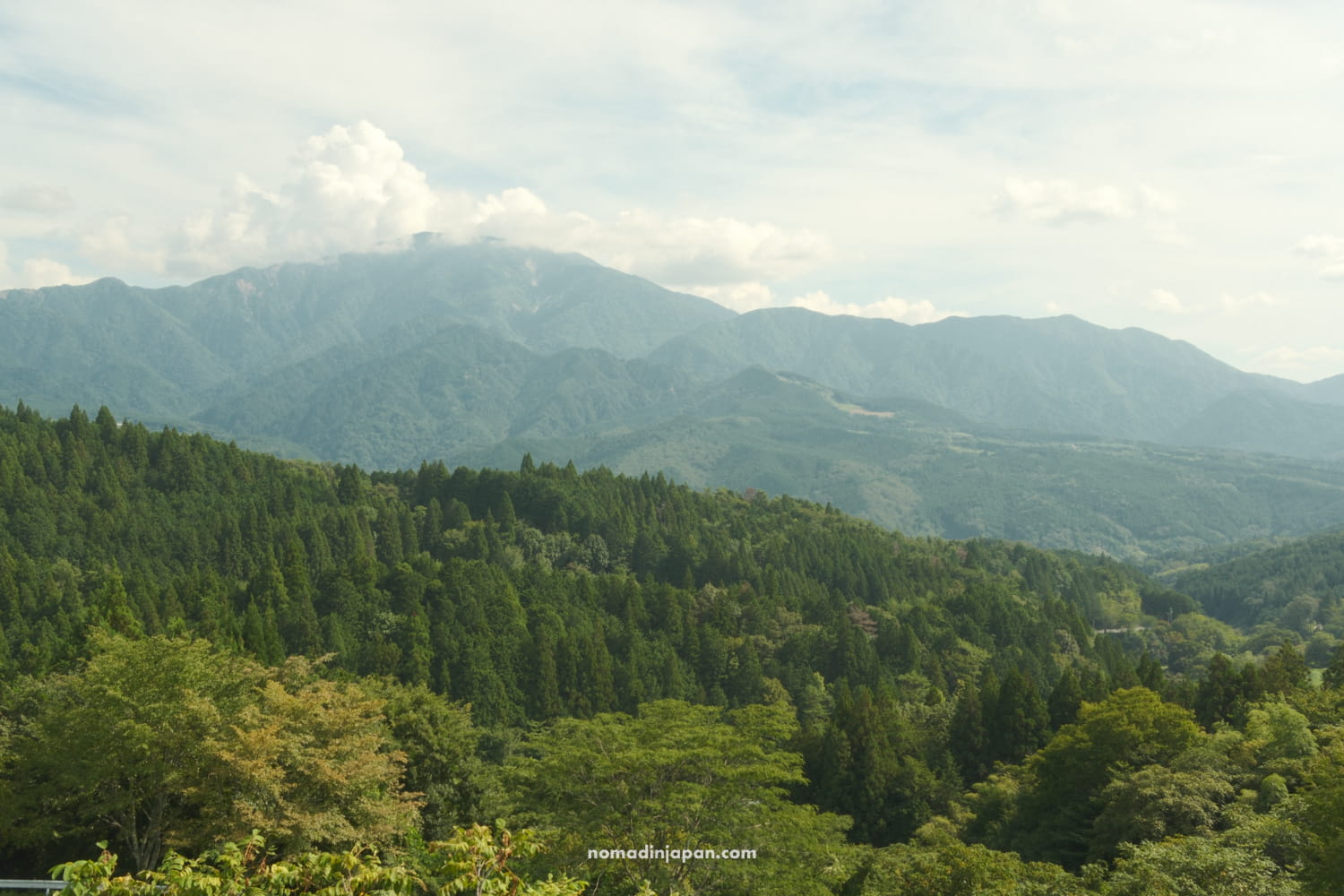
The reward of approaching Magome after a few hours of walking, with its sloping cobblestone street, traditional wooden buildings, and mountain views, is probably my top reason for ending in Magome, rather than in Tsumago.
Don’t get me wrong here—Tsumago-juku is adorable, with a couple of gorgeous, historic inns to stay in, but Magome makes more sense to “end” a weekend in, since you can easily continue on to Nakatsugawa, where trains depart for Osaka, Nagoya, Tokyo, etc.
If you end your hike in Tsumago, you’re more centrally located in the mountains, and will either need to turn back by bus or continue north toward Narai-juku. (Which has its own perks.)
2. Spend the night in Magome after your hike
I think staying overnight in Magome-juku is an experience on its own that adds so much memorability to your Nakasendo walk.
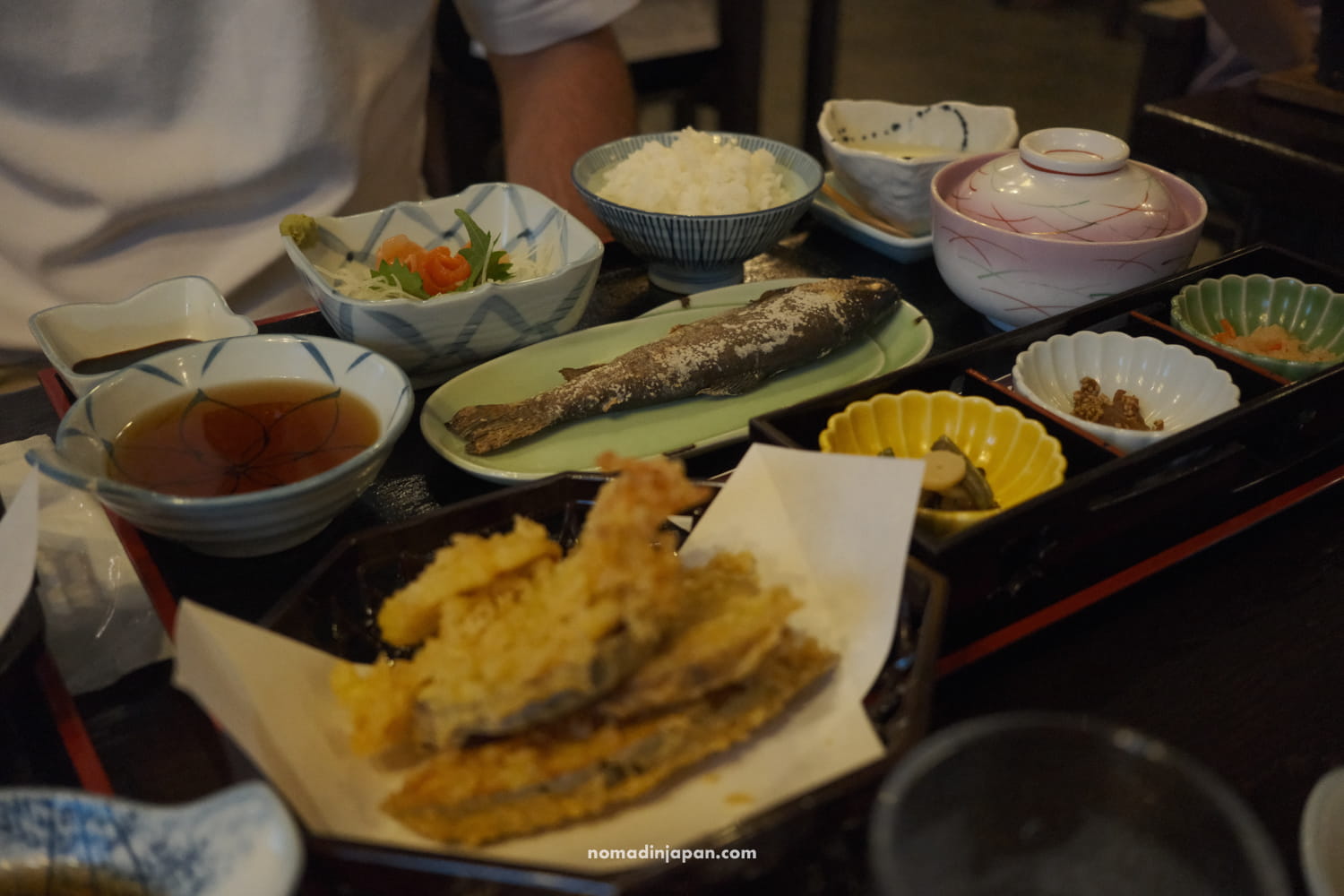
Rather than rushing to catch a bus, you can check into a traditional minshuku, enjoy dinner and breakfast, and experience the town after day-trippers leave.
3. Enjoy a slower morning in Tsumago
Starting your Nakasendo hike in Tsumago-juku gives you time to wander its preserved Edo-period town before the crowds arrive.
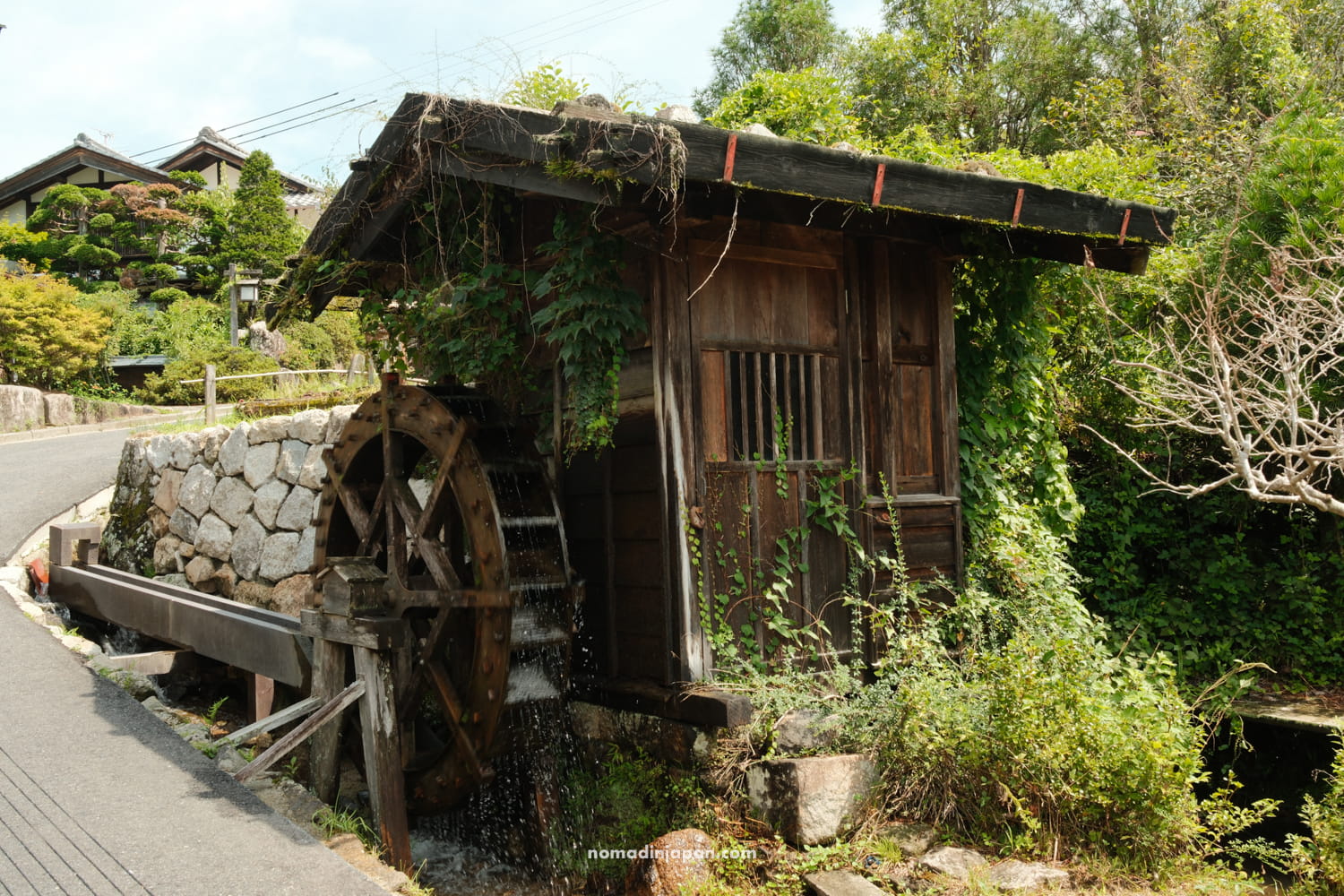
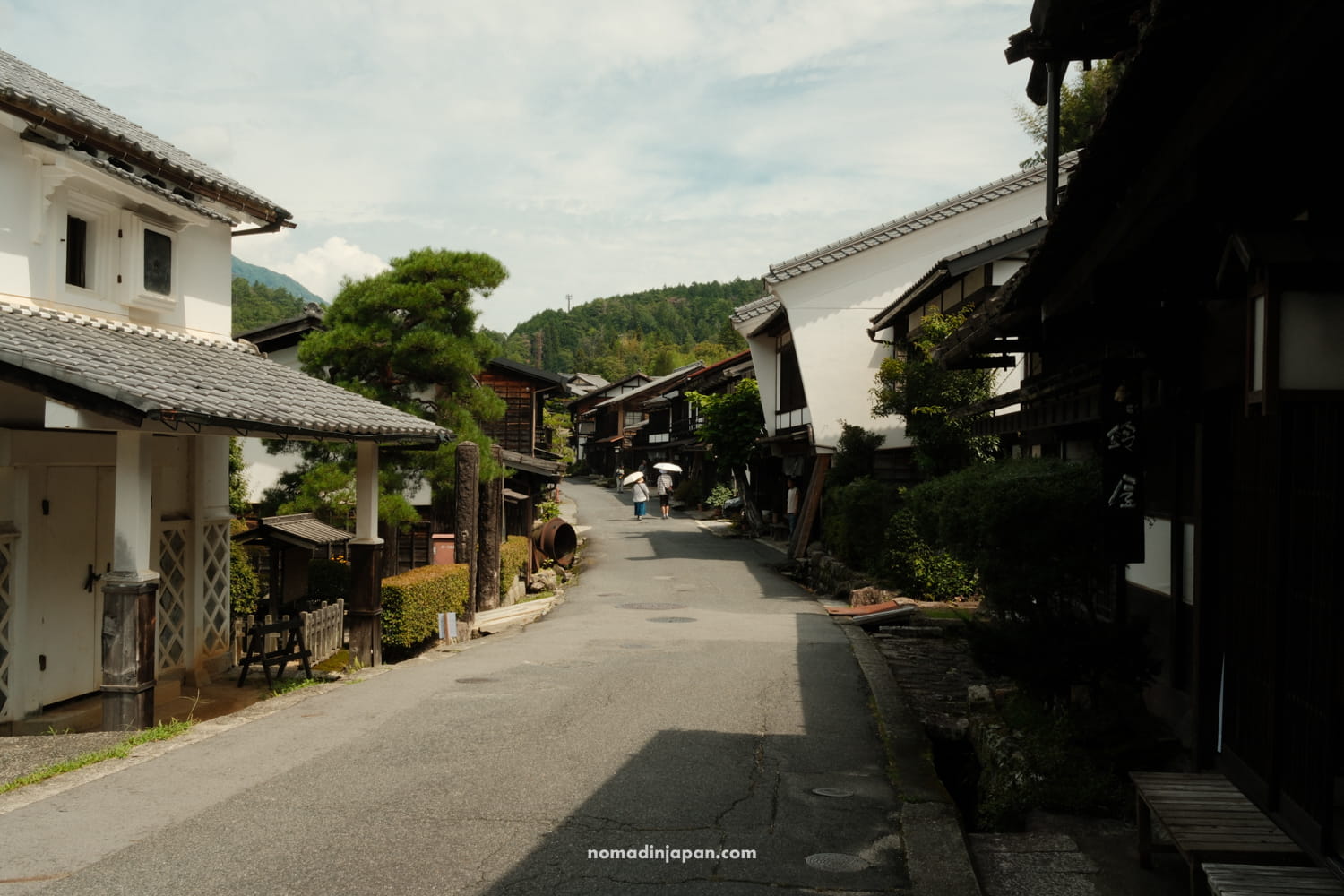
This means you’ll be able to wander Terashita, one of the best-preserved sections of the old Nakasendo road, lined with traditional wooden houses!
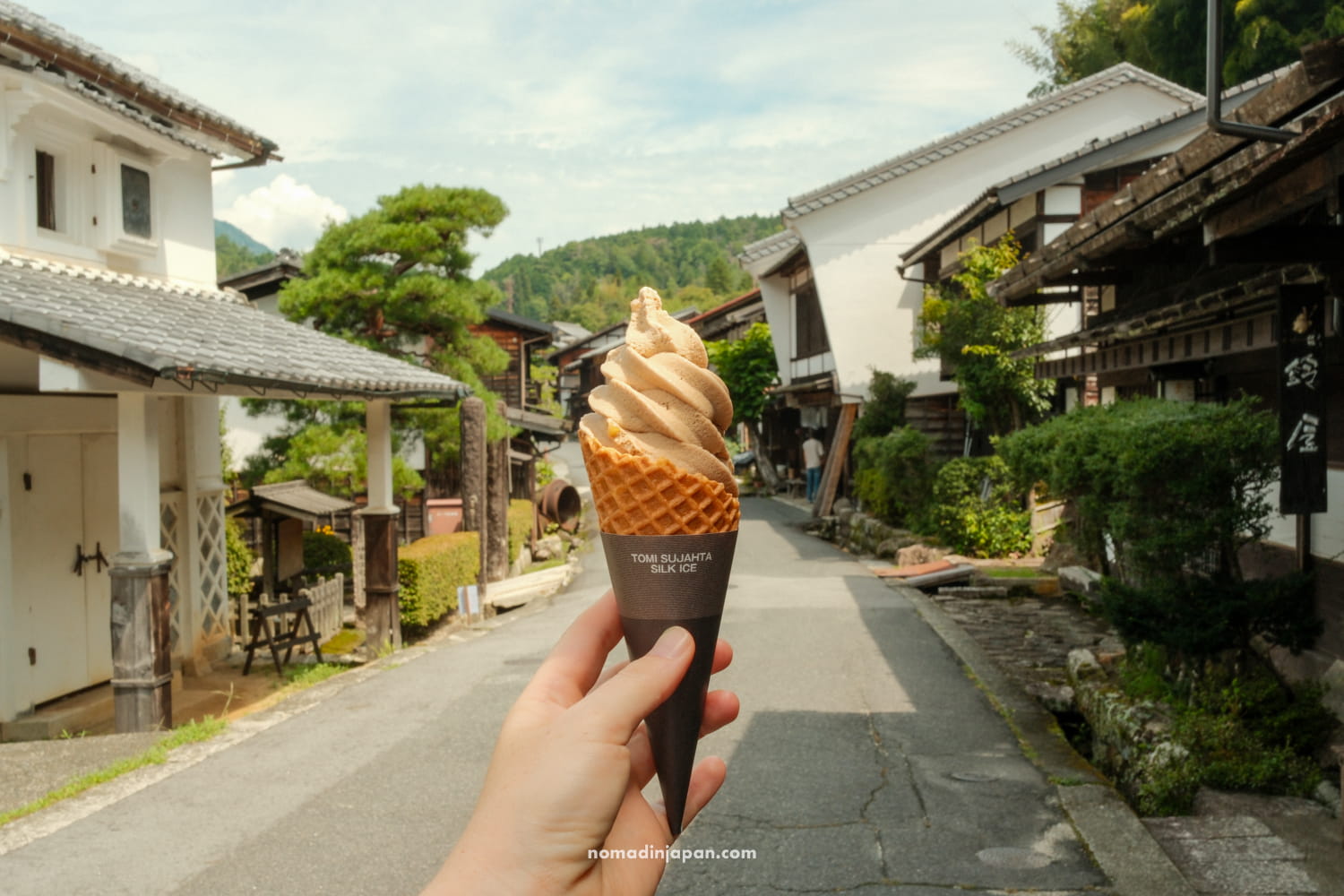
If you arrive after 9 AM, you can also visit the Waki-Honjin Okuya (a historic inn and now cultural property), Tsumago-juku Honjin, or Nagiso History Museum before grabbing a chestnut soft serve and setting off toward Magome, as we did!
4. Magome’s shops close early, so overnighting gives you more time to explore
Rather than treating the trail as a quick day trip (but possible from Nagoya), make it part of a slow-travel itinerary.
If you do try to squeeze in Tsumago and Magome in one day, you’re likely to miss out on browsing the historic shops filled with regional specialties and crafts.
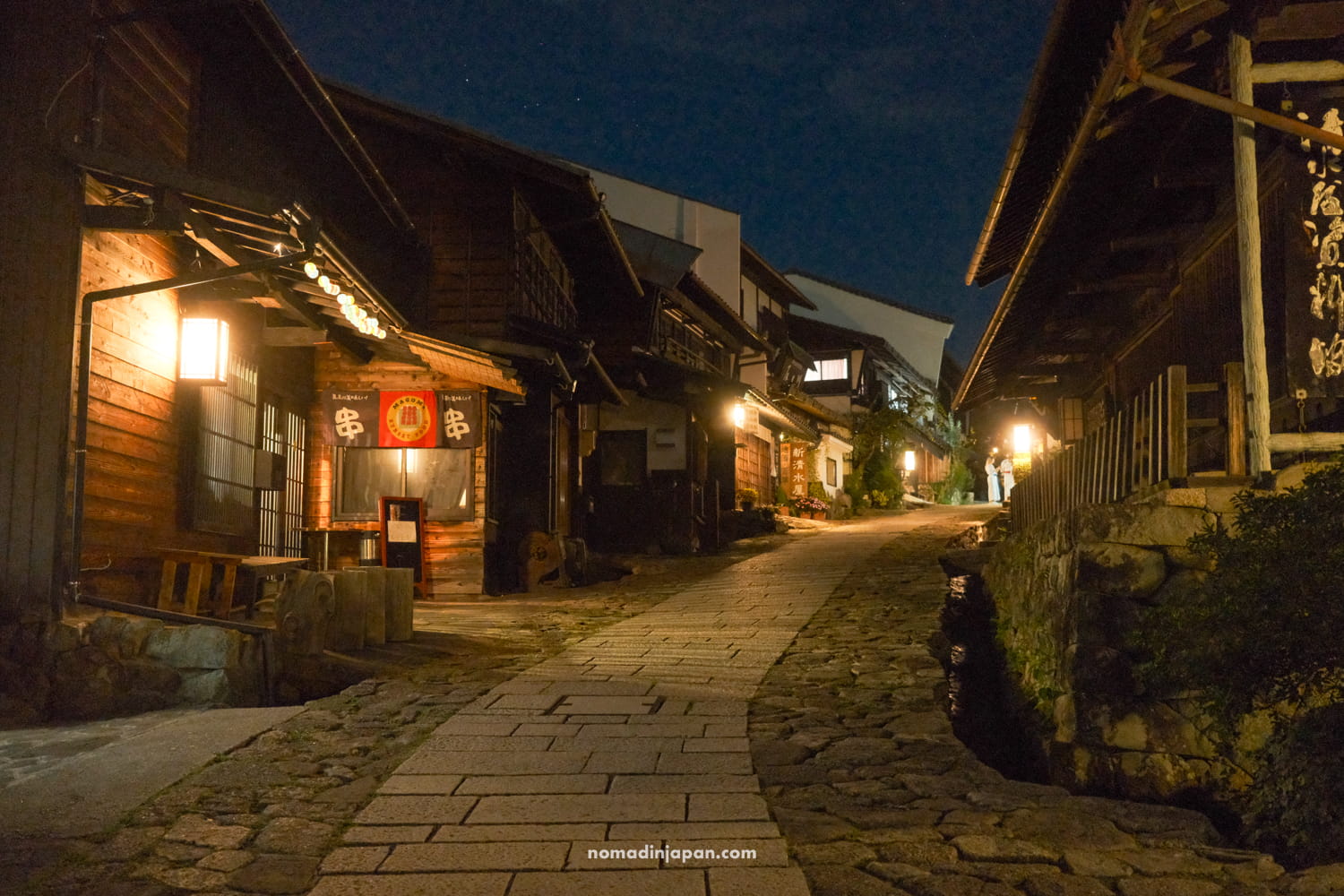
Being able to drop our bags off at 3 pm (check-in), wander the shops, enjoy dinner and the village at night, and then wander the streets again in the early morning without crowds was so special!
5. Experience the Nakasendo as a journey, not just a day trip
Ultimately, I feel that spending a night in either Magome or Tsumago, and maybe a night in Narai-juku, allows you to experience the Nakasendo as travelers of old did: by walking a bit during the day, then lodging in the next town over to refuel and rest.
Our decision to do the Nakasendo in reverse made the anticipation of reaching Magome all the more memorable.
The post towns, forest trail, and sense of following in the footsteps of Edo-period travelers became much more rewarding than just hopping between them by bus in a hurry.
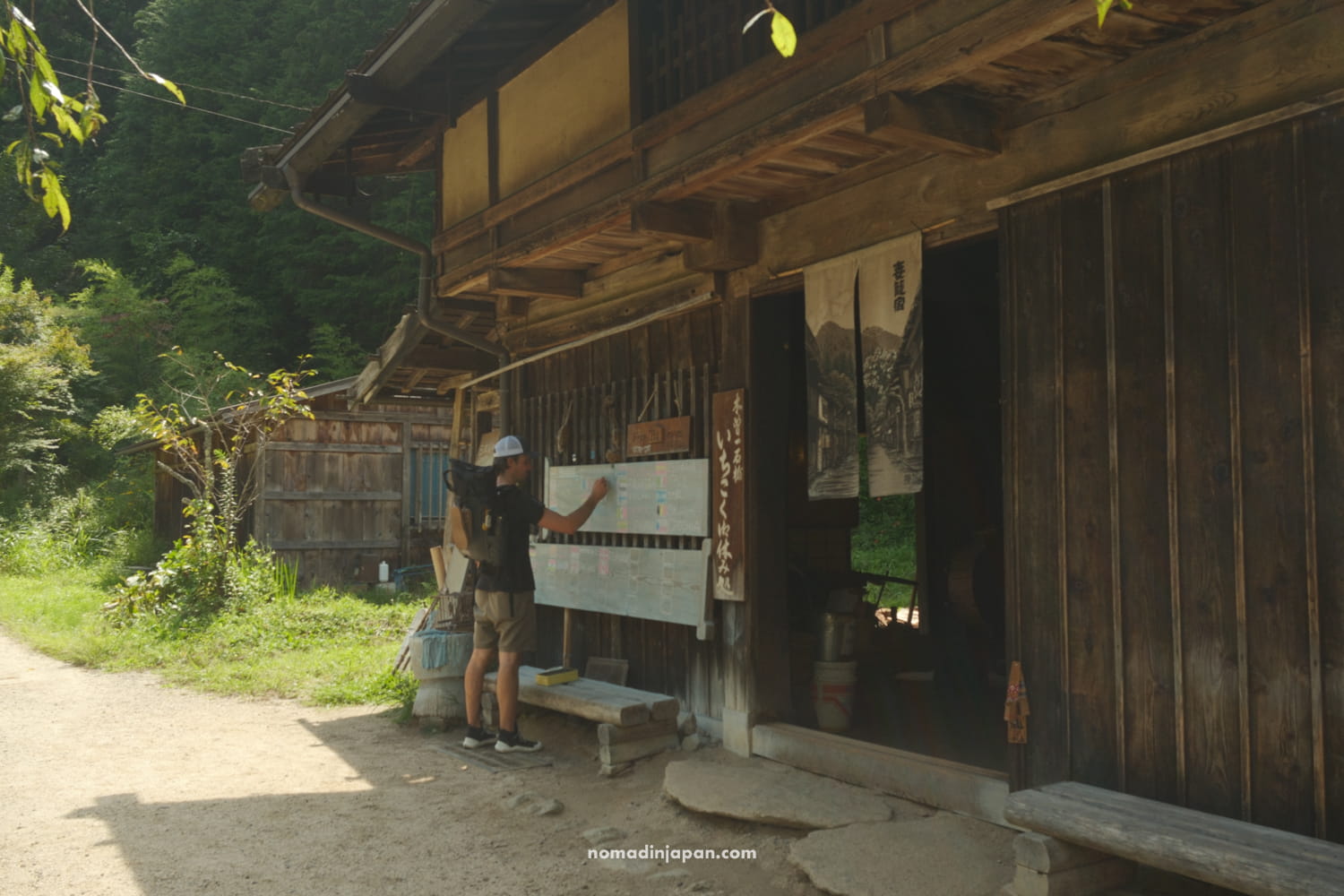
What to Expect on the Tsumago to Magome Trail
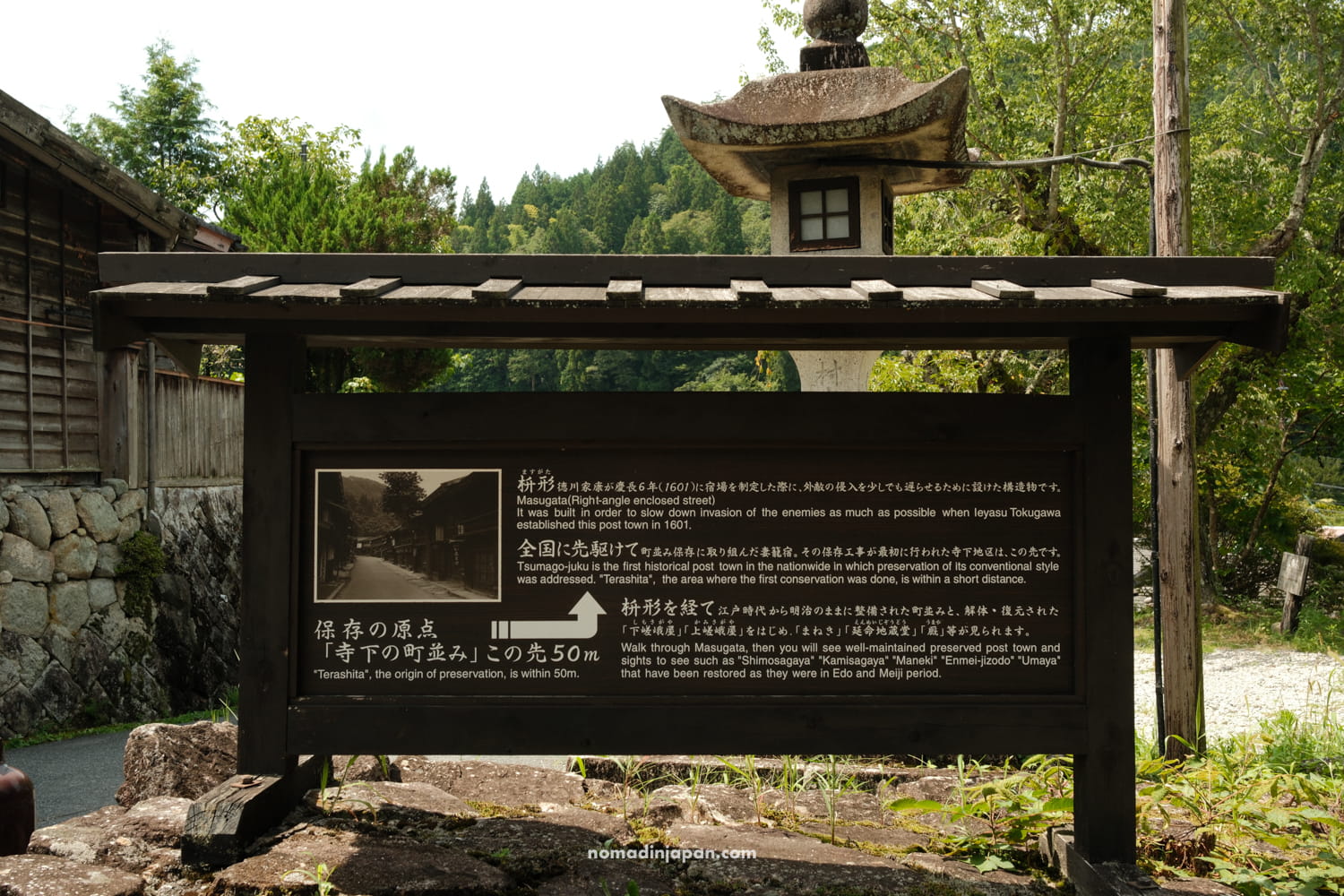
As you walk through Tsumago’s village, take your time to explore the inns and museums, and also experience Terashita Street. But once you leave, you’ll follow the paved road out of the town.
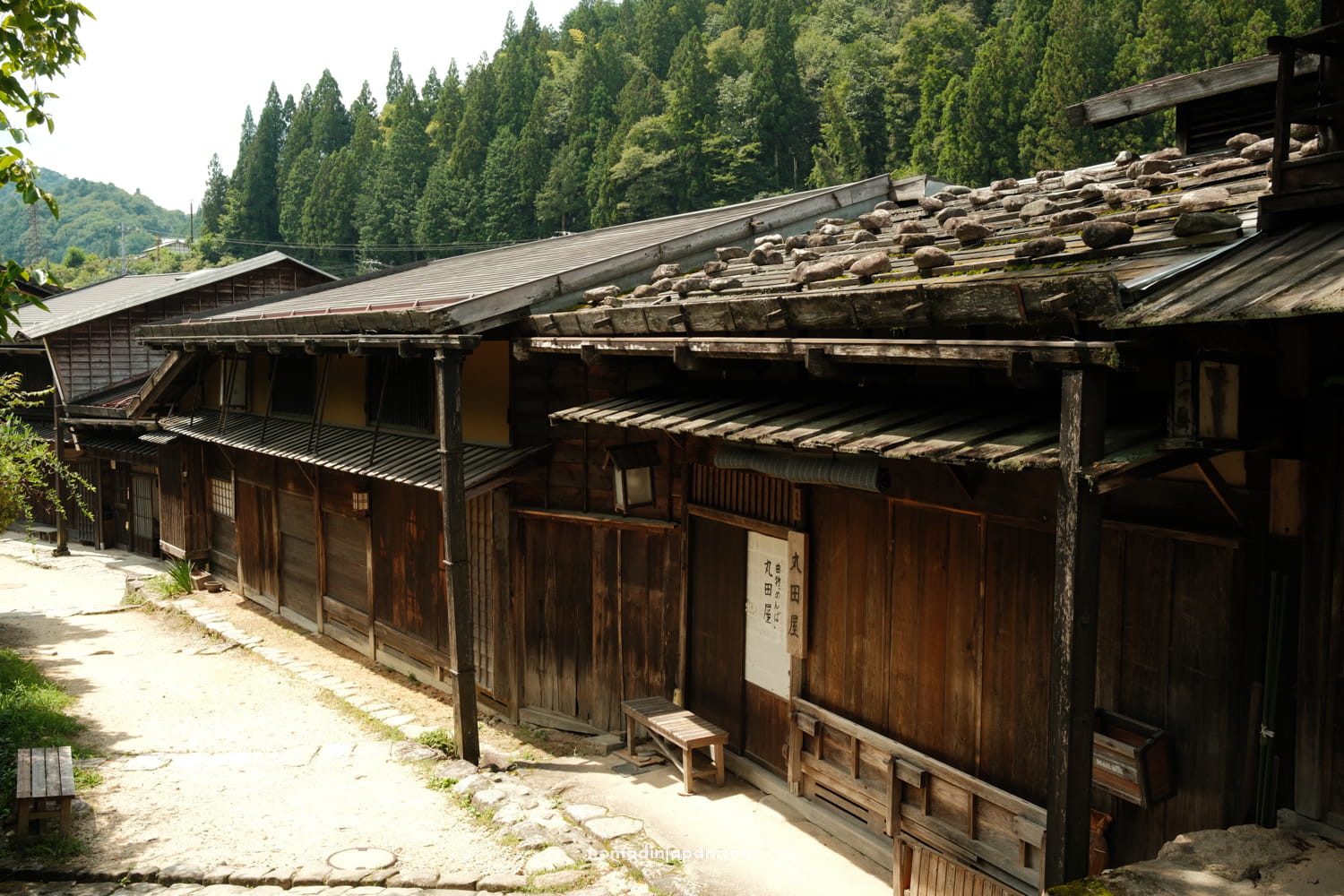
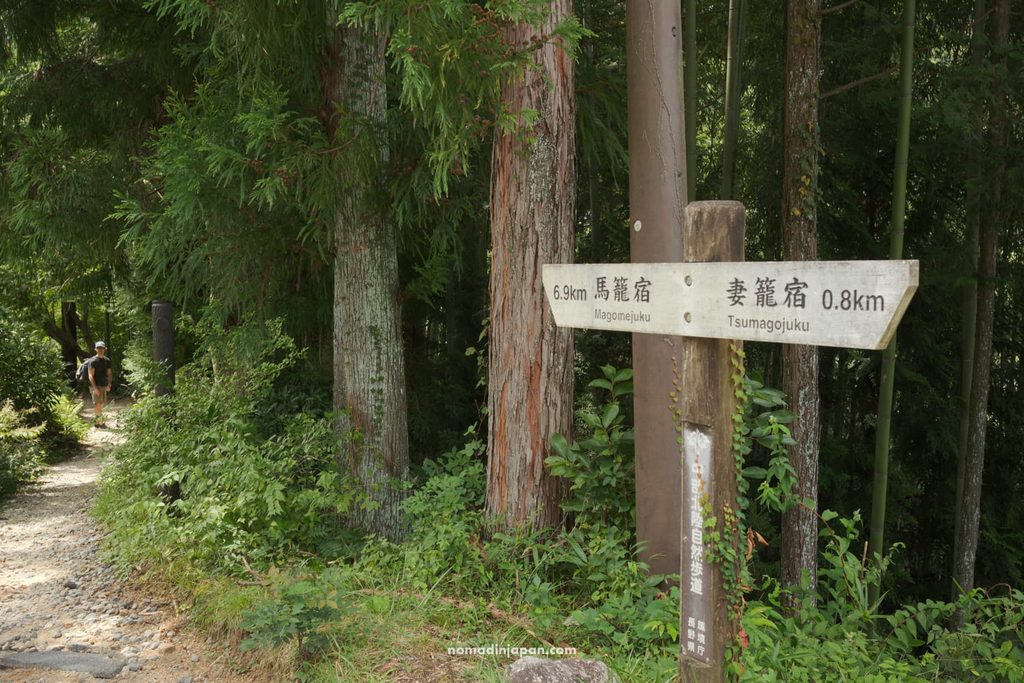
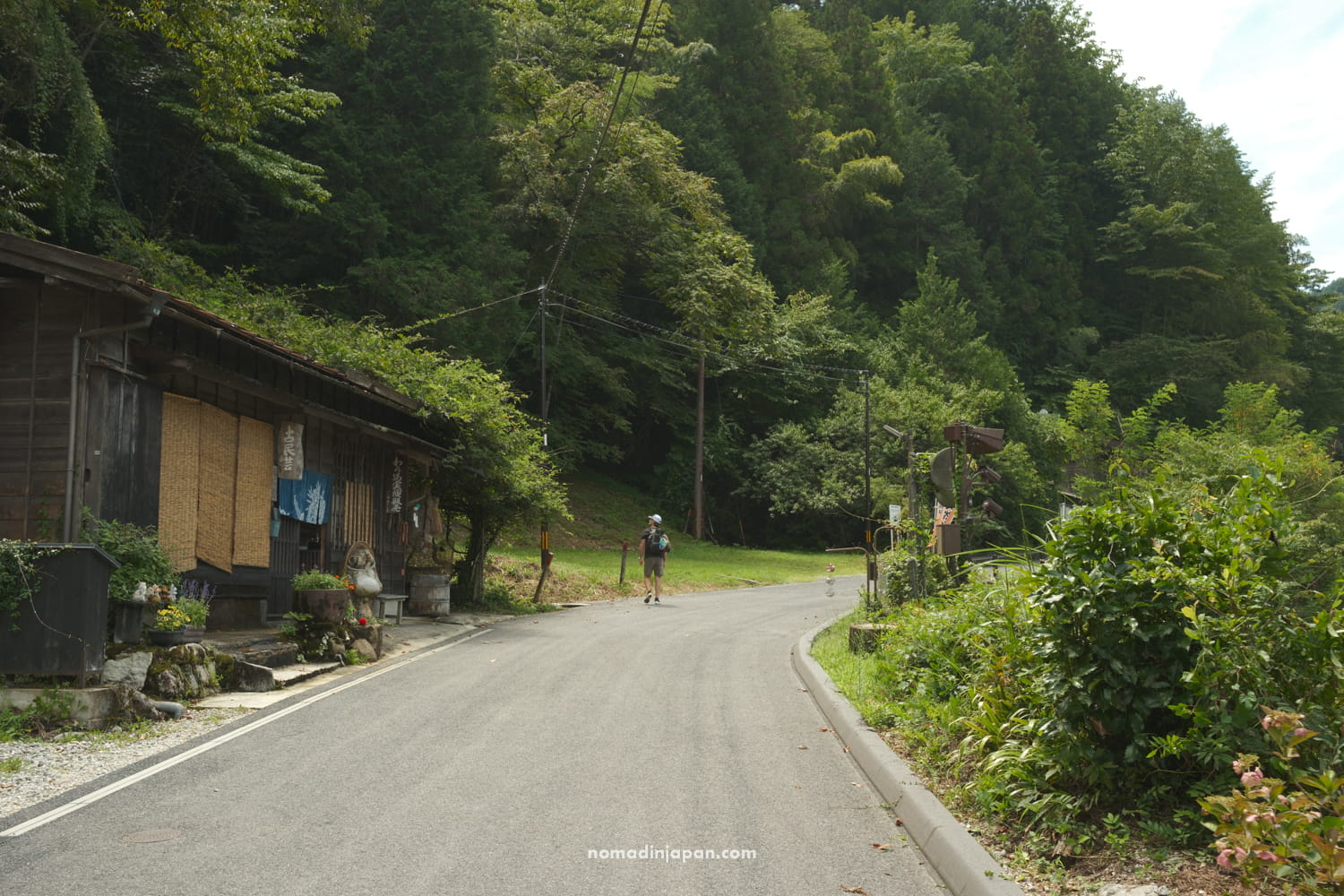
Soon, you’ll be walking above the riverside, past beautiful Japanese homes and gardens. The signage for the Nakasendo Way is readily marked. About 10-15 minutes in, you’ll enter the treeline and begin your forest walk.
The way to Tsumago features a few uphills, but nothing too bad. The total elevation gain is only about 400 m overall. It actually felt safer hiking in this direction because the cobblestones can be uneven and slippery, so going uphill worked out for us (and, again, my knees thanked me for it!).
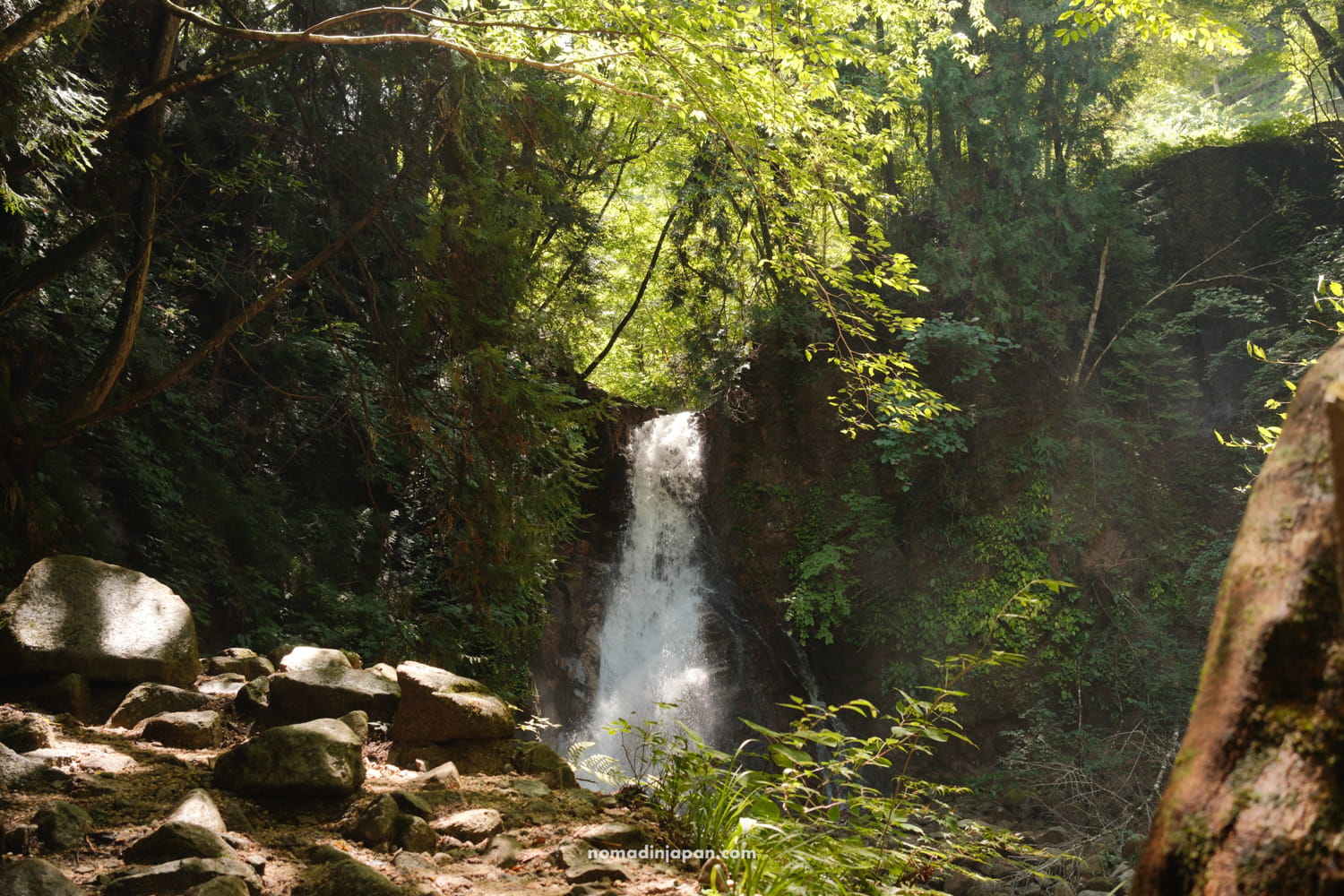
I also loved coming upon the two waterfalls between Tsumago and Magome, known as Otaki and Metaki (男滝・女滝), meaning “male” and “female” waterfalls, which are closer to Tsumago. 💦
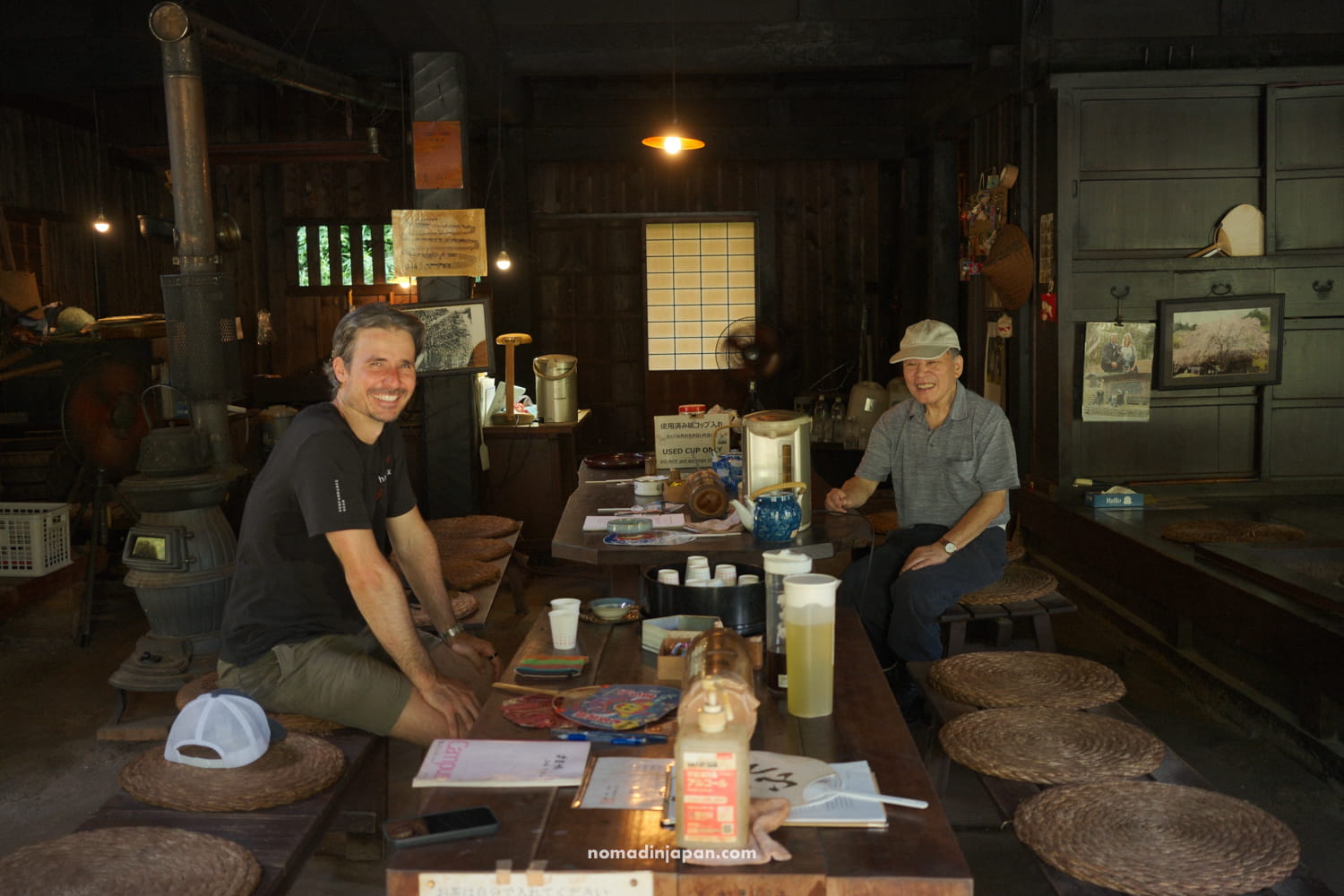
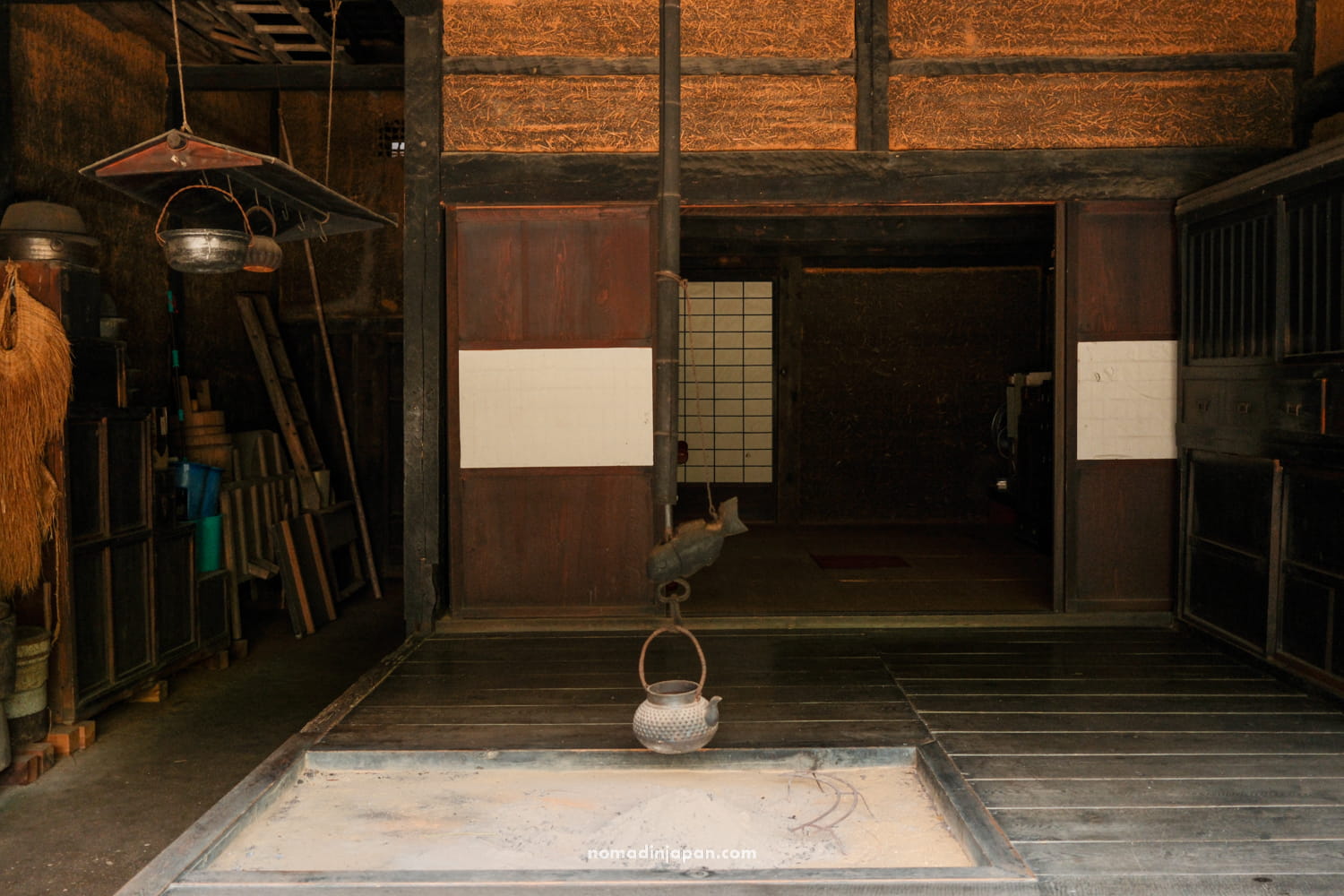
Later, as you approach Magome, there is a historic 250-year-old teahouse that feels perfectly positioned for a well-earned break. Stop in for some free green or black tea. It is overseen by a lovely elderly man who is happy to welcome foreigners in.
You know you’re arriving in Magome once you reach a gravel clearing with a beautiful overlook. You’re at the top of the hill, and now you just need to slowly walk down the historic slope and enjoy the mountain views.
How to Get to Tsumago and Return from Magome
If you follow our Nakasendo weekend itinerary, you’ll reach Magome on foot from Tsumago. But getting to Tsumago is the first step, and for that, I’d recommend coming from the top down. You can reach Tsumago via Nagiso Station.
If you’re coming from Narai-juku, that means a local train ride (about 1h30) and a 5-minute bus ride into Tsumago.
Note: There are luggage forwarding options, but consider the short hike only requires a day bag at most, with water, sunscreen, a hat, and proper walking shoes.
So, Should You Hike Tsumago to Magome or Magome to Tsumago?
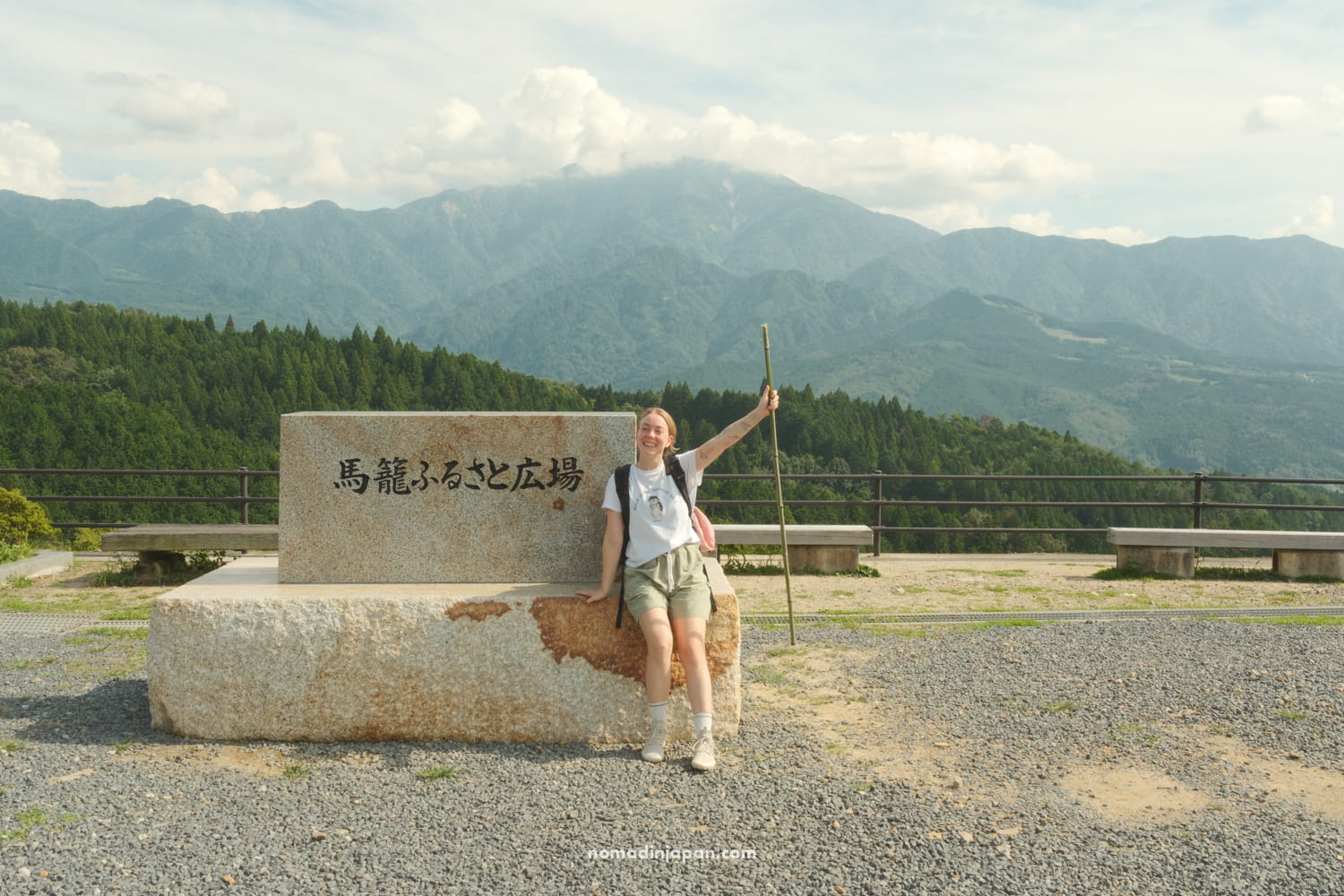
I hope this guide has helped clear up any doubts about which direction you should hike the Nakasendo.
I personally have no regrets doing the walk from Tsumago-juku to Magome-juku, with an overnight at the Magome Chaya Guesthouse.
Either direction is still an 8km (5-mile) hike, so go prepared with water. And consider taking a trekking pole or two to help with stability or to ease pressure on the knees.
To recap:
- Both directions have the same views
- Ending in Magome-juku has a more “wow” finish
- Starting in Tsumago gives you time to visit
- The Tsumago to Magome route requires a bit more uphill overall, with about 400m elevation gain
- Staying overnight in the towns is highly recommended!
Also, quick note! Bear bells are stationed throughout the forest trail. Give those a hard ring as you pass by. Asian black bears in the Kiso Valley are common; sightings are few, but not impossible. 🐻
If you have any more questions about walking from Tsumago-juku to Magome-juku, please drop them in the comment section at the bottom of this post. Thanks!