How Much Does the Kumano Kodo Cost? My Real 5-Day Pilgrimage Budget
If you plan to trek Japan’s UNESCO-listed pilgrimage trail, the Kumano Kodo, it’s helpful to know what costs are included—and how much to budget.
In this guide, I’ve compiled all our costs for completing the Nakahechi Route hike.

While the “full” Nakahechi trail spans 4–5 days, depending on pace, we spent an extra night post-trail to soak in the onsens and feast on fresh tuna in Nachi-Katsuura town on the coast, and collect our last Grand Shrine stamp at the Kumano Hayatama Taisha in neighboring Shingu town.
💡 Important note: You can reduce costs by hiking for 2 or even 3 days to reach Kumano Hongu Taisha, as this officially counts toward your Kumano “certification.” This really only matters if you wish to participate in stamp collecting and intend to register for the Dual Pilgrim status by completing the other UNESCO pilgrimage trail: the Camino de Santiago in Spain.
All of the before-and-after costs include extra transport from Osaka and back, accommodation in Wakayama and Nachi-Katsuura, and in-between purchases for bento (lunch) and omamori (amulets), among other odds and ends.
I’ll do my best to walk you through everything we spent, while letting you know what’s essential for the pilgrimage and what’s additional/optional!
Quick Answer: How Much Does the Kumano Kodo Cost?

As a couple, we spent approximately ¥185,000–¥195,000 (~$1,400 USD) to experience the 5-day Kumano pilgrimage. That works out to be roughly $280 per day, for two.
Overall, accommodation was by far the biggest expense:
- Accommodation: ¥165,050 (~$1,030)
- Transportation: ¥35,000 (~$220)
- Extra Food: ¥10,000–¥12,000 (~$50–$75)
- Souvenirs and others: ¥5,000+ (~$30)
Read more below for details!
Money Tip 💴
Our trip leaned toward the higher end due to several ryokan and other premium accommodations. Budget-conscious hikers can spend considerably less by shortening their trip to 3 days (instead of 5) and booking well in advance to secure more budget-friendly guesthouses.
Our Full Kumano Kodo Cost Breakdown
Accommodation Costs

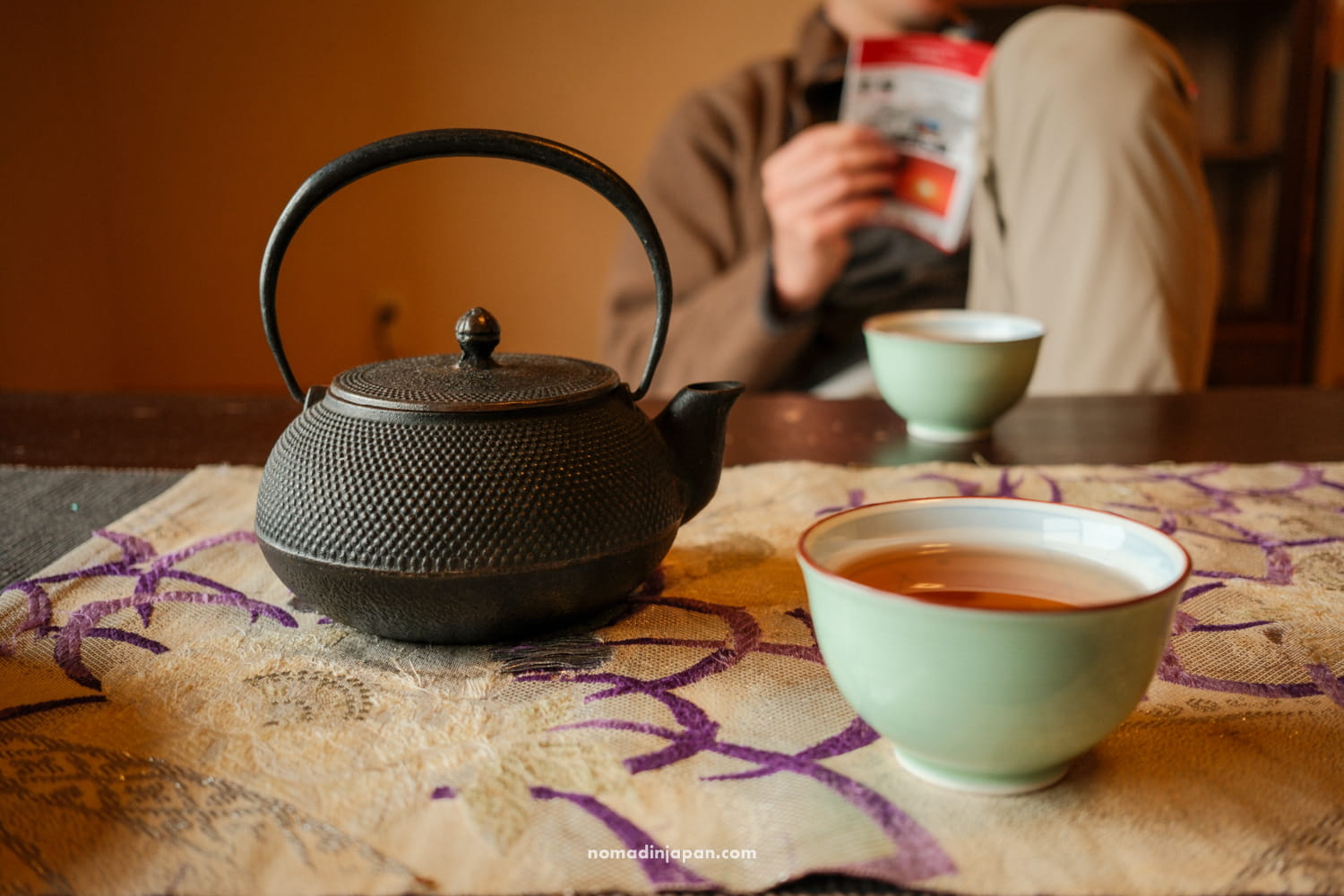
Accommodation accounted for nearly 90% of our total trip cost, including half-board (dinner + breakfast) in some cases (not all).
|
Accommodation |
Cost (JPY) |
|---|---|
|
¥43,700 |
|
|
KUMANOYASAI BASE (Chikatsuyu) |
¥36,000 |
|
¥8,400 |
|
|
SEN HAVEN Nakamura (Koguchi) |
¥32,400 |
|
Hotel Urashima (Nachi-Katsuura) |
¥44,550 |
|
Total |
¥165,050 (~$1,030) |
You can read more details about each place we stayed, and why, in my guide to Where to Stay on the Kumano Kodo.
Accommodation plan — if you END hike at Kumano Hongu Taisha (short Nakahechi):
Night 1/2: Book a place in Takahara or Chikatsuyu (depending on whether you want to hike ~2.5 hours vs. ~7 hours on your first day).
Night 2/3: Book around Hongu (aka Yunomine Onsen, Kawayu Onsen, or Hongu area).
➡️ Our accommodation plan — if you END hike at Kumano Nachi Taisha (full Nakahechi).
Same as above, but add in TWO extra hiking days, with one crucial overnight in Koguchi (the midway village between Hongu Taisha and Nachi Taisha). You cannot hike the whole thing in one day. Koguchi is a must-stopover.
🥾 Trailhead: Takijiri-oji
🪵 Night 1: Kiri-no-Sato Lodge, Takahara
💫 Night 2: Kumanoyasai Base, Chikatsuyu
♨️ Night 3: J-Hoppers Hostel, Yunomine Onsen
🌲 Night 4: Sen. Haven Nakamura, Koguchi
⛩️ End hike: Kumano Nachi Taisha
🌊 Night 5 (optional): Overnight in Nachi-Katsuura or onward travel back to Osaka/etc
Transportation Costs
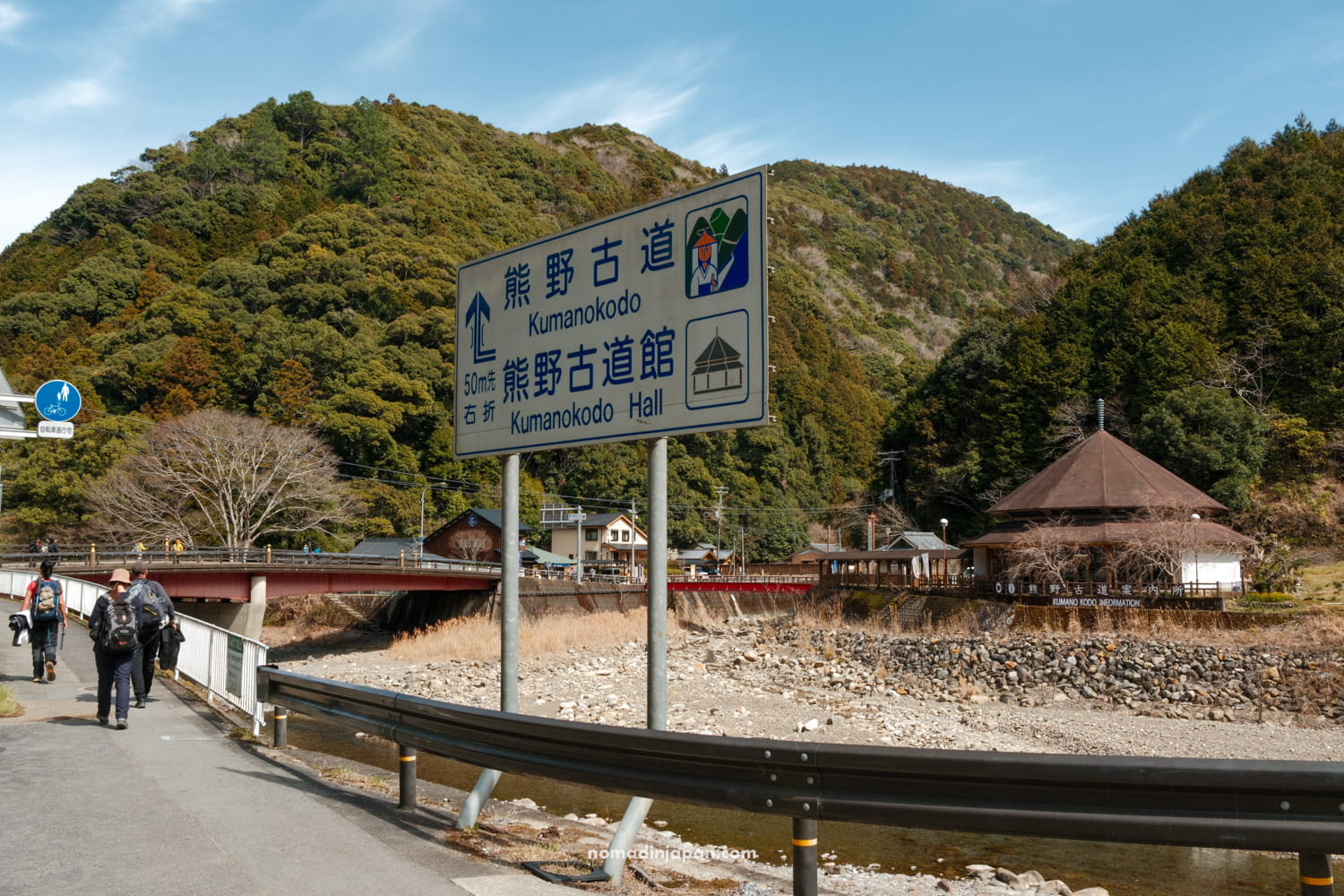
Transport to the Kumano Kodo trailhead and back to the Osaka area costs around ¥17,500 per person (about $110 each), making it the second-most expensive part of organizing the Kumano Kodo hike. So worth it, though!
Getting to the Kumano Kodo
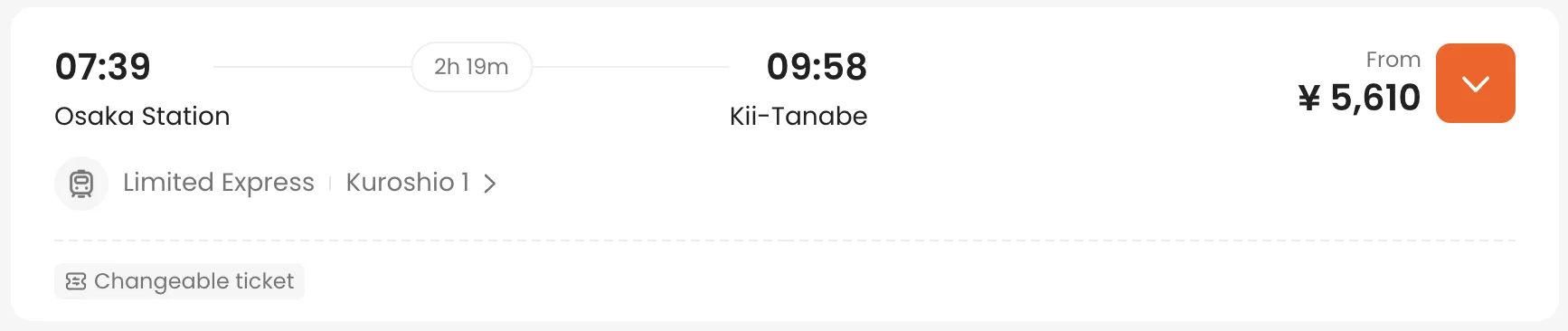
- Train from Osaka or Kyoto to Kii-Tanabe
- Bus from Tanabe to Takijiri-oji
- Approx. ¥5,000–¥6,500 ($35–$40)
The easiest way to reach the trailhead for the Nakahechi Route of the Kumano Kodo is to take the Limited Express Kuroshio train from Osaka to Tanabe City (Kii-Tanabe Station), and then take a 30-minute bus ride to Takijiri-oji, where the trail officially starts.
We had a unique situation where we stayed a few nights at Guesthouse RICO prior to our hike in the city of Wakayama (Wakayama Prefecture).
It would have been more convenient, however, to overnight in Tanabe the night before. This way, we could’ve visited the Tanabe City Tourism Center to check trail conditions before taking the bus to the trailhead in Takijiri-oji.
In Tanabe, you can also pick up your free Kumano Kodo stamp booklet. 💮 There’s also a stamp to collect here, don’t forget! (I was so gutted to miss it that we even went back for it on our way back to Wakayama from Nachi-Katsuura lol.)

Local Bus Transportation
We hiked most of the trail, but we took five buses in total.
- Bus #1 (on Day 1): Kii-Tanabe → Takijiri-oji
- Bus #2 (on Day 3): Chikatsuyu → Doyukawa-bashi stop
- Bus #3 (on Day 3): Hongu → Yunomine Onsen Village
- Bus #4 and #5 (Day 4:) Yunomine → Hongu → Koguchi trailhead
- Bus #5 (on Day 5): Nachi Falls → Kii-Katsuura
- Total approx. ¥4,000–¥5,000 (~$30)
Bus fares were inexpensive, with our total transportation cost coming to roughly ¥2,000–¥2,500 per person across all five rides.
💳 IC Cards (Suica/Pasamo/etc) do not work for the Kii-Tanabe to Takijiri-oji route. Instead, take exact change/cash. They did for the inter-village buses, though.
Returning From Nachi-Katsuura
- Train back to Osaka or Kyoto
- Approx. ¥7,500 ($50)
Fortunately, the Limited Express Kuroshio train runs from Shingu (where the Kumano Hayatama Taisha Grand Shrine is) or from Kii-Katsuura Station (Nachikatsuura town), making it convenient to travel back to Osaka or Kyoto after you’ve completed the pilgrimage.
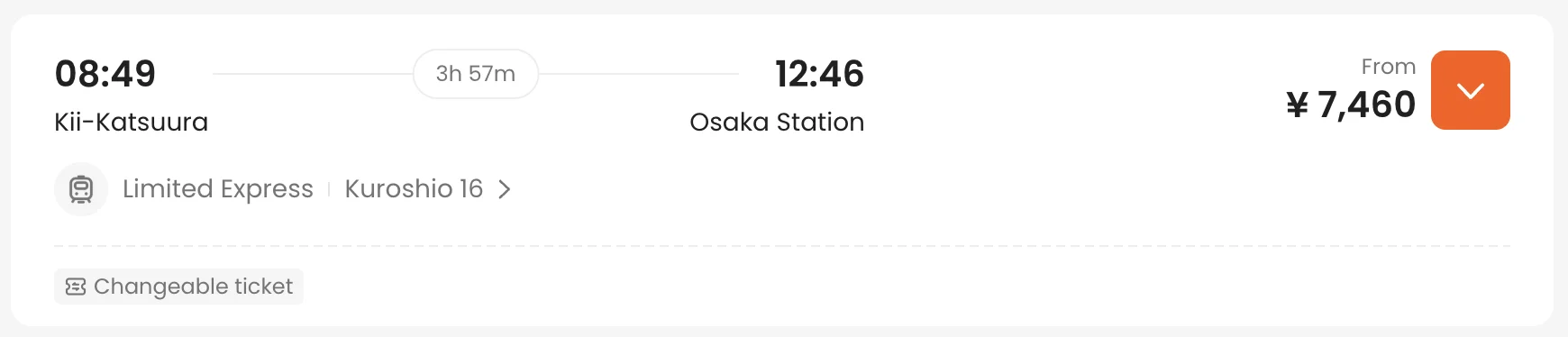

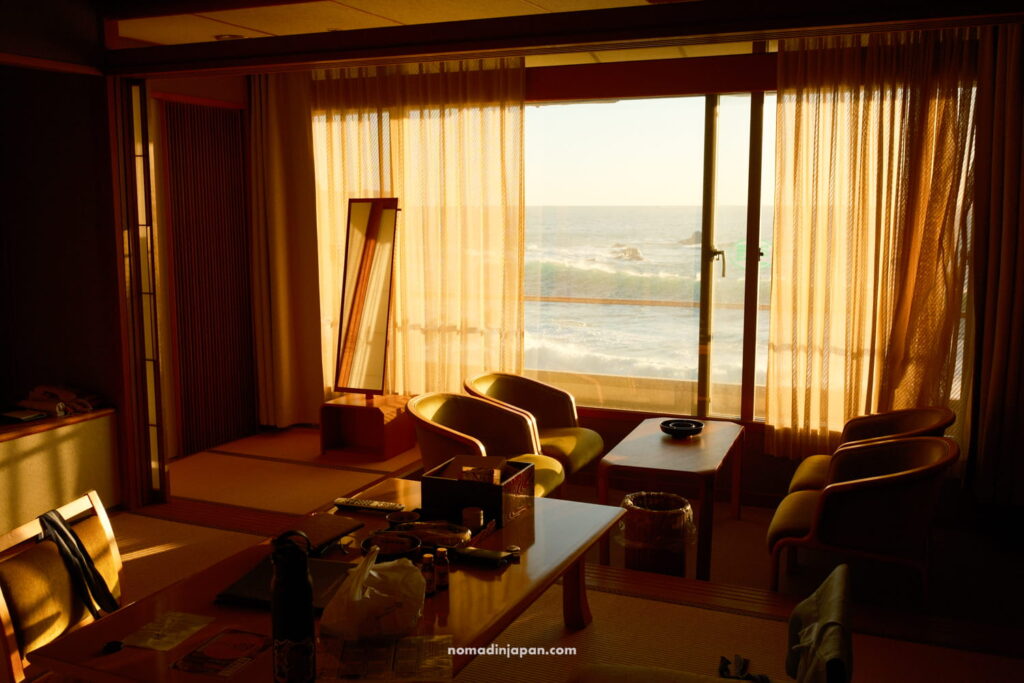
For us, we first made a stop in Tanabe (non-essential), before ending in Wakayama and flying out of Osaka to Okinawa the next morning.
Again, no need to follow what we did — you can hop directly on the train and go all the way back from Kii-Katsuura or Shingu to Osaka in one go, without transfers.
Extra Food Costs
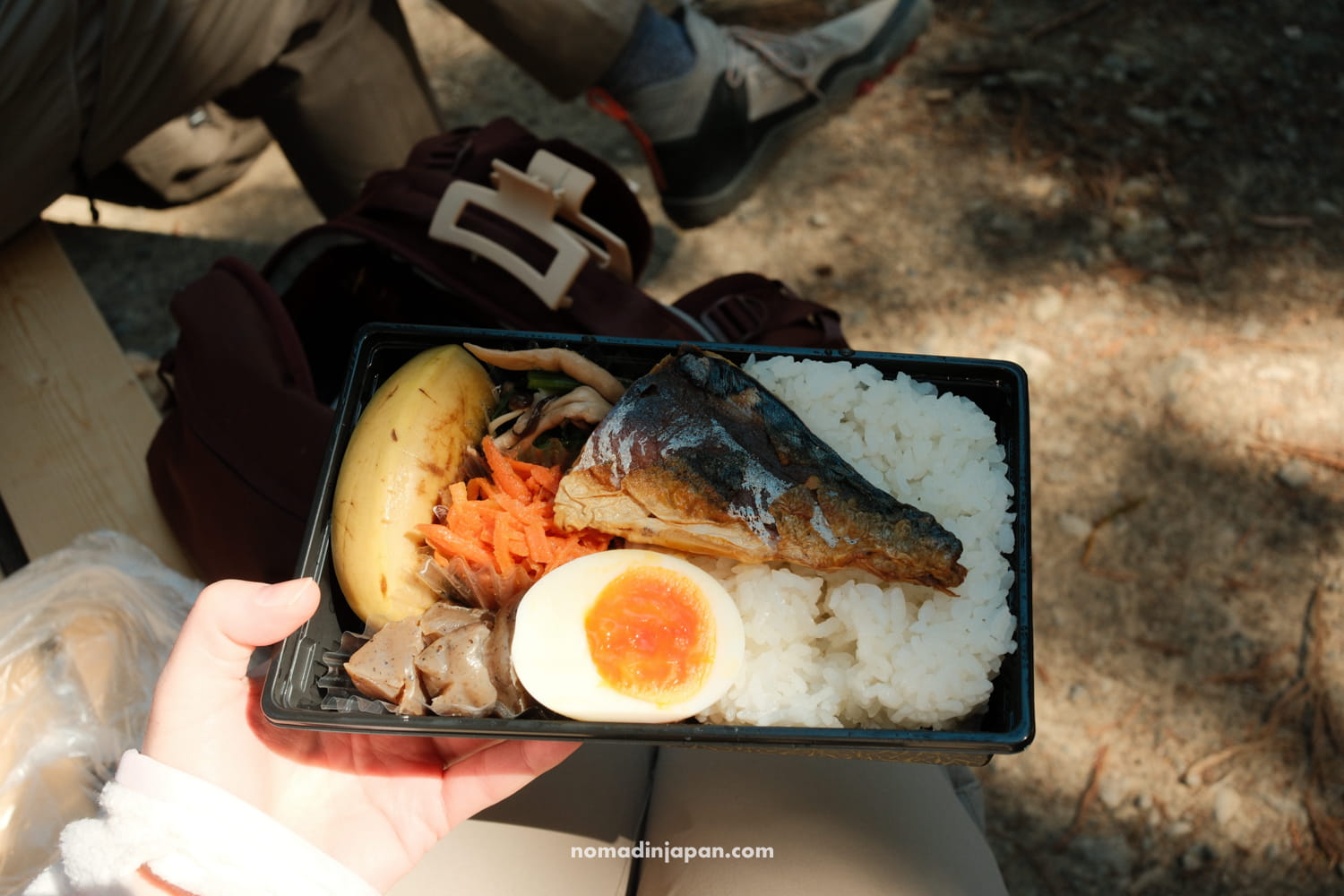
Food is limited on the trail itself, so you need to organize dinner/breakfast/lunch with your accommodations.
In total, we probably only spent around $75 in extra lunches and snacks. That also includes the $30 we spent on dinner at a bar in Yunomine Onsen village.
As mentioned, most breakfasts and dinners were included with accommodation. When they weren’t, it usually was a supplemental fee of around ¥800 – ¥1000 (around $5 – $6).
Bento Lunches
- 2+ bento lunches + 2 DIY lunches
- Approximately ¥1,000 each
- Total: ~¥5,000 ($30)
We would order a bento takeaway lunch box for the next day’s hike (make sure to reserve a day in advance), so that we’d have a picnic around midday on the trail before later arriving at our next destination mid-afternoon or early evening.
From my notes, we ordered bento from Takahara (night 1) → Chikatsuyu (night 2), then again to Hongu.
We stayed the night in Yunomine Onsen village instead of Hongu town, but picked up delicious sandwiches ourselves for our hike to Koguchi that day.
In Koguchi, we stocked up on snacks at a mini convenience store for our last hike to Nachi Falls the following day.
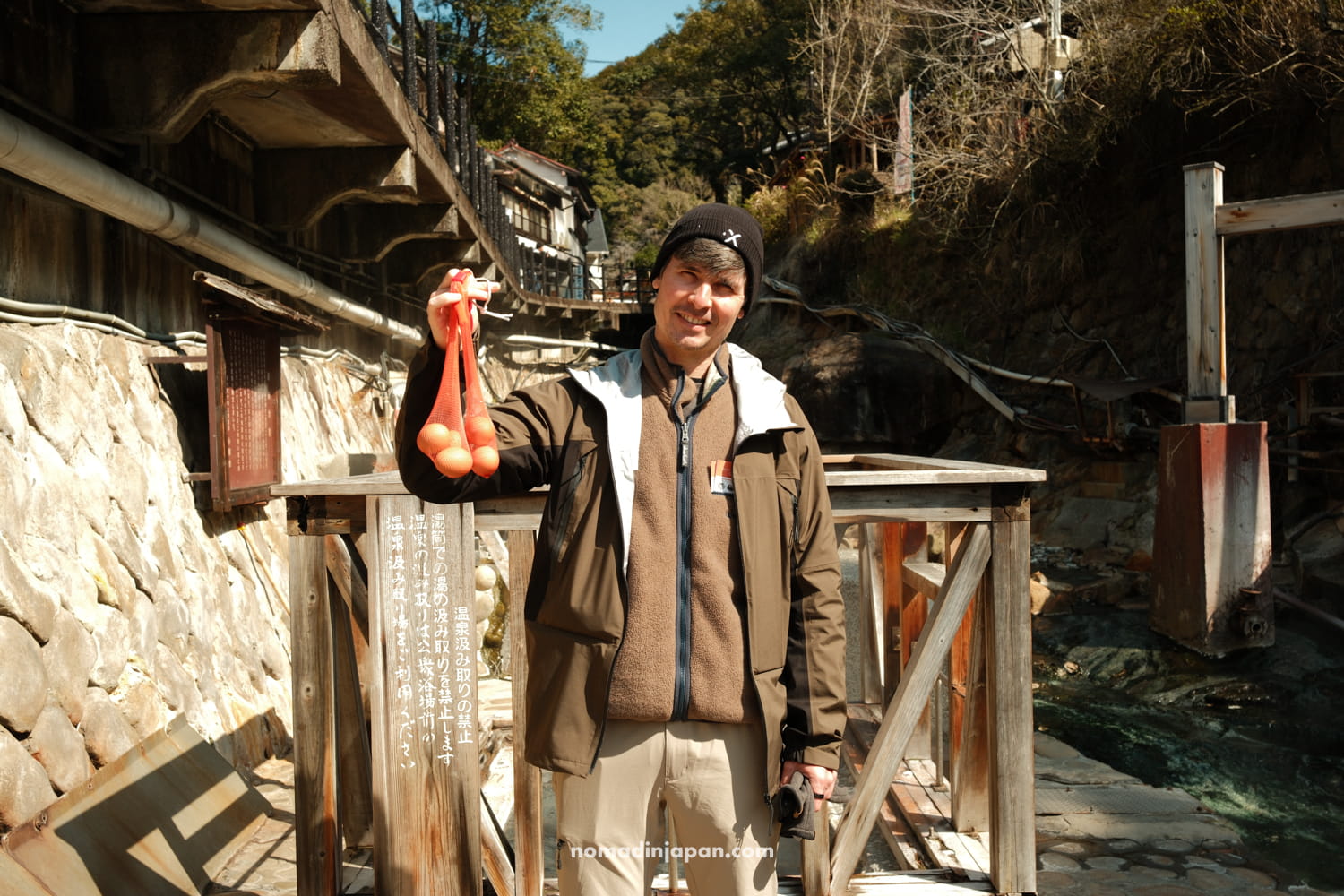
Snacks and Drinks
- Snacks
- Vending machine drinks
- Estimated: ~¥3,000 ($20)
While there aren’t many snacks and drinks on the trail, there is a rest stop area from Takahara to Chikatsuyu where you can order udon and soba noodles, as well as other snacks.
In Takahara, there was also a cute honor system granola bar stand. But that was the only one of its kind we saw.
Vending machines are also available here, and on the trail just before you descend into Hongu Taisha Shrine, but the two days of additional hiking from Hongu → Koguchi → Nachi really have nothing (except for a small convenience store in Koguchi), so you need to pack picnics and enough water for those two final days.
Other Kumano Costs: Onsen, Luggage, Amulets…
Your budget should also take into account the “other” costs beyond the major ones: accommodation, transport, and food.
Many tourists opt to use the network of luggage-shuttling services for their hikes, which you need to arrange through your accommodation.
Personally, we chose to hike the Nakahechi with our 40L backpacks. I’m not sure how much this service costs, as it may vary per route/hotel/weight, etc. I recommend packing light.
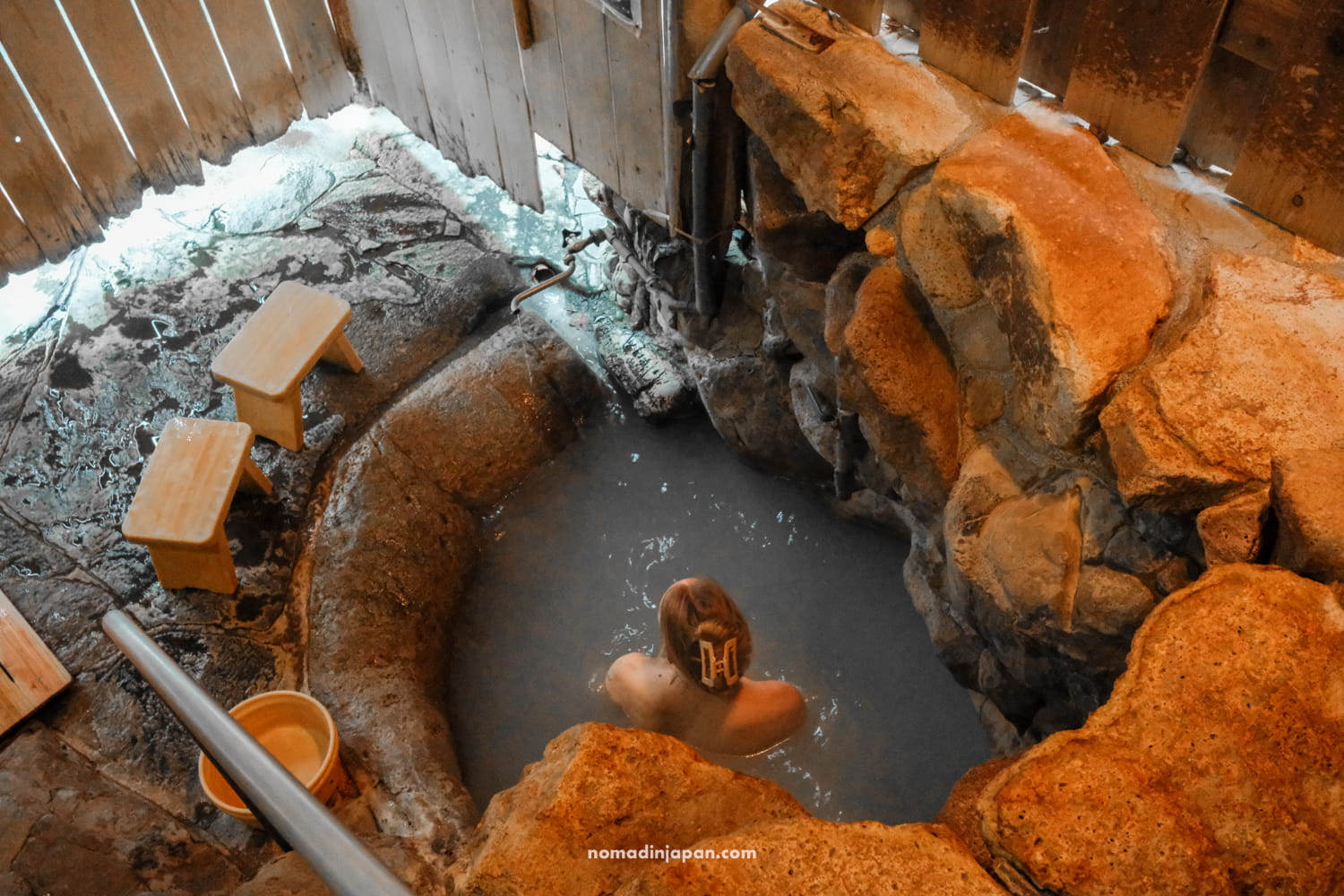
An exciting part of the Kumano pilgrimage is the chance to soak in onsen (natural hot springs). A highlight was visiting Tsuboyu Onsen in Yunomine, the world’s only UNESCO-listed hot spring bath. (Costs ~800 JPY per person, vending machine ticket; cash only.)
Your ryokan or guesthouse may also include private-use onsen baths in your room rate (as we had at Kirinosato Takahara Lodge).
Finally, take spare change for the shrines and rituals along the Kumano!
There are three Grand Shrines to visit as part of the Kumano pilgrimage (known as the Kumano Sanzan).

Each has its own collection of good-luck amulets (omamori) and souvenirs, including special Kumano Kodo omamori, such as the Yatagarasu (three-legged black crow 🐦⬛), which symbolizes Kumano.
Costs for these amulets can vary anywhere from ¥250 to ¥1000 and above.
My Kumano Kodo Tip: Prioritize the Pilgrimage Experience

Rather than treating the Kumano Kodo solely as a hike, we viewed it as a cultural journey to witness what makes the Kumano pilgrimage so special.
This meant taking our itinerary more slowly and enjoying a night of rest in Nachi-Katsuura, making our trip 5 days and 6 nights without budget constraints.
If you have the spare budget, I highly recommend doing something similar. Taking it slower meant I could enjoy the pace we set, relax leisurely in the onsen, spend time reading and participating in Shinto rituals, and more.
That said, flexibility with accommodation will be key. Stay where you can, with what’s available, without feeling “bad” about not getting the place you wanted.
Overall, we stayed in 1 ryokan, 1 private rental, 1 hostel dorm room, 1 three-bedroom Japanese house, and 1 luxurious Showa-era resort.
Each added a different viewpoint and experience of the entire pilgrimage.
Accommodation plan — if you END hike at Kumano Hongu Taisha (short Nakahechi):
Night 1/2: Book a place in Takahara or Chikatsuyu (depending on whether you want to hike ~2.5 hours vs. ~7 hours on your first day).
Night 2/3: Book around Hongu (aka Yunomine Onsen, Kawayu Onsen, or Hongu area).
➡️ Our accommodation plan — if you END hike at Kumano Nachi Taisha (full Nakahechi).
Same as above, but add in TWO extra hiking days, with one crucial overnight in Koguchi (the midway village between Hongu Taisha and Nachi Taisha). You cannot hike the whole thing in one day. Koguchi is a must-stopover.
🥾 Trailhead: Takijiri-oji
🪵 Night 1: Kiri-no-Sato Lodge, Takahara
💫 Night 2: Kumanoyasai Base, Chikatsuyu
♨️ Night 3: J-Hoppers Hostel, Yunomine Onsen
🌲 Night 4: Sen. Haven Nakamura, Koguchi
⛩️ End hike: Kumano Nachi Taisha
🌊 Night 5 (optional): Stay in Nachi-Katsuura or onward travel back to Osaka/etc
All in all, I think this flexibility and openness are what made our Kumano pilgrimage flow as well as it did.
Remember, you can budget the Kumano down to the bare essentials:
- Round-trip from Osaka (get train tickets here)
- Osaka to Kii-Tanabe
- Kii-Katsuura to Osaka
- Book 2 nights minimum
- Day 1: Hike to and stay in Chikatsuyu or Nonaka (14km hike)
- Day 2: Hike to Hongu (7km, 18km, or 25km hike, depending on whether you want to use the bus), stay in Hongu or Yunomine

Technically, you only need to reach the Kumano Hongu Taisha Shrine for it to “count” toward your pilgrimage status.
However, if you want to do the full Nakahechi Route of the Kumano Kodo, then you’ll need to visit the two other remaining shrines:
- Kumano Nachi Taisha (the one with the pagoda and the waterfall)
- and the Kumano Hayatama Taisha (not reachable by foot; located in Shingu town).
For this, you need to add one night in Koguchi (the non-optional mid-way point between Hongu and Nachi). And then, for a restful evening stay in Nachikatsuura town (especially after that steep mountain pass from Koguchi to Nachi Falls!!).
Is the Kumano Kodo Worth the Cost?

After five days on the Nakahechi Route, I felt the experience 10000% justified by the cost.
The Kumano Kodo isn’t simply a hike—it’s a rare opportunity to combine trekking, cultural immersion, traditional accommodation, and centuries of history into a single journey!
So, unequivocally YES. 🙌 The Kumano is worth the splurge—and worth enjoying slowly. No need to rush through this experience.
Have any leftover questions about the Kumano budget or costs? If so, ask away in the comments below!