A Skier’s Guide to Zao Onsen, Japan’s ‘Snow Monster’ Resort
I might have found the near-perfect place to ski in Central Japan, and believe it or not, it’s not in the gorgeous Japanese Alps of Nagano Prefecture. Instead, it’s a quick 2.5-hour Shinkansen north out of Tokyo, nestled in the Zao mountains of Yamagata.
Welcome to Zao Onsen, where the ‘Japow’ snow is just as good as you’ll find in Hakuba or Hokkaido. The catch…?
Fewer crowds, an adorable, concentrated onsen village (with some of the oldest recorded onsens in Japan), and a great balance of tourist accessibility and authentic Japanese village life.
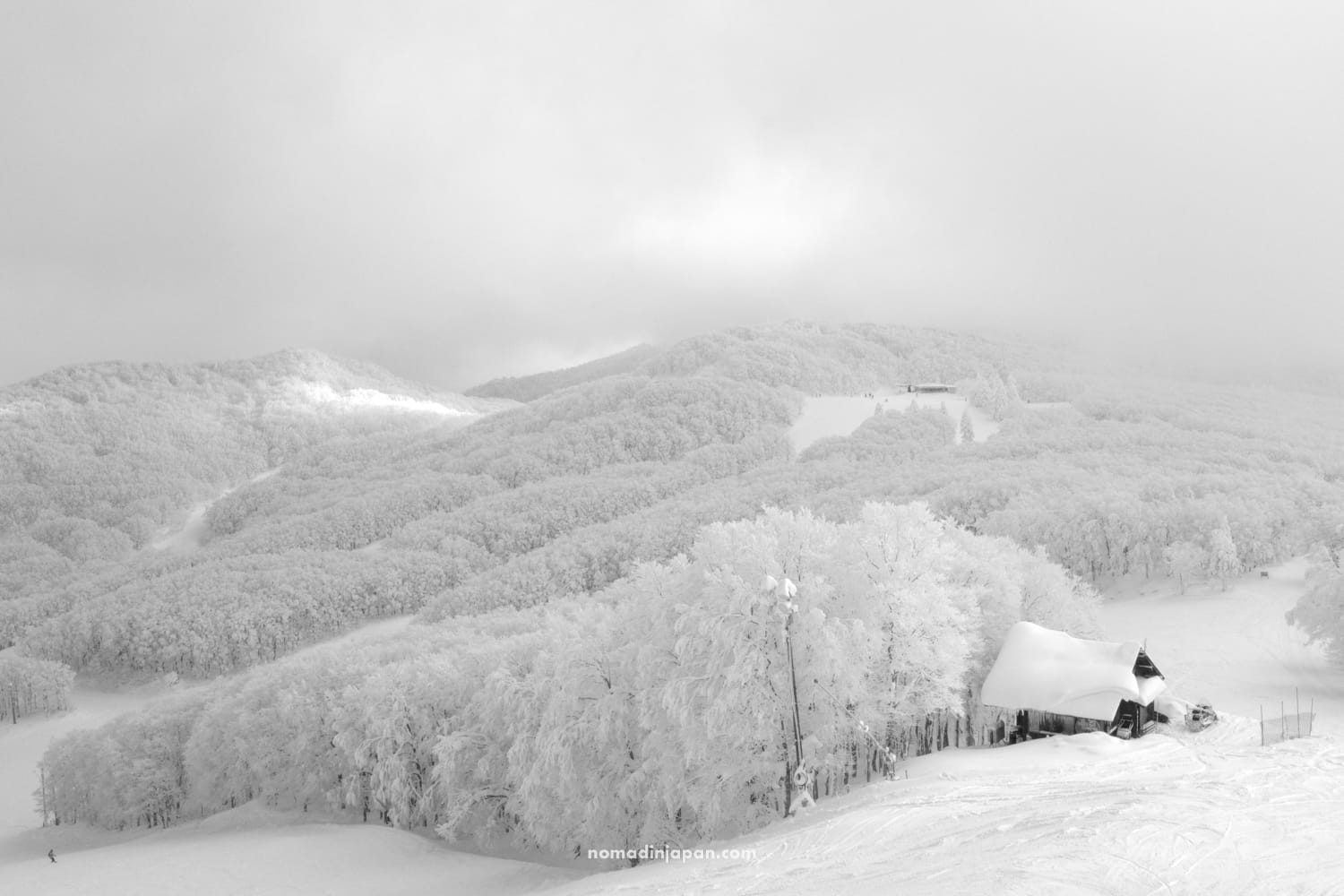
I found Zao Onsen after extensive research, trying to avoid overrun villages like Nozawa Onsen, where I had skied the previous winter. Although Nozawa is fantastic in its own right, I wanted something a bit quieter and lesser-known, yet still within easy reach of Tokyo.
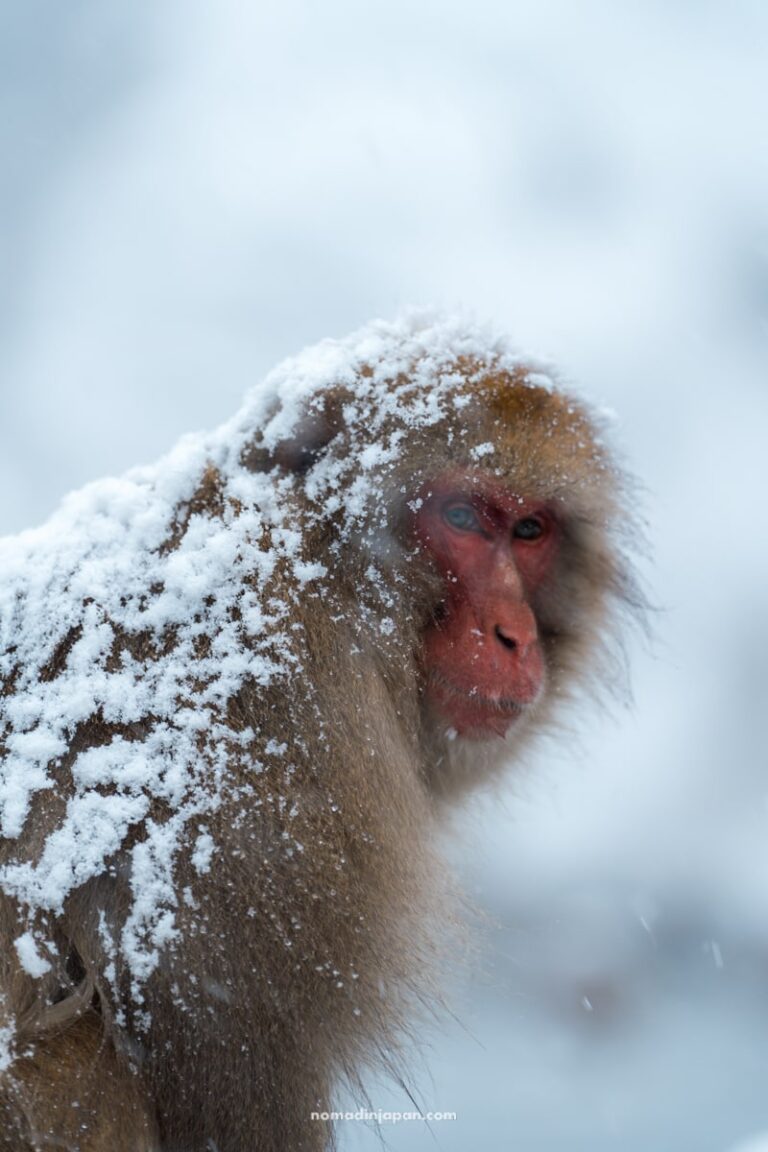
Zao Onsen is mostly known—and is quickly gaining popularity—for its famous ‘snow monsters,’ also known as juhyo. These are frost-covered fir trees, frozen over by a gnarly combo of harsh winds and ice, creating surreal but beautiful monster-like shapes. ❄️
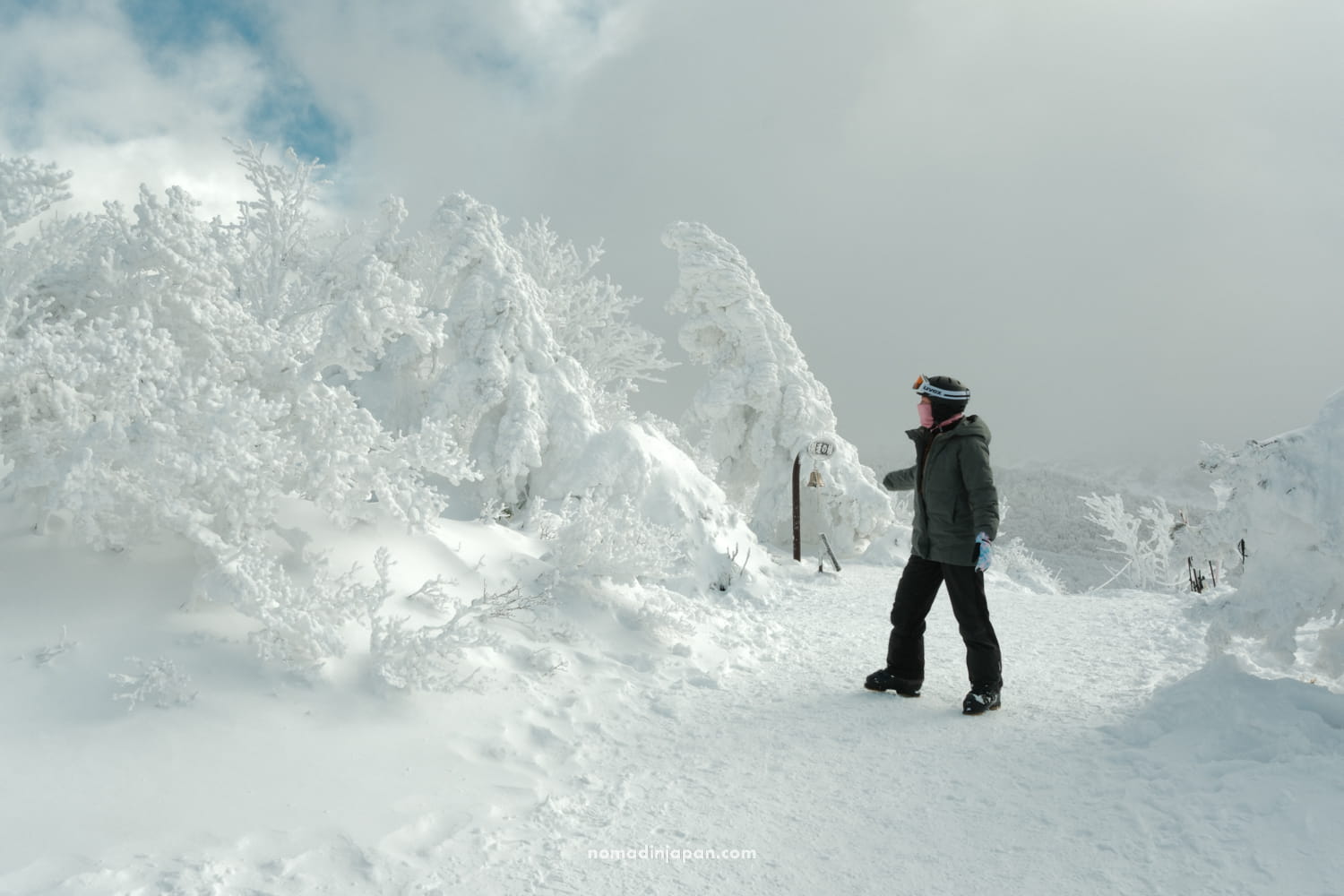
As a skier or snowboarder, you can ski among Zao’s famous snow monsters, while most tourists fly above them in the covered Zao Ropeway. (You can even see them lit up in colorful lights during the Zao Juhyo Festival from December to March!)
All to say, YES, Zao Onsen is good for skiing. In fact, it just might be my most memorable Japan ski trip to date because of its accessibility, unique character, public onsens, and, of course, its incredibly uncrowded slopes and runs that are scenic, great for all ski levels, and just plain fun!
Here’s my guide to skiing at Zao Onsen Mountain and Snow Resort.
Zao Onsen Ski Resort at a Glance
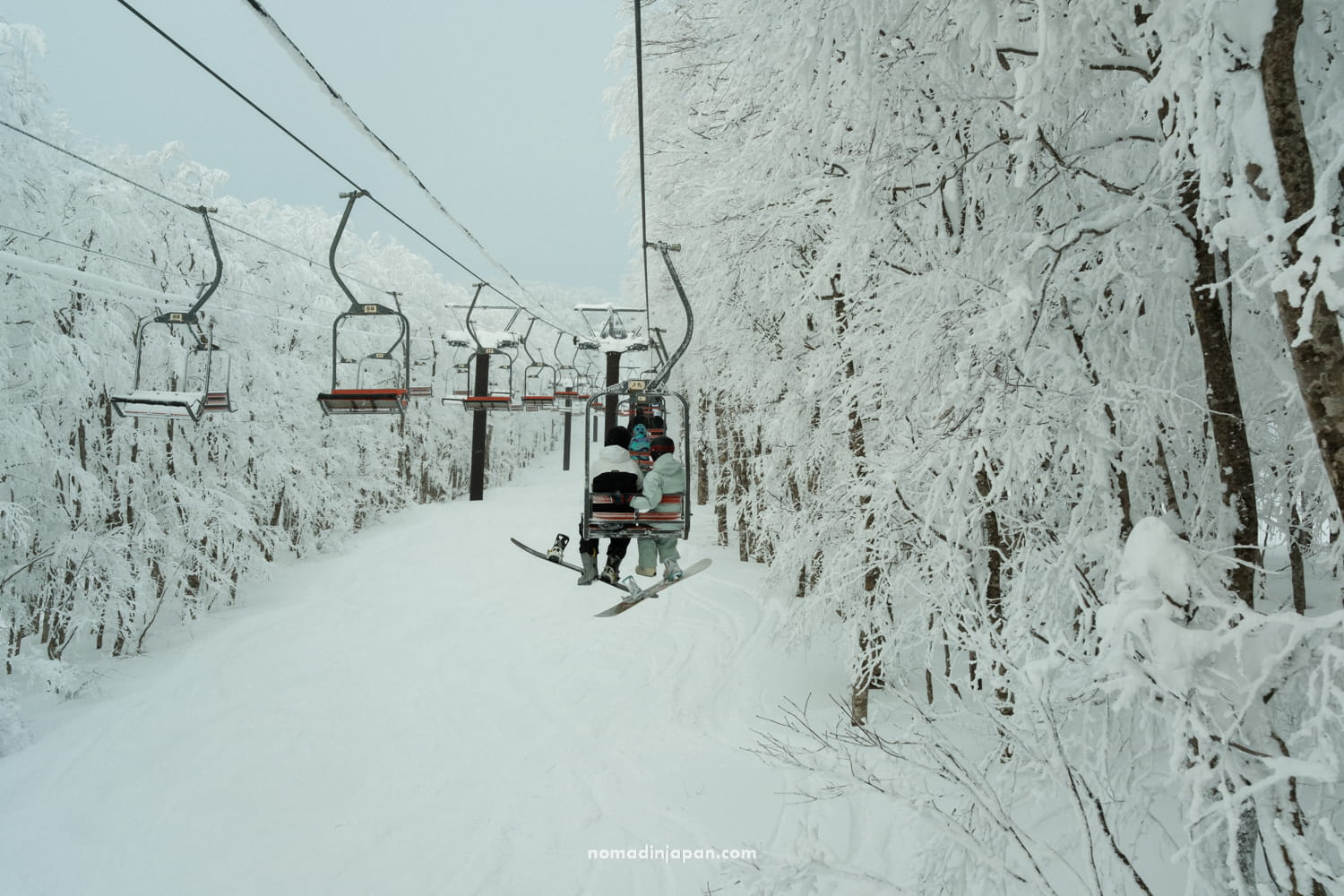


Who is Zao Onsen Ski Resort really for? While incredible, I don’t think it is suitable for everyone.
I’d say it’s perfect for beginner- to intermediate-level skiers who want scenic long runs (with gorgeous mountain views!!), snow monster viewing, and slow travelers who want to combine skiing with traditional Japanese onsen culture. ♨️
Here’s what to expect—at a glance!
- Ski terrain: 14 slopes, 12 courses (up to 10 km long)
- Lifts: Approx. 30 lifts, gondolas & ropeways
- Elevation: Top 1,661 m // Bottom 780 m
- Difficulty: 80% beginner-intermediate, 20% advanced
- Best months: January–February
- Snow conditions: Heavy natural snowfall, FLUFFY, famous for juhyo (snow monsters)
- Getting there: Tokyo to Yamagata by train followed by a direct 40-minute bus from Yamagata Station
- Where to stay: In the onsen village (we stayed at Ringo-ya ryokan; my review)
Understanding the Zao Onsen Ski Resort Trail Map
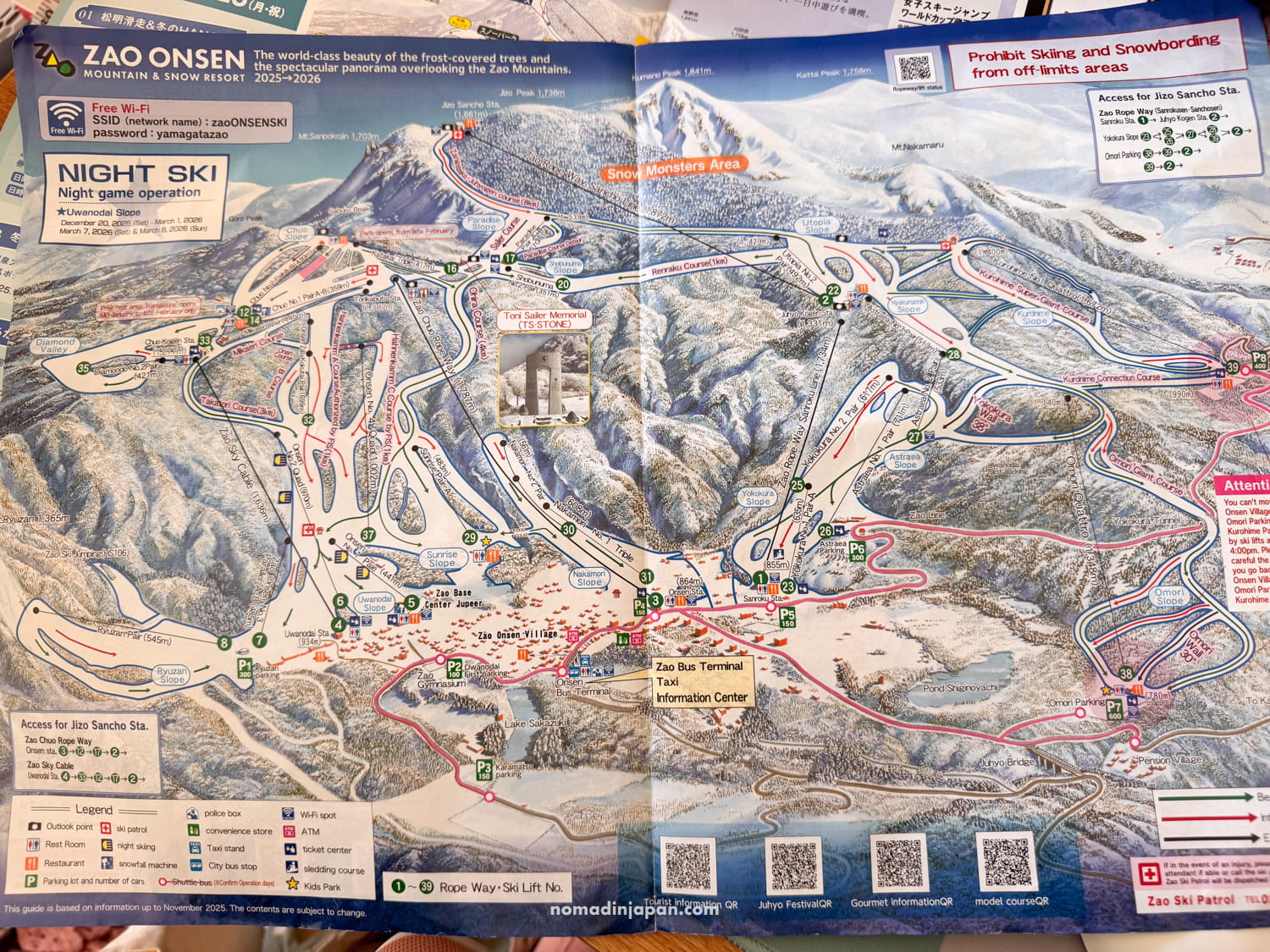
Before you set off to the slopes, walking a mile in your ski boots, take a sec to pore over this map with me. (You can get a free map in the village, or at your hotel.)
Zao Onsen has a couple of quirks that, once you understand, will make navigating the mountain via skiing, ropeway, and sky cable much easier.
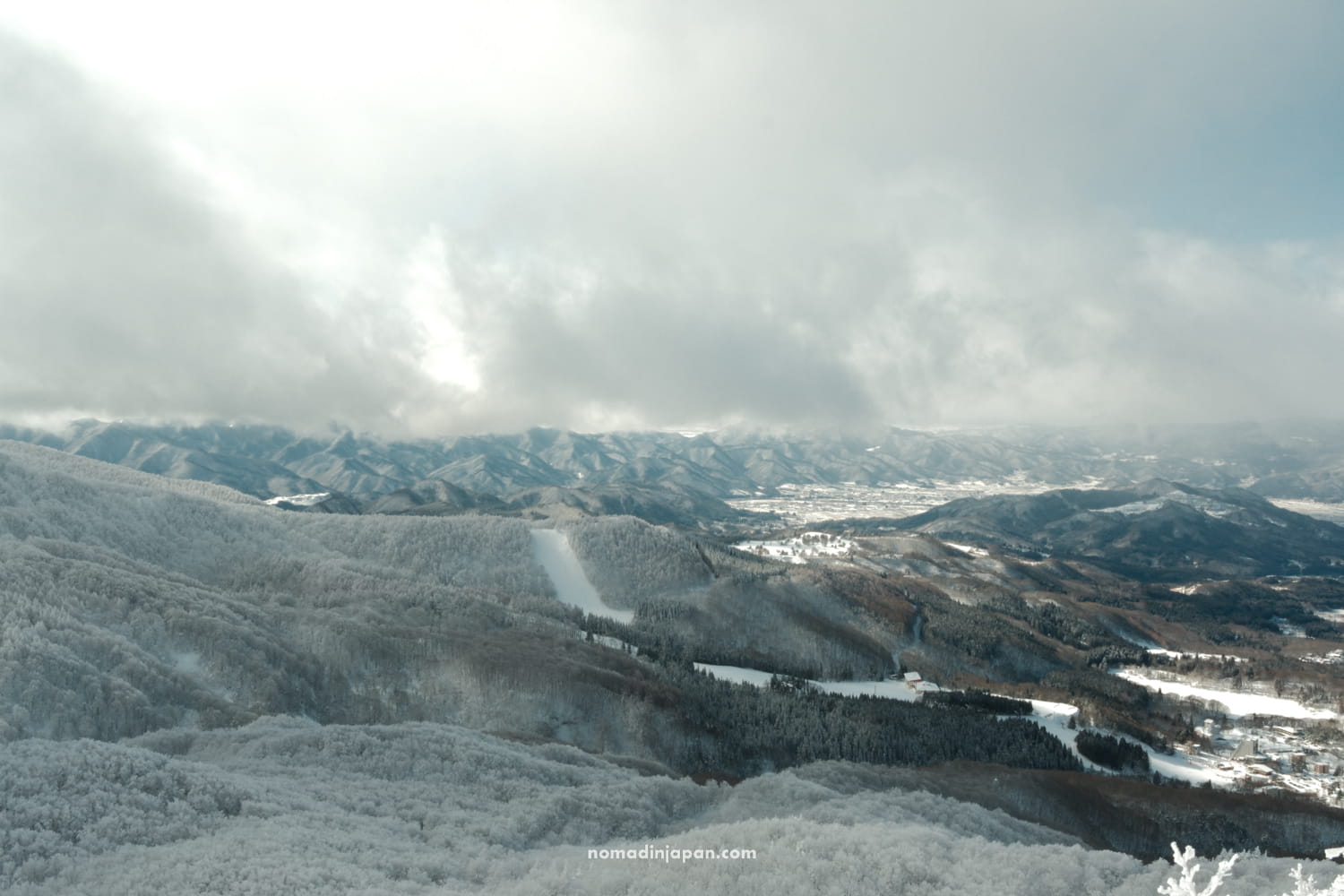
For starters, if you want to get up to the Snow Monsters area first before the gondola tourists arrive, then you can reach it three ways:
- Direct via Zap Ropeway #1 (Sanruoku Line), then take #2 to the top (Sancho Line).
- From Zao Chuo Ropeway (Onsen Station): Take ropeway #3, then lift #12, then lift #17, followed by ropeway #2.
- From Zao Sky Cable (Uwanodai Station): Take cable #4, then lift #33, then lift #12, then lift #17, followed by ropeway #2.
I personally felt Ropeway access #3 (Onsen Sta.) on the map was the most central to the village, where we stayed at Ringo-ya ryokan, so we would make our way there first (a 3-5 minute walk in ski boots), then get some practice runs in between the Chuo Slope and Uwanodai Slope. It’s mostly all green and red (intermediate) runs around here, making it fun and easy to go down and back up again.
Then, when you’re ready to reach the snow monsters, you can follow the suggested routes above.
Best Ski Runs at Zao Onsen
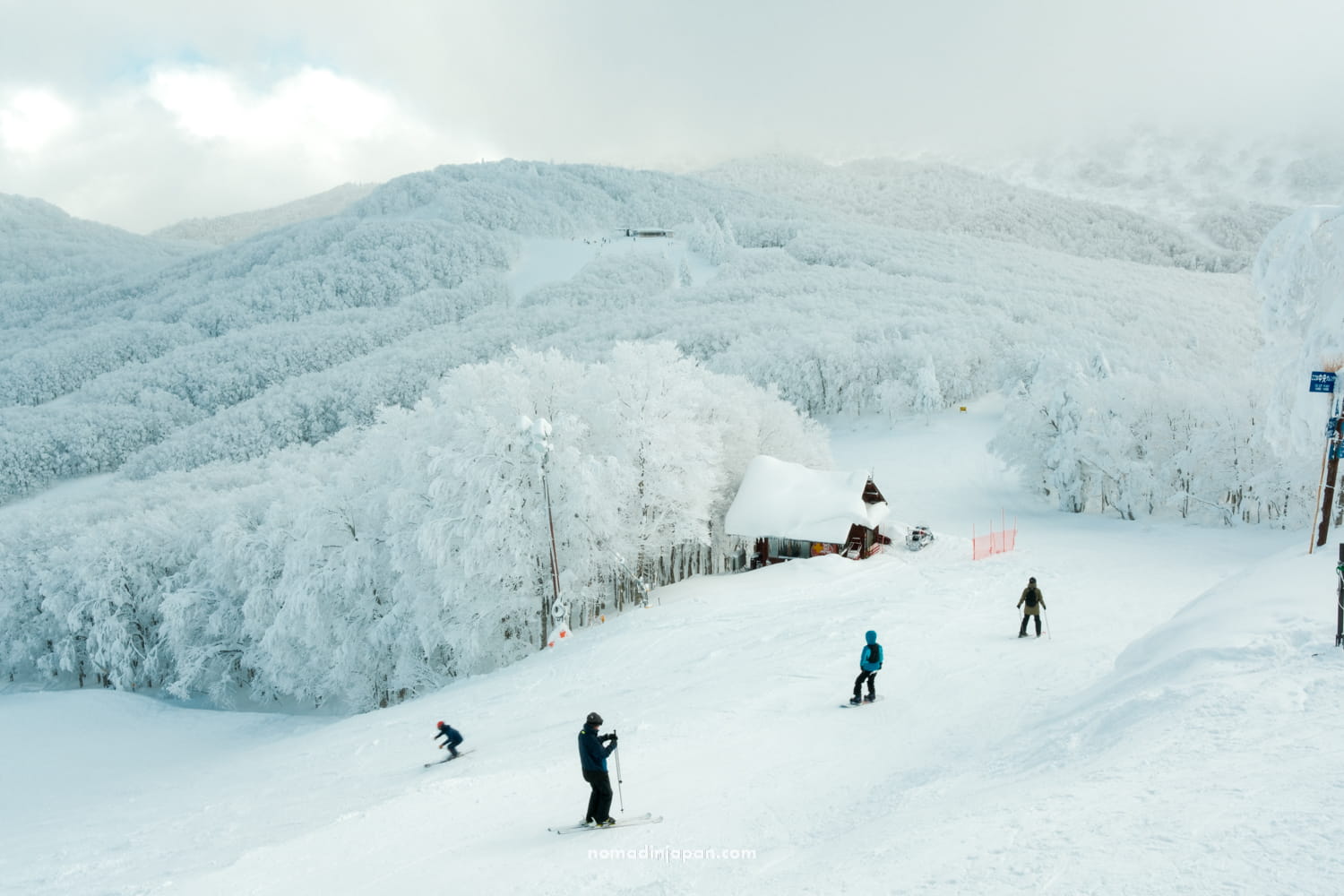
Now that the map makes a bit more sense, I would say my favorite runs at Zao were concentrated on the left side of the mountain. Start at #3 ropeway for a quicker ascent, or take the Sky Cable #4 up to ride down the Takatori Course (green into red).
The longest run at Zao Onsen Ski Resort is about 10 km, starting at the top at Jizo Sancho Sta. and following the Juhyogen course (8 km) down the “right side” of the map/mountain following the Jizo Sancho–Yokokura descent. You can also branch off further down to the Omori Parking (P7, #38 lift) via the Omori Slope, but it’s a bit farther from the village, so pay attention to late-afternoon closure times.
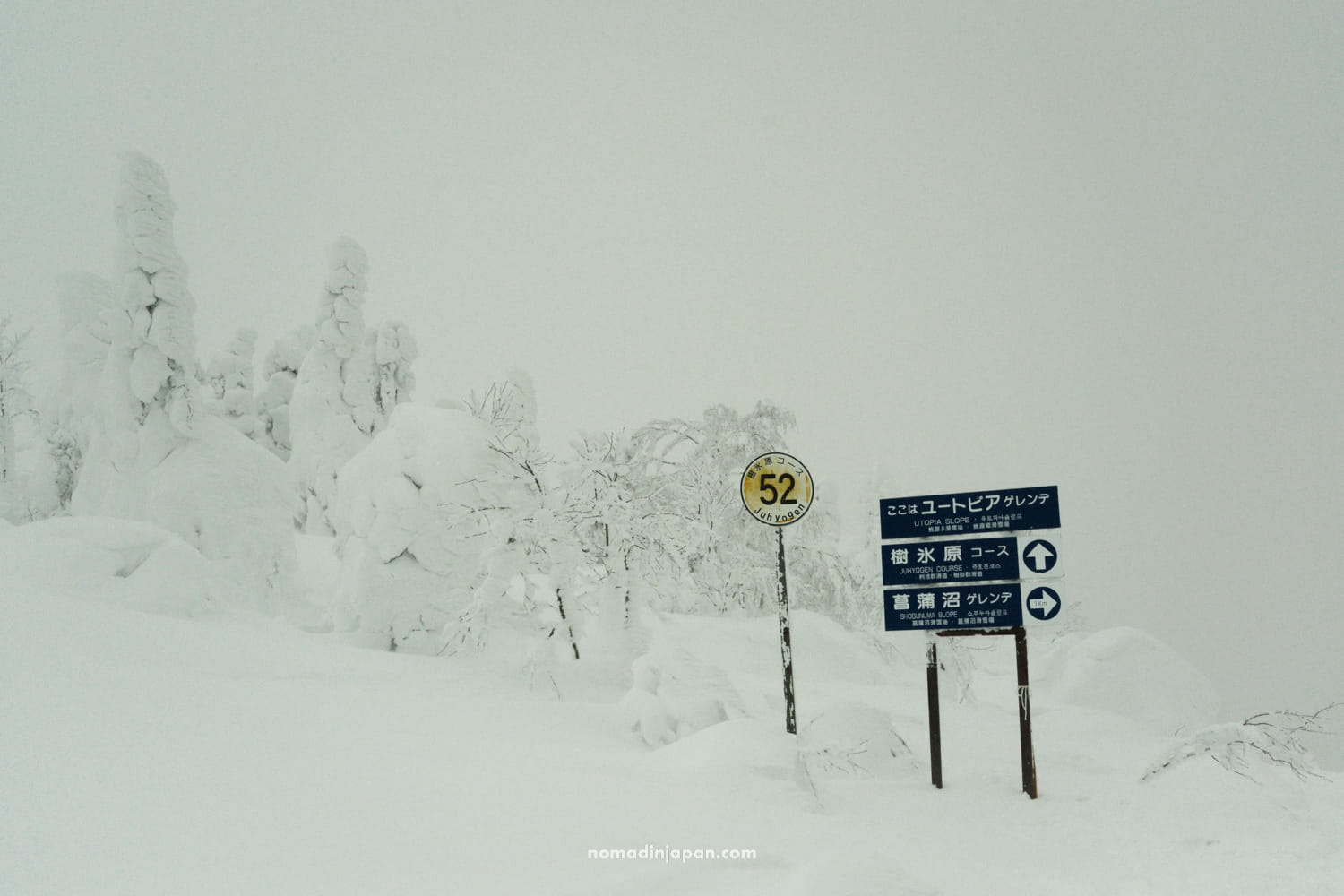
While the snow monster area is popular and cool to see because of the trees, the Juhyogen course actually wasn’t my favorite because of poor visibility, freezing temps, and a slower/longer slope that requires a bit of pushing.
That whole stretch, however, is pretty scenic if you can get a clear day!
To get unhampered mountain views and fewer crowds, take the Utopia down into the Hyakumannin Slope, all the way down the Omori Giant Course. It’s just such a long, fun ride with wide, spacious runs.
You can also go night skiing on certain slopes, which is pretty unique!
Notes on Skiing Through Zao’s Famous Snow Monsters
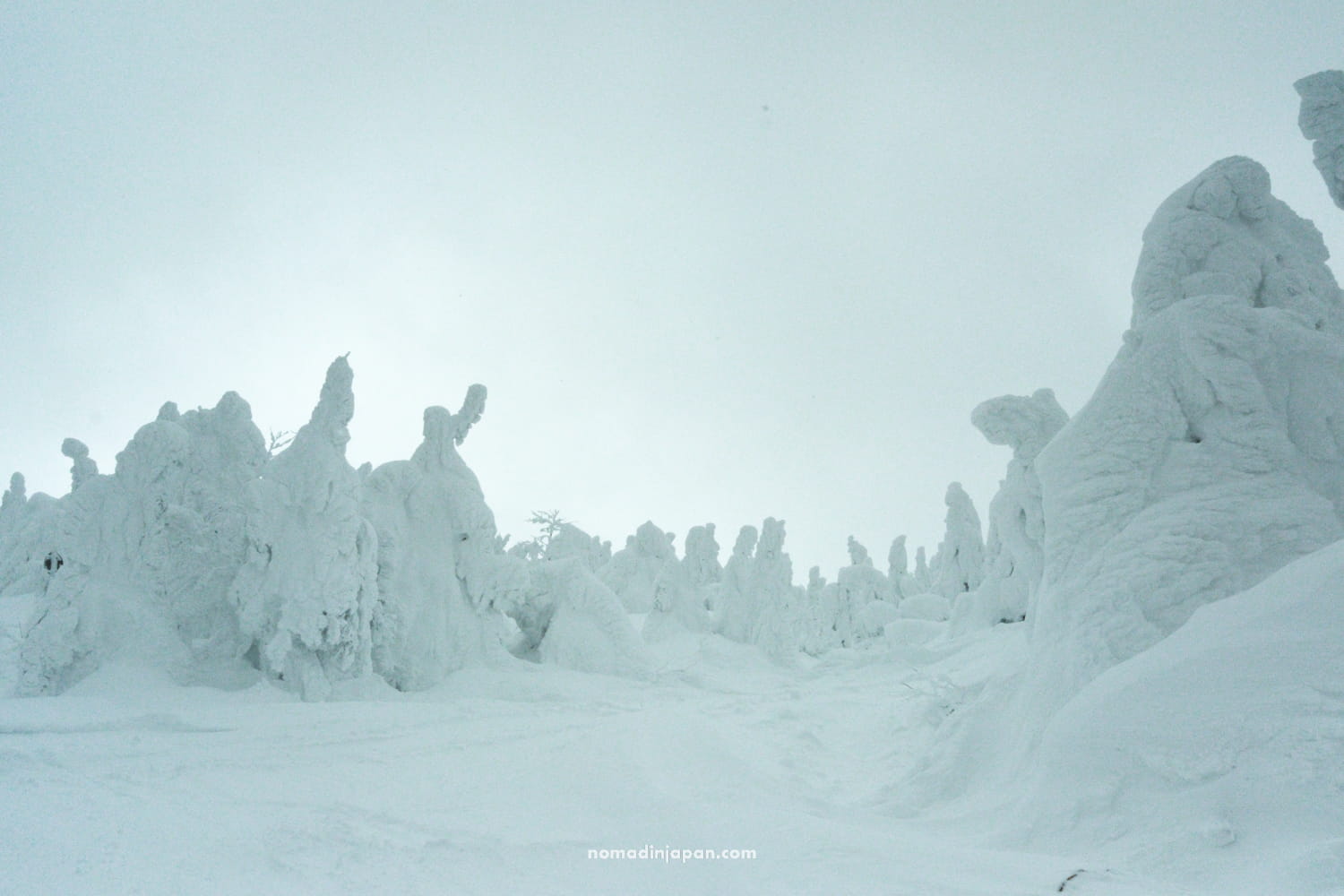
Once you reach the top of Jizo Sancho Station, you can warm up in the cafe, grab a bite, and take a peek outside.
It’s most likely going to be windy as heck, icy, and unpleasant to stay out there too long. But if you’re lucky and it’s nice out, this is the perfect place to snap some photos before taking the run down the Juhyogen course.
Be careful: The Juhyogen course eventually turns green, so many beginners attempt it; however, it starts red (intermediate) and is pretty narrow in some curves, and is not easy to turn or slow down. I’m a decent intermediate skier, and the Juhyogen course definitely challenged me at the beginning because it does have some tricky turns. Low visibility makes this potentially dangerous, so don’t try to ski down if it’s a blizzard out!
Zao Onsen Lift Passes & Prices
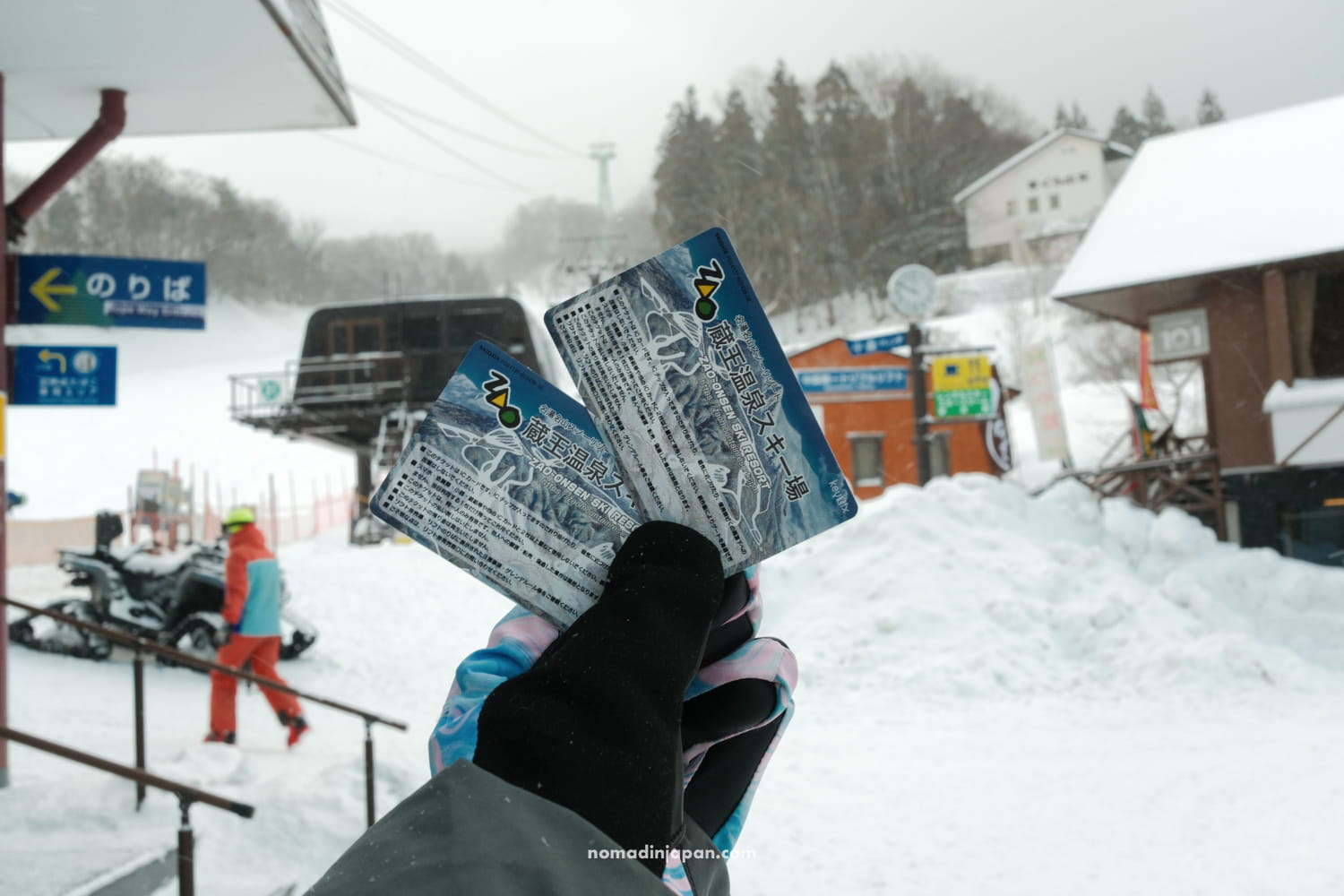
Zao’s lift passes and prices can change each season, but last I checked:
- Adult 2-day tickets cost ¥15,900–¥17,900 (about $100);
- 3-day tickets cost ¥23,800–¥26,800 (during regular and peak seasons).
There are other options, such as a 4-hour lift pass and a 1-day pass.
I will go ahead and say that you should definitely take a multi-day pass because Zao Onsen has plenty of runs and the way it’s spread out makes it time-consuming to ski between the sky cable stations.
In short, most people want to extend their stay and ski time once they discover how awesome the skiing in Zao really is!
You can see more pricing and book your lift tickets online, or just head to one of the village stations to pick up your pass at the window.
More Tips for Planning a Zao Onsen Ski Trip

Where to Stay for Skiing in Zao Onsen
In general, there are two types of ski accommodation in Japan: ski-in, ski-out hotels, and then smaller inns tucked into the adjacent onsen village.
Based on our experience, here’s where I recommend you stay for a ski trip.

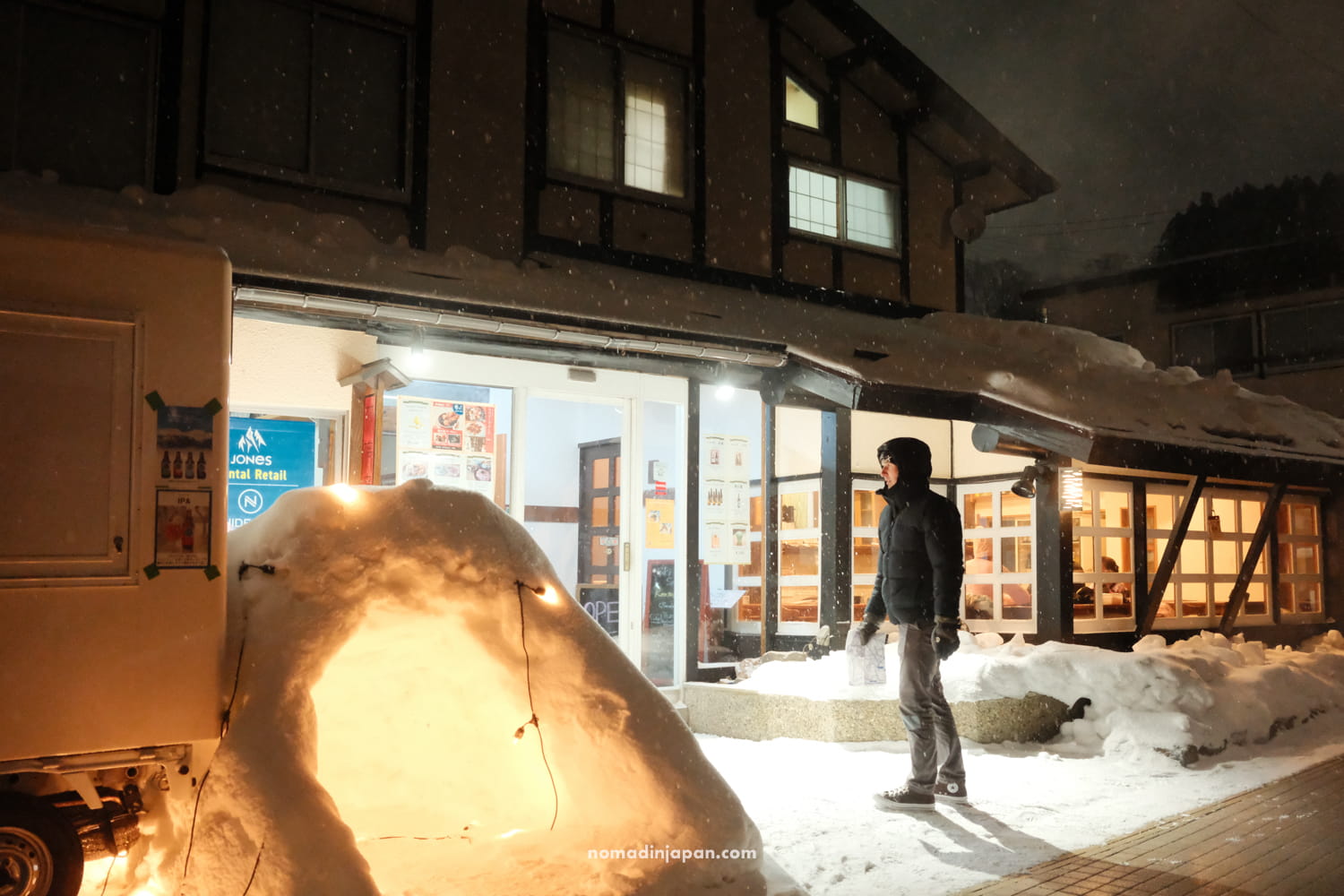
Stay in the heart of the village
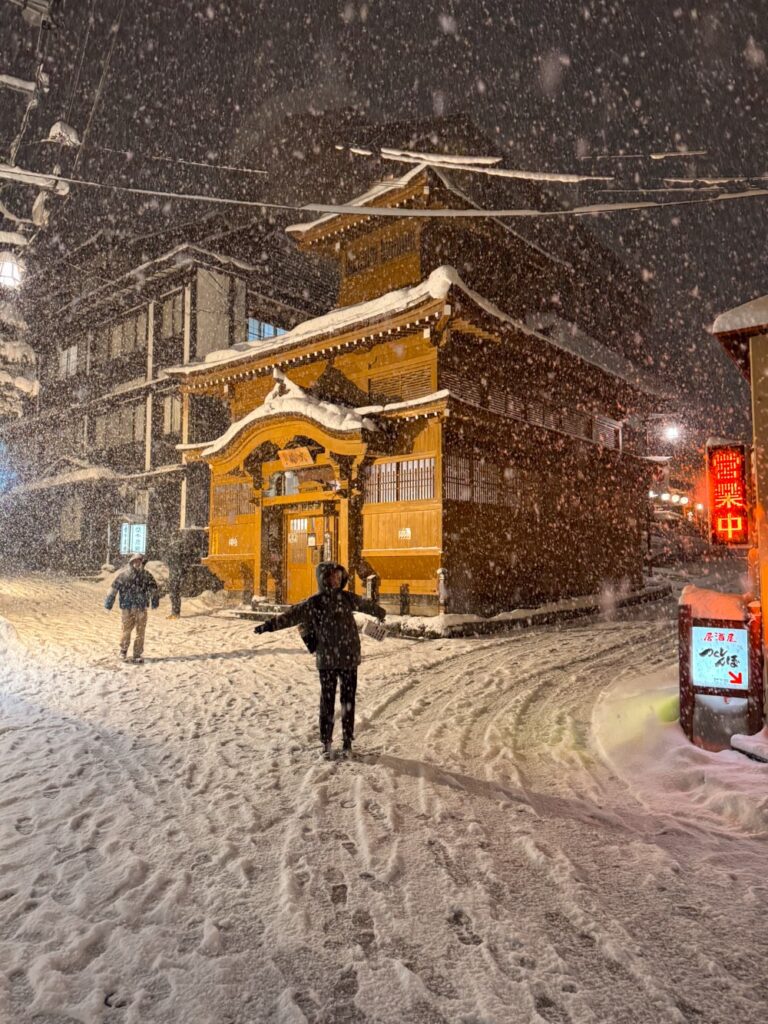
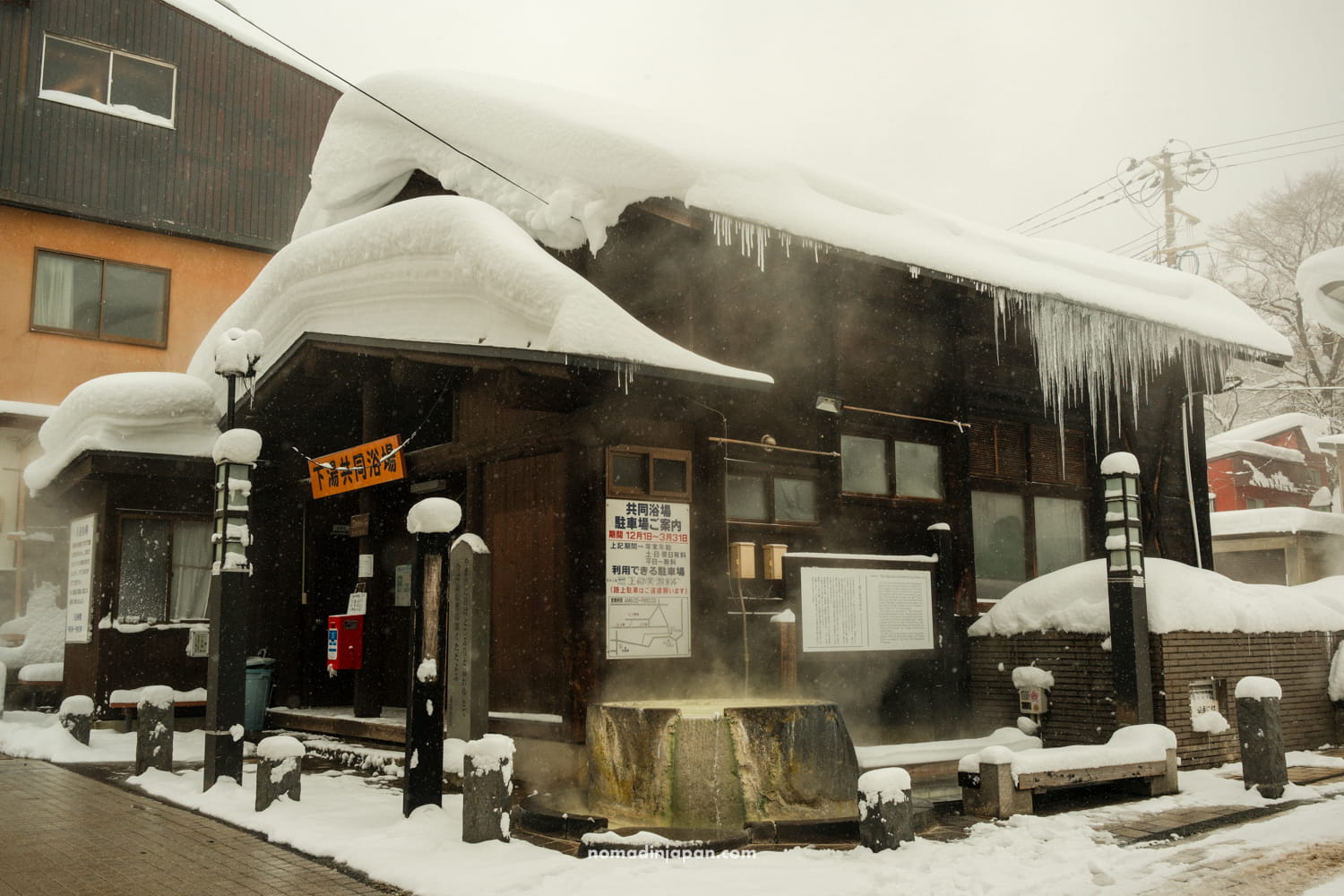
Considering Zao Onsen’s incredible bathhouse culture, which dates back centuries, I would definitely say that staying in the village is a big part of what makes Zao so special.
After the slopes, you can shed your ski gear and slip into the soothing hot waters at one of the public onsen baths. PS. There is a small fee of maybe 100 yen, but if you’re lodging in the town, you’ll likely be given onsen vouchers to use them for free.
There is truly nothing better than this feeling!!!


Our accommodation: Ringo-ya Ryokan
Our ryokan was perfectly located across from the oldest onsen in the village, and just a 2-minute walk’s away from the most temperate (43C) and atmospheric (the one up by the torii gate). ♨️
What I also loved about Ringo-ya ryokan was the convenience of bathing in an onsen at our place, if we didn’t want to go out, and the ability to also rent our ski gear on-site. We could also order dinner or breakfast, or try their Yamagata sake right on property. I highly recommend staying here if you can snag a Japanese tatami room and don’t mind a rustic, charming Showa-era inn.
Most ryokan and inns in Zao Onsen Village are scattered throughout the area, while others are perched on the hill near the Uwanodai Slope and Sky Cable lift #4.
Other than Ringo-ya, I’d recommend this ryokan in town:
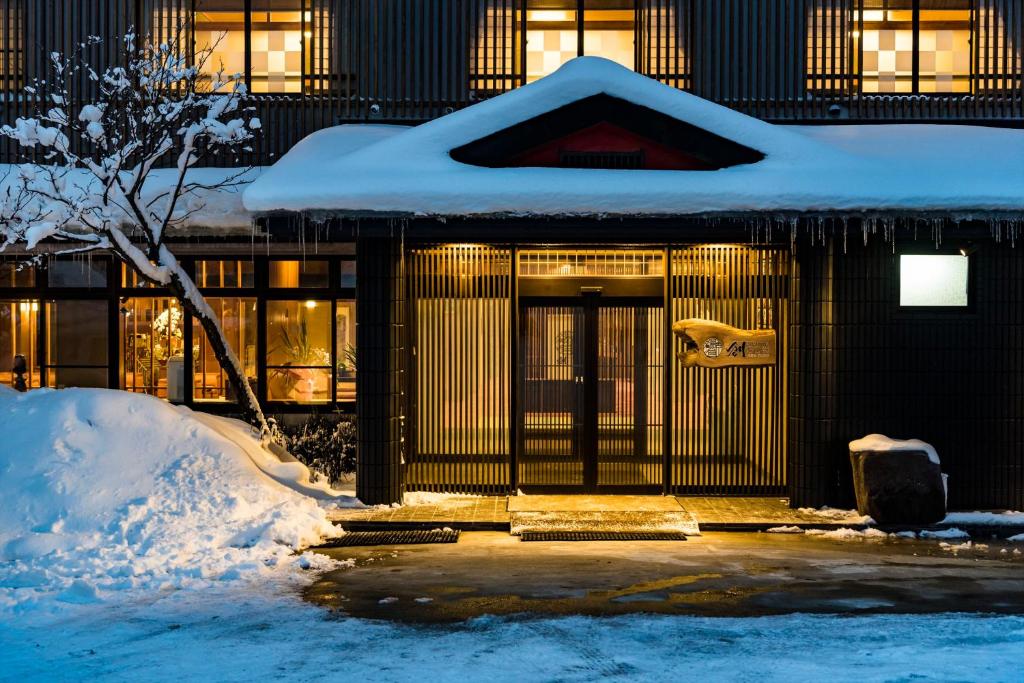
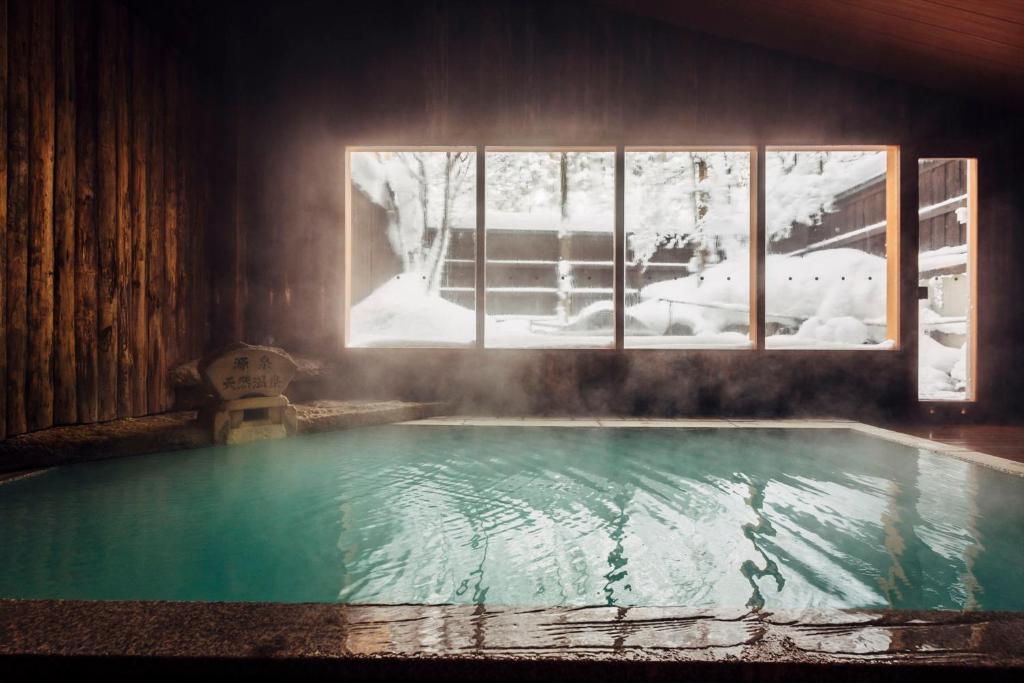
Meitoya So Ryokan
🌟 8.4/10 ~ 549+ reviews
For families or couples seeking an extra touch of luxury, with a gorgeous on-site onsen hot spring, Meitoya is the best mix of the authentic and the modern, located in the heart of the village.
Where to Rent Ski Equipment in Zao Onsen
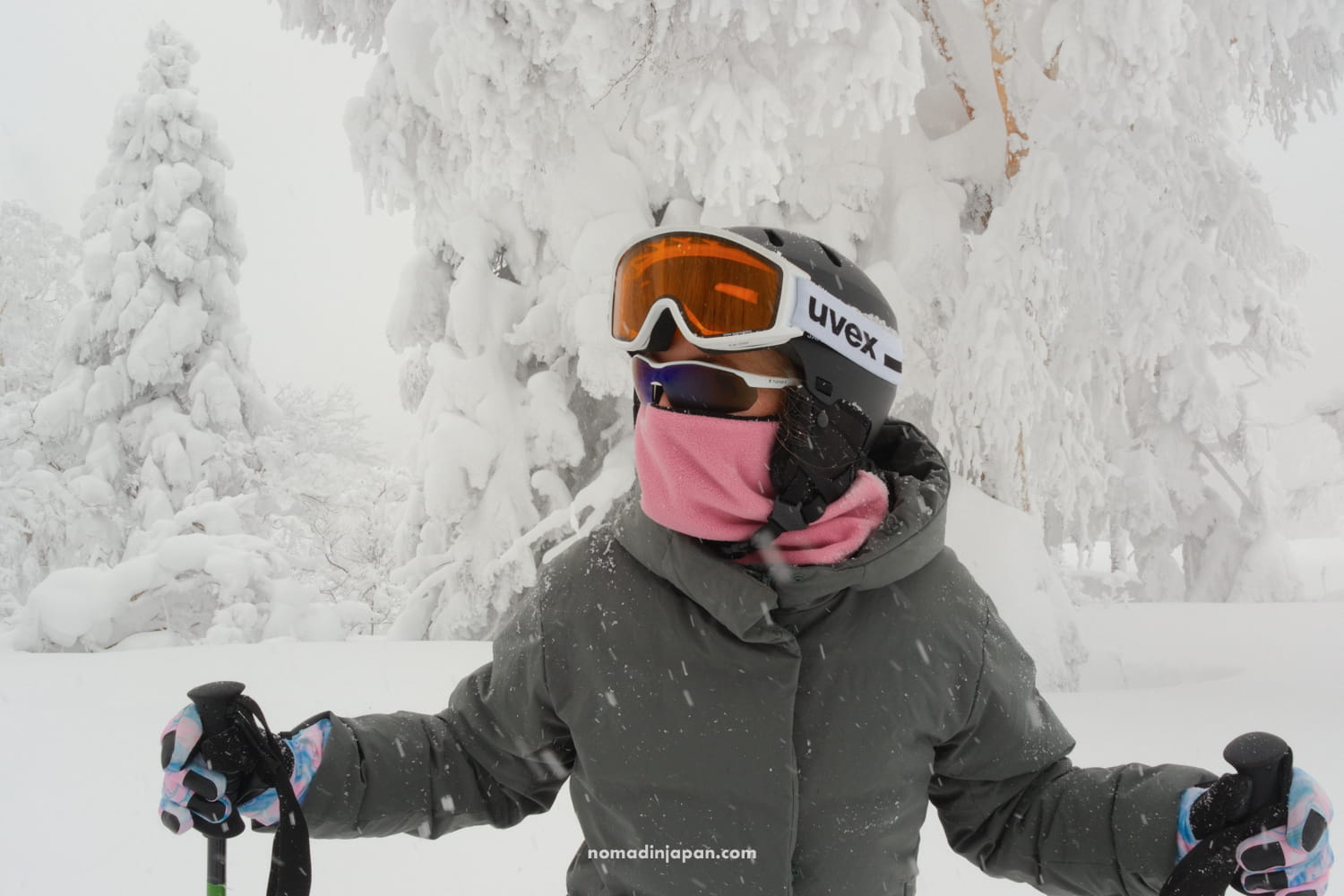
As I mentioned above, we rented our ski gear directly from the owner of the Ringo-ya ryokan where we stayed. He fitted us with standard ski gear that was pretty nice.
However, just note that this is a small shop, and a smaller village than large ski resorts, so the ski rental prices were a bit elevated—more than what we expected, actually! Looking at our receipt, we paid a total of 47,000 JPY for a 2-day rental for two, including:
- Standard ski set (skis, poles) x2
- Boots x2
- Goggles x2
That’s about $300 USD, or about $75 per person, per day.

We could’ve brought costs down if we had our own goggles, gloves, etc. So consider bringing your own and renting only what you need day-of.
In Zao, there are about 10 total ski rental shops. We couldn’t verify their prices, but these are the places we saw around town that looked nice:
- Shiba Ski: A well-rated locally run rental shop near the Zao Chuo Ropeway. Has skis, snowboards, and winter clothing.
- Trunkbase: Located in the village (not far from our hotel), with English-speaking staff and equipment rentals, including warm gear from popular outdoor brands.
- Zao Base Center JUPEER: A convenient rental option near the Uwanodai slopes and Zao Sky Cable.
Where to Eat on the Mountain
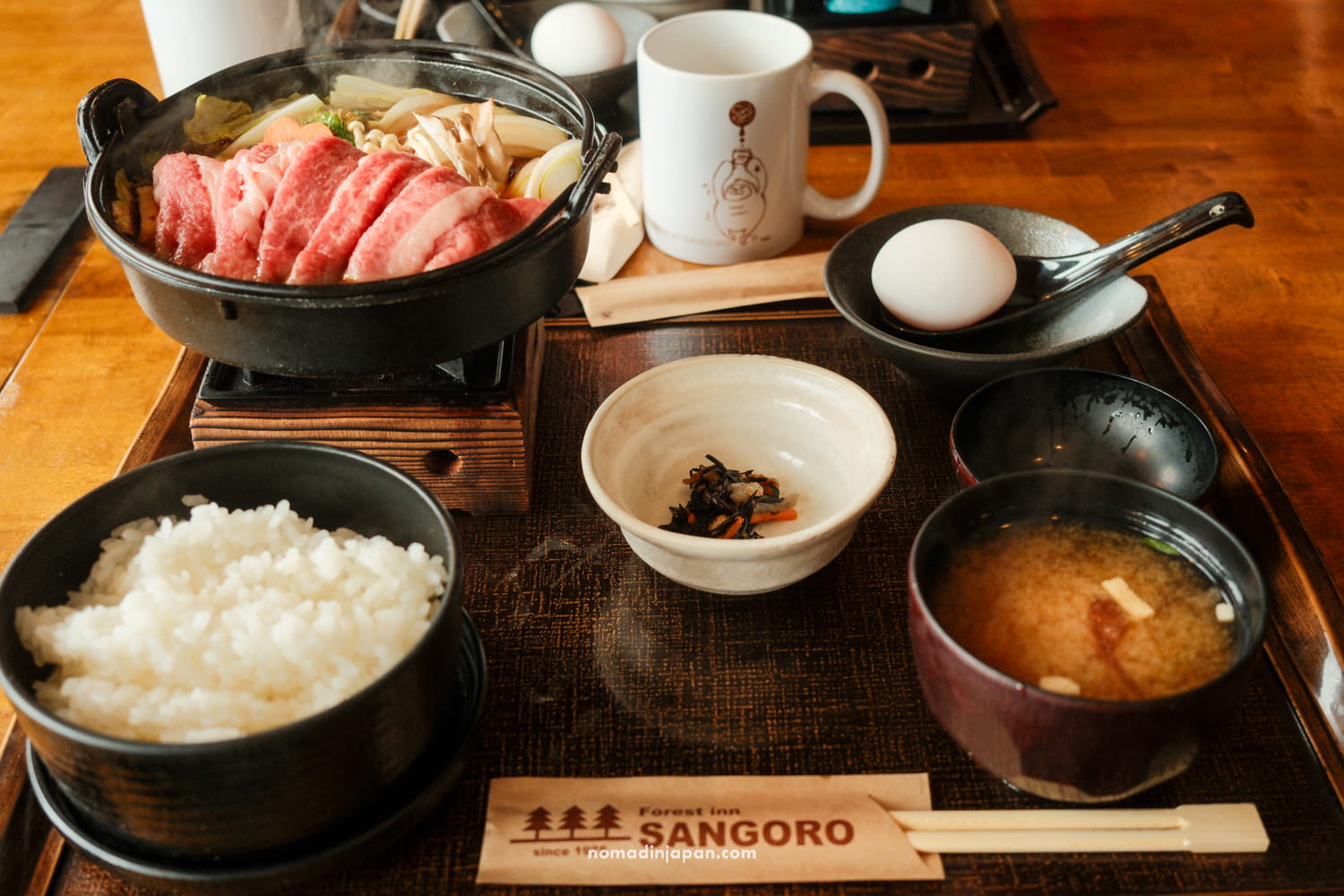
There weren’t many food or lunch spots on the mountain, but Forest Inn Sangoro (accessible via lift #12 on the Chuo Slope) was perfectly cozy and very European, chalet-style, with roaring fires and wood-burning stoves. Their menu includes katsu curry, pasta, and beef sukiyaki (which was my order!).
On our second day of skiing, we explored the right side of the resort at the bottom of the Kurohime course and ate katsu curry in a large-windowed lodge (Restaurant Kurohime) by lift #39.
Off the slope, our go-to was to grab a yummy breakfast at Have a Good Slice (pizza by night), or a delicious smash burger at Lodge Scole for dinner with ski friends. There are also a couple of udon/soba establishments, but not too many choices overall.
How to Get to Zao Onsen Ski Resort
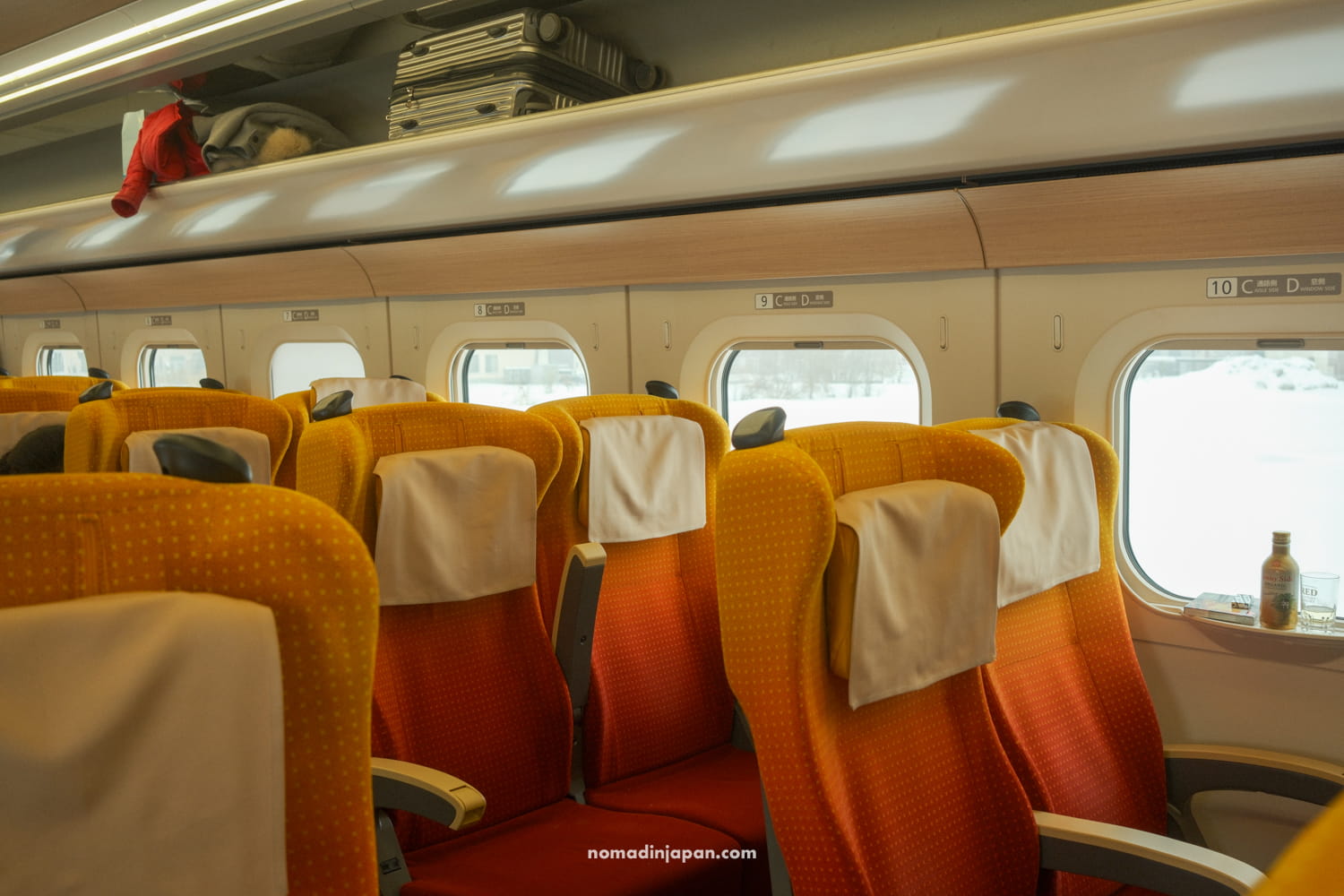
Real quick—the last reason to ski in Zao Onsen is its accessibility from Tokyo.
I actually couldn’t believe how uncrowded it was, despite being only one train ride and a direct bus ride from the station away from Japan’s most populous city.
- Grab a Shinkansen ticket from Tokyo to Yamagata (2h15m)
- Once there, buy your bus ticket direct to Zao Onsen (line up early if you can)
That’s it!
Final Score: Is Zao Onsen Ski Resort Worth Visiting?
One final note before you go. Surprisingly, many tourists visit Zao Onsen just to see the snow monster trees. That means the main Zao Ropeway line up to Jizo Sancho Station can have a huge line with non-skiers and non-snowboarders.
I think you’d be missing out on what makes Zao’s mountains special if you just fly above them on the gondola. Exploring it on your own skis or snowboard offers you a completely different, uncrowded experience.
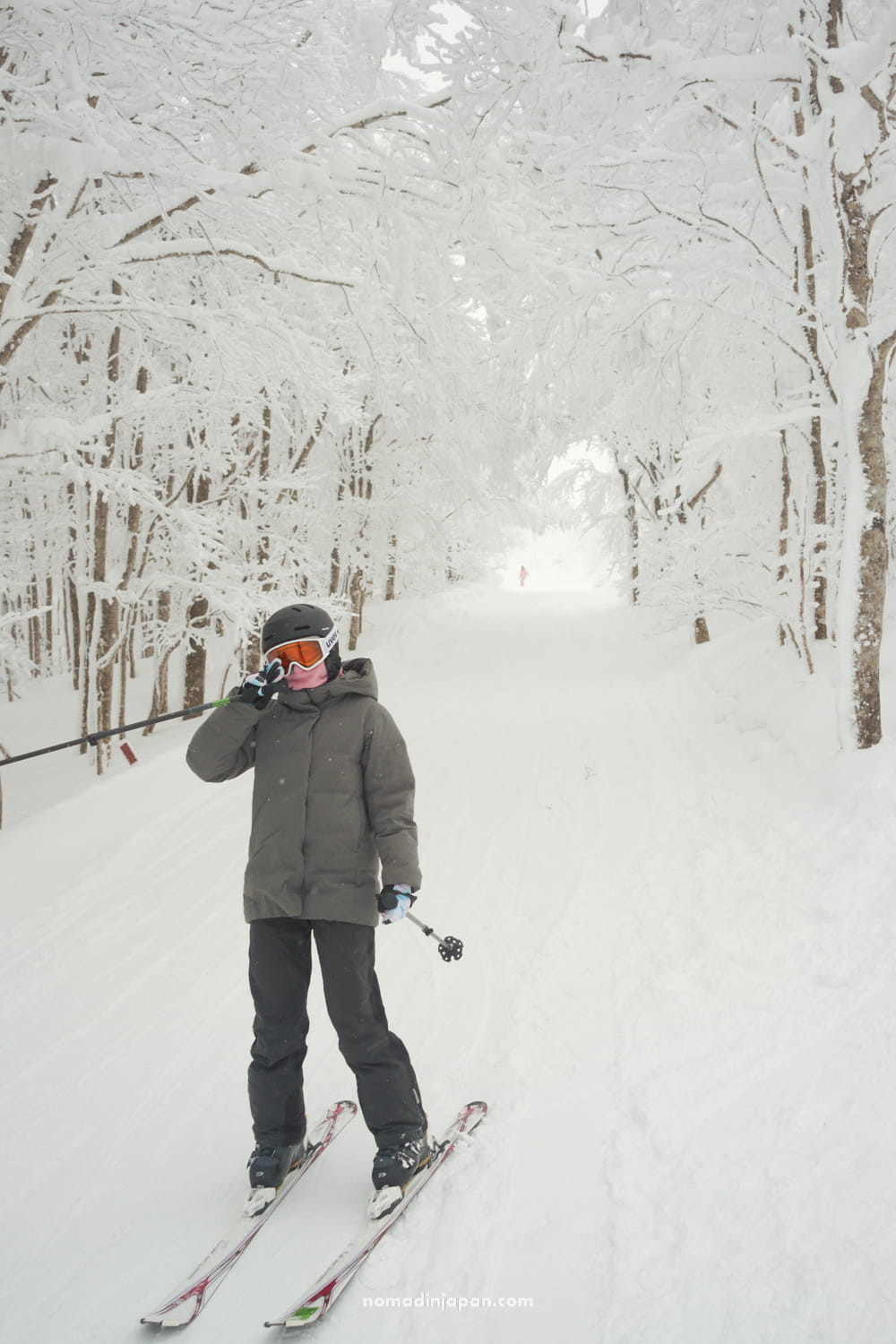
Between the historic onsen bathhouses (which I had mostly to myself at night), the small but authentic izakayas, the uncrowded slopes, the mountain views, and more, I 100% think skiing in Zao Onsen is worth it!! ♥️
That said, Zao Onsen’s ski resort will hopefully preserve its small village feel, even as it becomes more popular. I truly hope so, because this is a hidden gem, and one of my favorite places to ski in Japan!
If you have any questions about planning your Zao Onsen ski trip, feel free to ask in the comment section below, and I’ll get back to you!