Remembering Nagasaki: Inside the Atomic Bomb Museum & Peace Park
I steeled myself as I stepped inside Nagasaki’s Atomic Bomb Museum. The pouring rain outside made my choice to come here on this particular day somehow more meaningful. As if it knew I needed to not rush through this. Traveling alone, I had the time and flexibility to take this in and process it.
If you found your way to this post, you, like me, are in Nagasaki (or planning a trip), and, of course, the Atomic Bomb Museum feels like a must-visit.
But what is the visit like? What should you expect? How can you plan a meaningful tour here into your itinerary?
I think a lot of people coming to Nagasaki have a vague idea of the Atomic Bomb destruction, and might feel nervous to visit. It can be sensitive to some viewers, understandably.
But it’s really something else to see and learn about it in person. I’ve been to both Hiroshima’s and now Nagasaki’s museums, and although they share a history, they have their own stories of destruction and resilience on opposite scales. And both times, I’ve left feeling, if anything, hopeful and inspired.
I encourage you to visit, and to take your time. Here is my short practical guide in hopes of answering some of your questions about the museum and memorial sites.
What to Expect Inside the Nagasaki Atomic Bomb Museum & Peace Park
- Admission: ¥200 adult (get tickets in person)
- Time needed: 1-2 hours (3-4 for Peace Park and Hypocenter Park)
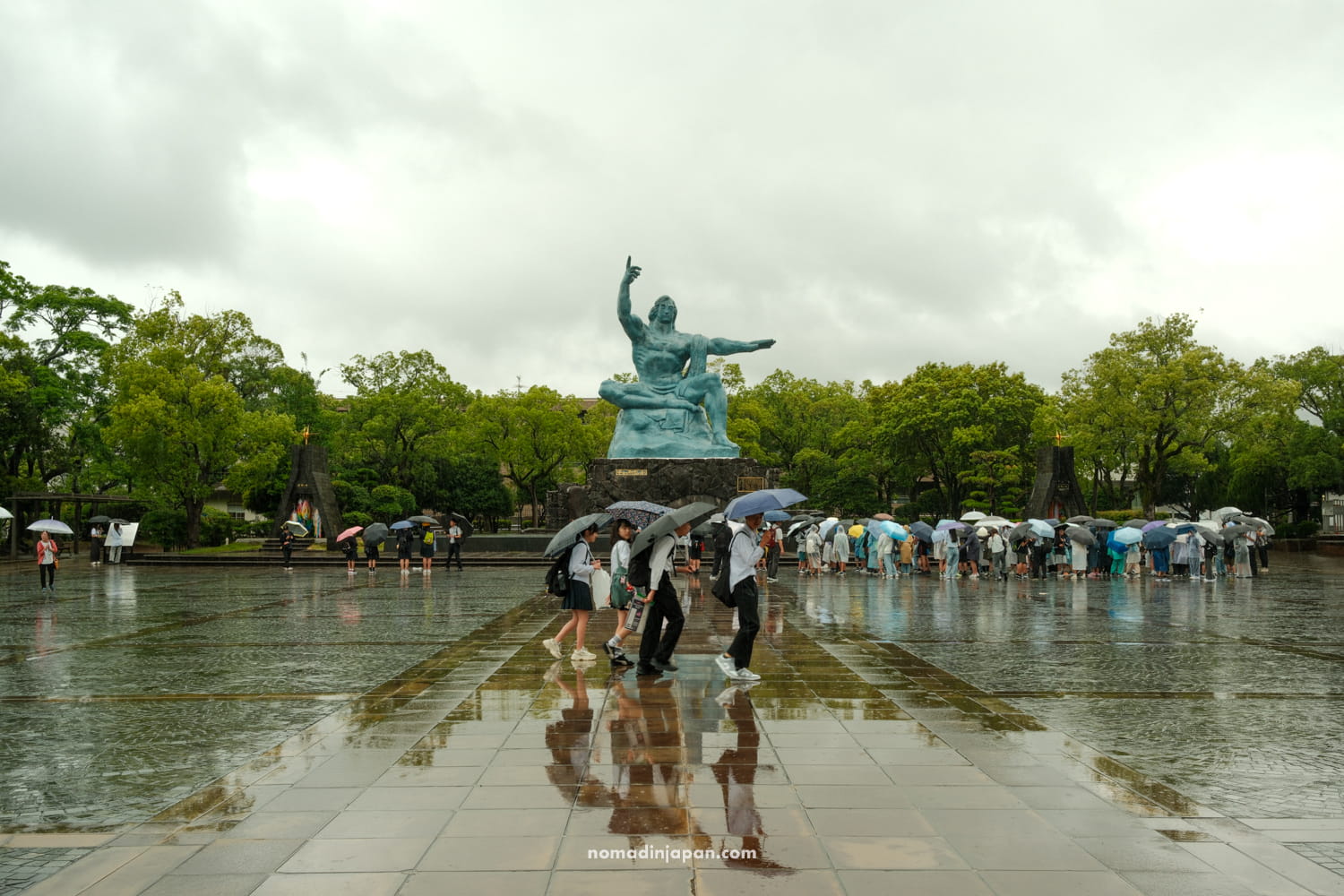
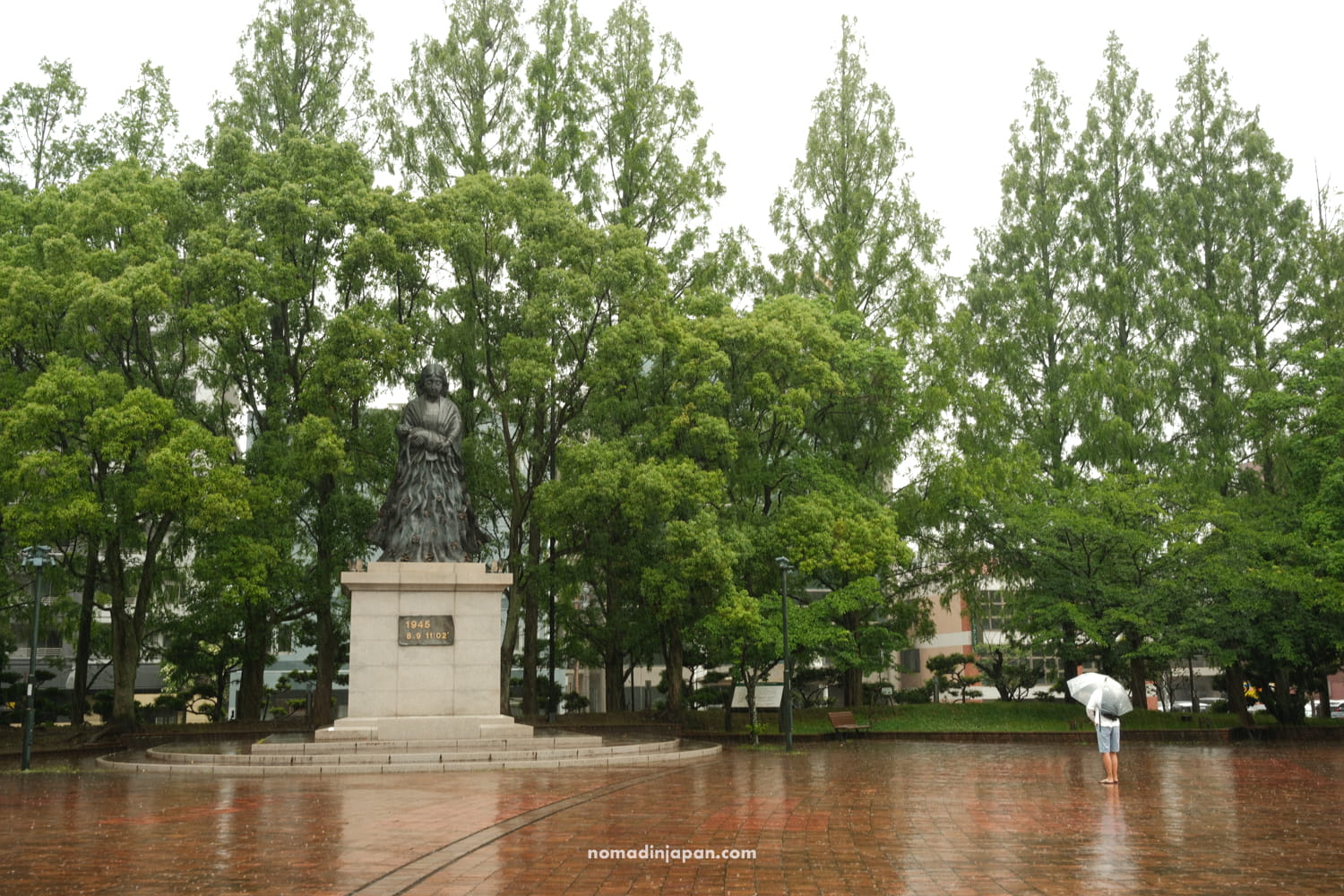
To make the most of your visit, I recommend visiting the Atomic Bomb Museum first, then Hypocenter Park, and ending with the Peace Park. 🕊️
A slow-paced walk-through of the museum will take roughly 1.5 hours, possibly more if you stop to read every plaque. That said, plan for at least a half-day tour if you want to move through the museum and visit the outdoor memorial parks.
The Events of August 9, 1945
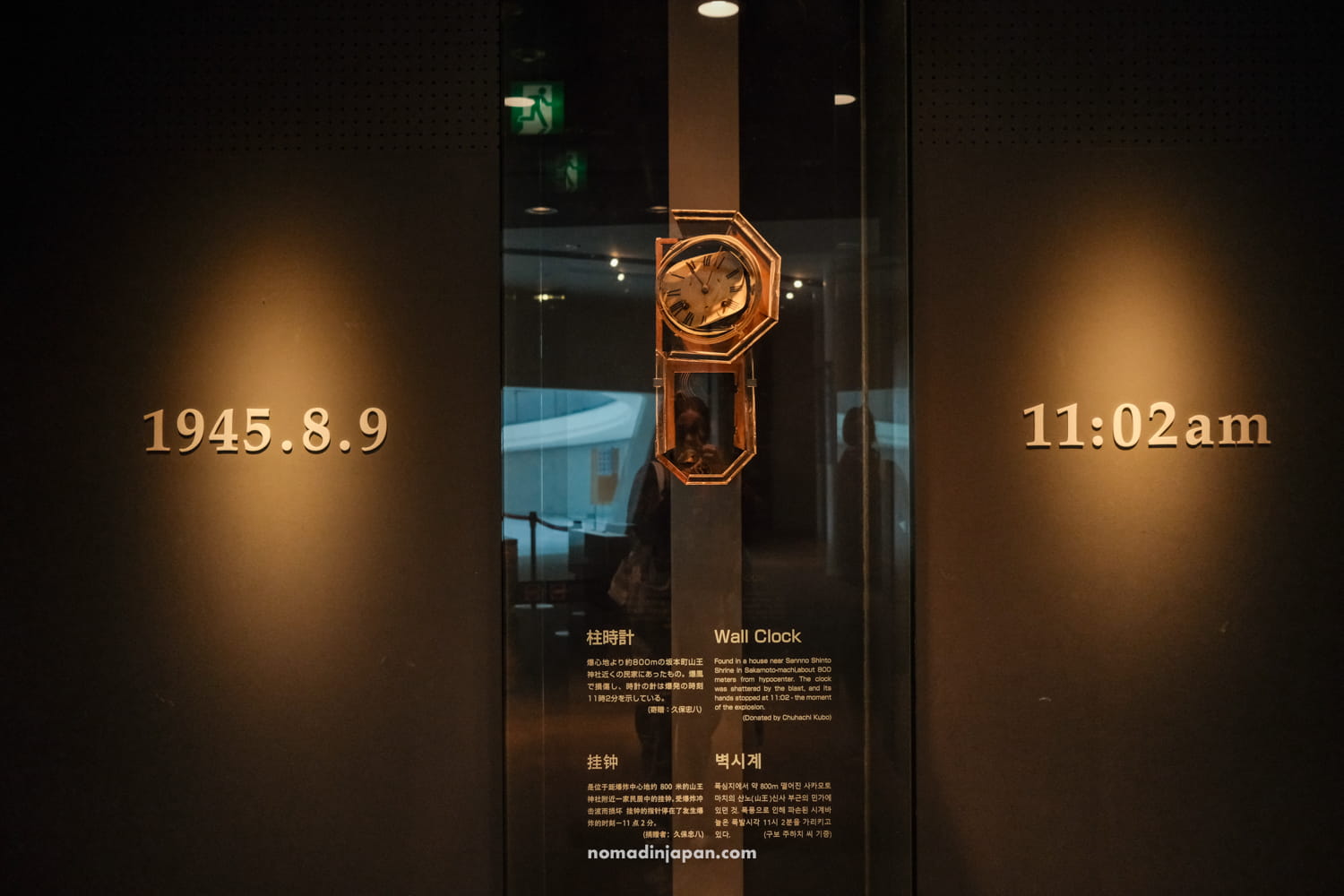
Nagasaki’s Atomic Bomb Museum takes you down underground, back in time, to 1945. The entrance of the museum starts with time: precisely, 11:02 AM, the morning of August 9th, when the United States dropped “Fat Man,” a 10,000-pound plutonium nuclear bomb over the city.
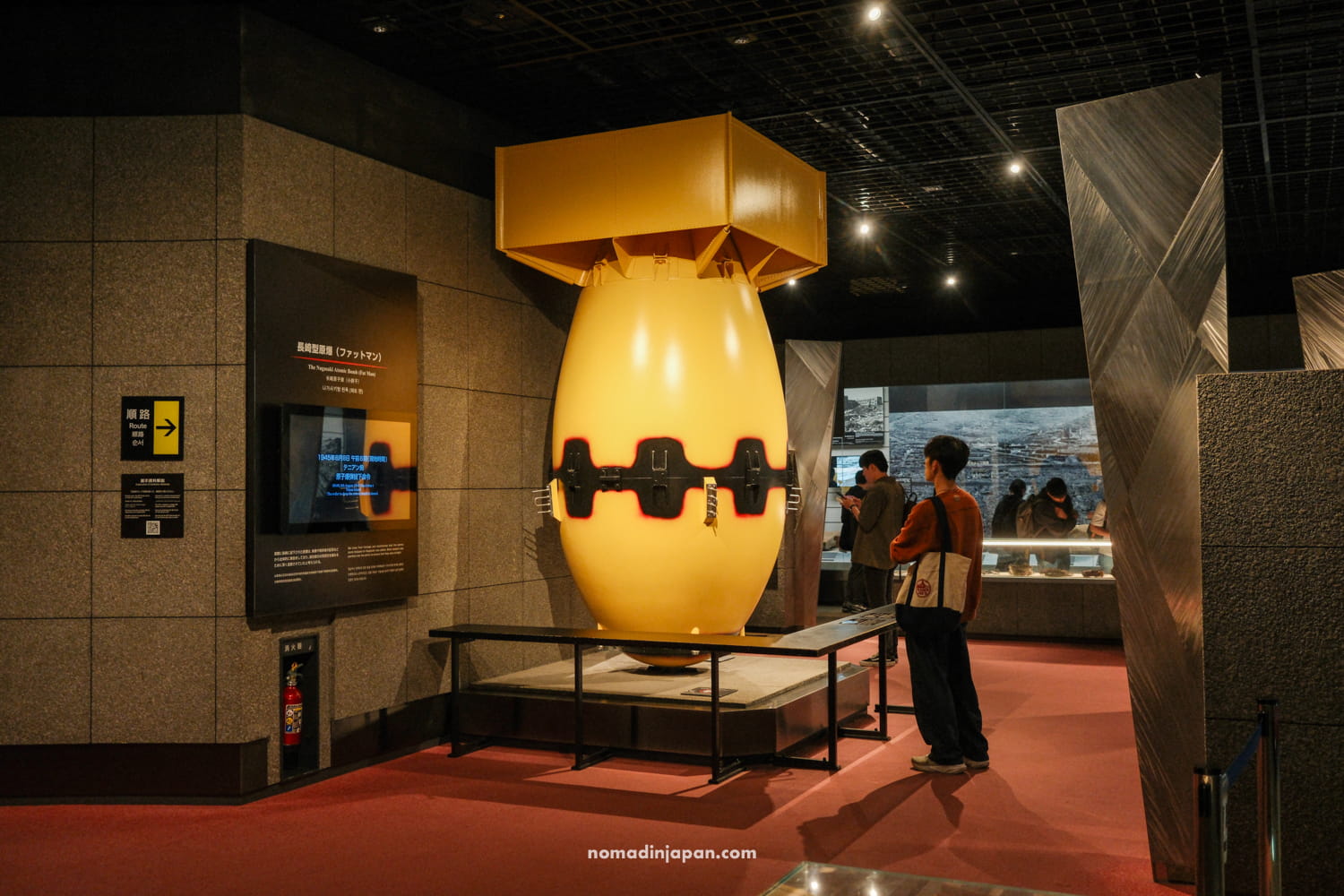
Due to cloud cover, the drop location was moved from Kokura to Nagasaki. It was ultimately dropped above the Catholic residential area just north of Nagasaki’s downtown, which somehow, miraculously, spared the historic city center from much of the blast, including dozens of Buddhist temples, Shinto shrines, and the iconic arched stone bridges that you can still see today. But the northern parts of Nagasaki were all but destroyed.
The ensuing human suffering is hardly fathomable, with nearly 40,000 who died instantly from the bomb blast. Due to severe burns, illness, and injury, that number exceeded 100,000 by the end of 1945.
Artifacts and Personal Stories
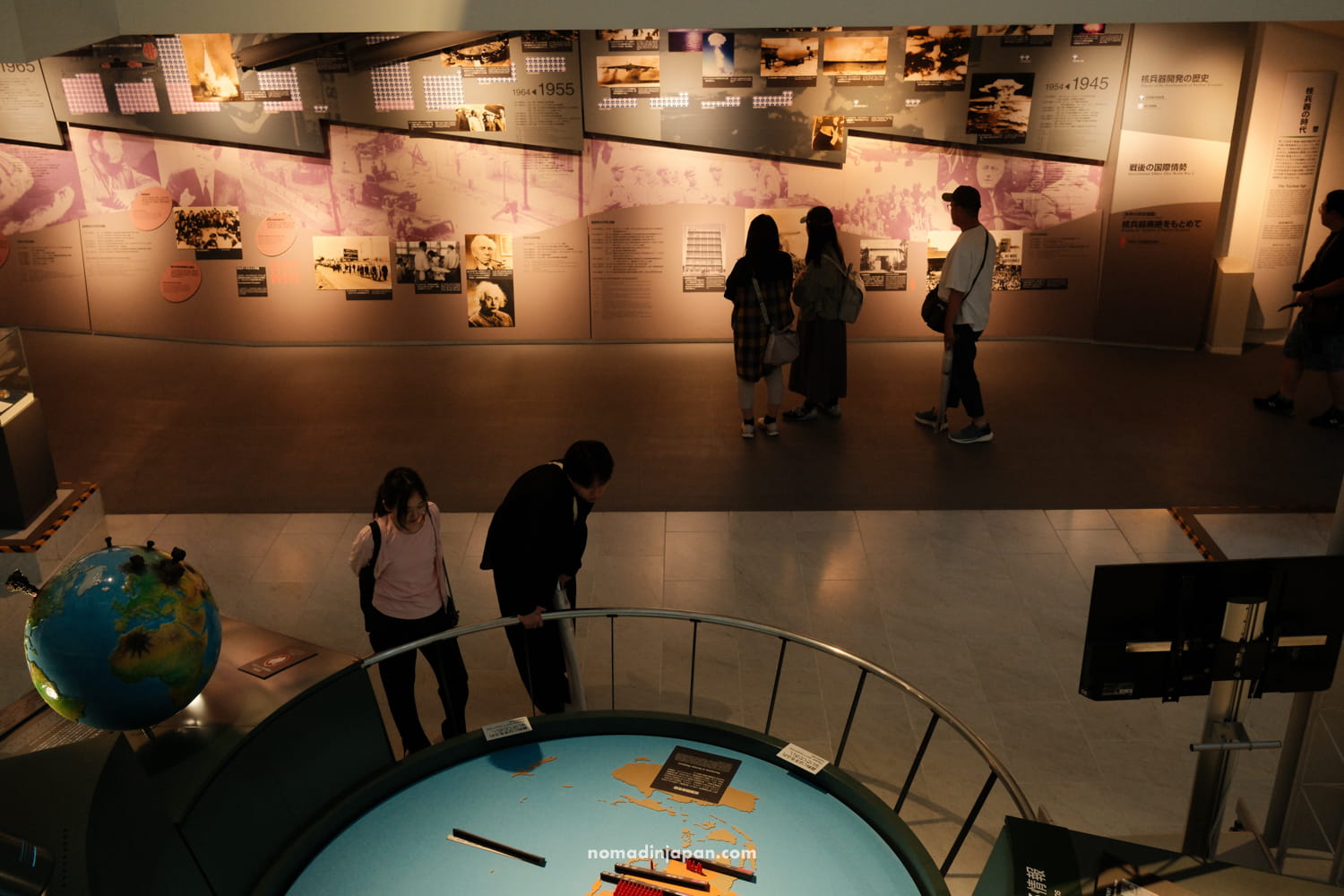
As you move through the museum, you’ll come across glass-paneled displays featuring survivor accounts, photographs, and exhibited objects that illustrate the destruction and suffering: children’s burnt shoes, melted lunchboxes, mangled furniture…
The clock at the entrance was also shocking to see, with the hands frozen at 11:02 AM. It’s as if time itself stopped and is now frozen for humanity to witness, and hopefully, never repeat.
Some of the stories, photographs, and objects are, honestly, hard to read and see, so I encourage you to take your time through these exhibits rather than rushing through them.
The Lasting Impact and Message of Peace
As with the Hiroshima museum, Nagasaki’s museum takes you through the destruction and causes of WWII and the horrors of the nuclear bombs. However, you won’t be leaving without a sense of hope.
The museum culminates in an overall message of World Peace: recognizing and warning of the human cost of nuclear weapons, and the ongoing efforts toward a nuclear-free world.
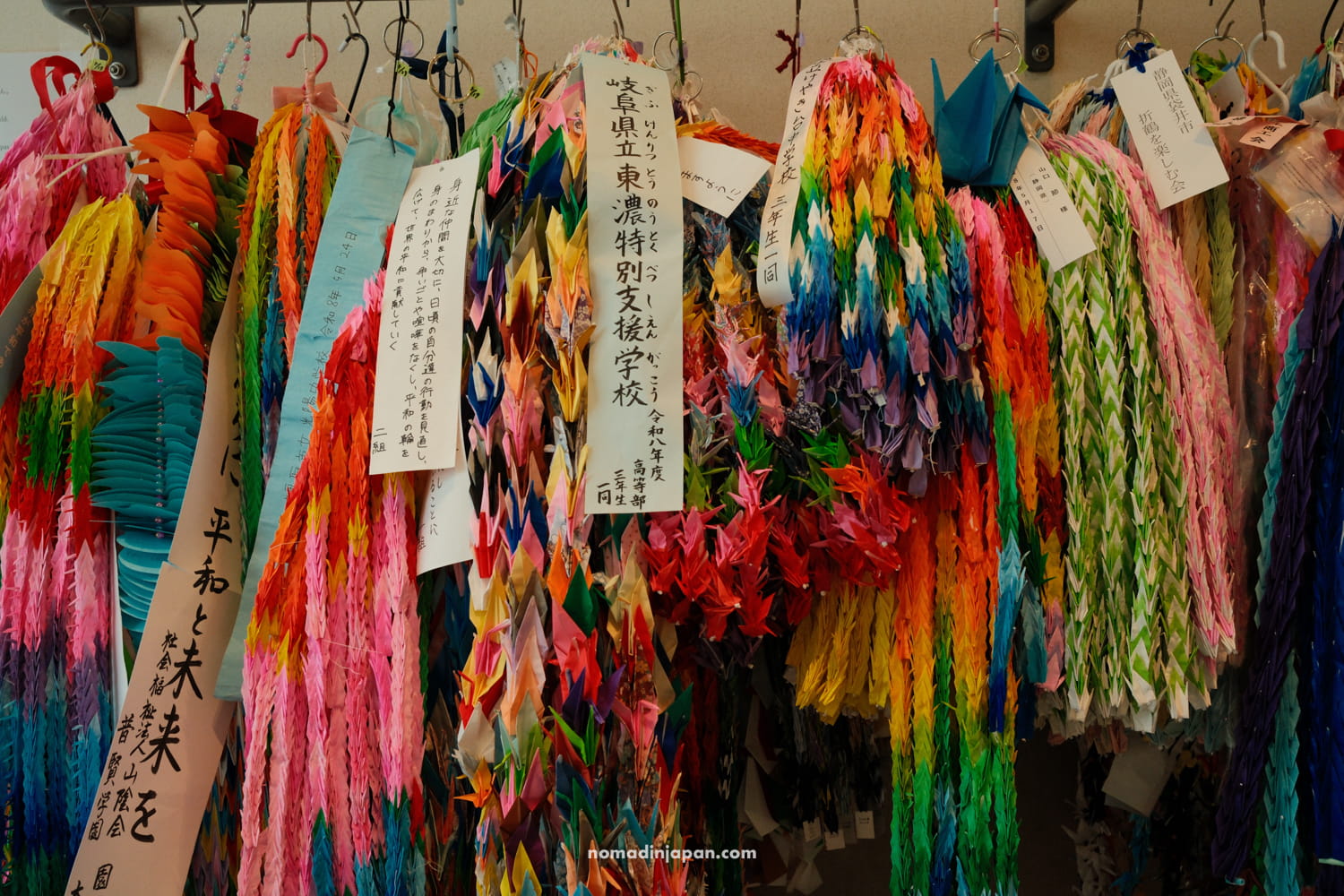
By the end of your visit, you’ll feel heavy but, hopefully, inspired, too. There are countless stories of resilience, love, hope, and support to reflect on, which I find just as important as the stories of suffering and loss.
Is the Nagasaki Atomic Bomb Museum Worth Visiting?
Absolutely! Even though a tour of the museum will be an initial emotional weight, it’s important to understand modern Nagasaki, and also to remember the human cost of war.
It’s also important for families with children. In fact, the day I went, there were lots of Japanese kindergarten students touring the facility with their schools.
I was even able to witness a beautiful ceremony in the rain at Nagasaki’s Peace Park, with dozens of school children paying their respects through song and moments of silence. I’ll never forget how moved I felt, and how everyone else present that day felt, too. We all paused to watch.
One more thing to consider: if you’re trying to compare with Hiroshima’s Peace Museum, I wouldn’t. Both museums commemorate distinct experiences, and visiting one doesn’t replace visiting the other.
How to Visit the Nagasaki Atomic Bomb Museum & Peace Park
How to Get There
Unless your hotel is near the Atomic Bomb Museum, the best way to get there is to take the historic tram in front of Nagasaki JR Station.
Take Line 1 (Blue) or Line 3 (Red) heading north toward Akasako and exit at Stop 20 (Atomic Bomb Museum). The ride takes about 12 minutes.
🍞 You can grab a cozy breakfast at Komeda’s Coffee around the corner of the Atomic Bomb tram stop before you go in, then grab lunch at Takayara Cafe, just down the stairs once you leave the Peace Park.
Tickets, Admission Fees, and Opening Hours
I believe tickets still cost just 200 JPY per person, but check the official museum website for seasonal information or closures to ensure you don’t miss a visit.
I’d recommend going early, around opening time at 8:30 or ~9:00 AM to have enough time to tour the memorial sites before grabbing lunch.
How Long Do You Need?
I recommend 1–2 hours for the museum itself, but think about including an extra 1–2 hours for visiting the nearby memorial sites, such as:
- Hypocenter Park (the site marking the bomb’s explosion directly overhead)
- Urakami Cathedral Ruins (by the epicenter; part of which is still standing)
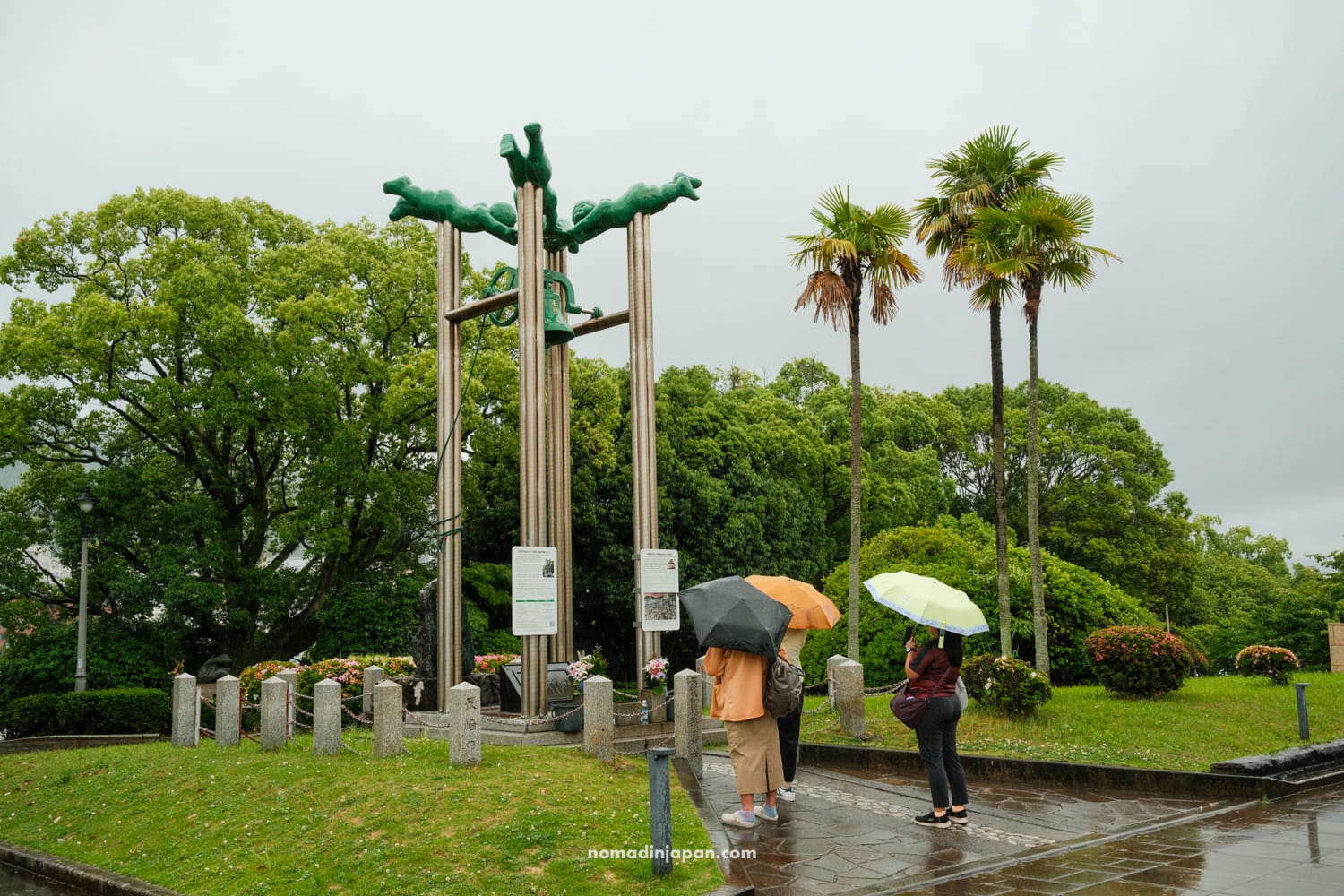
- The Peace Park and all its statues, including the large Peace Statue, dedicated to lasting World Peace (this was the most beautiful and hopeful part of my visit in the rain!)
- Urakami Cathedral and the One-leg Torii Gate (a bit further of a walk aways, but worth visiting too)
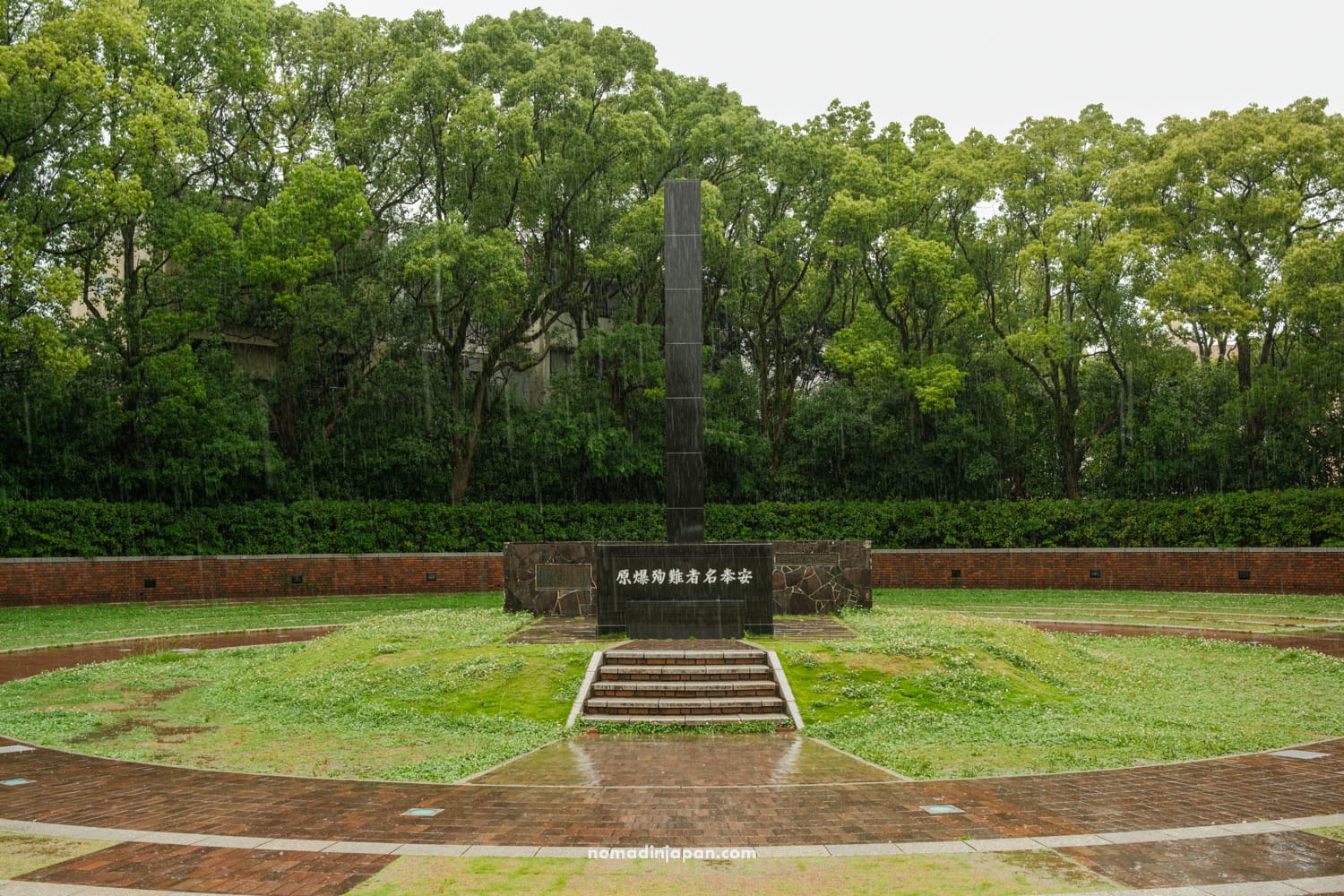
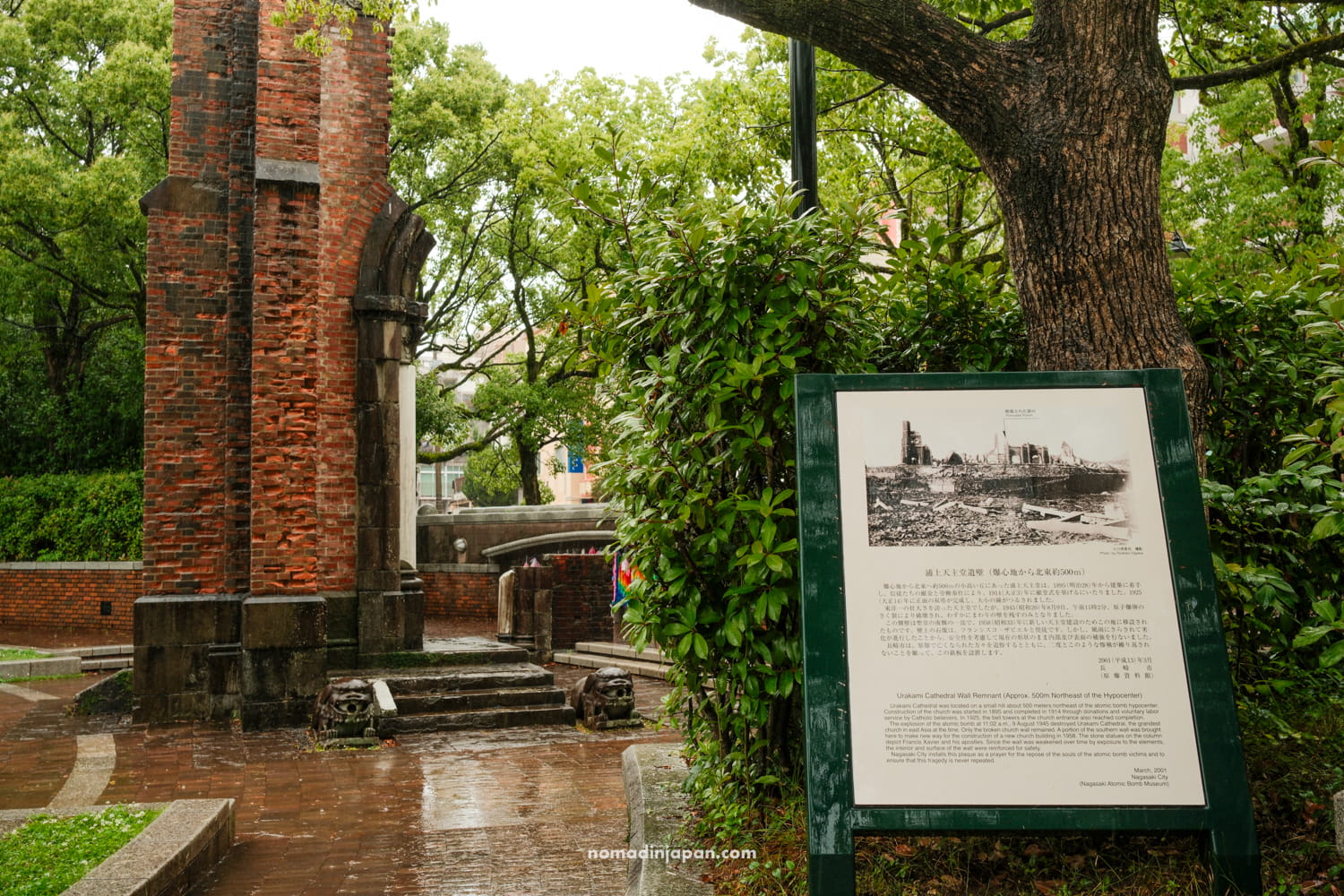
You will be walking quite a bit, so be sure to head out in comfortable attire and pack an umbrella just in case of rain. The above stops are just as important as the Atomic Bomb Museum, in my opinion.
Tips for a Respectful Visit
I think most people who intend to visit the Atomic Bomb Museum are respectful; however, it’s a good reminder to stay quiet during your visit!
Respect photography rules (no flash or videoing others), and allow yourself time to process what you’ve seen. It’s not impactful to rush through this, treating it as just a “thing to do” in Nagasaki.
Final Thoughts on Visiting Nagasaki’s Atomic Bomb Museum
What surprised me about Nagasaki’s Atomic Bomb Museum was its message of love, of peace, of joy.
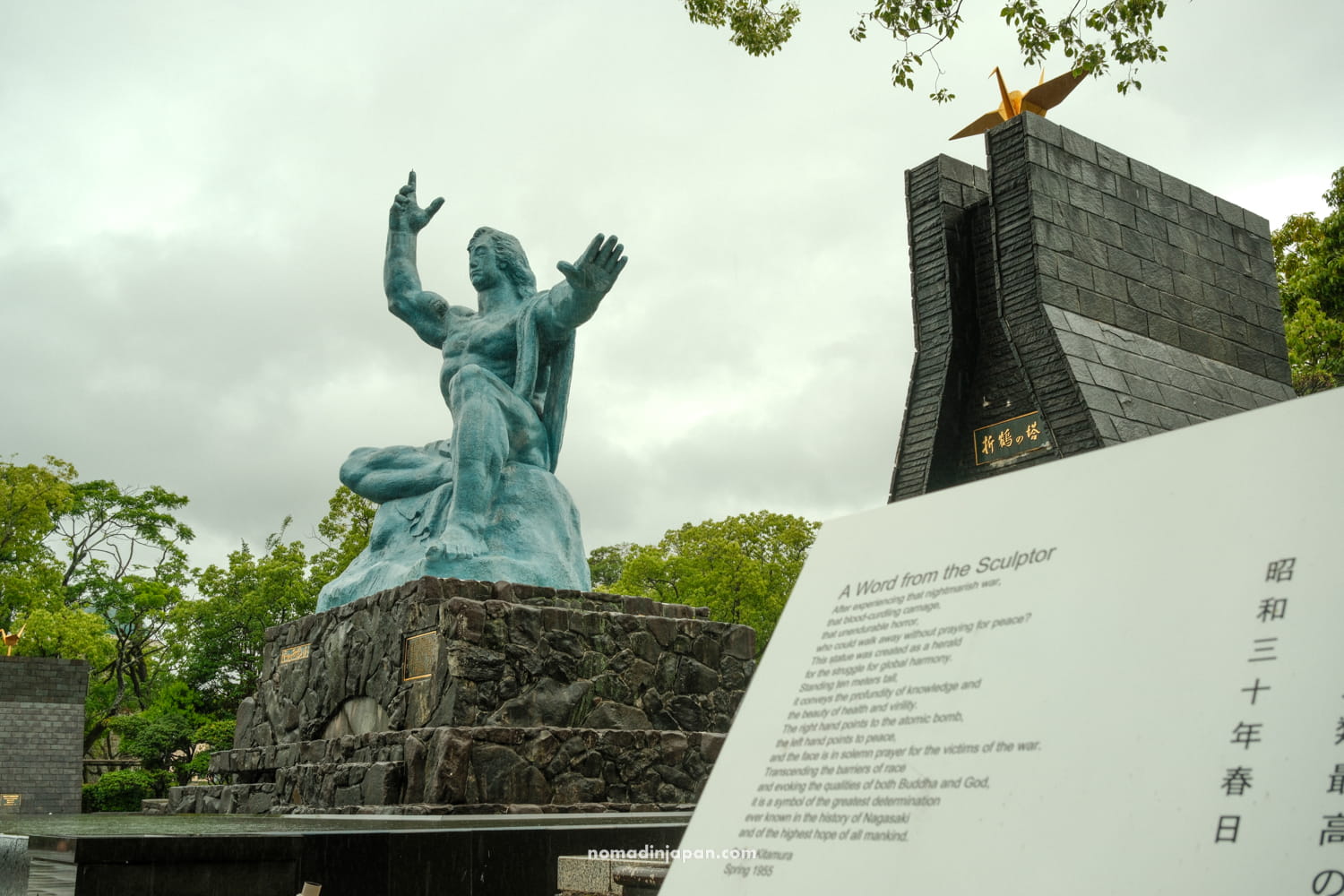
I think the way the city represented this egregious tragedy and scale of human suffering was extremely thoughtful and respectful. It is hard; it is honest- not diminished and victimized, not blameful and angry.
The city itself is committed to fostering world peace, and I think that kind of message will inspire future generations never to repeat such a horror.
I think everyone could spend some time in quiet contemplation with a message like that.
So, yes, go tour Nagasaki’s Atomic Bomb museum, but don’t come only for that. Nagasaki’s identity is much more than its WWII history. Get out on foot and explore Nagasaki’s promise of peace, felt throughout the city and in conversations with locals!
For recommendations on what to do beyond the Atomic Bomb Museum, read my Nagasaki 4-day itinerary.