Snowy Streets & Sulfur Hot Springs: The Magic of Zao Onsen Village in Winter
Most people know Zao Onsen for one of two things: its famous snow monsters (juhyo) or its ski resort.
But it seems few travel all the way here just for the village itself, even though it’s one of the best parts of the experience! ♨️

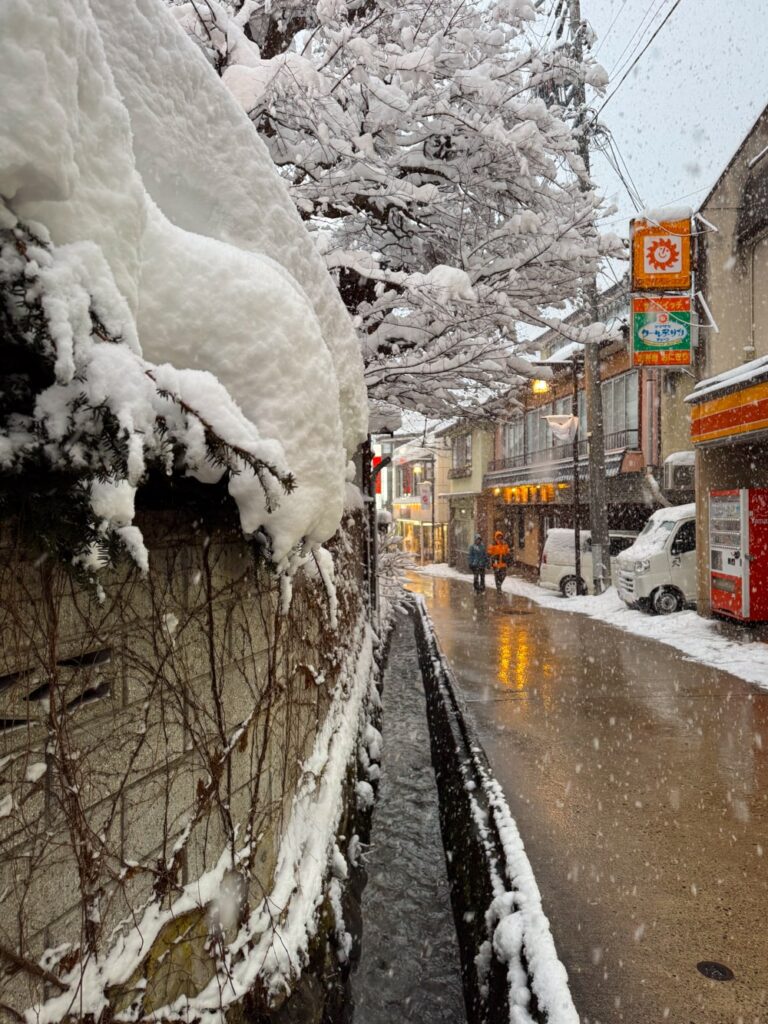
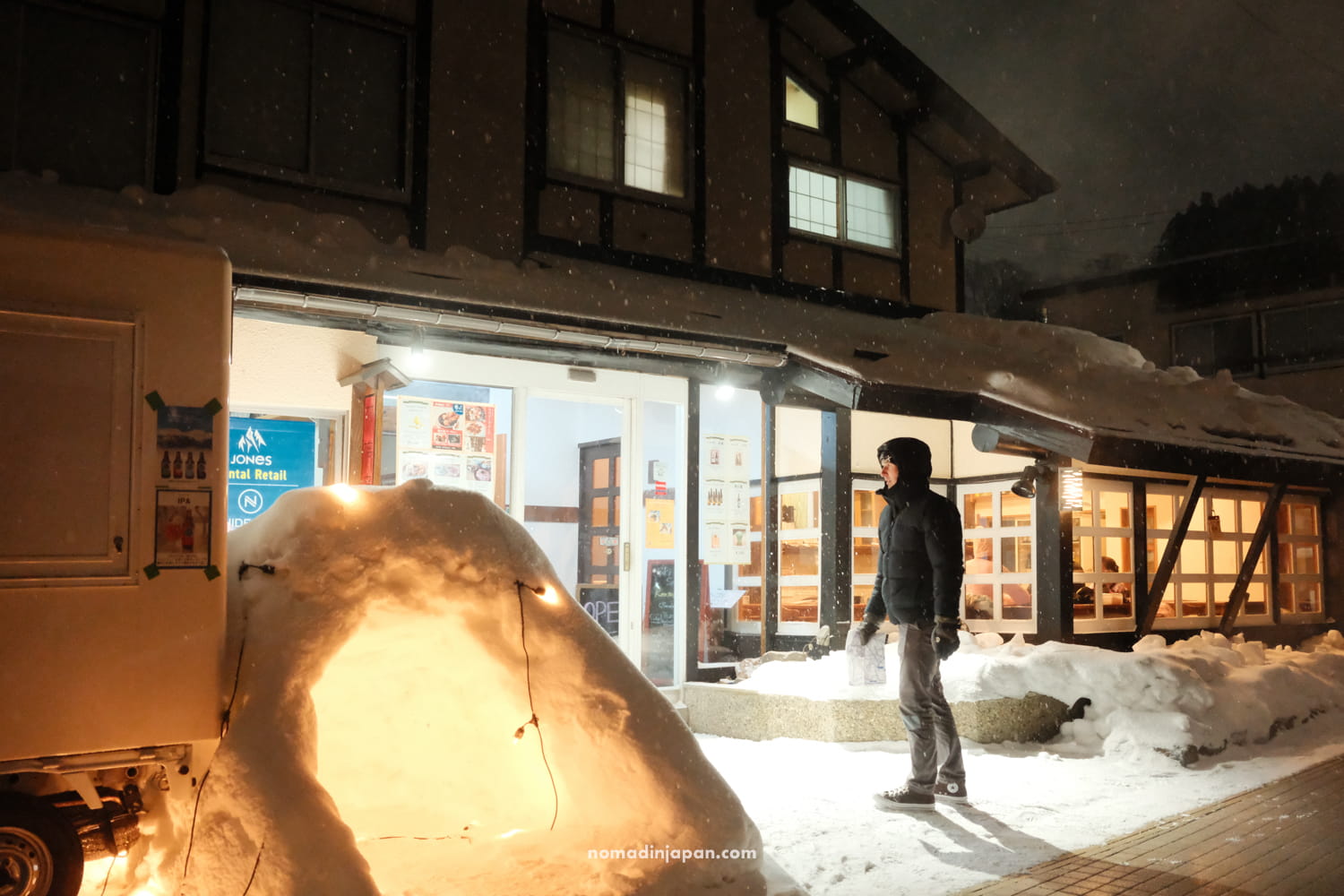
When I got off the bus and started walking through the village to our ryokan, I couldn’t stop saying, “Omg this is amazing!” “Look at that!” “Wooow, look at the hot spring river steaming!”
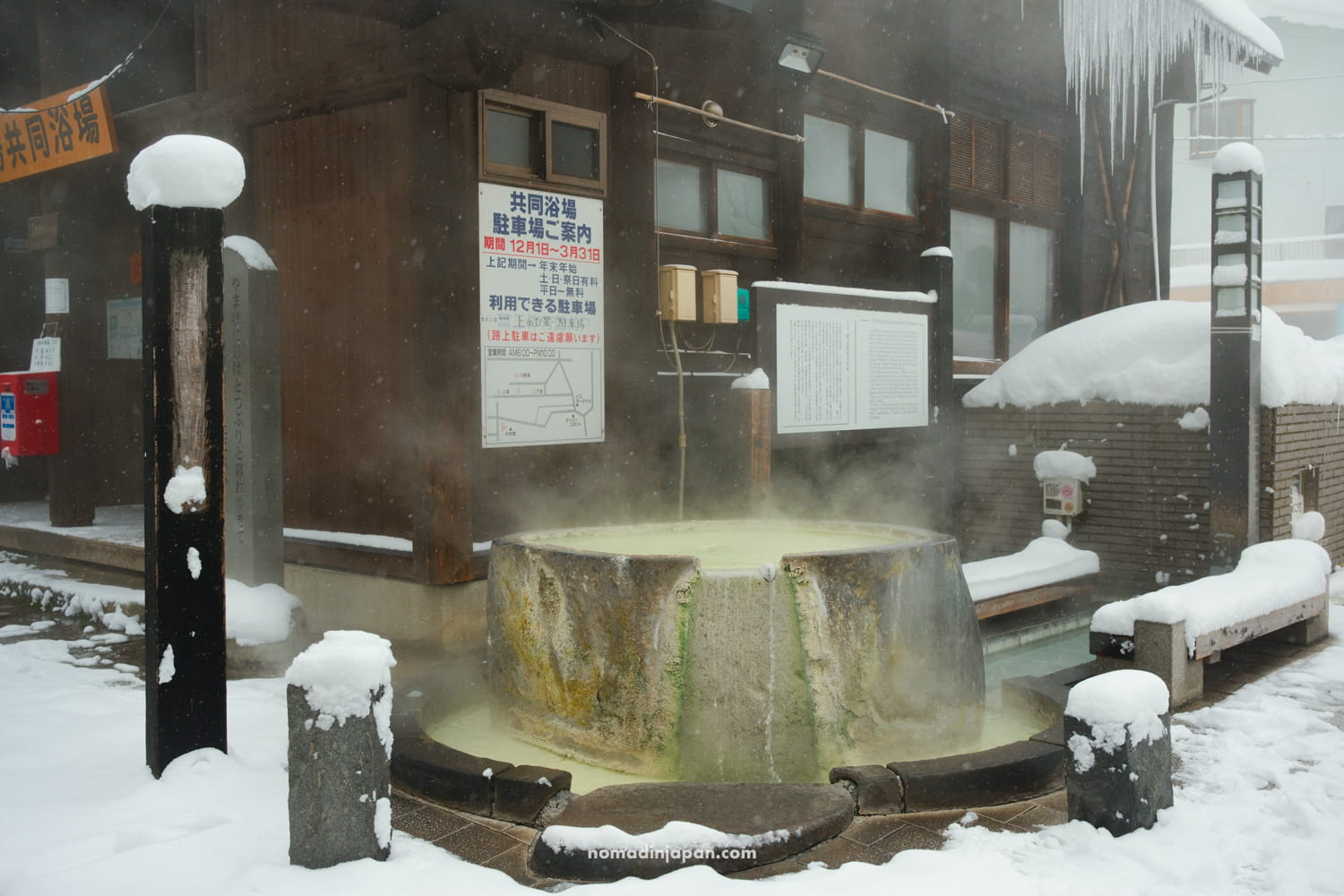
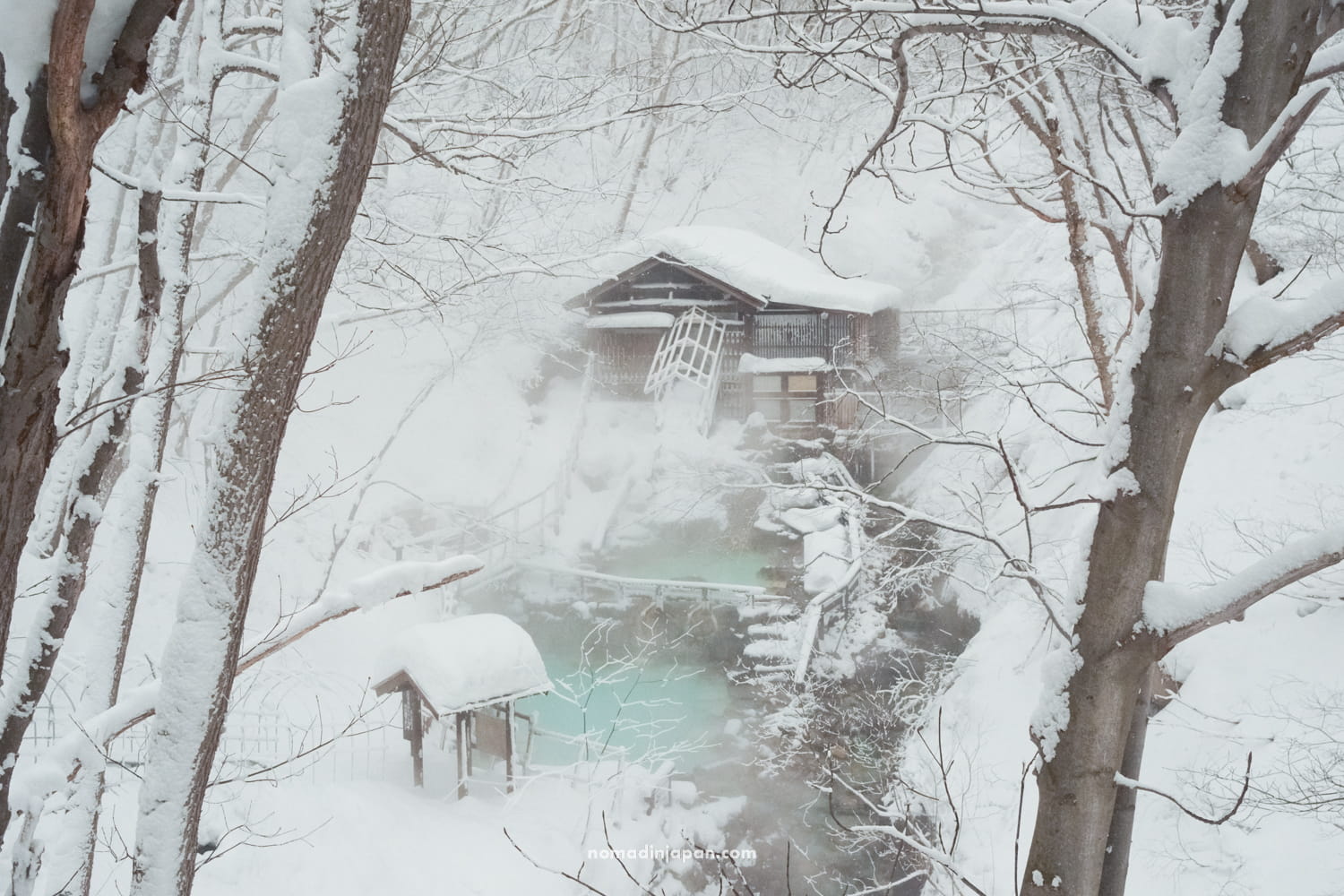
Indeed, beyond the slopes, Zao Onsen invites you into its steaming bathhouses, which look like something out of an old Japanese film.
In fact, Zao Onsen’s hot spring history dates back 2,000 years—making it one of the oldest onsen villages in Japan and one with extra-sulfur-rich hot spring water unique to this town. (It’s even more acidic than lemon juice!)
And yet, so few know of Zao outside of skiing or snow monsters!
The village of Zao Onsen also has a small but active local community, a sake-tasting museum, and hidden shops and izakayas to pop into when you’re not skiing or wandering among the frozen fir trees—all perfect for slowing down and enjoying this historic mountain town in Yamagata.
Below, I share more details about what you can do in the village when you’re not shredding japow or photographing snow monsters.
Exploring Zao Onsen Village Beyond the Slopes
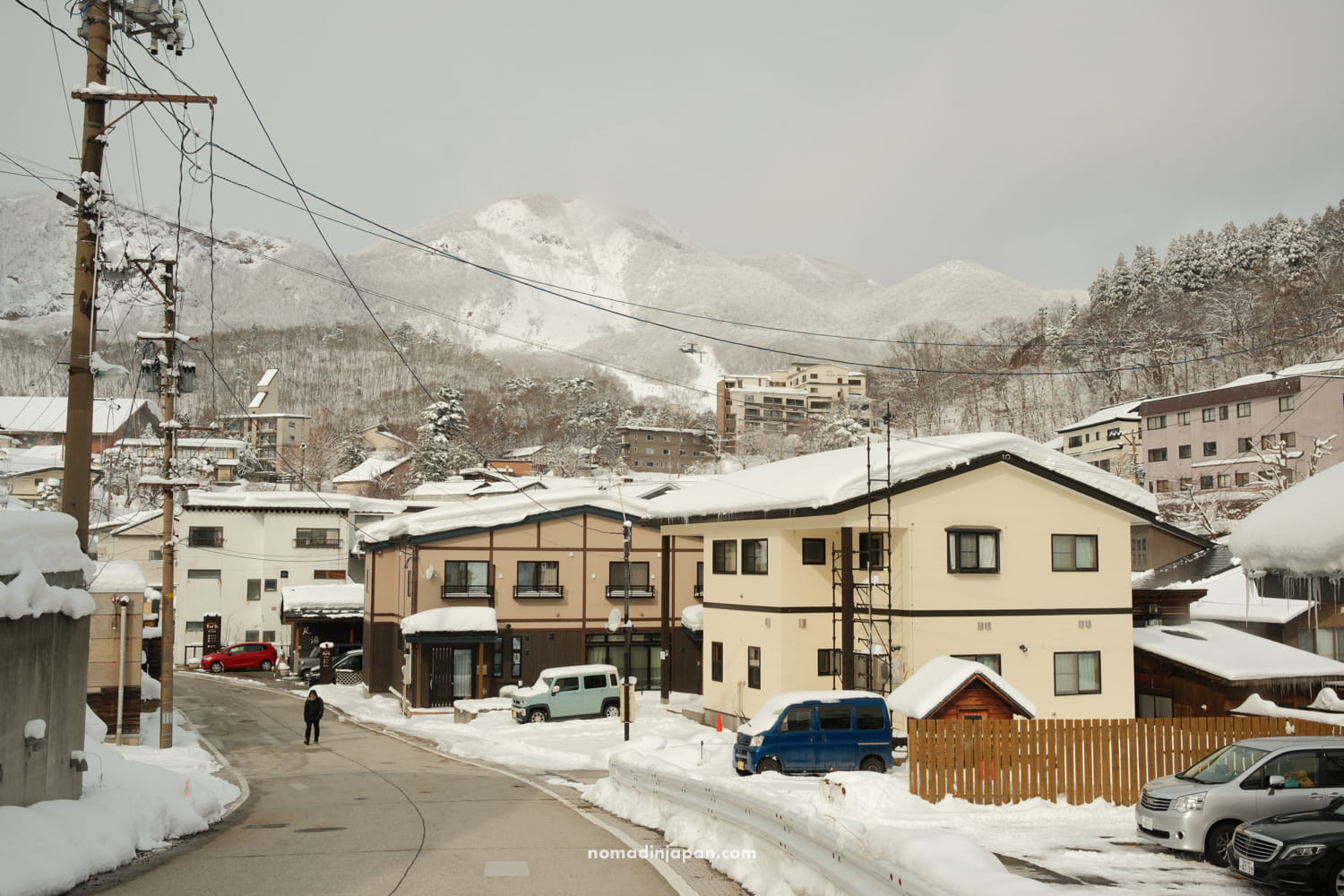
If you can bake time into your itinerary to explore Zao Onsen, you won’t regret it!
That said, how long should you plan to stay in Zao?
Because the village is so small, you can cover a lot of ground in one day, ideally coupled with a multi-night stay (especially if you are skiing).
And if you want to make the most of the village in between other activities, choose to stay in Zao Onsen village center rather than booking your hotel a little town-adjacent.
I recommend at least two full days to give you time to ski, soak, and explore!
We stayed at the Ringo-ya Ryokan (*my review linked), a more rustic choice but no less fabulous. It has on-site ski rentals, its own small onsen, traditional Japanese tatami rooms, and is located right across from one of the historic bathhouses in town. Read my review for more details or go ahead and check availability.
Things to Do in Zao Onsen That’s Not Skiing
Sake-tasting, onsen bathing, shop browsing, craft making, cafe hopping, gondola riding… there’s more to Zao Onsen than meets the eye.
And in my opinion, it’s the perfect-sized town for enjoying a slower pace!
Of course, if you compare Zao with other popular onsen ski towns like Nozawa Onsen, which has a crowded après-ski scene, then you might think Zao is “sleepy.”
When, in fact, it’s just less crowded with tourists and remains more local. There aren’t as many shops or restaurants open, so your choices will be limited, but that kinda adds to the charm.
Knowing that, you can appreciate Zao for its quieter, uncrowded, snowy winter atmosphere and make the most of your time in the village.
Wander the Snowy Streets of Old Zao Onsen

Looking at a map, Zao is a bit spread out. But at its heart is the historic Takayu-dori, known as the old “hot spring street,” with its traditional bathhouses. This is where a lot of the best places to stay are located.
This street and the street over, Yunoka-dori, sandwich a cluster of Zao’s shops and restaurants.
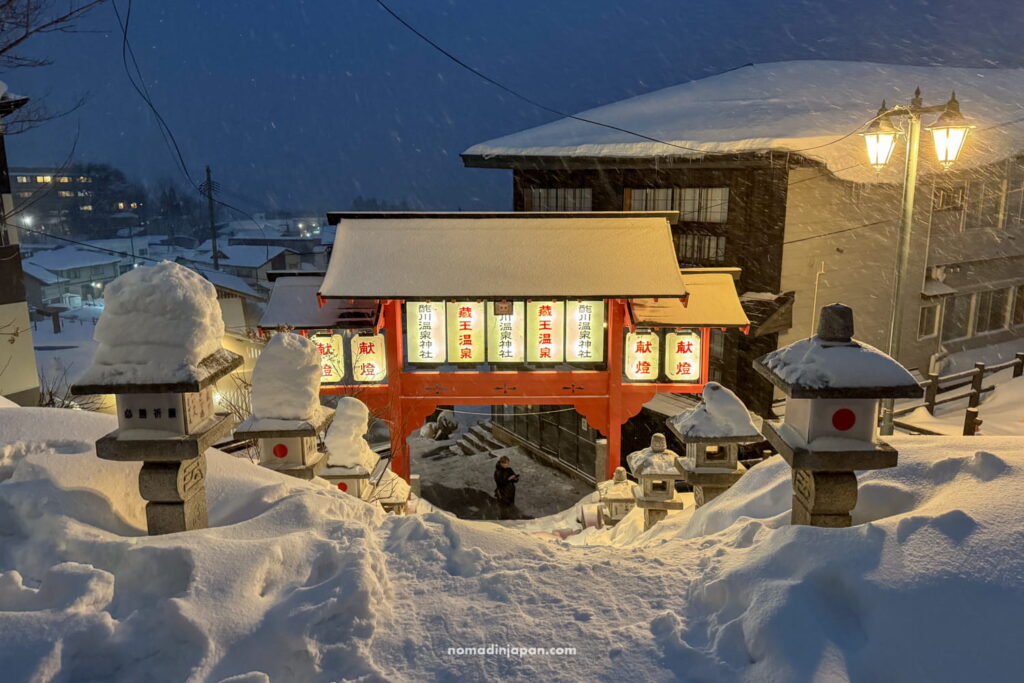
If you walk to the end of Takayu-dori, you’ll reach the Sugawa Onsen Shrine. This is a perfect photo spot!
Soak in Zao’s Centuries-Old Sulfur Hot Springs
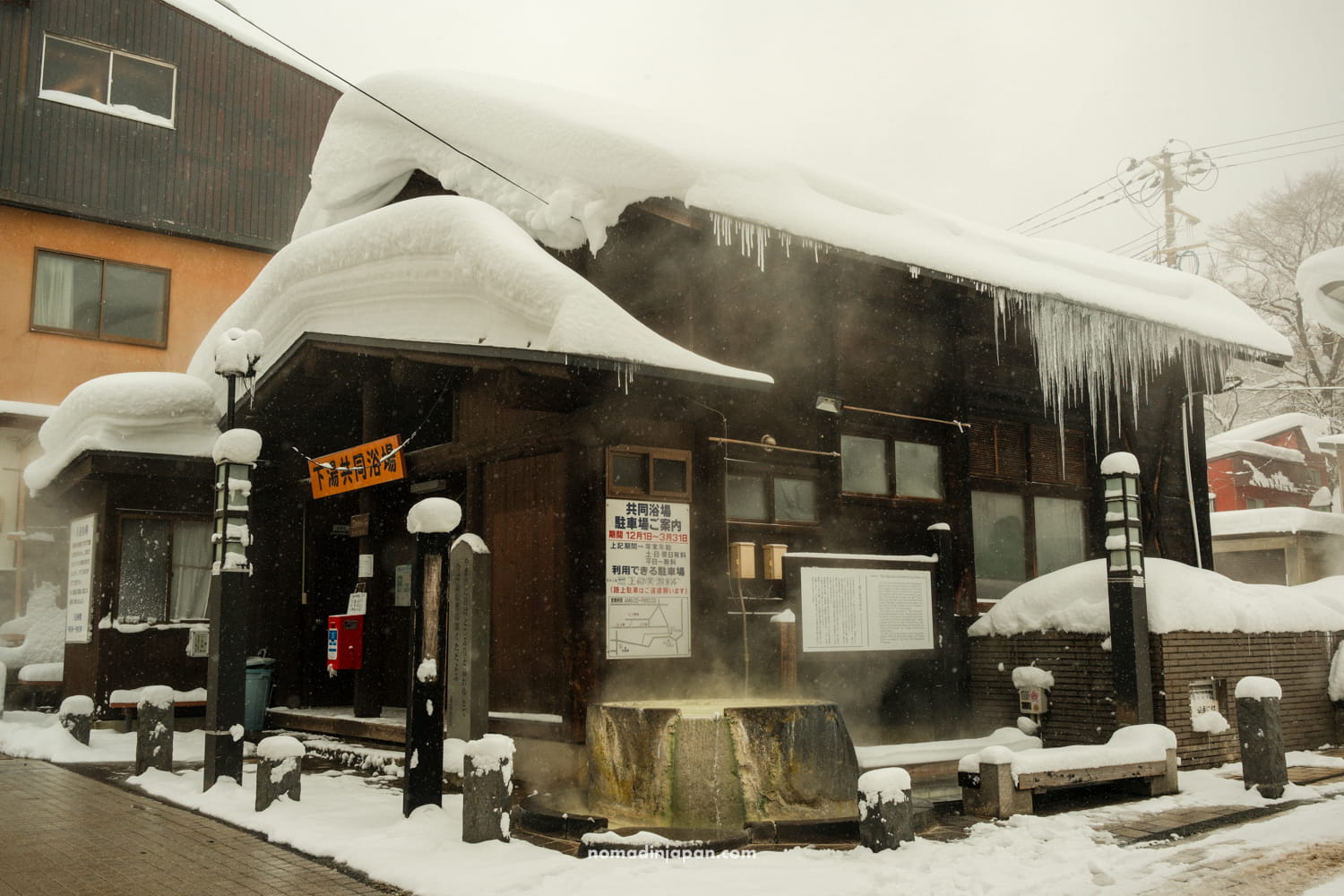
This street also leads you to Zao Onsen’s three historic bathhouses (in order):
- Shimoyu ♨️
- Kaminoyu ♨️
- Kawarayu ♨️
Shimoyu, the oldest—and reportedly the hottest!—is located right opposite where we stayed. While I dipped my head inside to take a look, I couldn’t possibly enter, as the water temperature was 45 °C!
Next, you’ll come across my favorite bathhouse in the village, Kaminoyu, where we would soak each night after wearing down our knees on the ski slopes because, of the three, this one was the least hot at around 43°C.
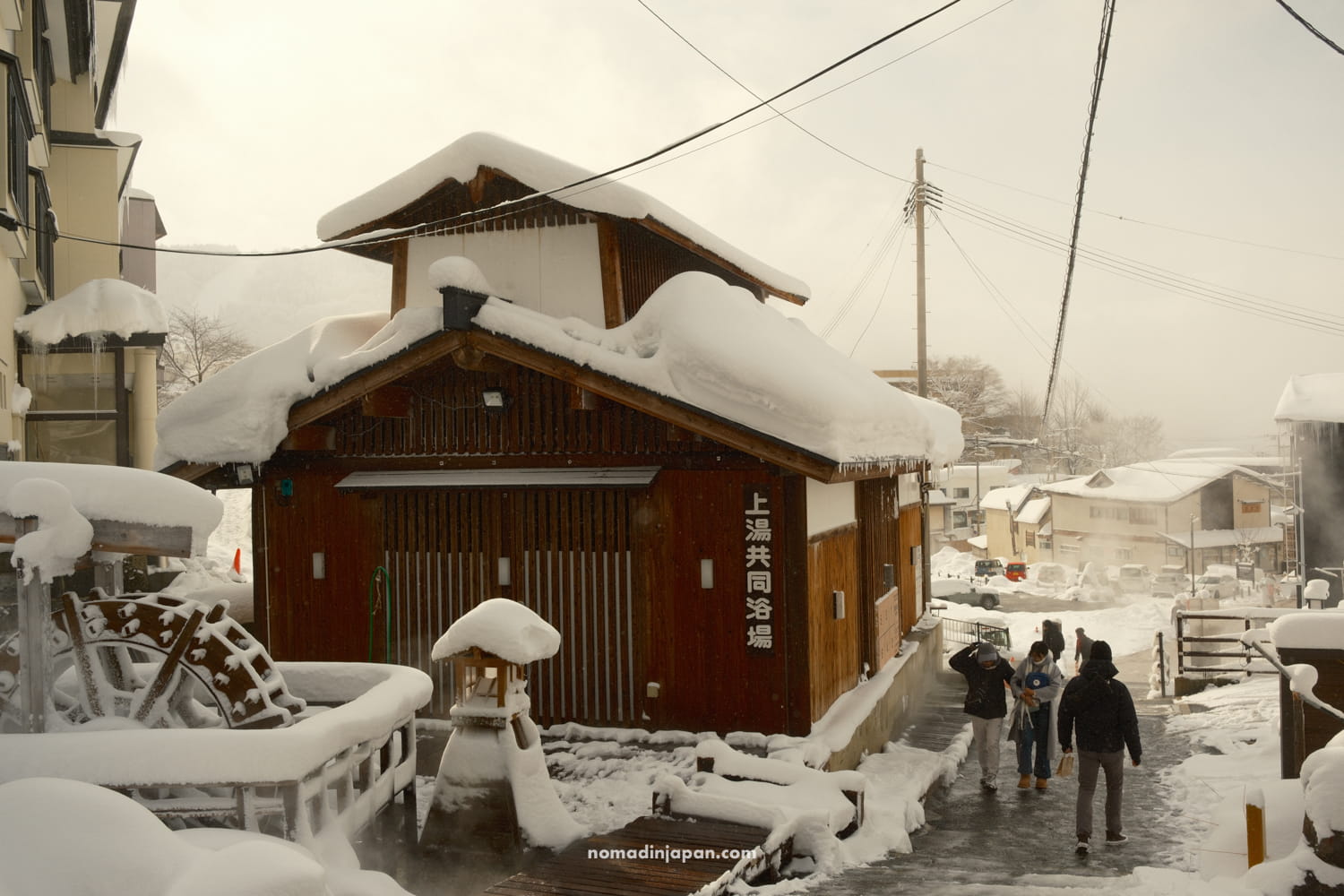
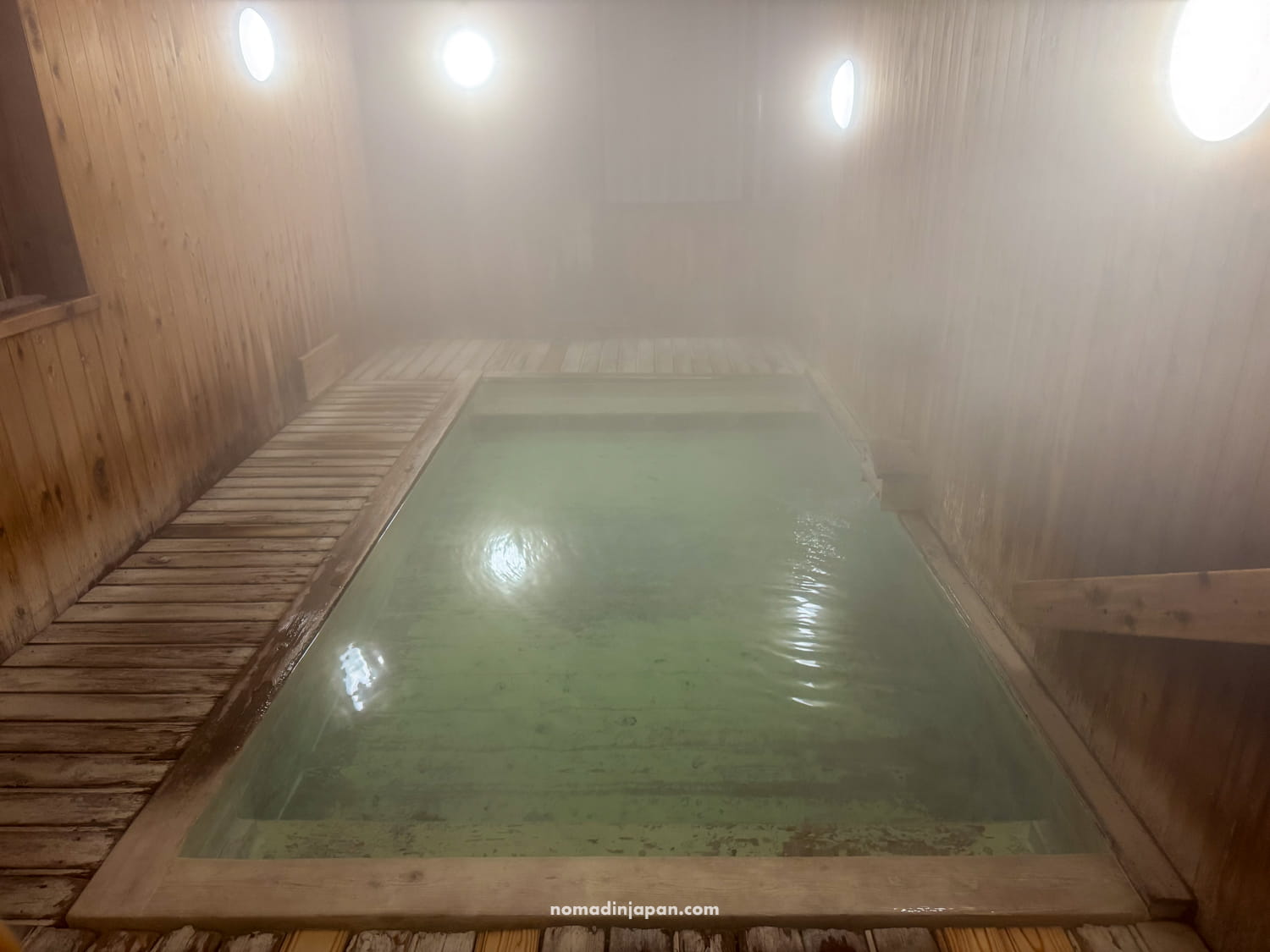
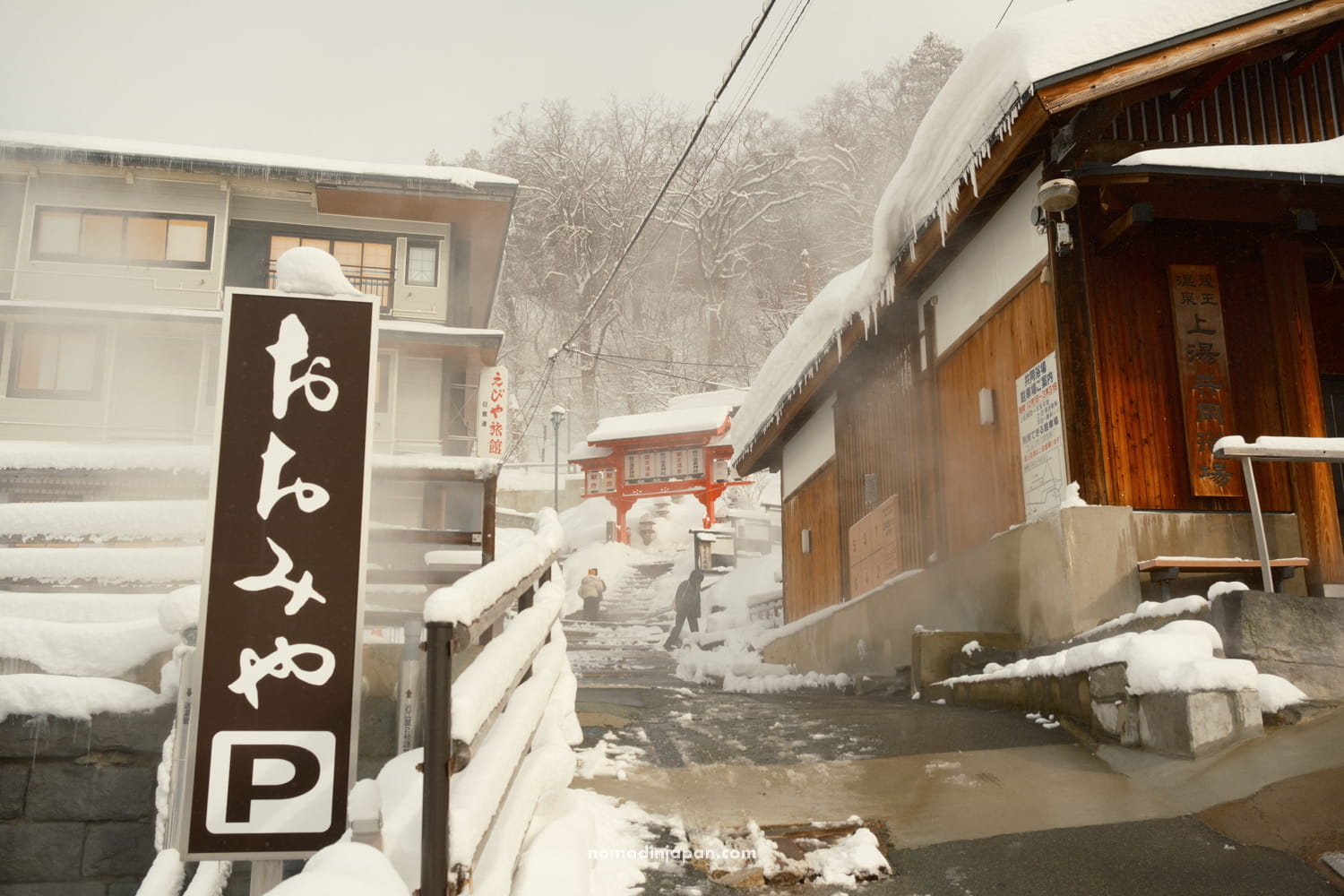
The water quality analysis here shows that it is extremely high in sulfur, with an acidity level higher than that of a lemon. 🍋
That said, you may notice that upon entering these hot springs, it stings a little! In my case, it didn’t bother me, and I would slip out feeling silky smooth and rejuvenated.
The third and final historic bathhouse, Kawarayu, sits tucked into the corner down Yunoka-dori Street. (Turn right at the entrance to the Kaminoyu bathhouse to get there.)
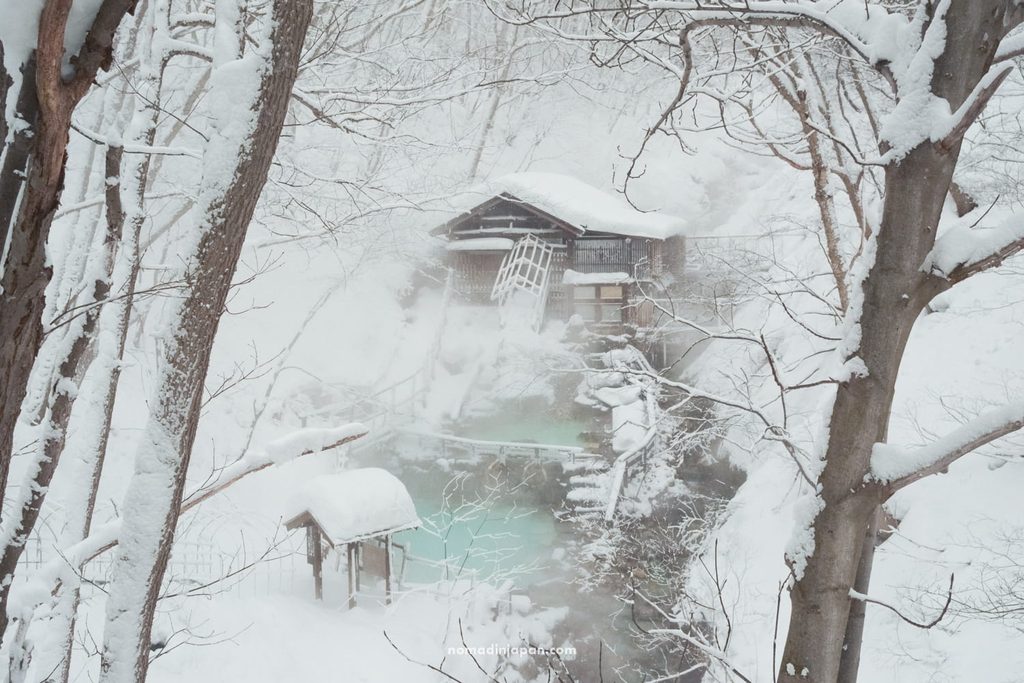
FYI: The Zao Dai-Rotemburo, the famous large outdoor bath, closes in winter.
I thought Kawarayu was cute; the hot spring water flows directly underneath it in a little creek and is piping hot! This one is definitely more frequented by locals than tourists.
Sample Renowned Yamagata Sake at the Sake Museum
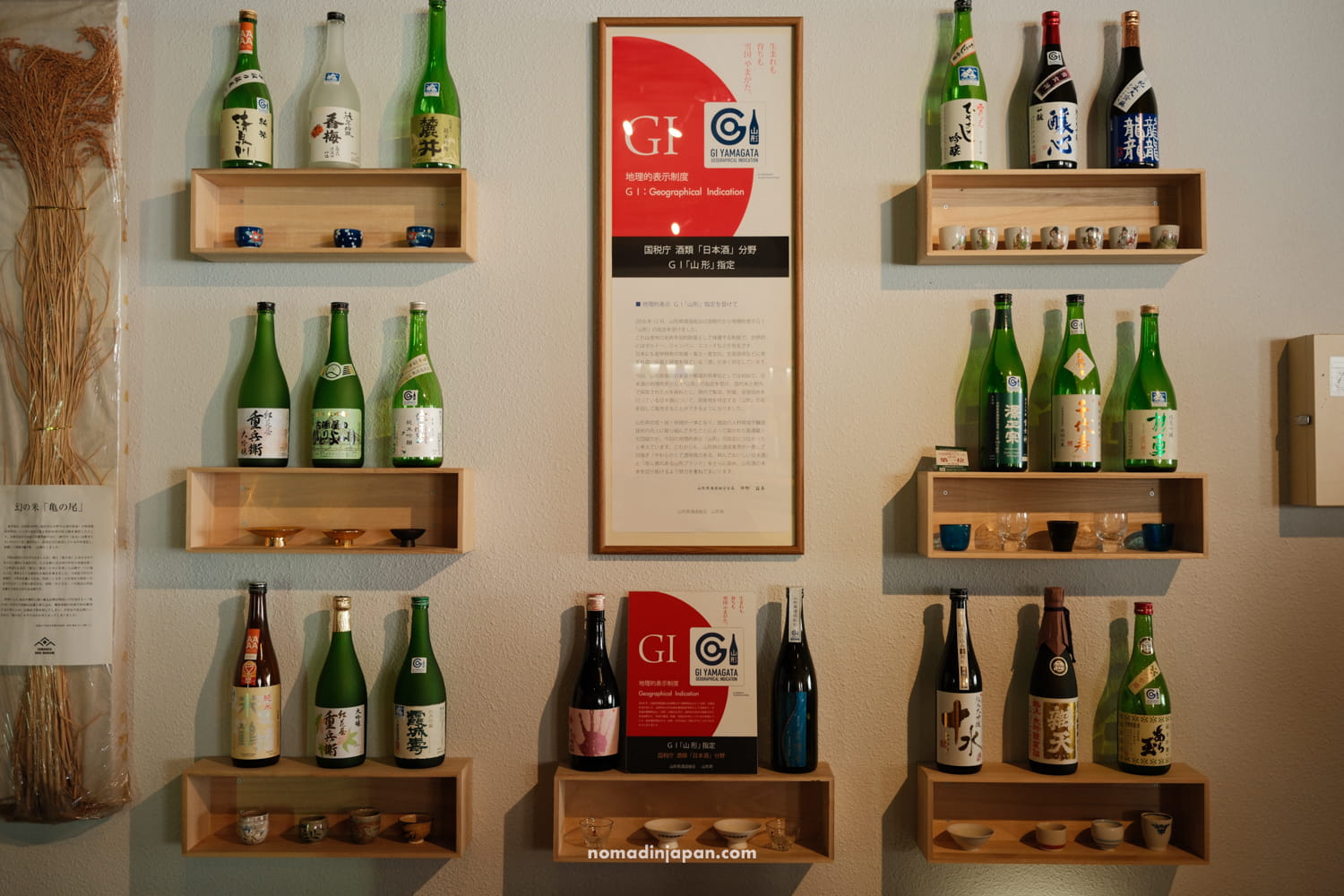
One of the newest additions to Zao Onsen village is the amazing Yamagata Sake Museum.
Here, you can sample some of the finest-quality sake from 49 breweries across Yamagata Prefecture!
It’s housed in a beautiful windowed building, but you could walk right by it and not realize what awaits inside. I made a quick 1-hour visit to meet up with an online friend, but I could’ve stayed all day just learning about and tasting the different types of sake. (Eat before, otherwise you’ll leave quite more inebriated than when you arrived lol.)
Notes 📝
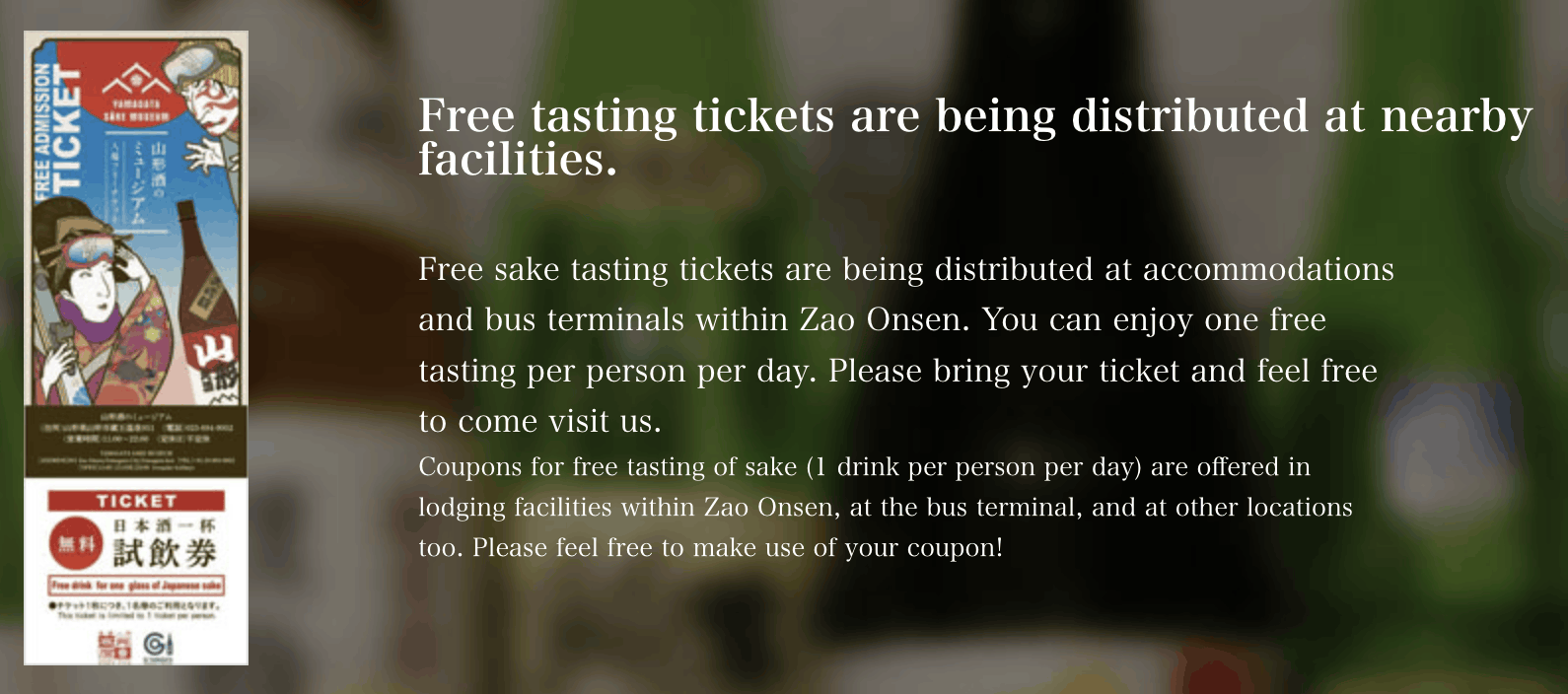
You can get a free sake sample ticket (1 per person, per day) at your accommodation in Zao or at the bus terminal upon arrival. Sake flights and food are also available at the Yukemuri Tsunami Bar inside.
This place definitely deserves more attention, and you shouldn’t overlook it on a Zao winter trip.
Shopping & Traditional Kokeshi Doll-Painting Workshop
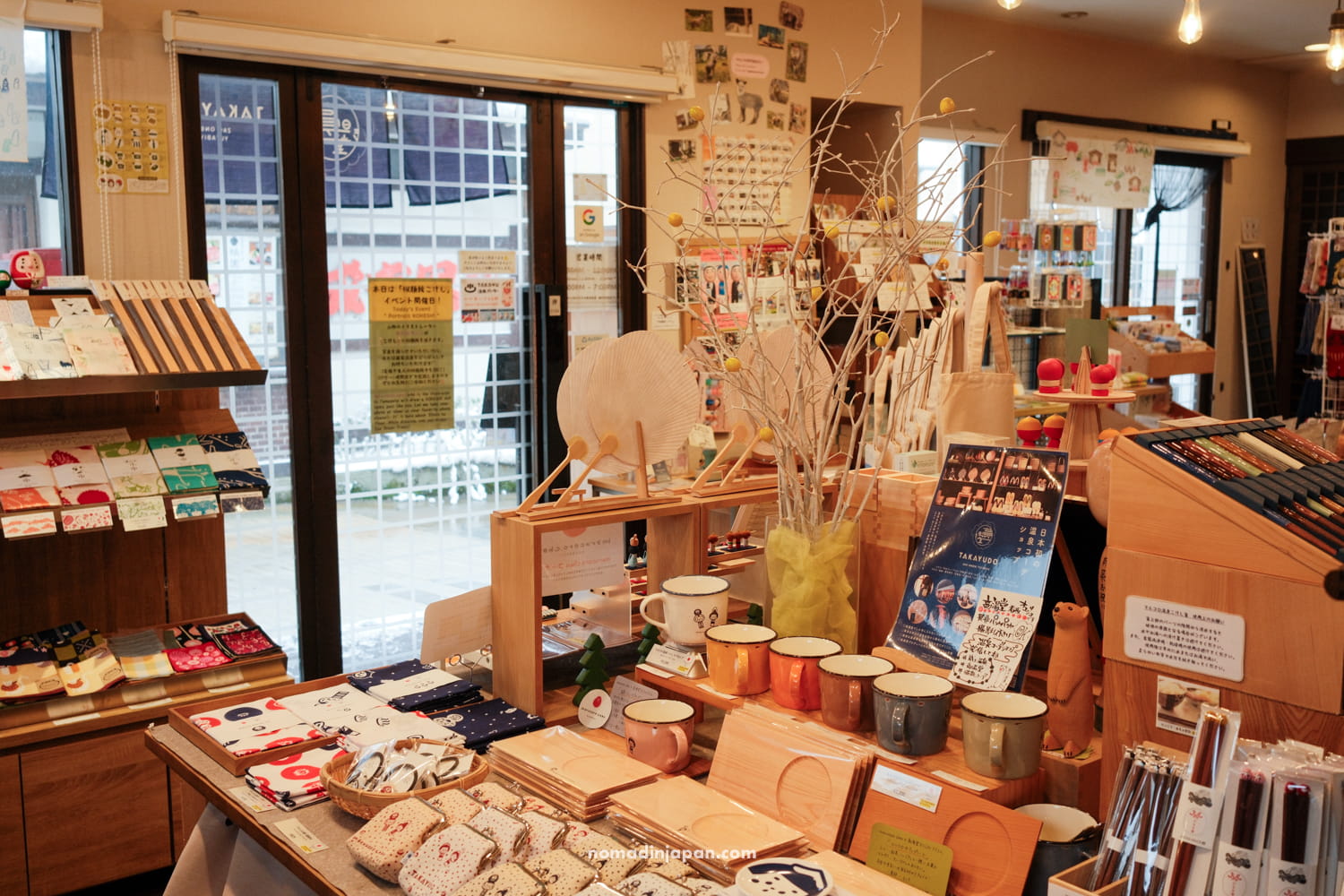
Lining Takayu-dori Street are numerous craft and artisan shops. One such is the long-standing Tanaka Kokeshiya, where you can browse traditional handmade Japanese wooden dolls, and even paint one yourself during a guided session!
This is one indoor activity in Zao that would be perfect for days with heavy snowfall. I would definitely have signed up to do this, but ran out of time.
This is why I recommend stopping by the Zao Onsen Tourist Association Center, located inside the bus terminal building, the day you arrive, so you can plan these non-ski activities into your itinerary.
While shopping in Zao wasn’t a big part of my agenda, I did enjoy stepping into all the shops and browsing the regional specialties on offer. In the Takayudo craft shop, I found a packet of Zao’s sulfur-rich hot-spring minerals, which I bought for my sister who loves to take baths.
Meet the Famous Snow Monsters (Without Skis)
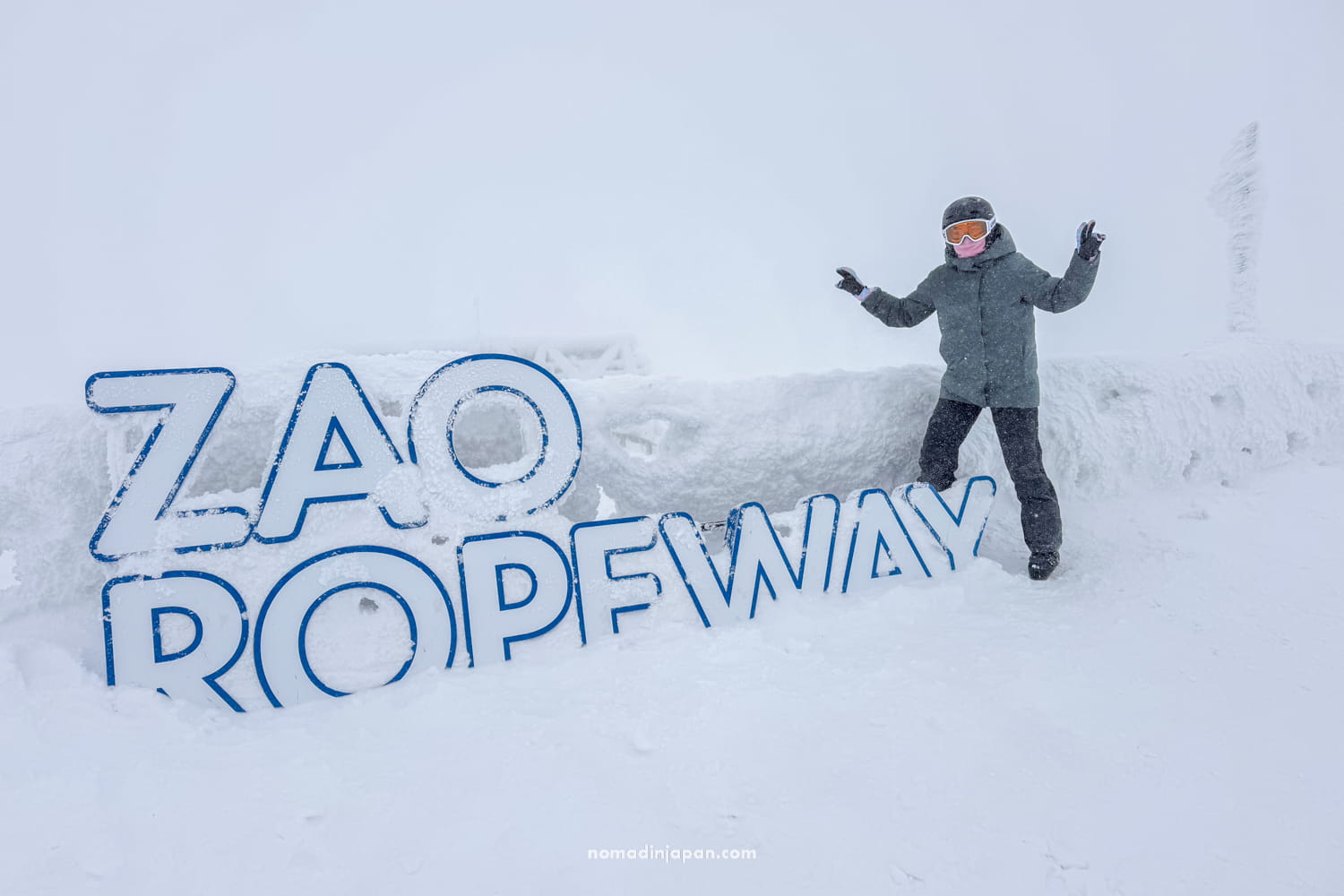
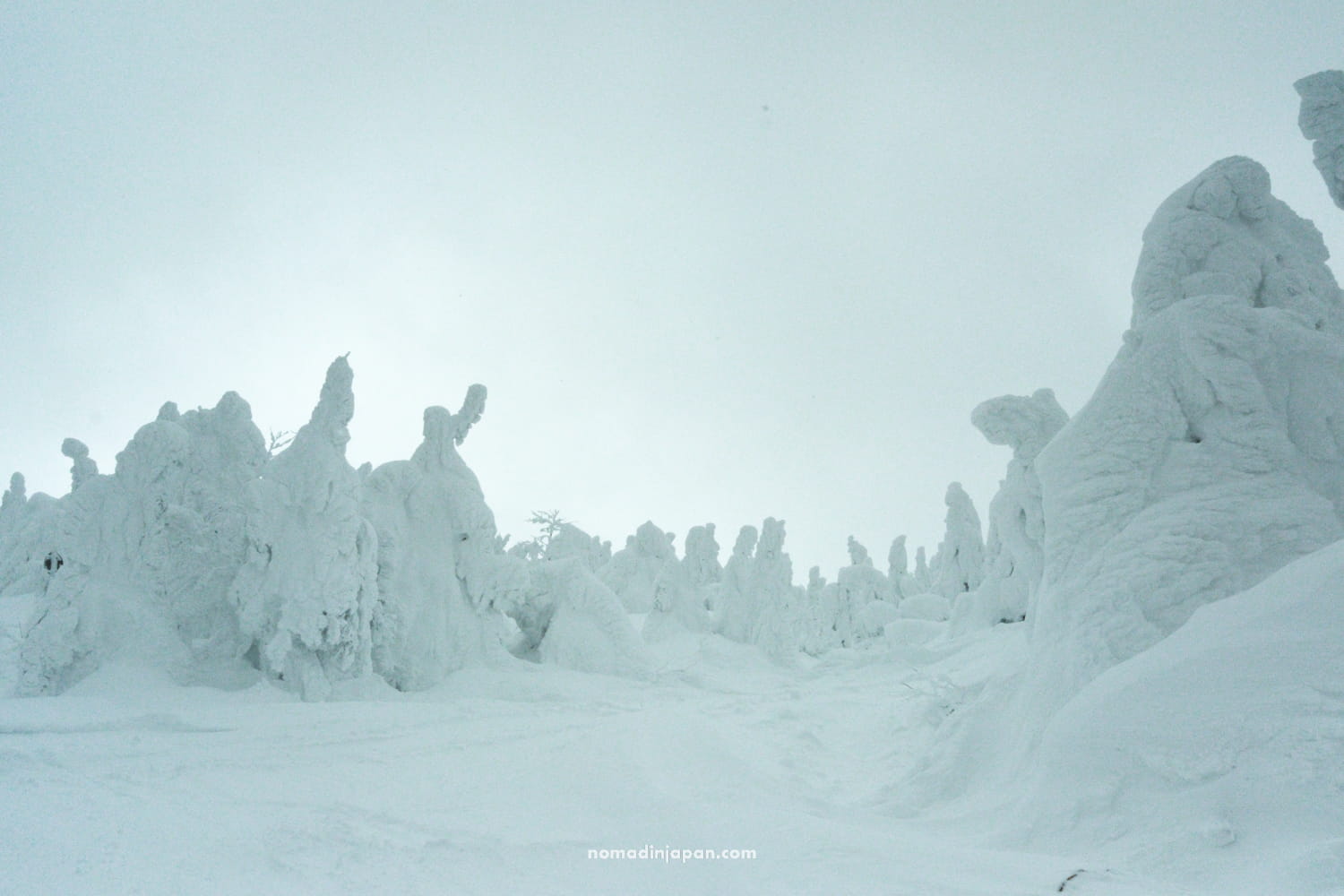
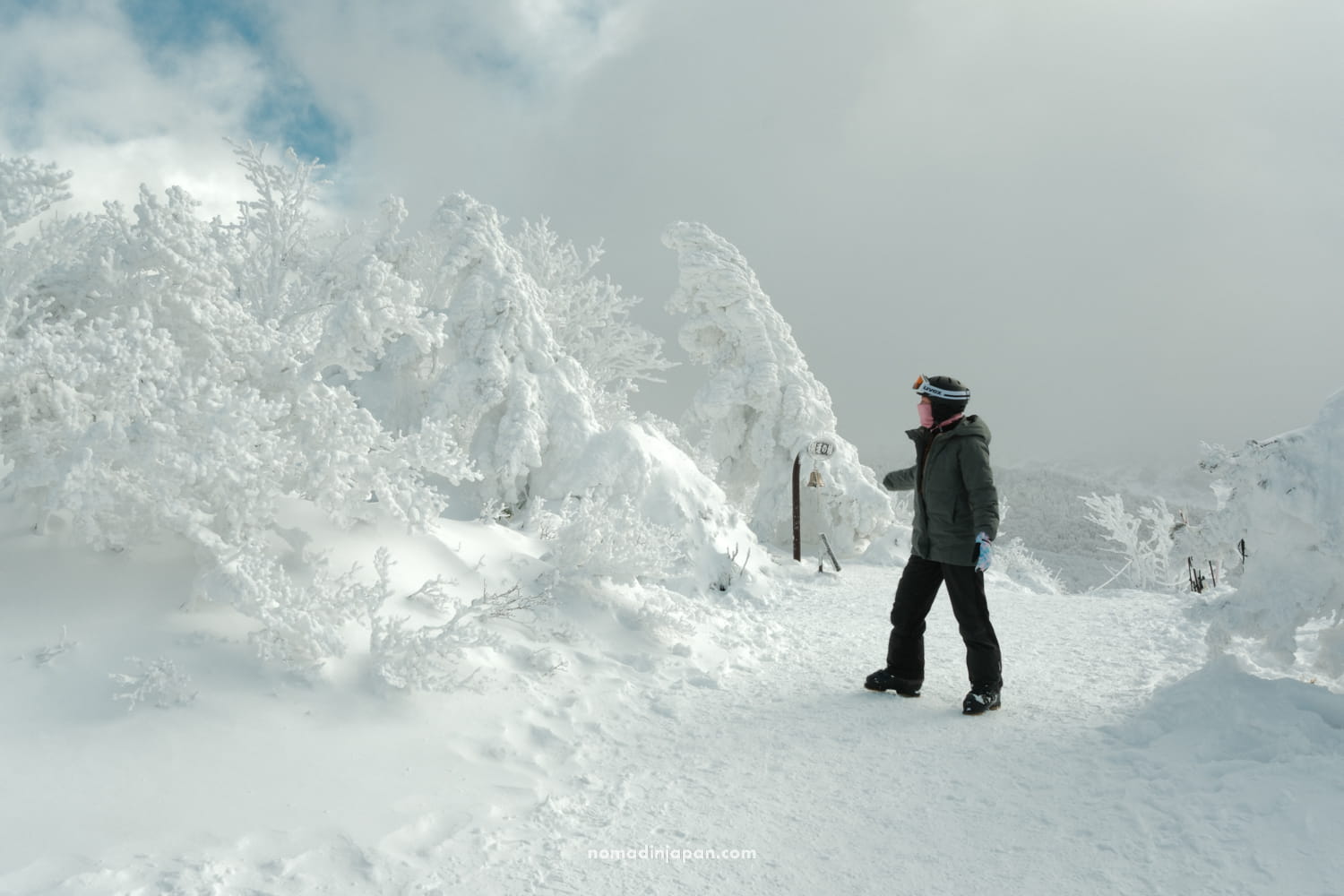
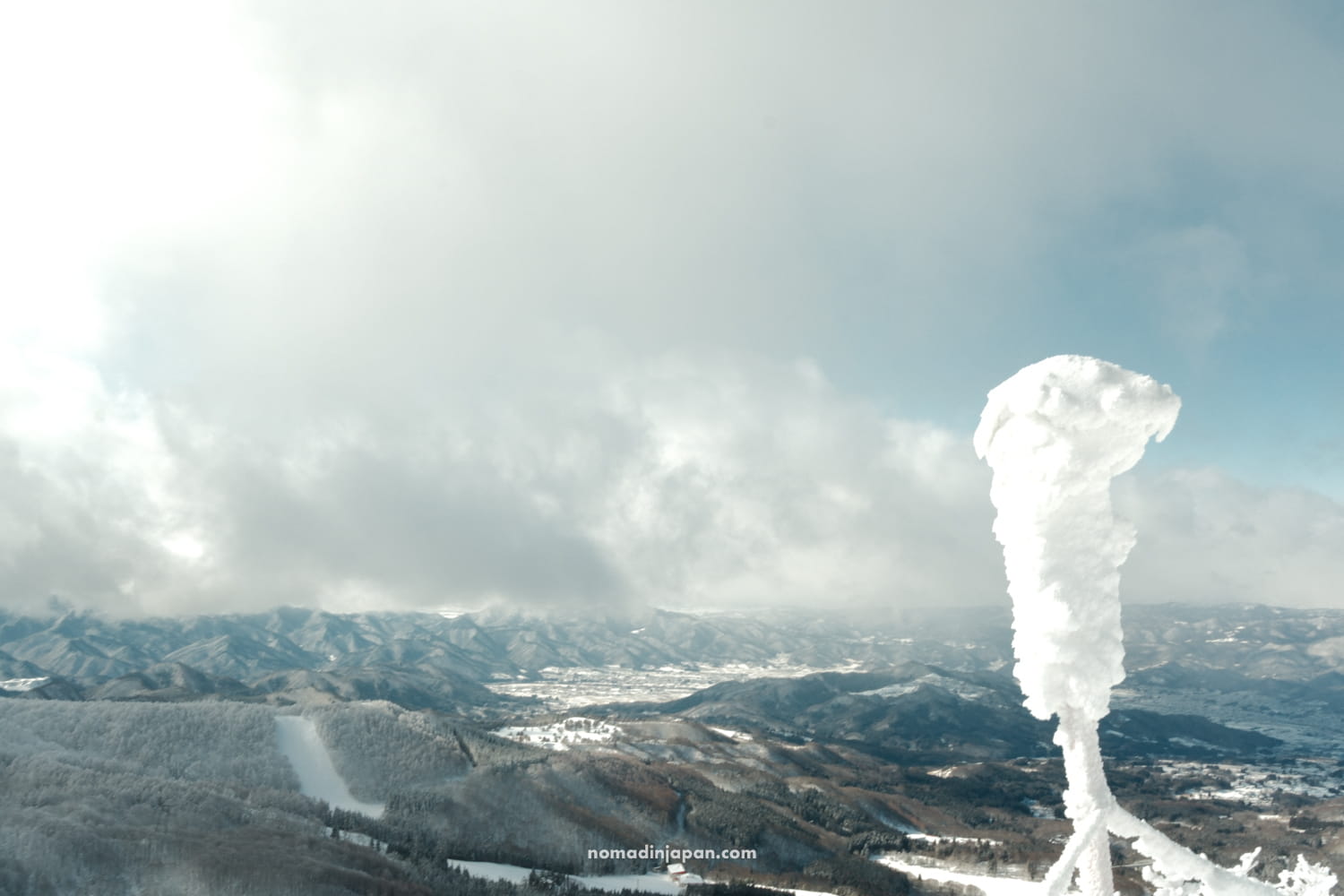
Of course, no visit to Zao Onsen in winter would be complete without meeting what it’s best known for: its ice-encrusted trees, aka snow monsters (juhyo).
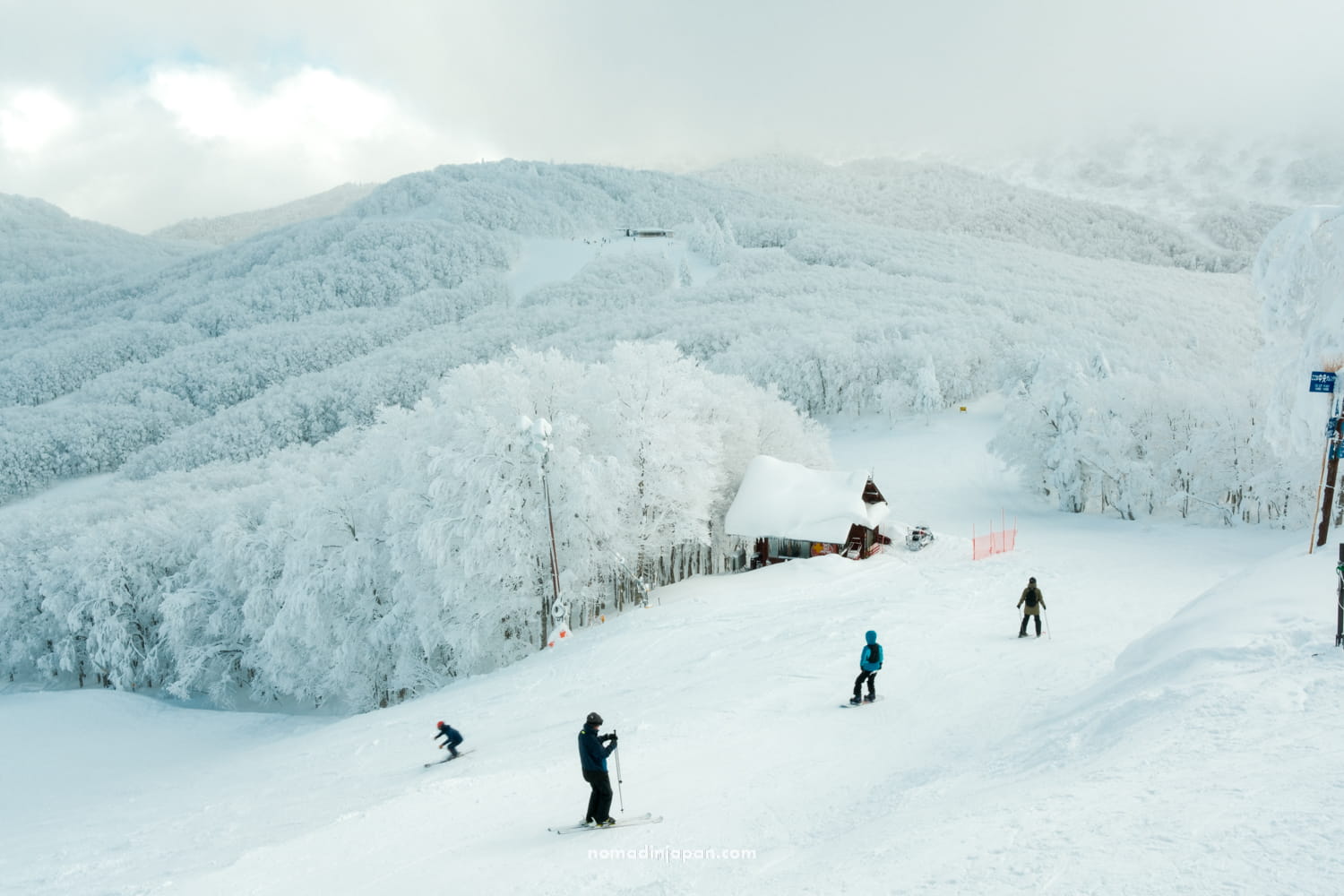
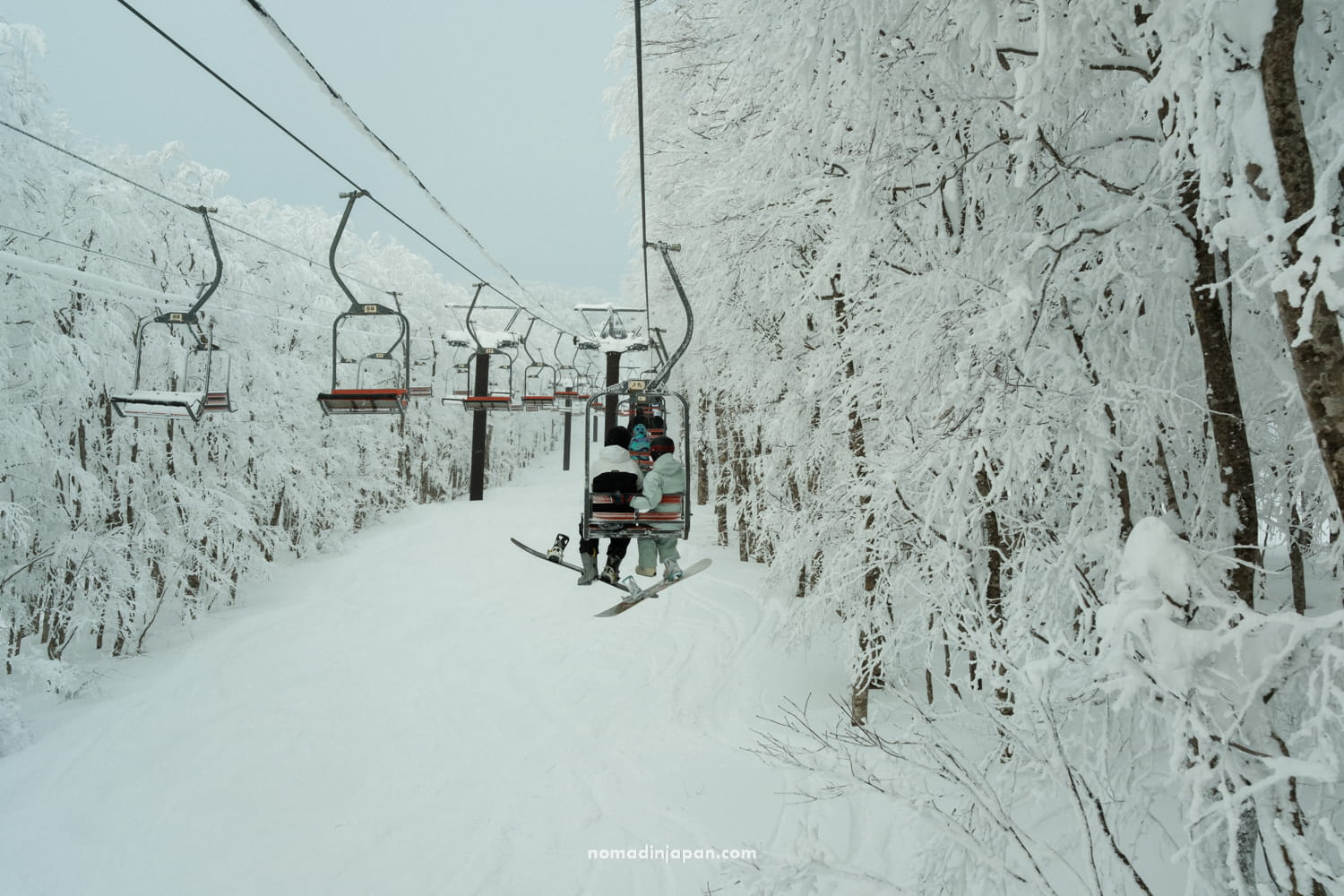
Every winter, when conditions are just right, these Aomori conifers transform into monster-like shapes. You can ski among them (read my Zao Ski Guide) or soar over them in a covered gondola. If you visit during Zao’s Juhyo Festival, you can also catch them lit up with winter illuminations.
All of the above combined, there’s more than enough to fill a lovely, slow, and intentional trip to Zao Onsen (with or without skiing—though, you know my preference!).
If you have any questions about what to do in Zao Onsen, especially in winter (though summertime offers a completely different experience!), let me know in the comments below.