Yunomine Onsen Village Guide: Japan’s Hidden UNESCO Hot Spring
Tucked in the rugged mountains of Wakayama lies an ancient hot spring (onsen) village with historic ties to the sacred Kumano Kodo Pilgrimage.
How old, exactly?

Yunomine has over 1,800 years of documented history and has been mentioned in journals of early aristocrats making the arduous journey to Hongu and the three Kumano shrines.
At the heart of Yunomine, tucked in a wooden hut built over an incredibly hot sulphur hot spring creek, you will find the only UNESCO World Heritage onsen in the world — Tsuboyu Onsen.
It is considered to be one of Japan’s oldest onsen, if not the oldest!


In this quaint village, don’t miss out on soaking in the healing waters, cooking a perfect onsen egg in the communal 90°C spring, and staying overnight in a traditional inn.
Here’s a quick guide for what to see and do in Yunomine Onsen!
Where Is Yunomine Onsen & Why Visit?

Yunomine Onsen is a remote mountain village on the Kii Peninsula.
In addition to the shrines and sacred Nachi Falls, it’s perhaps one of the most trip-worthy places to see in Wakayama Prefecture.
You can get here by bus, car, or on foot from Hongu if you are hiking either the Akgai-goe section (from Hosshinmon-oji) or via the Daimon-goe section (from Hongu) of the Nakahechi Route of the Kumano Kodo.
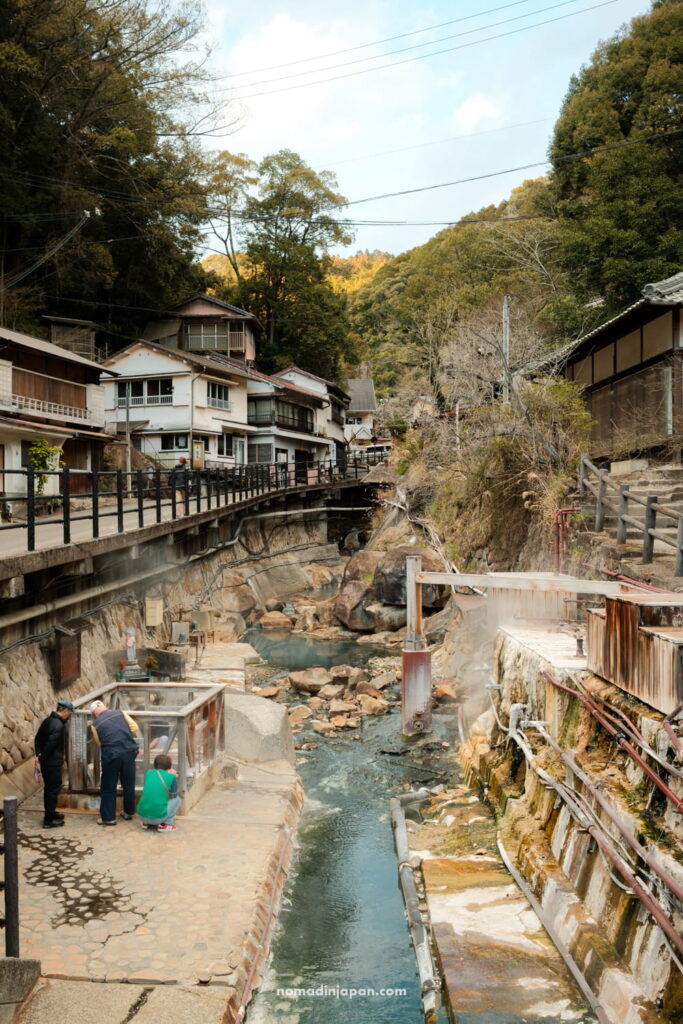
Aside from Yunomine being one of (if not the) oldest onsen in Japan, you should visit simply because this village is truly tiny and unique.
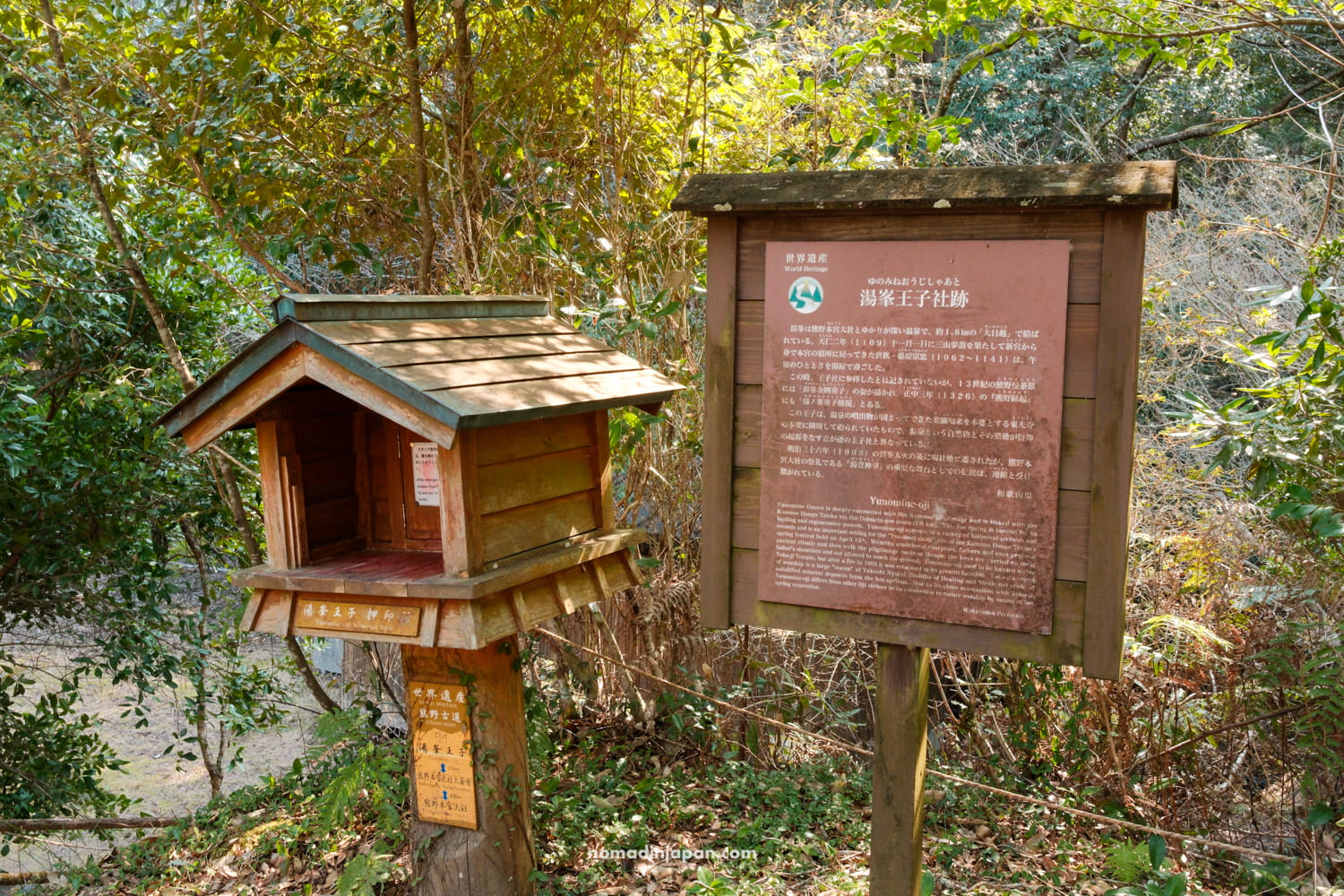
I highly recommend taking your time here to walk around the village (which won’t take long), stop in at the Yunomune-chaya teahouse for sweets, and even collect one of the Kumano Kodo stamps at the Yunomini-oji Shrine, perched up on a hill behind the village.
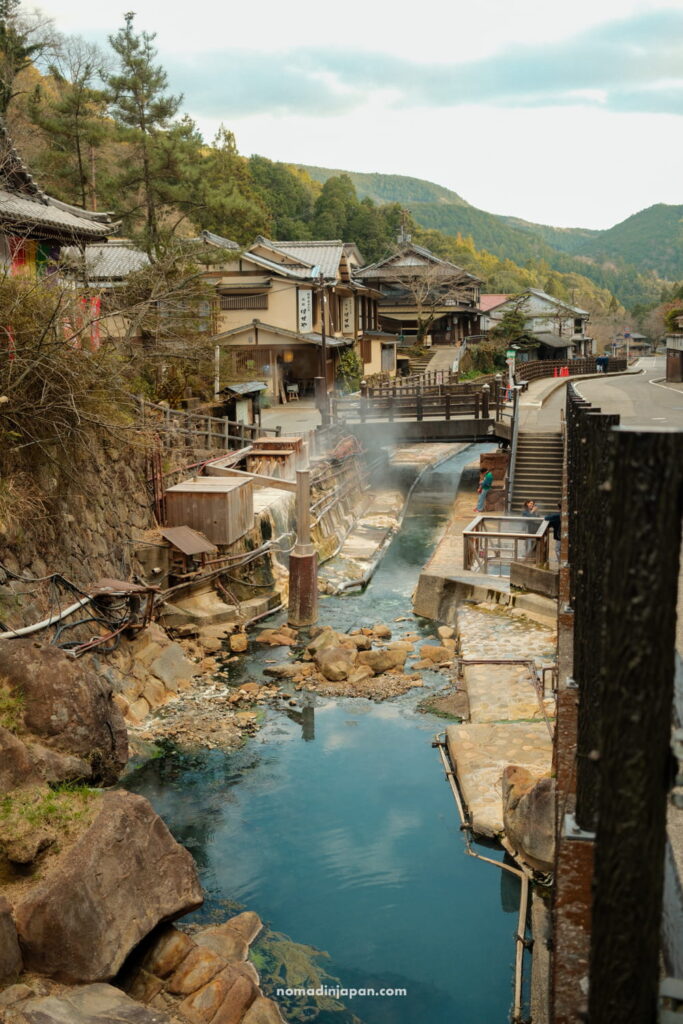
The chance to bathe in these historic, mineral-rich waters feels like a once-in-a-lifetime experience. ♨️
I mean, it’s not every day you get to soak in the world’s only World Heritage hot spring at Tsuboyu, which is bucket-list-worthy!
A Sacred Stop on the Kumano Kodo
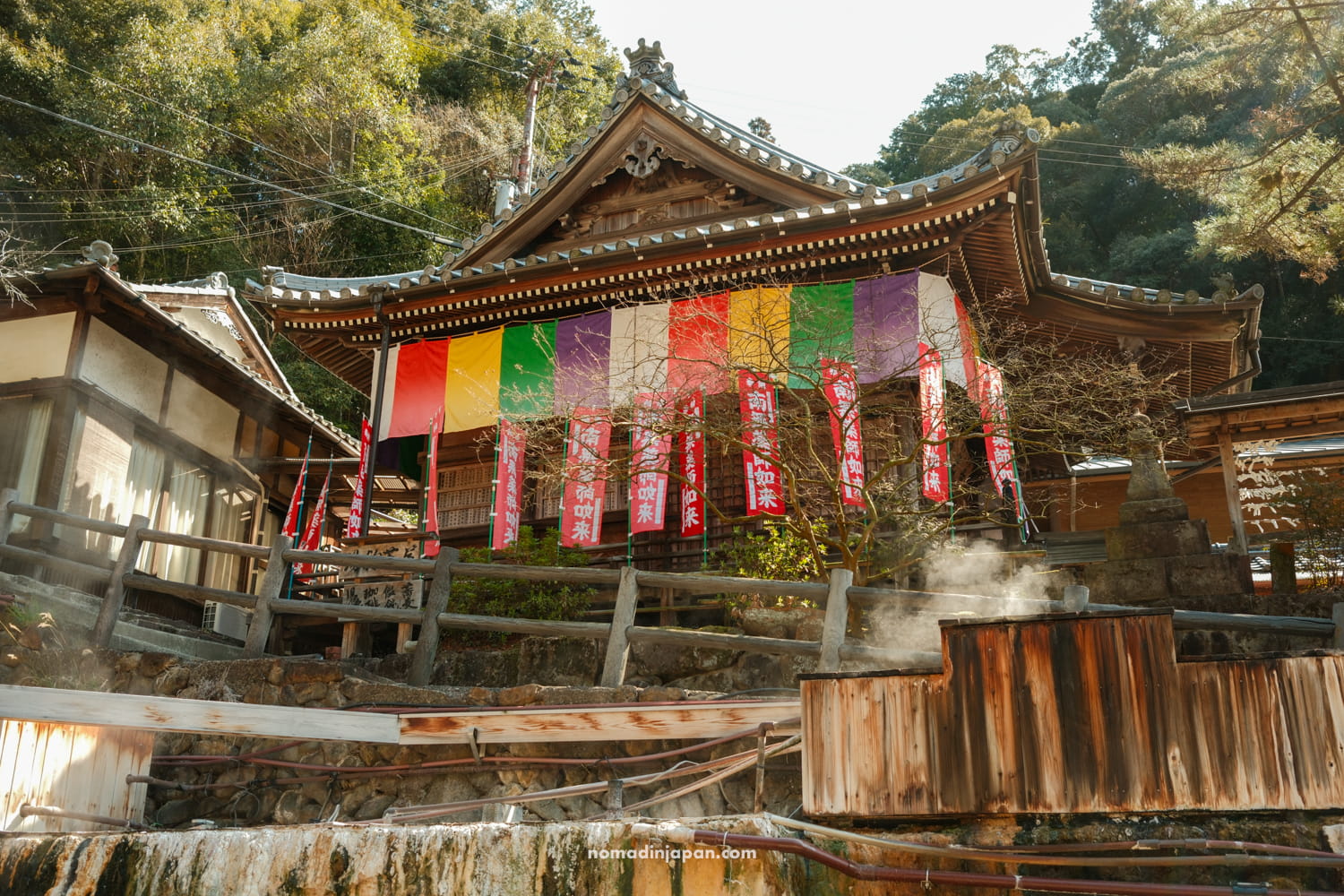
Though I can’t find an exact document stating its foundation, Yunomine Onsen is said to have been discovered in the 4th century by a priest.
Inside the Toko-ji Temple lies the Yunomine Healing Buddha, which is said to be made of mineral deposits.
Located in a steep valley along a river with multiple hot spring vents, the onsen’s original name of yunomune, literally meaning hot water chest, is said to have come from onsen spring water bursting from a hole in the chest of the healing Buddha Yakushi Nyorai’s statue in the local temple of Tokoji, which is still there today.
– Deeper Japan
For over 1,000 years, pilgrims heading to Kumano Hongu Taisha for worship would stop here at Yunomine for purification rituals, known as yugori.
It’s pretty wild, and even a tad emotional, to sit in these bath waters and retrace the very footsteps of those pilgrims today, an entire millennium later.
Soak in Tsuboyu: The UNESCO Onsen

As the only UNESCO World Heritage hot spring you can bathe in, Tsuboyu should be on your list of things to do in Yunomine.
Some people skip it because nearly every ryokan and accommodation in Yunomine has its own hot spring baths, but honestly — between the atmosphere of the tiny, milky-blue bath, and the historical and cultural ties to the Kumano Kodo — I wouldn’t want to miss it.
The catch? The Tsuboyu Onsen operates on a first-come, first-served basis. To secure a spot, please read more in my guide on how to get tickets for Tsuboyu.
If you want to skip Tsuboyu, there’s still a chance to enjoy Yunomine’s mineral-rich hot springs at the public bathhouse, right beside the Toko-ji Temple.

Cooking Eggs in the Hot Spring Well (Onsen Tamago!)
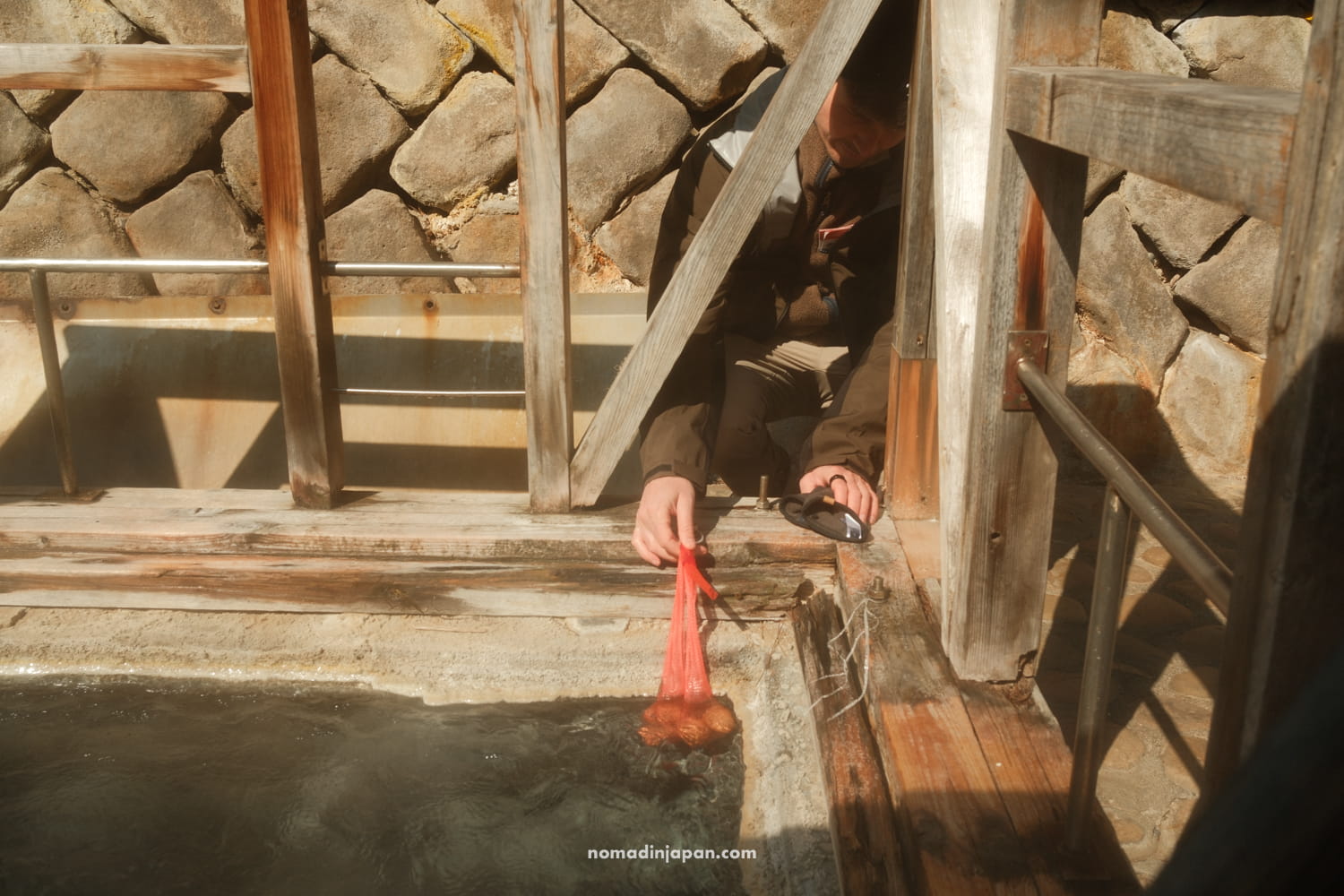
Part of the Yunomine Onsen Village experience is getting to purchase local eggs to cook in the VERY hot communal cooking bath or well, down by the creek. This area is apparently called the Yuzutsu.
This is a community-oriented “kitchen” right in the middle of town — don’t be surprised to see locals hooking their nets full of eggs and vegetables for steaming!
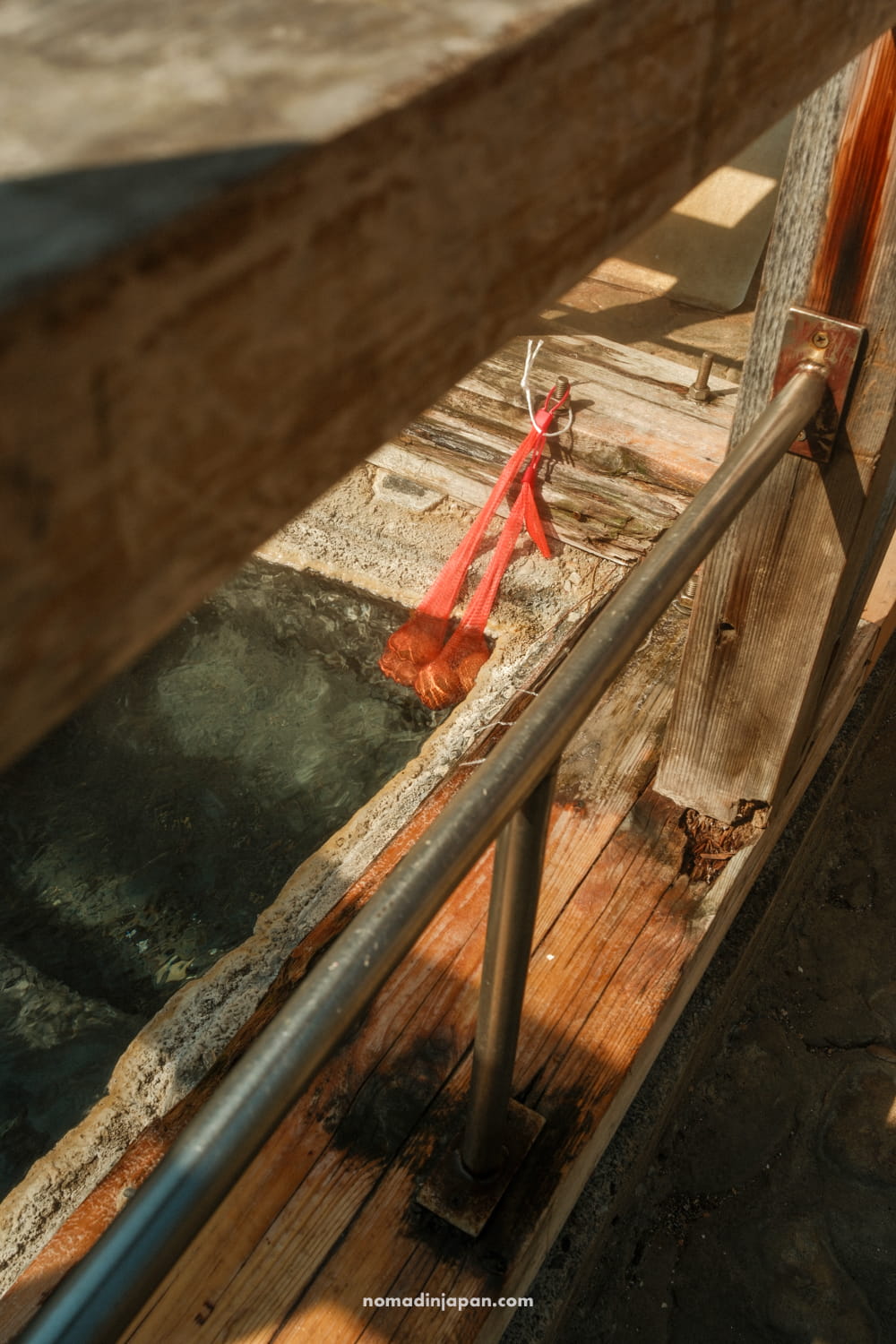
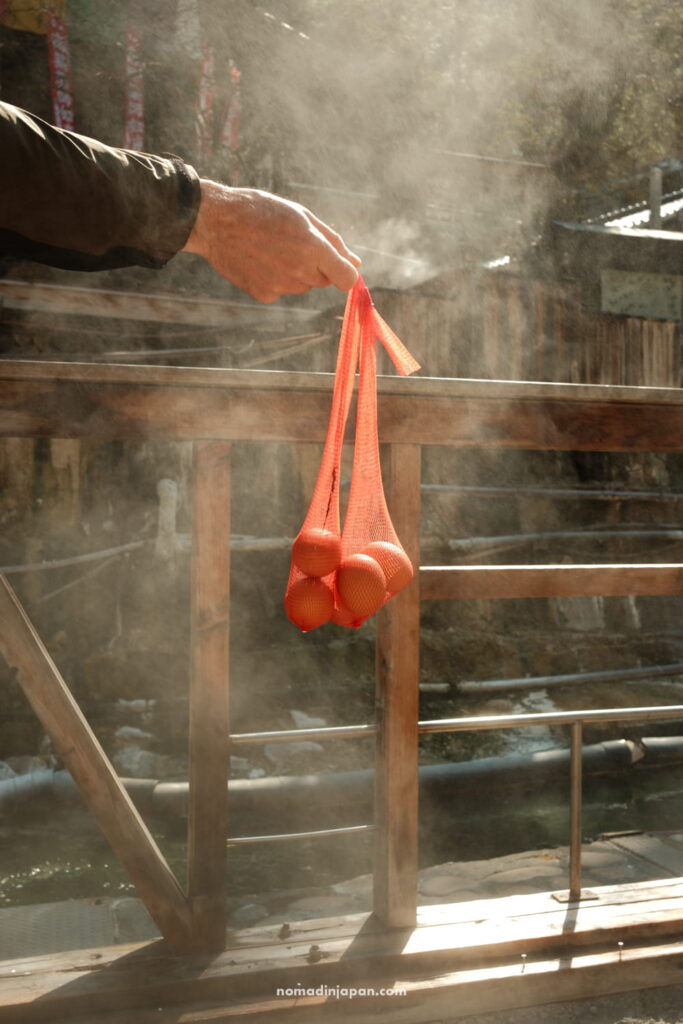
While we picked up our fresh eggs at our guesthouse, J-Hoppers, you can also buy them at the small convenience store near the river (by the bridge).
How to cook onsen eggs in Yunomine:
- Buy fresh eggs (pre-packaged in an onsen-safe net!)
- Dip the eggs, then hook the net to the side of a nail (you’ll see it!)
- Cook eggs ~12 minutes in the bubbling water
- Let cool
- Peel and enjoy!
Food & Where to Eat in Yunomine
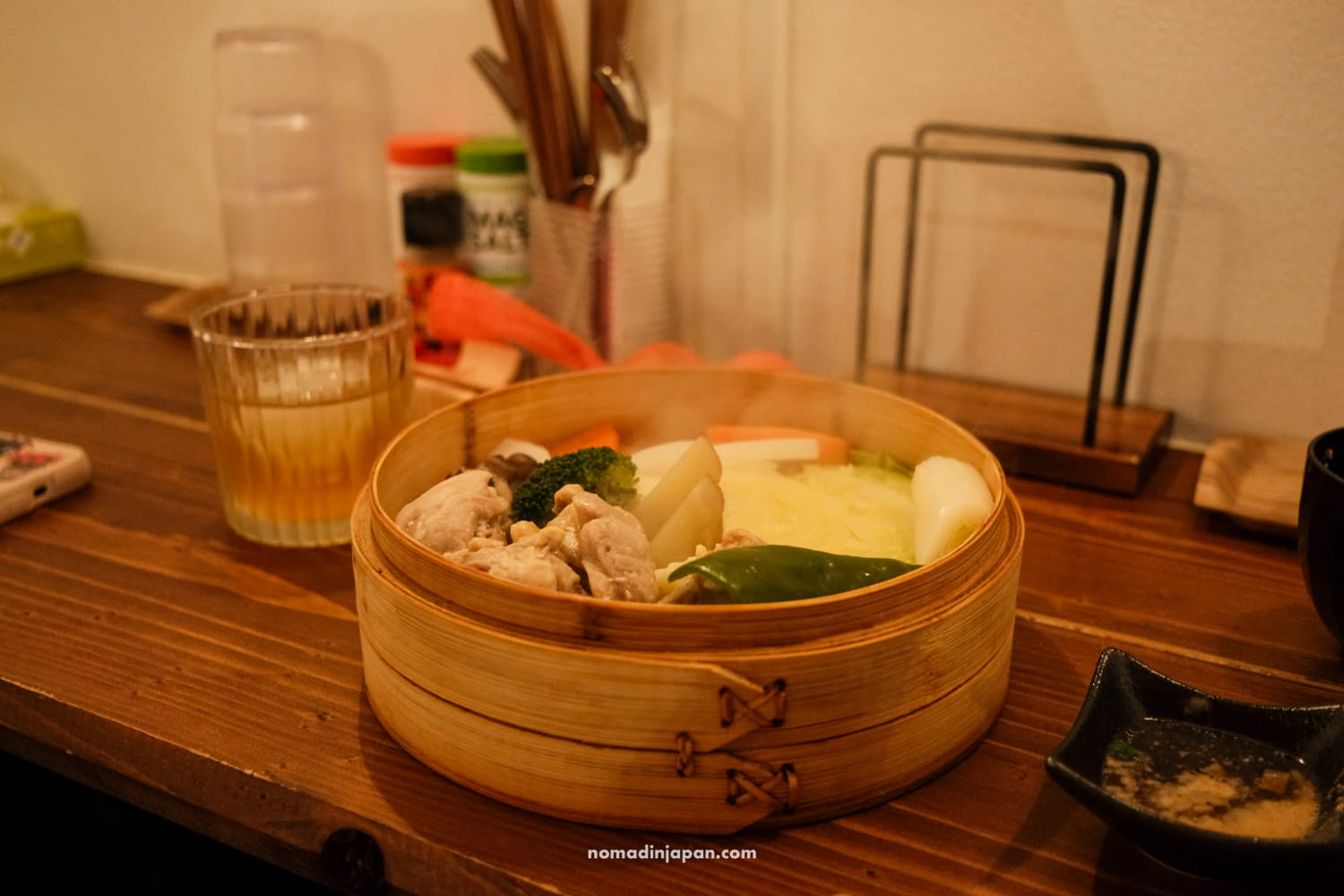
Speaking of eggs and food, because the town is so small, don’t expect to find many places to eat or sit down for meals.
You Got It Bar is about the only restaurant in the village for dinner and drinks (which features onsen-steamed veggies and meat, gyoza, craft beer, and more!).

We had planned to go to another cafe in the morning, but it was closed (even though Google said it was open).
Dinner and breakfast are usually included in your ryokan rate, so best to plan your meal times before/after Yunomine, or drop by the bar if you’re visiting at night or staying at the J-Hoppers Guesthouse (as we did).
Final Tips for Visiting Yunomine Onsen
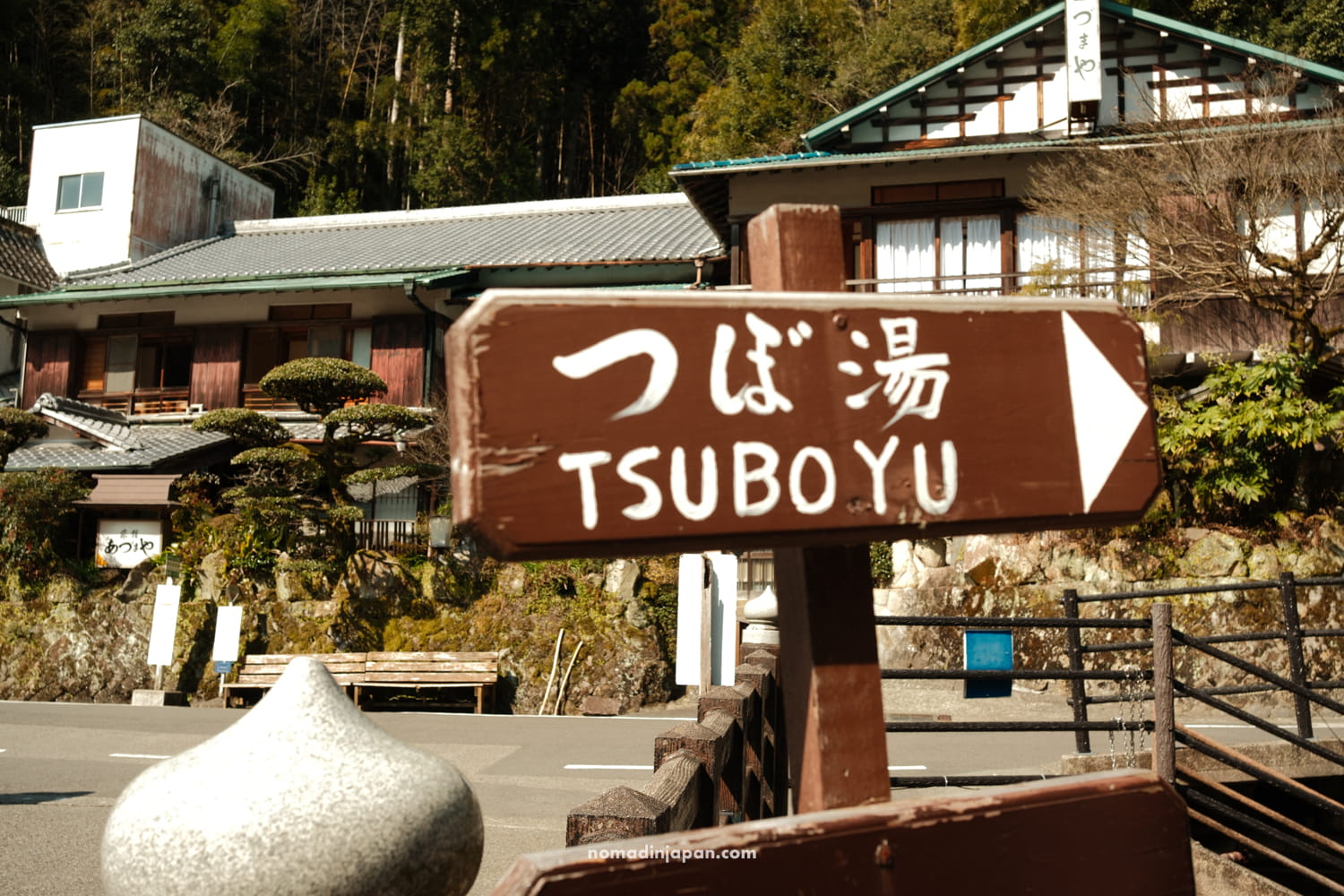
Yunomine Onsen is worth visiting, even if you’re not hiking the Kumano Kodo. Blink, and you could miss it — it’s that small!
While you can reach the village by car, public parking is limited. Instead, I’d suggest staying overnight in a ryokan (such as Ryokan Adumaya), as this traditional village is perfect for it and has centuries-old inns with their own hot springs.
Also:
- Bring cash (for the onsen ticket machine)
- Respect onsen etiquette
- Book accommodation ahead of time!
- Plan around your Kumano hiking itinerary
Bookmark this guide to Yunomine Onsen Village for later and share it with a friend! ♨️